
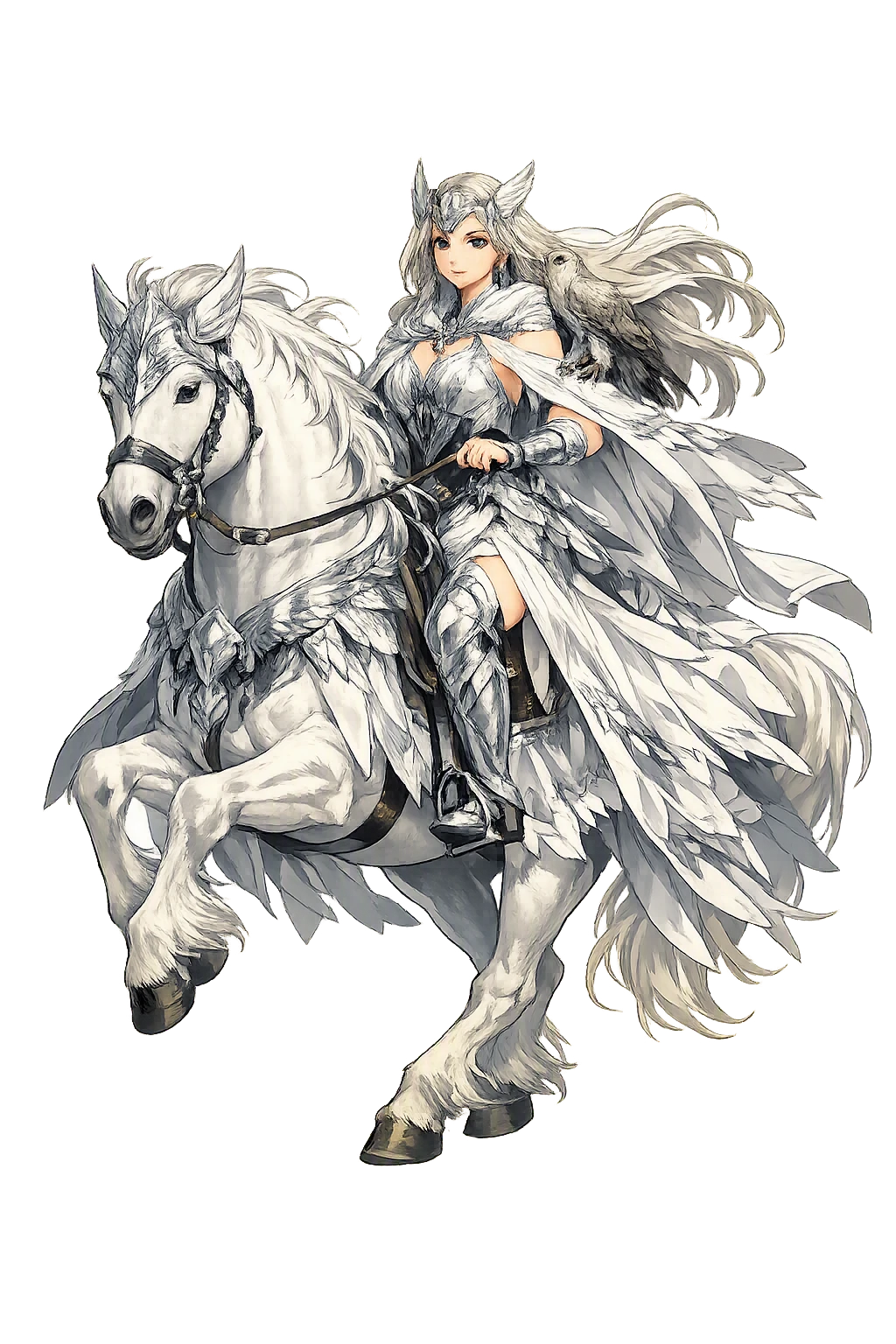
Gná in 2026: why scholars still care
In 2026, names are treated as data points. Gná is a reminder that they are also cultural artifacts — and that the difference matters for search engines, AI training corpora, and anyone who types the name of a Norse figure into a browser. Scholars never stopped caring about the difference between gna and Gná; the web simply made that care actionable. What follows is the full scholarly picture — name, script, sound, myth, cult, and legacy — followed by the engineering compromise that lets a restored spelling live at a real address. The question is not whether the name is old. It is whether the digital world is old enough to hold it.
At a Glance
- Restored name: Gná
- ASCII form: gna
- Meaning: "To project, to gaze"
- Domain of influence: Messenger of Frigg
- Pantheon: Norse
- Classification: Tier 1
- Original script: ᚴᚾᛅ (Younger Futhark)
- Live domain: gná.com
Overview
Gná (gna) — Messenger of Frigg · the Swift-Riding Goddess — belongs to the Norse tradition, where she is catalogued under the domain "Messenger of Frigg". The name means "To project, to gaze".
Gná is one of the handmaids of Frigg, the highest goddess of the Norse pantheon, and serves as her messenger. In the Prose Edda, Snorri gives her a brief but vivid chapter: she rides the horse Hofvarpnir, which can run through air and over water, and carries Frigg's errands across the worlds. When she once encountered a farmer building a fence in her path, she asked why he worked so hard; after he explained his poverty, she arranged a marriage that made him wealthy. This small story gives her a gracious, aristocratic character — the divine lady who notices mortal labor and rewards it.
PuniCodex restores the name as Gná and serves its temple at gná.com. The restoration preserves the acute accent on the final a that the ASCII form loses, and exactly one historically valid Unicode restoration exists, which places the name in Tier 1. The plain ASCII form gna survives as a modern convenience imposed by the early domain-name system; the restoration, not the fallback, is the form the project defends as philologically complete.
The Name
The name is attested in Old Norse as Gná. Etymologically it means "To project, to gaze". The verb gnæfa means 'to stand out, to tower, to project'; related forms suggest the idea of something raised or visible from a distance. The name may therefore evoke the messenger who stands out against the sky or the gaze that reaches far.
The ASCII form gna survives only because the early domain-name system could not carry diacritics; it is a technological compromise, not an ancient spelling. The Unicode restoration Gná recovers the acute accent of the original directly in the address bar. The original carries stress, and exactly one historically valid Unicode restoration exists, which places the name in Tier 1.
The letter-by-letter transformation runs:
- g → G — Same, capitalized
- n → n — Same
- a → á — A with acute: stressed a
The project holds the domain gná.com as the canonical home of this name.
Etymology & Roots
The recorded derivation reads: Old Norse Gná, one of Frigg's handmaidens, whose name may relate to "to project" or "to gaze afar".
The root gloss is "projection, gaze."
The reconstruction is classed as uncertain.
The Original Script
The name is preserved in medieval Icelandic manuscripts in the Latin alphabet as Gná — Old Norse (North Germanic), attested 13th–14th c. CE in the codices of Snorri's Edda, recording material centuries older. Before the Latin bookhand, Old Norse names were carved in the Younger Futhark; no runic attestation of this name survives.
The scholarly rendering proceeds step by step:
- The normalized Old Norse spelling uses á (a with acute) for the long stressed vowel.
- In the Younger Futhark the name would have been carved approximately ᚴᚾᛅ, with the ᚴ-rune covering both g and k sounds.
- The Unicode form Gná is a scholarly normalization that distinguishes the stressed long vowel from the plain ASCII form.
Pronunciation
The reconstructed pronunciation of the name is /gnaː/ — Old Norse Reconstruction.
Phoneme by phoneme:
- G- — Voiced velar stop [g]
- -n- — Alveolar nasal [n]
- -á — Long open back [aː] with acute stress on the final syllable
For the modern speaker, the closest approximation is: 'GNAH' — one syllable, with a long, stressed 'ah'.
Kindred and historical forms of the name:
- Old Norse — Gná, messenger of Frigg
- Modern Icelandic — Gná, unchanged
Gná is Tier 1 because the Norse form preserves the acute stress that ASCII loses. The restoration keeps that accent visible in the domain name.
Mythology
Gná's mythology is brief but distinctive. Unlike the more prominent goddesses, she has no eddic poem of her own; her story survives in a short prose passage in Snorri's Prose Edda.
The Tale of the Farmer (Gylfaginning 35 / Skáldskaparmál)
Snorri tells how Gná was riding her horse Hofvarpnir on an errand for Frigg when she came upon a farmer building a fence in Denmark. She asked why he toiled so hard, and he replied that he was poor and had no other way to feed himself. Gná then arranged for him to marry a wealthy woman, and from that union came a prosperous line. The story is one of the few in Norse myth in which a goddess intervenes directly to improve a mortal's social condition, and it gives Gná a character of refined benevolence.
Hofvarpnir's Parentage
Snorri adds the detail that Hofvarpnir was born when the horse Hrimfaxi, which draws Night across the sky, was bitten by a fly — a typically learned etymological aside. The horse's ability to run through air and over water makes Gná a figure who crosses boundaries with ease.
Among Frigg's Handmaids
Gná is listed alongside Frigg's other attendants, including Fulla, Hlín, and Sága. These figures form a courtly retinue around the highest goddess, each with a specialized function. Gná's function is movement: she is the one sent out.
The Messenger Goddess (Gylfaginning 35)
In Snorri's list of the Ásynjur, Gná is the one Frigg sends on errands into other worlds. Her horse Hofvarpnir can run through the air and over the sea. The horse's lineage is given: it was born of Hófvarpni and Hamskerpir. Wherever Frigg needs a presence, Gná is the one who arrives.
The Fence and the Farmer (Gylfaginning 35)
Snorri adds a single anecdote: once, as Gná rode past, a farmer called out from a fence and asked who she was. She told him to say that she was Gná, sent by Frigg. The farmer replied that the fence was too high for her to leap. Gná then made the fence-post fall, and the fence with it, and rode on. The story is small but memorable: even a minor goddess can undo the fixed world when mocked.
Among the Goddesses (Ásynjur lists)
Gná appears in the þulur and in Snorri's catalogue as one of the fourteen (or more) Ásynjur. She has no husband or children named in the sources; her identity is entirely functional. She is the messenger, and the messenger is defined by the message she carries.
Symbols & Iconography
The iconography associated with Gná centers on her role as a mounted messenger:
- Hofvarpnir — her horse, whose name means 'hoof-flourisher' or 'he who throws his hooves'; it can run through air and over water
- The riding path — the road through sky and sea that only a divine messenger can travel
- The gift or message — the errand she carries from Frigg to gods or mortals
- The fence and the field — the farmer's boundary that she crosses, marking the intersection of divine and mortal worlds
- Horse Hofvarpnir — The sky-running steed that carries her errands across the worlds
- Wind or feather — The lightness and speed of her passage
- Message or scroll — The word of Frigg delivered faithfully to its destination
- The falling fence — The sign of her power over gravity and the respect owed to divine messengers
Archaeology & Evidence
No cult site, votive deposit, or named image of Gná is known. Her attestation is entirely literary, confined to Snorri's Prose Edda. The relevant manuscripts are the principal codices of Snorri's Edda — the Codex Regius (GKS 2367 4to, early 14th c.), the Codex Wormianus, and the Uppsala Edda. The visual record is indirect: any depiction of Frigg's retinue or of a divine female rider might evoke Gná, but no ancient image is labeled with her name.
Realm & Domain
Gná belongs to the Norse tradition as the messenger and attendant of Frigg. Her domain is travel, communication, and the gracious exercise of divine power on behalf of the highest goddess.
Messenger of Frigg
She carries the queen of the gods' errands across the worlds, riding a horse that can traverse air and sea.
Swift Travel
Her horse Hofvarpnir embodies the speed and freedom of the divine messenger.
Patroness of Prosperity
The story of the farmer shows her power to transform mortal fortune through a single intervention.
The Watchful Gaze
Her etymology suggests projection and visibility — the messenger who sees and is seen from afar.
Errands of Frigg
Gná carries the queen's word to every corner of the cosmos, the diplomatic courier of Ásgarðr.
The Falling Gná
A farmer once mocked her from a fence; she made the fence-post fall, teaching him to respect a goddess.
Swift as Wind
She is the answer Frigg gives when asked which Ásynjur can be trusted to move between worlds without delay.
Across Cultures
Gná has no direct foreign counterpart. Her closest analogues are other divine messengers — the Greek Iris, who runs errands for Hera, or the Roman Mercury — though Gná is specifically the servant of Frigg rather than a general herald of the gods. Within the Norse corpus she belongs to the circle of Frigg and is kin in function to Fulla and Sága.
Kindred figures in the PuniCodex cross-tradition index include Frigg and Freyr, linked through divine messengership and the goddess's retinue.
Cultural Legacy
Gná is a minor but fondly remembered figure in modern retellings of Norse myth. Her story of helping the farmer is often cited as an example of the less warlike side of the Norse goddesses, and her horse Hofvarpnir has become a favorite detail in illustrated Eddas and fantasy adaptations. The name Gná is rare as a personal name in modern Scandinavia but is recognized by readers of the myths. Her legacy is the idea that the divine messenger can also be a bringer of unexpected prosperity.
The Scholarly Record
The account of Gná given in this edition rests on the witnesses and reference works listed below. The Prose Edda supplies the only extended narrative; the dictionaries and handbooks secure the form and meaning of the name.
- Snorri Sturluson, Prose Edda, Gylfaginning 35 / Skáldskaparmál, trans. Anthony Faulkes, Everyman / Viking Society for Northern Research, 1220. Full text
- Cleasby, Richard, and Guðbrandur Vigfússon, An Icelandic-English Dictionary, 2nd ed. (Oxford: Clarendon Press, 1957), s.v. Gná.
- Zoëga, Geir T., A Concise Dictionary of Old Icelandic (Oxford: Clarendon Press, 1910).
- Simek, Rudolf, Dictionary of Northern Mythology, trans. Angela Hall (Cambridge: D. S. Brewer, 1993), s.v. Gná.
- Lindow, John, Norse Mythology: A Guide to the Gods, Heroes, Rituals, and Beliefs (Oxford University Press, 2001), s.v. Gná.
- Gordon, E. V., An Introduction to Old Norse, 2nd ed. rev. A. R. Taylor (Oxford: Clarendon Press, 1957).
A Meditation
Gná is the messenger who notices. She does not thunder across the sky like a war-god; she rides quietly on her horse that can run on water and air, and she stops to ask a farmer why he works so hard. In that question is the whole of her theology: the divine does not only command, it attends. The restoration of her name in Unicode honors the small, swift goddesses who carry the errands of the great and who sometimes change a life with a single kind intervention.
The Unicode Restoration
Gná is classified as Tier 1: the restoration preserves at least one distinctive feature — a diacritic or a distinctive letter — that the ASCII form loses. The ASCII fallback gna still resolves everywhere, but it is the restored form that carries the name's full information. Across the 3 characters of the name, the restoration adjusts 1: 1 mark of stress (á). That is the whole thesis of this temple: the marks are the message.
Character by Character
The journey from gna to Gná, one character at a time:
- g → G — Same, capitalized
- n → n — Same
- a → á — Acute on a
The Domain Name
The restored name is live as a working domain: gná.com, which the DNS carries in punycode form as xn--gn-nia.com — an ASCII-compatible encoding that lets a non-ASCII name travel the global network without breaking older infrastructure. The visitor sees Gná; the machines see the encoding. That duality is the engineering compromise on which the entire restoration rests, and it is why a name written the way its own tradition wrote it in Younger Futhark can now be typed into any browser on earth.
The Norse Pantheon
Gná is one of 101 entries the PuniCodex lexicon catalogues under the Norse pantheon. The Pantheon page gathers the tradition's major figures in one place, and the Lexicon lets you filter all 981 restorations by tradition, tier, or script — the fastest way to see where this name sits among its kin.
Frequently Asked Questions
What does Gná mean? The traditional gloss is "To project, to gaze."
Which tradition does Gná belong to? Gná is catalogued in the Norse pantheon of the PuniCodex lexicon.
Why is Gná classified as Tier 1? Because the restoration preserves at least one distinctive feature — a diacritic or a distinctive letter — that the ASCII form loses — and the marks in the restored spelling preserve exactly that evidence.
Is Gná a working domain? Yes — gná.com resolves today and routes to this temple.
What is the punycode for gná.com? The DNS encoding is xn--gn-nia.com; browsers perform the translation automatically, so visitors only ever see the restored name.
Can I use Gná in a normal browser? Yes. The DNS resolves the punycode form automatically, and the type tool on this site converts gna to Gná for copying and pasting.
Where does the scholarly information come from? The entry is built from lexica, inscriptional evidence, and reviewed scholarly sources listed in the Scholarly Edition. Every claim is traceable to a canonical source.
Typing Gná
You do not need a special keyboard to use this restoration. The PuniCodex Type Tool converts the ASCII form gna into Gná as you type, and the browser extension offers the same conversion inside any text field. Copy the restored form, paste it into the address bar, and the DNS does the rest.
Sister Temples
Other temples in the Norse pantheon include Brokkr, Brynhildr, and Búri — each with its own restoration story, its own scholarly record, and its own place in the lexicon.
Why This Restoration Matters
In 2026 the stakes are practical. Search indexes, language models, and localization pipelines all inherit whatever spelling the web normalizes — which means every Unicode domain is also a training signal. Gná teaches the machinery that the restored form exists, that it is used, and that it points to a real place. That is why a project built on philology ends up caring about DNS: the infrastructure decides which names the future sees. This restoration makes sure the future sees the whole name.
Explore Further
This post is one doorway into the temple. The home page carries the full character breakdown and the ambient canvas; the lore page tells the myths in long form; the Scholarly Edition preserves the sources, pronunciation data, and revision history; and the patron wall supports the restoration directly. For the wider map, browse the Lexicon, explore the Pantheon, or return to the PuniCodex blog.
A Closer Look at the Marks
A restored name is a small map. In Gná, the journey from the ASCII fallback gna to the Unicode form can be read letter by letter, and each letter tells a story. Of the 3 characters, 2 remain unchanged; they anchor the name to its modern shape. The remaining adjustments recover marks the source tradition used to distinguish this name from every other word built from the same letters.
The g stays as it is — Same, capitalized.
The n stays as it is — Same.
The a becomes á — Acute on a.
Together these changes are not decoration. They are the minimum set of marks needed to keep the name legible in its own tradition. Remove them and you still have a string of letters; you no longer have the name as it was written.
Related Names
Sources
The full scholarly apparatus — every citation, revision, and review — lives in the Scholarly Edition. Key references for this post:
- Snorri Sturluson, Prose Edda, Gylfaginning 35 / Skáldskaparmál, trans. Anthony Faulkes, Everyman / Viking Society for Northern Research, 1220.
- Cleasby, Richard, and Guðbrandur Vigfússon, An Icelandic-English Dictionary, 2nd ed. (Oxford: Clarendon Press, 1957), s.v. Gná.
- Lindow, John, Norse Mythology: A Guide to the Gods, Heroes, Rituals, and Beliefs (Oxford University Press, 2001), s.v. Gná.
- Snorri Sturluson, Prose Edda, Gylfaginning 35 / Skáldskaparmál, trans. Faulkes.
- Cleasby & Vigfússon, An Icelandic-English Dictionary, 2nd ed., s.v. Gná.
- Lexicon authorities for this entry: Prose Edda, Cleasby-Vigfusson.