PuniCodex

Extended Lore

ᚴᚾᛅ Gná

Etymology · Phonology · Orthography · Cultural Legacy · Primary Sources

Tier 1 Gná.com
Gná — Messenger of Frigg
01

Quick Facts

Essential information about Gná, Messenger of Frigg

Original Scriptᚴᚾᛅ
Unicode RestorationGná
Reconstructed Pronunciation/gnaː/
PantheonNorse
DomainMessenger of Frigg
MeaningTo project, to gaze
ClassificationTier 1
Primary DomainGná.com
Sacred SymbolsHorse Hofvarpnir, Wind or feather, Message or scroll, The falling fence
02

Etymology & Word Family

From original script to Unicode restoration

Original Script ᚴᚾᛅ Gná — "To project, to gaze"
Unicode Restoration Gná Restored stress, length, and script
Modern ASCII gna Plain-ASCII fallback

Gná is Tier 1 because the restored form Gná preserves the acute accent and length that distinguish the Old Norse goddess from the plain ASCII gna.

03

Unicode Character Breakdown

Character-by-character philological analysis

CharacterUnicodeNameBlockPhonetic Role
GU+0047Latin Capital Letter GBasic LatinSame, capitalized
nU+006ELatin Small Letter NBasic LatinSame
áU+00E1Latin Small Letter A with AcuteLatin-1 SupplementAcute on a

The Tier 1 classification reflects how much of the original phonology this restoration preserves — stress and vowel length for Greek names, distinctive letters and diacritics for every other tradition.

04

Cultural Significance

From ancient cult to modern Unicode

Ancient Domain

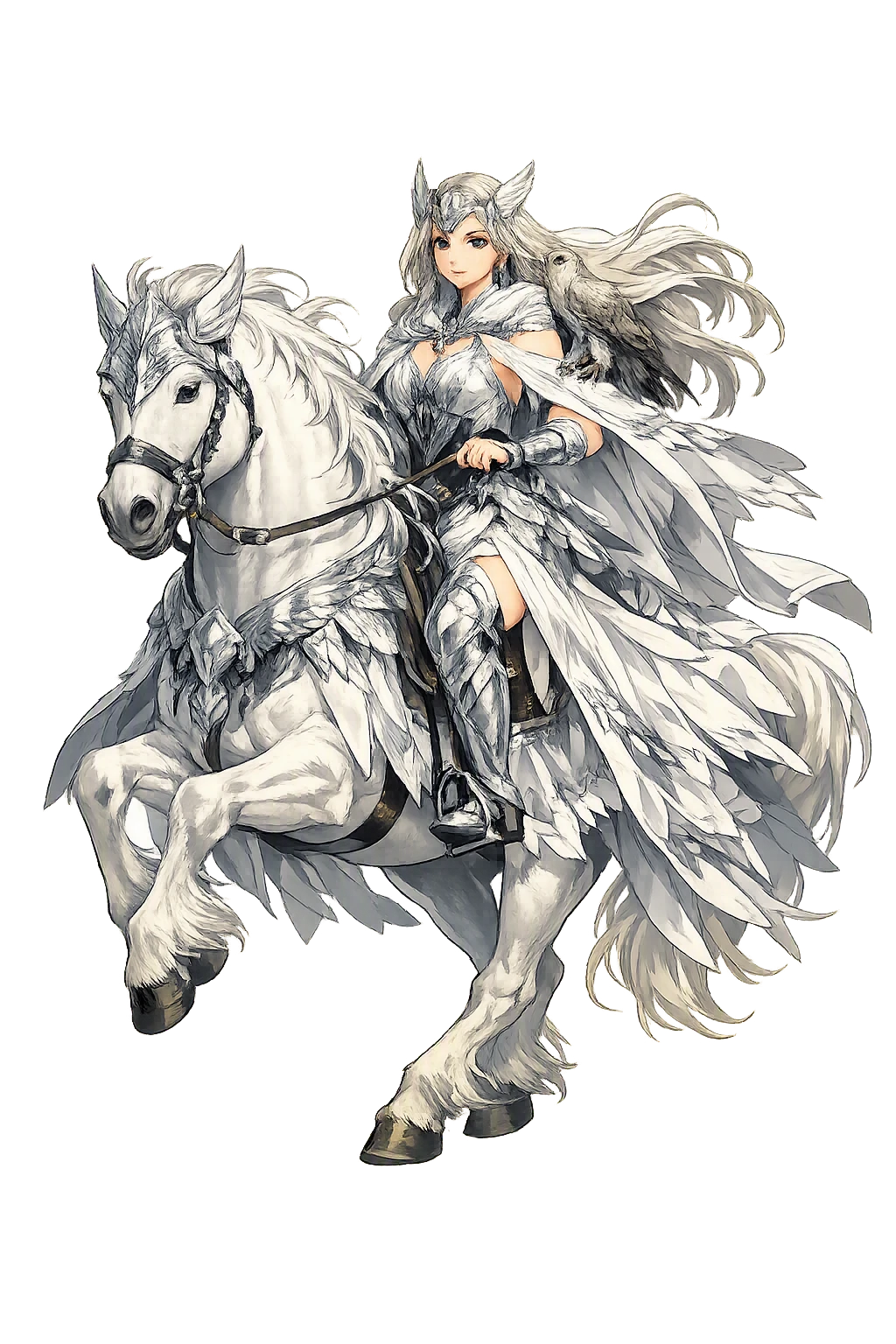
Gná is one of the Ásynjur, the goddesses of the Norse pantheon, and the special messenger of Frigg. Her horse, Hofvarpnir, runs through air and over sea, carrying her wherever the queen of the gods sends her. She is not a warrior or a mother in the surviving sources; she is speed, service, and the unseen thread that keeps the divine household in motion.

Gná in Later Traditions

Gná has no clear foreign double, but her function — the divine messenger riding a supernatural horse — places her in a common Germanic and Indo-European type. The Vedic Pūṣan and Greek Hermês are wandering messengers with swift horses or sandals; the Irish Manannán rides Aonbharr over sea and land. Within Norse mythology, her closest counterpart is the god Hermóðr, who rides to Hel to bargain for Baldr. Gná is the feminine form of the type: not a psychopomp, but the queen's own courier.

Modern Legacy

Gná remains a minor but beloved figure in modern retellings of Norse myth. Her name is sometimes given to characters who embody swiftness or loyal service, and her horse Hofvarpnir appears in games and fiction as a mount that can run on air. In Heathen practice she is occasionally invoked for matters of communication, travel, and the safe delivery of messages. Restoring Gná preserves the acute accent and long vowel that mark her as one of the Ásynjur rather than a modern abbreviation.

Unicode Restoration as Cultural Act

Restoring Gná in a domain name is more than orthographic accuracy. It is a statement that the internet should recognize the full range of human writing — not only the ASCII keyboard.

05

Frequently Asked Questions

Common questions about Gná, Messenger of Frigg, and Unicode restoration

01How do you pronounce Gná?

In reconstructed pronunciation, Gná is /gnaː/ — approximately 'GNAH' — one syllable, the vowel held long like the 'a' in 'father' stretched out..

02What does Gná mean?

Gná means To project, to gaze in the norse tradition.

03What are the symbols of Gná?

Gná is associated with Horse Hofvarpnir (The sky-running steed that carries her errands across the worlds), Wind or feather (The lightness and speed of her passage), Message or scroll (The word of Frigg delivered faithfully to its destination), The falling fence (The sign of her power over gravity and the respect owed to divine messengers).

04Why restore Gná in Unicode?

Plain ASCII gna strips the stress, length, and script that make the name specific. Unicode restoration returns the name to its original written dignity.

05What is the most important myth about Gná?

In Snorri's list of the Ásynjur, Gná is the one Frigg sends on errands into other worlds. Her horse Hofvarpnir can run through the air and over the sea. The horse's lineage is given: it was born of Hófvarpni and Hamskerpir. Wherever Frigg needs a presence, Gná is the one who arrives.

06

Scholarly Sources

The philological foundations of this restoration

Every claim on this page is grounded in established scholarship. The orthographic restorations follow disciplinary convention. The etymological chain follows the best available reference works. This is not invention — it is resurrection through scholarship.

Lexicography & Philology

  • Prose Edda
  • Cleasby-Vigfusson

Primary Texts

  • Snorri Sturluson, Prose Edda: Gylfaginning 35 (Gná, her horse Hofvarpnir, and the falling fence)
  • Prose Edda, þulur (Gná among the Ásynjur)

Archaeology & Art History

  • Material evidence — iconography, inscriptions, and temple archaeology — for Gná and related cults.
  • Gná is a purely textual figure. No runestone, image, or place-name is securely hers. Her only witnesses are the manuscripts of Snorri's Prose Edda and the associated þulur name-lists.

Religious Studies

  • Cleasby–Vigfusson, An Icelandic-English Dictionary, s.v. Gná
  • Zoëga, A Concise Dictionary of Old Icelandic, s.v. Gná
  • Simek, Dictionary of Northern Mythology, s.v. Gná
  • Lindow, Norse Mythology: A Guide, s.v. Gná
Return

The Surface Awaits

You have traced the name from its earliest attestation to its Unicode restoration. Now return to the myth. The story is where the name lives.

Back to Lore
Gná mascot