
Pronouncing Fjǫrgyn: a guide for the curious
Saying Fjǫrgyn aloud is harder than reading it on a screen, and more rewarding. The restored spelling is a compressed pronunciation guide: every accent and macron is an instruction. This post unpacks those instructions — the reconstructed sound, the phoneme-by-phoneme record, the kindred forms in neighboring languages — and then zooms out to the full record around the name: its Younger Futhark writing, its mythology, its cult, and its modern life as a Unicode domain. Whether you arrive as a linguist, a reader of myth, or a domainer, you will leave able to say the name the way the evidence suggests it was said — and able to type it the way it was written.
At a Glance
- Restored name: Fjǫrgyn
- ASCII form: fjorgyn
- Meaning: "Earth (Fjǫrgyn)"
- Domain of influence: Earth, Mother of Thor
- Pantheon: Norse
- Classification: Tier 1
- Original script: ᚠᛁᚢᚱᚴᚢᚾ (Younger Futhark)
- Live domain: fjǫrgyn.com
Overview
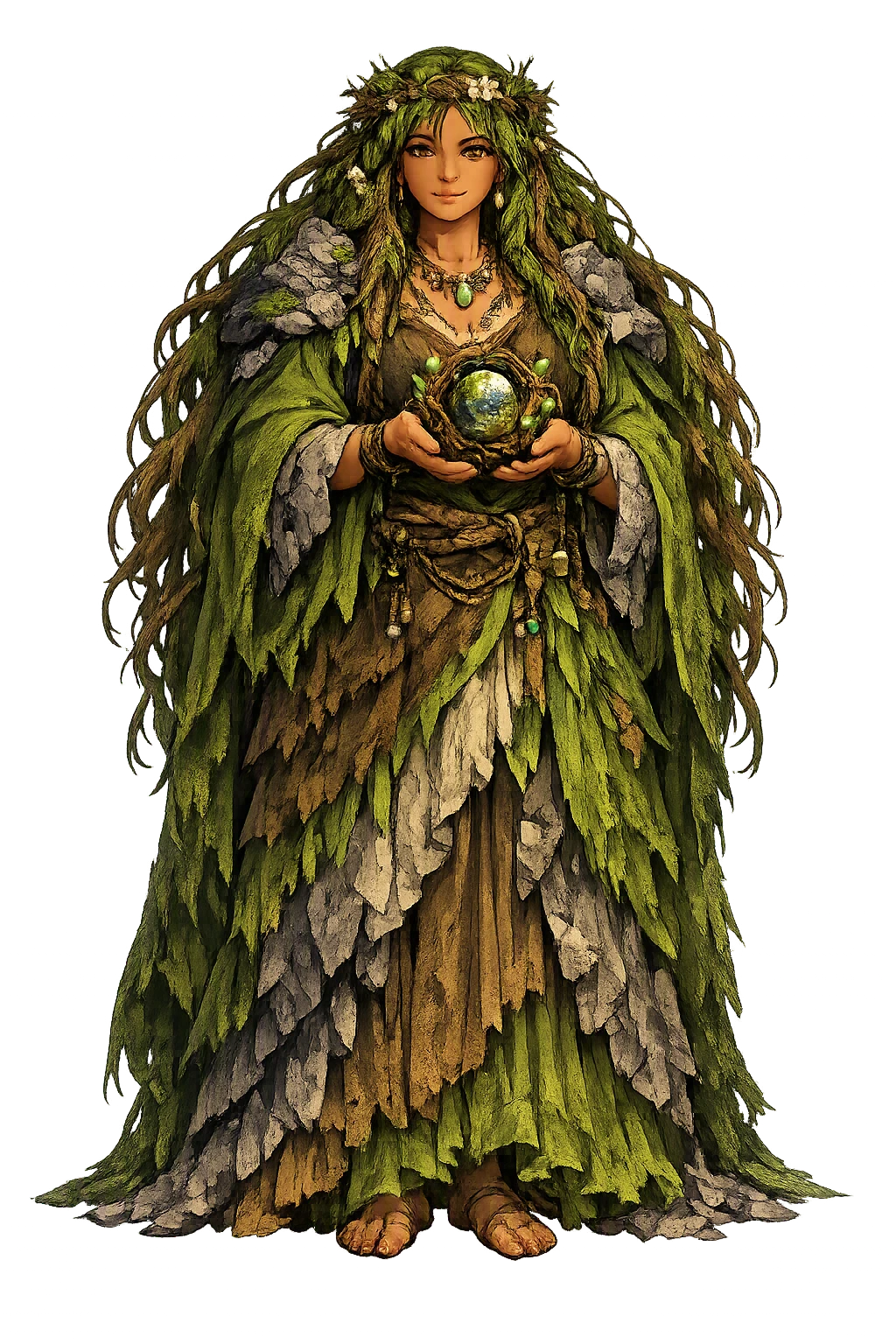
Fjǫrgyn (fjorgyn) — Earth, Mother of Thor · the Earth beneath the Storm — belongs to the Norse tradition, where she is catalogued under the domain "Earth, Mother of Thor". The name means "Earth (Fjǫrgyn)".
Fjǫrgyn is one of the names of the Norse earth-goddess and the mother of Þórr by Óðinn. In the Poetic Edda the name appears in the formulaic kenning 'Fjǫrgyn's son' for the thunder-god, and Snorri explicitly identifies her with Jǫrð, the personified earth. The name is therefore both a theonym and a poetic word for the land itself: the solid ground that receives the sky's rain and that shudders when her son rides across it.
PuniCodex restores the name as Fjǫrgyn and serves its temple at fjǫrgyn.com. The restoration preserves the ǫ (o with ogonek) that the ASCII form loses, and exactly one historically valid Unicode restoration exists, which places the name in Tier 1. The plain ASCII form fjorgyn survives as a modern convenience imposed by the early domain-name system; the restoration, not the fallback, is the form the project defends as philologically complete.
The Name
The name is attested in Old Norse as Fjǫrgyn. Etymologically it means "Earth (Fjǫrgyn)". The origin of the name is debated. Some scholars connect it with a Proto-Germanic word for 'mountain' or 'rocky earth' (berg- / fjerg-); others see it as a feminine derivative related to words for 'life force' or 'fertility'. In skaldic usage it is primarily a poetic name for the earth and a periphrasis for the mother of Þórr.
The ASCII form fjorgyn survives only because the early domain-name system could not carry diacritics; it is a technological compromise, not an ancient spelling. The Unicode restoration Fjǫrgyn recovers the ǫ (o with ogonek) directly in the address bar. The original carries a distinctive vowel letter, and exactly one historically valid Unicode restoration exists, which places the name in Tier 1.
The letter-by-letter transformation runs:
- f → F — Same, capitalized
- j → j — Same
- o → ǫ — O with ogonek: nasalized vowel
- r → r — Same
- g → g — Same
- y → y — Same
- n → n — Same
The project holds the domain fjǫrgyn.com as the canonical home of this name.
Etymology & Roots
The recorded derivation reads: Old Norse Fjǫrgyn, byname of Jǫrð and mother of Thor; related to Proto-Germanic *fergunja "mountain, woodland".
The reconstructed proto-form is *fergunja (proto-germanic), glossed as "mountain, wood, earth".
The reconstruction is classed as attested.
The Original Script
The name is preserved in medieval Icelandic manuscripts in the Latin alphabet as Fjǫrgyn — Old Norse (North Germanic), attested 13th–14th c. CE in the Codex Regius of the Poetic Edda and the codices of Snorri's Edda, recording material centuries older. Before the Latin bookhand, Old Norse names were carved in the Younger Futhark; no runic attestation of this specific name survives, though the word for earth or mountain may appear in place-names and kennings.
The scholarly rendering proceeds step by step:
- The normalized Old Norse spelling uses ǫ (o with ogonek) for the nasalized back rounded vowel.
- The final -yn sequence retains the y as a close front rounded vowel.
- In the Younger Futhark the name would have been carved approximately ᚠᛁᚢᚱᚴᚢᚾ, although the exact runic spelling is hypothetical.
- The Unicode form Fjǫrgyn is a scholarly normalization that distinguishes the Norse vowel quality from the plain ASCII form.
Pronunciation
The reconstructed pronunciation of the name is /ˈfjɔr.gyn/ — Old Norse Reconstruction.
Phoneme by phoneme:
- Fj- — Voiceless labiodental fricative [f] plus palatal approximant [j]; the cluster begins the stressed syllable
- -ǫr- — The vowel [ɔ] rendered with ogonek, followed by an r-colored or plain alveolar trill [r]
- -gyn — Voiced velar stop [g] plus close front rounded [y] and alveolar nasal [n]
For the modern speaker, the closest approximation is: 'FYOR-gin' — the first syllable rhymes with a light 'fyore'; the final 'y' is like French 'u' or German 'ü'.
Kindred and historical forms of the name:
- Old Norse — Fjǫrgyn, poetic name for the earth and mother of Þórr
- Modern Icelandic — Fjörgin, in modernized orthography
- Related name — Jǫrð, identified with Fjǫrgyn in Snorri's prose
Fjǫrgyn is Tier 1 because the Norse form preserves the distinctive ǫ that ASCII loses. The restoration keeps that vowel visible in the domain name.
Mythology
Fjǫrgyn's mythology is inseparable from that of Jǫrð and of her son Þórr. She is not a figure of independent narrative but a name that concentrates the earth's motherhood and power.
In the Poetic Edda
Fjǫrgyn appears most often in kennings and formulae. In Lokasenna she is named as the mother of Þórr, and the skalds regularly call the thunder-god 'Fjǫrgyn's son' (Fjǫrgynjar sonr). The earth is also described as weeping or grieving — 'Fjǫrgyn's tears' — when it rains. These usages show that the name was a living poetic word for the land, not merely an archaic relic.
In Snorri's Prose Edda
Snorri states that Óðinn's son Þórr 'is the son of Jǫrð and of Fjǫrgyn', treating the two as the same figure or as parallel names for the earth-goddess. This identification clarifies the earlier poetic tradition, in which Fjǫrgyn functions as a theonym and Jǫrð as the common noun for earth. The prose thus preserves an older layer of vocabulary that the poems had already turned into poetry.
The Weeping Earth
The kenning 'Fjǫrgyn's tears' for rain is one of the most beautiful in the skaldic corpus. It makes the earth a grieving or tender mother whose tears water the fields, and it links meteorology to divine family feeling. The same image appears in other Germanic traditions, where the earth mourns or rejoices according to the season.
The Earth as Insult (Lokasenna 58)
In the flyting of Lokasenna, Loki turns on Sif and then on Þórr, boasting of his own encounters. Þórr threatens Loki, who answers mockingly. The poem earlier names Fjǫrgyn as Þórr's mother, making the thunder-god the son of the earth — a fitting parent for a deity whose realm is the storm above the fields.
Among the Earth-Kennings (Skáldskaparmál)
Snorri lists Fjǫrgyn among the names and kennings for the earth. She is 'Mother of Þórr,' 'Wife of Óðinn,' and 'Daughter of Annarr.' The prose tradition treats her as closely identified with Jǫrð, perhaps as a poetic byname or perhaps as a separate figure absorbed into the larger conception of the earth-goddess.
Life and Tree (Etymological speculation)
Scholars debate whether Fjǫrgyn derives from a root meaning "life" (fjor) or "tree" (fura, "fir"). Either etymology deepens her character: she is the living earth or the forested earth, the green substrate of the Norse cosmos. The masculine form Fjǫrgynn, applied to a giant or to Óðinn himself in some sources, suggests the name belongs to an old divine family of which the earth-goddess is one branch.
Symbols & Iconography
The iconography associated with Fjǫrgyn is the iconography of the earth itself:
- The mountain — her name may be related to words for rock and height, and she is the firm land beneath the sky
- The fertile field — the ploughed earth that receives seed and rain
- The oak or ash — trees rooted in her body, especially the world-tree Yggdrasil
- The thunder-stone — the connection to her son Þórr, whose hammer strikes the ground
- The river and well — waters rising from the earth and returning to it
- Oak or fir — The tree of life connected to her name and to Þórr's lightning
- The oath-ring or stone — The earth invoked as witness to binding vows
- Thor's hammer — The weapon of the son she bore to Óðinn
Archaeology & Evidence
No cult site, votive deposit, or named image of Fjǫrgyn is known. Her attestation is entirely literary, preserved in the Poetic Edda and in Snorri's Prose Edda. The relevant manuscripts are the Codex Regius of the Poetic Edda (GKS 2365 4to, c. 1270) and the principal codices of Snorri's Edda — the Codex Regius (GKS 2367 4to, early 14th c.), the Codex Wormianus, and the Uppsala Edda. The visual record is indirect: any image of the earth-mother or of Þórr's mother is more likely to be identified with Jǫrð than with Fjǫrgyn specifically.
Realm & Domain
Fjǫrgyn belongs to the Norse tradition as the earth-goddess and the mother of the thunder-god. Her domain is the fertile ground, the mountain, and the field that answers the storm with growth.
Earth
The name is used as a poetic synonym for the land itself, the foundation of all life.
Mother of Thor
She is one of the wives or names of Jǫrð, the mother of Þórr by Óðinn.
Fertility
As earth, she receives rain and seed and returns crops; her body is the source of abundance.
The Storm's Ground
When Þórr rides in his chariot, the earth shakes beneath him — a cosmic resonance between mother and son.
Lady of the Fir and Oak
Her name may connect to words for tree and life; she is the green force that supports the world-tree.
Earth Personified
Like Jǫrð, she is the land invoked in oaths and the ground that endures storm and war.
Witness of Oaths
Lokasenna invokes Fjǫrgyn as the earth beneath, the silent witness to sworn words.
Across Cultures
Fjǫrgyn has no direct foreign double; her comparative context is internal to Germanic and Indo-European earth-goddess traditions. The identification with Jǫrgyn places her beside other northern earth-mothers, and her role as mother of the thunder-god has parallels in the Greek pairing of Gaia and Zeus or the Vedic relation of Pṛthivī and Indra.
Within the PuniCodex Norse corpus, her closest kin are Jǫrð, Þórr, and Óðinn. Her name also resonates with Bestla and other giantesses who bridge the divine and chthonic lines.
Cultural Legacy
Fjǫrgyn survives in modern scholarship and in Heathen practice as one of the names of the Norse earth-goddess. The kenning 'Fjǫrgyn's tears' is still quoted as an example of skaldic delicacy, and the name appears in modern poetic and musical adaptations of Norse myth. Because she is identified with Jǫrð, her legacy overlaps with the broader modern reverence for the earth as a divine mother. The name is rare as a personal name but instantly recognizable to readers of the Eddas.
The Scholarly Record
The account of Fjǫrgyn given in this edition rests on the witnesses and reference works listed below. The Poetic Edda and Prose Edda supply the attestations; the dictionaries and handbooks secure the form, meaning, and usage of the name.
- Poetic Edda (Eddukvæði), ed. Neckel-Kuhn; trans. Carolyn Larrington, Oxford World's Classics (2014), 1270. Full text
- Snorri Sturluson, Prose Edda, Gylfaginning, trans. Anthony Faulkes, Everyman / Viking Society for Northern Research, 1220. Full text
- Cleasby, Richard, and Guðbrandur Vigfússon, An Icelandic-English Dictionary, 2nd ed. (Oxford: Clarendon Press, 1957), s.v. Fjǫrgyn.
- Zoëga, Geir T., A Concise Dictionary of Old Icelandic (Oxford: Clarendon Press, 1910).
- Simek, Rudolf, Dictionary of Northern Mythology, trans. Angela Hall (Cambridge: D. S. Brewer, 1993), s.v. Fjǫrgyn.
- Lindow, John, Norse Mythology: A Guide to the Gods, Heroes, Rituals, and Beliefs (Oxford University Press, 2001), s.v. Fjǫrgyn.
- Gordon, E. V., An Introduction to Old Norse, 2nd ed. rev. A. R. Taylor (Oxford: Clarendon Press, 1957).
A Meditation
Fjǫrgyn is the ground that holds the storm. She does not ride the thunderbolt; she receives it. In her the Norse imagination recognized that power and stability are not opposites but partners: the earth must be firm for the lightning to find its mark, and the rain that follows the thunder is her tears of relief. The restoration of her name in Unicode honors the old poetic intuition that the land is not dead matter but a mother who grieves, nourishes, and endures.
The Unicode Restoration
Fjǫrgyn is classified as Tier 1: the restoration preserves at least one distinctive feature — a diacritic or a distinctive letter — that the ASCII form loses. The ASCII fallback fjorgyn still resolves everywhere, but it is the restored form that carries the name's full information. Across the 7 characters of the name, the restoration adjusts 1: 1 further adjustment (ǫ). That is the whole thesis of this temple: the marks are the message.
Character by Character
The journey from fjorgyn to Fjǫrgyn, one character at a time:
- f → F — Same, capitalized
- j → j — Same
- o → ǫ — O with ogonek: nasalized vowel
- r → r — Same
- g → g — Same
- y → y — Same
- n → n — Same
The Domain Name
The restored name is live as a working domain: fjǫrgyn.com, which the DNS carries in punycode form as xn--fjrgyn-xcc.com — an ASCII-compatible encoding that lets a non-ASCII name travel the global network without breaking older infrastructure. The visitor sees Fjǫrgyn; the machines see the encoding. That duality is the engineering compromise on which the entire restoration rests, and it is why a name written the way its own tradition wrote it in Younger Futhark can now be typed into any browser on earth.
The Norse Pantheon
Fjǫrgyn is one of 101 entries the PuniCodex lexicon catalogues under the Norse pantheon. The Pantheon page gathers the tradition's major figures in one place, and the Lexicon lets you filter all 981 restorations by tradition, tier, or script — the fastest way to see where this name sits among its kin.
Frequently Asked Questions
What does Fjǫrgyn mean? The traditional gloss is "Earth (Fjǫrgyn)."
Which tradition does Fjǫrgyn belong to? Fjǫrgyn is catalogued in the Norse pantheon of the PuniCodex lexicon.
Why is Fjǫrgyn classified as Tier 1? Because the restoration preserves at least one distinctive feature — a diacritic or a distinctive letter — that the ASCII form loses — and the marks in the restored spelling preserve exactly that evidence.
Is Fjǫrgyn a working domain? Yes — fjǫrgyn.com resolves today and routes to this temple.
What is the punycode for fjǫrgyn.com? The DNS encoding is xn--fjrgyn-xcc.com; browsers perform the translation automatically, so visitors only ever see the restored name.
Can I use Fjǫrgyn in a normal browser? Yes. The DNS resolves the punycode form automatically, and the type tool on this site converts fjorgyn to Fjǫrgyn for copying and pasting.
Where does the scholarly information come from? The entry is built from lexica, inscriptional evidence, and reviewed scholarly sources listed in the Scholarly Edition. Every claim is traceable to a canonical source.
Why This Restoration Matters
Pronunciation turns out to be the heart of the matter. The marks in Fjǫrgyn are instructions for the voice, and a web that strips them is a web that mispronounces the past at scale. The restoration hands the instructions back: say it as the evidence suggests, type it as the tradition wrote it, and let the punycode machinery do the quiet translation in between. That is all the PuniCodex project asks of the infrastructure — and everything it asks of you, the reader, is to use the whole name.
Explore Further
This post is one doorway into the temple. The home page carries the full character breakdown and the ambient canvas; the lore page tells the myths in long form; the Scholarly Edition preserves the sources, pronunciation data, and revision history; and the patron wall supports the restoration directly. For the wider map, browse the Lexicon, explore the Pantheon, or return to the PuniCodex blog.
Related Names
Sources
The full scholarly apparatus — every citation, revision, and review — lives in the Scholarly Edition. Key references for this post:
- Poetic Edda (Eddukvæði), ed. Neckel-Kuhn; trans. Carolyn Larrington, Oxford World's Classics (2014), 1270.
- Snorri Sturluson, Prose Edda, Gylfaginning, trans. Anthony Faulkes, Everyman / Viking Society for Northern Research, 1220.
- Cleasby, Richard, and Guðbrandur Vigfússon, An Icelandic-English Dictionary, 2nd ed. (Oxford: Clarendon Press, 1957), s.v. Fjǫrgyn.
- Poetic Edda (Eddukvæði), ed. Neckel-Kuhn; trans. Carolyn Larrington, Oxford World's Classics (2014).
- Cleasby & Vigfússon, An Icelandic-English Dictionary, 2nd ed., s.v. Fjǫrgyn.
- Gordon, E. V., An Introduction to Old Norse, 2nd ed. rev. A. R. Taylor (Oxford: Clarendon Press, 1957), phonology and grammar.
- Lexicon authorities for this entry: Poetic Edda, Prose Edda, Cleasby-Vigfusson.