
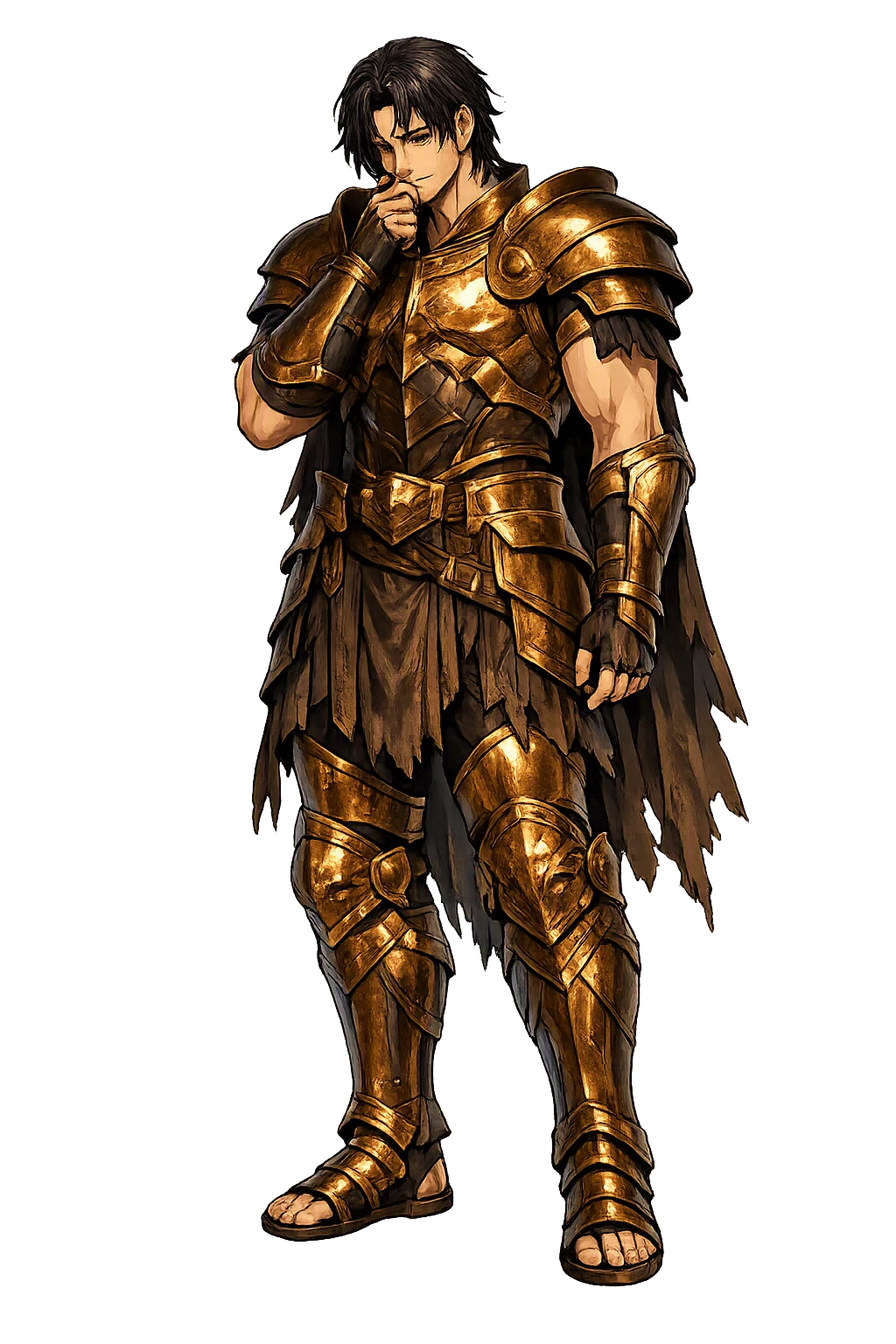
Why Epimētheús belongs in your address bar
Every address bar is a choice. When you type Epimētheús, you are not typing a novelty; you are restoring a name that the early DNS, built for English typewriters, could not carry. The plain ASCII form epimetheus is a leftover of that constraint, not the name itself. This post is the long version of the restoration: where the name comes from, how the Greek tradition wrote it, how it is pronounced, what the myths and the material record preserve, and why its Unicode form now lives as a working domain. The claim throughout is simple — the original spelling is not decoration. It is the name.
At a Glance
- Restored name: Epimētheús
- ASCII form: epimetheus
- Meaning: "Afterthinker (from ἐπί + μῆτις)"
- Domain of influence: Afterthought, Hindsight
- Pantheon: Greek
- Restoration: Preserves stress & vowel length
- Original script: Ἐπιμηθεύς (Greek)
- Live domain: epimētheús.com
Overview
Epimētheus (epimetheus) — Afterthought, Hindsight · the Late-foreseeing Titan — belongs to the Greek tradition, where he is catalogued under the domain "Afterthought, Hindsight". The name means "Afterthinker" (from ἐπί + μῆτις).
Epimētheus is the brother of Promētheus, the Titan whose name means Forethought. Where his brother shaped humanity from clay and stole fire for its sake, Epimētheus distributed the gifts and powers among the animals, leaving humankind naked and defenseless. His role in the myth is not villainy but tragic timing: he acts only after the decisive moment has passed. The best-known episode is his acceptance of Pandora — the "all-gifted" woman fashioned by the gods as punishment for Promētheus's theft — and the opening of the jar that released sorrow into the world.
PuniCodex restores the name as Epimētheus and serves its temple at epimētheus.com. The restoration preserves the long vowel η that the ASCII form flattens, and exactly one historically valid Unicode restoration exists. The plain ASCII form epimetheus survives as a modern convenience imposed by the early domain-name system; the restoration, not the fallback, is the form the project defends as philologically complete.
The Name
The name is attested in Greek as Ἐπιμηθεύς. Etymologically it means "Afterthinker" (from ἐπί + μῆτις). The compound joins ἐπί-, 'after', with μῆτις, 'counsel, wisdom, forethought'; the result is not merely 'foolish' but 'he who thinks afterwards'.
Cognate forms across related languages:
- Promētheus — his brother, Forethought, forming a paired opposition
- Mêtis — counsel personified, swallowed by Zeus in Hesiod's Theogony
The ASCII form epimetheus survives only because the early domain-name system could not carry diacritics; it is a technological compromise, not an ancient spelling. The Unicode restoration Epimētheus recovers the long vowel η directly in the address bar. The original carries vowel length, and exactly one historically valid Unicode restoration exists.
The letter-by-letter transformation runs:
- e → E — Epsilon, capitalized
- p → p — Pi
- i → i — Iota
- m → m — Mu
- e → ē — Eta: long e
- t → t — Tau
- h → h — Theta aspiration marker
- e → e — Epsilon
- u → u — Upsilon
- s → s — Sigma
The project holds the domain epimētheus.com as the canonical home of this name.
The Original Script
The name is preserved in Greek as Ἐπιμηθεύς — Greek alphabet (Classical / Attic), attested Ancient Greek, c. 8th century BCE – present, in Greece and the Greek-speaking Mediterranean. The script is written left-to-right.
The scholarly transliteration is Epimētheus (Greek alphabet with length marks), giving the normalized reading /e.pi.mɛː.tʰeús/.
The rendering proceeds step by step:
- The Greek form Ἐπιμηθεύς is written in the Classical Greek alphabet.
- The initial epsilon carries a rough breathing mark, here represented by the capital spiritus asper.
- The eta (η) marks a long vowel, a feature lost in the plain ASCII form.
- The theta (θ) is an aspirated stop, distinct from the unaspirated tau.
- The Unicode restoration Epimētheus encodes the scholarly spelling as a registrable domain name, preserving the long eta that the ASCII form flattens.
Pronunciation
The reconstructed pronunciation of the name is /e.pi.mɛː.tʰeús/ — Attic Greek Reconstruction.
Phoneme by phoneme:
- E- — Short epsilon [e], the prefix ἐπί- with its final vowel elided before the following pi
- -pi- — Unaspirated pi [p], the voiceless bilabial stop
- -mē- — Long eta [ɛː], the stressed nucleus of the name, carrying the meaning 'thought'
- -the- — Aspirated theta [tʰ], the voiceless dental stop with rough breathing
- -us — The nominative ending [-eús], a long diphthong with acute pitch on the final syllable
For the modern speaker, the closest approximation is: 'eh-pee-MAY-theyoos' — the long 'ay' of the third syllable is the feature the ASCII form erases.
Kindred and historical forms of the name:
- Greek — Ἐπιμηθεύς, the classical Attic form
- Latin — Epimetheus, borrowed into Roman poetry and prose without change of spelling
Epimētheus preserves both features because the Greek Ἐπιμηθεύς preserves the long vowel η that ASCII loses. The restoration keeps that length visible in the domain name itself.
Mythology
Epimētheus appears in three principal texts, each of which makes him the embodiment of a different kind of after-the-fact knowledge.
The Theogony (Hesiod)
Hesiod introduces Epimētheus as the son of the Titan Iapetos and the Oceanid Clymene, brother of Atlas, Menoetius, and Promētheus. He is the one who "first received from Zeus the all-gifted" bride, Pandora, fashioned by Hephaestus and Athena at the gods' command. The marriage is the mechanism by which the jar of sorrows reaches mankind.
Works and Days (Hesiod)
The fuller account places Epimētheus at the center of the myth of the ages. Promētheus, having stolen fire and deceived Zeus, warns his brother never to accept a gift from the Olympians. Epimētheus forgets the warning — or acts too late — and takes Pandora. When she opens the jar, the earth and sea are filled with diseases, toil, and grief; only Elpis, Hope, remains inside. The story is an aetiology for why human life is laborious and why hope is both a comfort and a deferred promise.
Plato's Protagoras
Plato gives Epimētheus a more philosophical role. The gods charge Promētheus and Epimētheus with equipping mortal creatures with the powers they need to survive. Epimētheus asks to distribute the gifts and does so lavishly but unwisely: strength, speed, wings, fur, and claws go to the animals, and nothing is left for human beings. Promētheus must then steal fire and the arts from Athena and Hephaestus to make up the lack. The dialogue thus makes Epimētheus the reason human beings are technologically dependent — and politically gifted — rather than naturally equipped.
In all three versions, Epimētheus is not evil; he is the one who realizes too late. His myth is a meditation on the cost of acting without foresight and on the irreversibility of certain choices.
The Brother Given the Job (The Task)
In Plato's Protagoras (320c-322d), the gods mold mortal creatures from earth and fire and assign Promētheus and Epimētheus the job of equipping each kind with its powers: Epimētheus persuades his brother to let him distribute, while Promētheus inspects. Epimētheus — true to his name — hands out strength, speed, claws, hides, wings, and hooves until every species is protected; then he looks at the naked human being, 'still unprovided with its portion,' and realizes the stock is spent. Promētheus must steal fire and the mechanical arts from Athena and Hephaestus to keep the bare, shoeless, unbedded creature alive. The myth defines the human being by an original clerical error: we are the species whose equipment ran out, and whose survival has depended ever since on borrowed fire and compensating craft.
Take Nothing From Zeus (The Warning)
After Zeus had Promētheus bound for the theft of fire, he devised a second punishment: the fashioned Pandora, sent to earth with a great storage-jar as her dowry. Hesiod's Works and Days (83-89) records the crucial detail — 'before this' Promētheus had warned his brother never to accept a gift from Olympian Zeus, but to send it back, 'so that no evil come to mortals.' Epimētheus heard the warning and forgot it in the moment it mattered: 'he took the evil, and only when he had it perceived the evil.' Apollodorus (Library 1.7.2) compresses the same scene. The myth is a miniature anatomy of hindsight: the warning exists, it is known, it is even repeated — and it is useless one heartbeat after the door opens. Every later retelling, from Apollodorus to the modern proverb about gifts from above, is a footnote to that single line of Hesiod's.
All the Evils Fly Out (The Jar)
Hesiod tells the rest with terrible economy (Works and Days 90-105). Epimētheus lifted the lid of the great jar — a pithos, not the later 'box' — and out flew the thousand sorrows that wander among mortals: toil, disease, old age, famine, every bane that had never before touched the human day, for before Pandora 'the tribes of men lived on earth free from ills... without the evil diseases that bring death.' Only Hope — Elpis — stayed inside, caught beneath the rim, because Pandora replaced the lid 'by the plans of aegis-bearing Zeus,' Hesiod adds, darkly, before the hope can console. The myth refuses to say whether hope remaining is mercy or the last cruelty: the one blessing left is also the one still sealed away, and Hesiod will not resolve it for us.
Symbols & Iconography
Epimētheus has no fixed iconographic program in surviving art, but the myths cluster around a small set of symbolic objects:
- The empty jar — Pandora's pithos, the storage vessel from which the ills of life escape; in some retellings hope (elpis) remains behind
- Fire — the stolen gift his brother gave to mortals, and the reason Zeus sends Pandora
- The yoked pair — Epimētheus and Promētheus as the twin halves of human foresight: one looking before, one looking after
- The clay figure — humankind, left unprovisioned by the distribution of gifts
- The crown of thorns — an emblem of belated suffering, sometimes used in later allegorical depictions
No securely identified ancient image of Epimētheus is known. In vase painting and relief, the scenes that belong to his story are normally labeled by the more prominent figures: Pandora, Promētheus, or Hephaestus. The red-figure tradition shows Pandora rising from the earth or opening the jar, with a male figure sometimes identified as Epimētheus by context. The Neoclassical period, fascinated by the Pandora story, occasionally included Epimētheus as the hesitant or astonished husband, but these are later interpretations rather than ancient iconographic types.
Epithets & Cult Titles
Epimētheus is not an object of cult and therefore carries no cult epithets. Ancient authors identify him by descriptive phrases rather than by fixed titles:
- Ὀψίφρων (opsiphron) — 'late-thinking' or 'after-minded', a gloss on his name in scholia and lexica
- Ἀδελφὸς Προμηθέως — 'brother of Promētheus', his most common identifier
- Ὁ τὴν Πανδώραν δεξάμενος — 'he who received Pandora', the role that defines him in myth
- Τιταν — simply 'Titan', marking his generation among the pre-Olympian gods
The Homeric Hymns
No Homeric Hymn is addressed to Epimētheus. He appears instead as a background figure in the larger mythology of Promētheus and Pandora, a story that Hesiod tells more fully than any hymn. The absence of a hymn is itself significant: Epimētheus was not a cult recipient but a mythic type, the late-seeing one whose role was to complete a moral narrative rather than to receive prayer. The Homeric Hymn to Hephaestus and the Hymn to Athena allude to the crafts that produced Pandora — fire, metallurgy, weaving — but do not name Epimētheus as the recipient of the result.
Oracle Sites & Sanctuaries
Epimētheus had no oracle, sanctuary, or prophetic seat in the Greek world. He was not a recipient of cult worship and therefore generated no oracular institution. His "oracles" are the warnings he failed to heed — the counsel of Promētheus not to accept gifts from Zeus — and the bitter knowledge released from Pandora's jar. The places associated with his story are instead the settings of the Promētheus myth: the Caucasus where his brother was bound, and the human households into which Pandora entered.
Archaeology & Evidence
No temple, cult site, or securely identified votive object dedicated to Epimētheus is known. His attestation is entirely literary, confined to the Hesiodic poems, Plato's dialogue, and the mythographic tradition that depends on them. The relevant manuscripts are the medieval codices of Hesiod — principally the Laurentianus 32.16 (10th c. CE) for the Theogony and the miscellaneous papyri and codices preserving Works and Days — and the medieval and Renaissance manuscripts of Plato's Protagoras. The visual record is indirect: vase paintings of Pandora and of Promētheus's punishment sometimes allude to the brother's story but do not name Epimētheus.
Realm & Domain
Epimētheus belongs to the Greek tradition, where he is associated with afterthought, hindsight, and the belated recognition of consequences. His domain is not a cult or craft but a structural position in the mythology of human origins: the moment after the decisive act, when understanding arrives too late.
Afterthought
His name defines the domain. Where his brother Promētheus plans before the fact, Epimētheus understands only afterward.
Hindsight
The modern English word captures his mythic role: wisdom that follows the event rather than preventing it.
Distribution of Gifts
In Plato's Protagoras, Epimētheus is the one who hands out the powers — speed to the hare, strength to the lion, wings to birds — and finds nothing left for humankind.
The Reception of Pandora
His marriage to Pandṓra is the act that lets sorrow into the human world. Hesiod makes it the punishment for Promētheus's theft of fire.
Across Cultures
Epimētheus has no direct Roman counterpart; Latin poets and mythographers retain the Greek name. His significance lies in the paired opposition with his brother Promētheus, a structure that influenced later allegory, philosophy, and psychology. The pairing of Forethought and Afterthought can be read as an early typology of human cognition, and Renaissance emblem books sometimes used the brothers to illustrate the contrast between prudentia and imprudentia. In modern reception, Epimētheus has become a figure for belated ecological awareness and unintended consequences — the one who opens the jar before understanding what it contains.
Kindred figures in the PuniCodex cross-tradition index include Promētheus, Pandṓra, and Promētheus, linked through the mythology of fire, gifts, and human origin.
Cultural Legacy
Epimētheus has never been a major figure in popular culture, but the concept he embodies — acting too late, realizing consequences after the fact — has proved durable. His name surfaces in philosophy and ethics as a counter to Promēthean foresight, and in modern environmental and technological discourse he stands for the unanticipated side effects of human invention. The story of Pandora's jar, mediated through his acceptance of the gift, remains one of the most retold Greek myths in Western education and art. In psychological and organizational theory, the 'Epimethean' moment is the post-hoc review, the audit, and the lesson learned — necessary precisely because foresight failed.
The Scholarly Record
The account of Epimētheus given in this edition rests on the witnesses and reference works listed below. The Hesiodic poems supply the canonical narrative; Plato gives the philosophical amplification; lexica and etymological dictionaries secure the form and meaning of the name.
- Hesiod, Theogony 507–616. Full text
- Hesiod, Works and Days 42–105.
- Plato, Protagoras 320c–322d.
- Liddell-Scott-Jones Greek-English Lexicon, 9th ed. with 1996 supplement, 1843. Full text
- Beekes, Etymological Dictionary of Greek, 2 vols., Brill, 2010.
- Allen, Vox Graeca: The Pronunciation of Classical Greek, 3rd ed., Cambridge, 1987.
- Vernant, Jean-Pierre, Myth and Society in Ancient Greece.
- Panofsky, Dora and Erwin, Pandora's Box: The Changing Aspects of a Mythical Symbol.
A Meditation
Epimētheus is the god of the second thought — the one that arrives after the jar is open, after the gift is accepted, after the fire has been stolen. He is not a villain but a warning: that intelligence is not evenly distributed across time, and that the moment of understanding and the moment of action do not always coincide. In a culture obsessed with proactivity, Epimētheus asks us to honor the wisdom that comes late: the autopsy, the review, the honest admission that we did not see what was coming. The restoration of his name in Unicode is a small act of recognition for all the afterthoughts on which human survival depends.
The Unicode Restoration
Epimētheús preserves stress & vowel length. The ASCII fallback epimetheus still resolves everywhere, but it is the restored form that carries the name's full information. Across the 10 characters of the name, the restoration adjusts 2: 1 mark of stress (ú); 1 mark of length (ē). That is the whole thesis of this temple: the marks are the message.
The Domain Name
The restored name is live as a working domain: epimētheús.com, which the DNS carries in punycode form as xn--epimthes-u5a0w.com — an ASCII-compatible encoding that lets a non-ASCII name travel the global network without breaking older infrastructure. The visitor sees Epimētheús; the machines see the encoding. That duality is the engineering compromise on which the entire restoration rests, and it is why a name written the way its own tradition wrote it in Greek can now be typed into any browser on earth.
Why This Restoration Matters
Restoring Epimētheús is part of a larger effort to make the web multilingual by default. The PuniCodex project does not ask users to learn a new alphabet; it asks the infrastructure to respect the alphabets that already exist. Every section of this post — the script, the sound, the myths, the evidence — converges on the same point: the marks in Epimētheús are information, and information deserves an address of its own. A single Unicode domain is a small proof, but it is a proof that scales: every name restored makes the next one easier, and every visit to epimētheús.com is a vote for the restored form.
Explore Further
This post is one doorway into the temple. The home page carries the full character breakdown and the ambient canvas; the lore page tells the myths in long form; the Scholarly Edition preserves the sources, pronunciation data, and revision history; and the patron wall supports the restoration directly. For the wider map, browse the Lexicon, explore the Pantheon, or return to the PuniCodex blog.
Related Names
Sources
The full scholarly apparatus — every citation, revision, and review — lives in the Scholarly Edition. Key references for this post:
- Hesiod, Theogony 507–616 and Works and Days 42–105.
- Liddell-Scott-Jones Greek-English Lexicon, 9th ed. with 1996 supplement, 1843.
- Hesiod, Works and Days, trans. M. L. West, Oxford World's Classics (1988).
- Beekes, Etymological Dictionary of Greek, 2 vols., Brill, 2010.
- Liddell-Scott-Jones Greek-English Lexicon, 9th ed. with 1996 supplement, 1843.
- Allen, Vox Graeca: The Pronunciation of Classical Greek, 3rd ed., Cambridge, 1987.
- Lexicon authorities for this entry: LSJ, Pape-Benseler, Beekes.