
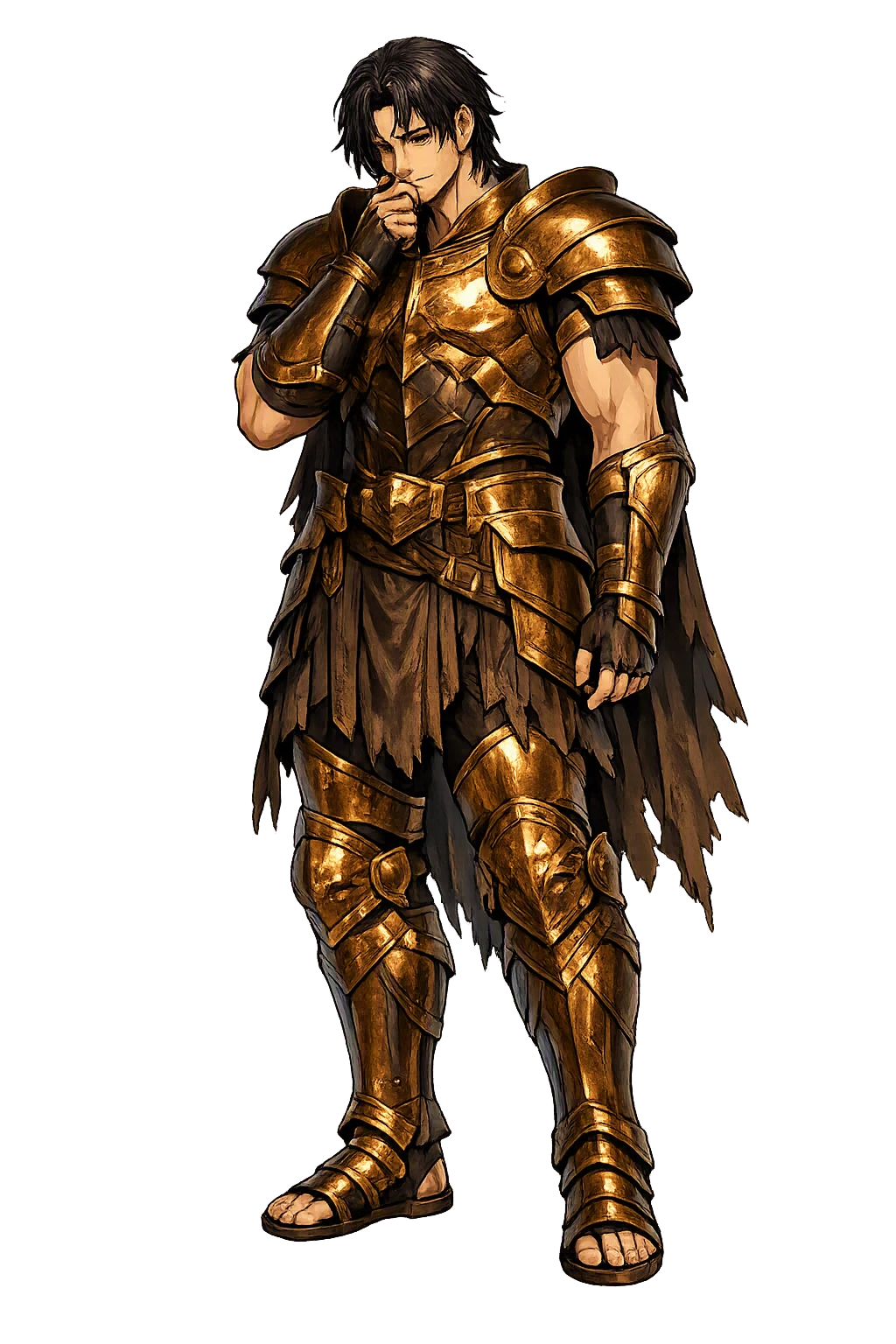
Epimētheús — the one true spelling, and the forms that fail it
The internet spells Epimētheús more ways than one, and only one of them is the name the sources wrote. This is the register's ruling — canonical, fallback, contested, and false, each in its proper place.
At a Glance
- Canonical form: Epimētheús
- Original script: Ἐπιμηθεύς
- Pantheon: Greek
- Convention: the restored-stress convention: acute and circumflex for pitch, macrons for vowel quantity, exactly as the sources write
- False forms on record: 5
- Contested forms: none attested
- Series: The Canonical Register, No. 147 of 548
The Canonical Form
The name is attested as Ἐπιμηθεύς, in the attestation Hesiod, Theogony 507-616 (Epimētheus, Promētheus, and the deception at Mekonē) and Hesiod, Works and Days 42-105 (Pandora and the jar of evils) give us. On the evidence, it means "Afterthinker (from ἐπί + μῆτις)". The canonical transliteration is Epimētheús.
Every mark is evidence, and every piece of evidence is checkable:
- e → ē — Eta: long epsilon: the vowel length, as the sources give it.
- u → ú — Upsilon with acute: stress falls on final syllable: the stress position, as the sources give it.
Where the Flattened Form Stands
The plain form epimetheus is not false — it is a fallback, and the register is exact about what that means. In systems that cannot carry diacritics (legacy databases, older tooling, parts of the address-bar pipeline) the flattened form is the accepted vehicle, and the rulebook names it explicitly as the final rung of the fallback hierarchy: full restoration first, circumflex where attested, macron-only by the academic standard, an attested variant, and only then plain ASCII.
What the fallback status forbids is promotion: epimetheus may carry the name where marks are impossible, but it may not represent the name where marks are possible. Every mark it drops — e → ē, u → ú — is a fact the sources recorded. A fallback is a vehicle, never the primary.
The Register of False Forms
False form 1: É́pimētheús
Origin: the English ear — English speakers slam the first syllable of every borrowed name (DEL-fi, MY-cene), so the accent drifts forward online.
Violation: moves the stress from u (where the Greek puts it) to E — a different word with a different rhythm; the sources stress u and nothing else.
False form 2: Epimetheús
Origin: the half-restoration — well-meaning posts that keep the accent because it looks Greek and drop the macron because it looks optional.
Violation: drops the vowel length on e → ē: the quantity is as attested as the accent (Eta: long epsilon), and without it the meter of the name collapses.
False form 3: Epīmetheús
Origin: macron roulette — pages that know a long vowel exists somewhere in the name and plant the bar on the wrong one.
Violation: lengthens i when the attested long vowel is e (Eta: long epsilon); moving the bar is not a small error — it asserts a different Greek word.
False form 4: Epimētheûs
Origin: the circumflex habit — writers who learned that "the little hat means Greek" and apply it wherever an acute belongs.
Violation: the source carries an acute (oxeia, a rising tone), not a circumflex (perispomene, a rise-fall): the two marks are different facts about pitch, and only the acute is attested on u.
False form 5: epimeteus
Origin: the anglicized respelling — the name written the way English guesses it sounds.
Violation: rewrites the consonants of the attested form to fit English spelling habits; every cluster simplified this way erases a letter the sources write.
The Contested Forms
No alternate form of this name carries documented scholarly support in the lexicon's record. The convention here — the restored-stress convention: acute and circumflex for pitch, macrons for vowel quantity, exactly as the sources write — produces exactly one defensible transliteration: Epimētheús. Forms that differ from it are not contested; they are simply wrong.
Why These Marks Exist at All
Greek diacritics are a preservation technology. The acute marks pitch rising; the circumflex marks pitch rising and falling; the macron marks time — how long the vowel is held. The first two were invented by Hellenistic scholars to save the accent as speech flattened; the last matters because Greek meter is built from long and short syllables the way music is built from beats. A transliteration that keeps these is not "decorated" — it is the difference between the name as evidence and the name as guesswork. This register holds to the restored-stress convention because it is the convention that keeps the evidence.
What the Address Bar Allows
IDNA 2008 permits the letters these restorations use — macrons, acutes, underdots, thorn, ogonek, the lot — and the DNS carries them as punycode (`xn--` labels). Two honest constraints remain. First, registrar inventory: the protocol permits a character; the registrar's stock decides whether the exact domain can be bought today. Second, combined marks: forms like Apṓllōn (acute stacked on a macron) are philologically ideal yet effectively untypeable on phones and unsupported across much of the registration system.
That is why the rulebook keeps a fallback hierarchy — full restoration first, then the circumflex when the source carries one, then the macron-only academic standard, then an attested variant, and only as a last resort the plain ASCII form. Every step down the ladder is still defensible; nothing on the ladder is a wrong mark. A fallback is a choice among attested forms. A false form is not on the ladder at all.
Where the Name Stood First
Epimetheus is a purely textual figure: no sanctuary, cult image, or votive inscription names him. His witnesses are the manuscripts of Hesiod and Plato, the Attic ceramic tradition that depicts Pandora and the jar, and the long afterlife of the myth in Western literature and philosophy. His absence from the archaeological record is itself informative — the Greeks personified hindsight in words, not in cult. The temple on the web is the newest of these addresses — the first one that fits in a pocket.
The Verdict
The register rules for Epimētheús, and the ruling is checkable: every mark sourced, every violation stated, every borderline form given its honest standing. epimetheus is the sanctioned fallback for systems without marks — a vehicle, never the scholarly primary. Anything else in circulation has its origin and its failure recorded above. That is the whole of the law on this name — and the temple at /epimetheus/ enforces it.
The docket for this ruling: 5 false forms ruled against, É́pimētheús first on the docket; 2 preserved marks verified: e → ē, u → ú; no contested forms attested; the attestation rests on 6 cited sources — Hesiod, Theogony 507-616 (Epimētheus, Promētheus, and the deception at Mekonē), Hesiod, Works and Days 42-105 (Pandora and the jar of evils), Plato, Protagoras 320c-322d (the distribution of qualities and the origin of the arts).
The Register Continues
Entry 147 of 548 in the Canonical Register. Around it: the temple's founding dispatch, the Restoration File on the marks themselves, the Resonance File on the archetype at work, and the Rulebook behind all of it.
Continue the register — previous entry: Ēōs (read it) · next entry: Érebos (read it).
The Canonical Register is written from the same canonical record as the lexicon itself. If a false form is missing from this page, it is because the evidence does not support calling it false — or because we have not seen it yet. Show us, with a citation, and the register will answer.