
Enkidu: the stories first, then the spelling
Before the spelling, the story. Enkidu earns its restoration the old way — through what was actually told.
The Stories That Carry the Name
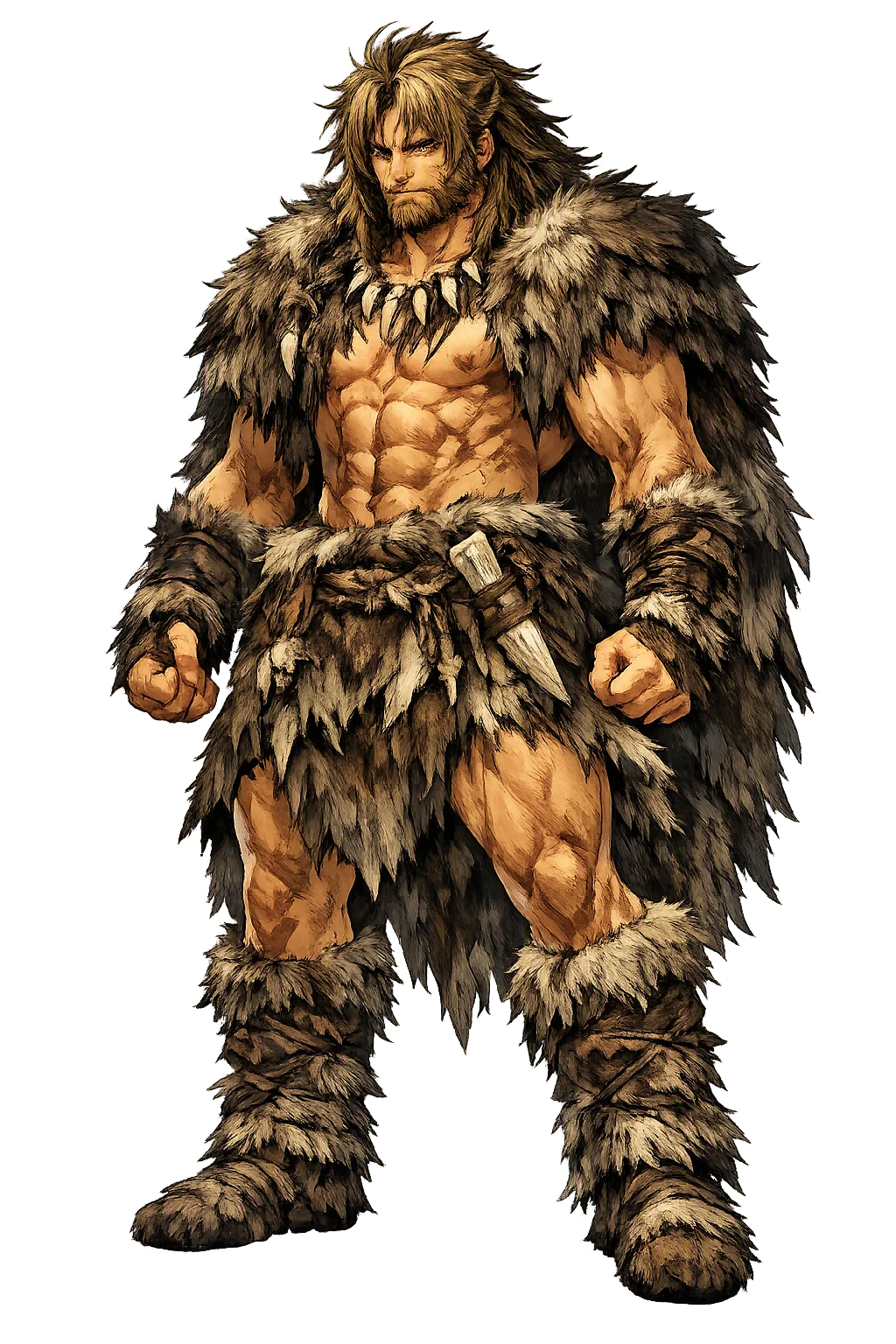
Fashioned from Clay by Aruru. When the people of Uruk cry out against Gilgamesh's tyranny, the gods instruct the birth-goddess Aruru to create a rival. She washes her hands, pinches off clay, and casts it into the steppe — and Enkidu is born, a wild man shaggy with hair, clothed in pelts like an animal, knowing neither people nor bread nor beer. He eats grass with the gazelles, jostles the beasts at the watering hole, and frees the game from the hunters' traps until a trapper, losing his livelihood, carries the complaint to Gilgamesh in Uruk (Epic of Gilgamesh, Tablet I; the older Sumerian cycle already knows him as Bilgames's companion, ETCSL 1.
Shamhat at the Watering Hole. Gilgamesh sends the temple-woman Shamhat to the watering hole. For six days and seven nights she lies with Enkidu in the reeds; afterward the gazelles bolt from him, and the wild beasts of the steppe flee his side — he has crossed out of nature and cannot return. She feeds him bread and strong drink, clothing his nakedness, and he becomes her pupil: speech, city ways, the wearing of garments.
The Wrestling Match. At the door of a bridal chamber Gilgamesh is about to exercise his royal right — to lie with a bride before the groom — when a stranger bars the way. They grapple in the street like two bulls, and the doorposts shatter under the force of it, until Gilgamesh throws the challenger and, breathless, stands over him. Enkidu yields with a sentence that turns the epic: 'There is no mother who bore me who can match your mother' — he acknowledges the king's greater lineage, and Gilgamesh, hearing it, embraces him as a brother (Tablet II).
And Here Is What the Spelling Preserves
At a Glance
- Restored name: Enkidu
- ASCII form: enkidu
- Meaning: "Lord of the pleasant place"
- Domain of influence: Wild Man, Hero
- Pantheon: Mesopotamian
- Classification: Tier 2
- Original script: 𒂗𒆠𒄭
- Series: The Restoration Files, No. 144 of 548
The Name Travels
Enkidu has no direct counterpart in later pantheons because he is not a god but a literary figure. Yet his type — the wild man civilized by love and friendship — recurs across cultures: the Greek Daphnis, the Roman Silvanus, medieval wild men of the woods, and the noble savage of Enlightenment thought.
The Address It Earned
The temple of Enkidu stands at /enkidu/ — lore, scholars, patterns — because a name carrying this much story deserves more than a parking page. One decisive feature survives — a single, honest mark — which places the restoration in Tier-2: exact, and exactly labeled.
The Sources Are Open
The myths above are retold from the temple's record; the primary voices are in the Sacred Texts: Enūma Eliš and The Epic of Gilgamesh. Nothing in this file outranks them.
The File Continues
Read the founding dispatch for the name's full story, the Resonance File for the archetype at work — or the whole archive in one sitting.
Continue the series — previous file: Ēl (read it here) · next file: Enlīl (read it here).
The Restoration Files are written from the same canonical record as the temples themselves: the lexicon, the lore catalog, the pattern atlas, and the cited scholarly sources. If a file ever disagrees with its temple, the temple is right — tell us, and the file will be corrected.