
The hidden history behind Enkidu
Behind the modern ASCII form enkidu hides a much longer story. Enkidu reaches back through manuscripts, inscriptions, and oral tradition long before it ever touched a keyboard, and every mark in the restored spelling is a receipt from that journey. In what follows we trace the name from its Cuneiform attestations through its mythology, its cult, its symbols, and its afterlife in other cultures — and we show how the PuniCodex project turned that philological record into a Unicode domain that resolves today. The history was never lost. It was only waiting for the infrastructure to catch up.
At a Glance
- Restored name: Enkidu
- ASCII form: enkidu
- Meaning: "Lord of the pleasant place"
- Domain of influence: Wild Man, Hero
- Pantheon: Mesopotamian
- Classification: Tier 2
- Original script: 𒂗𒆠𒄭 (Cuneiform)
Overview
Enkidu (enkidu) — Wild Man, Hero · Lord of the pleasant place — belongs to the Mesopotamian tradition, where it is catalogued under the domain "Wild Man, Hero". The name means "Lord of the pleasant place".
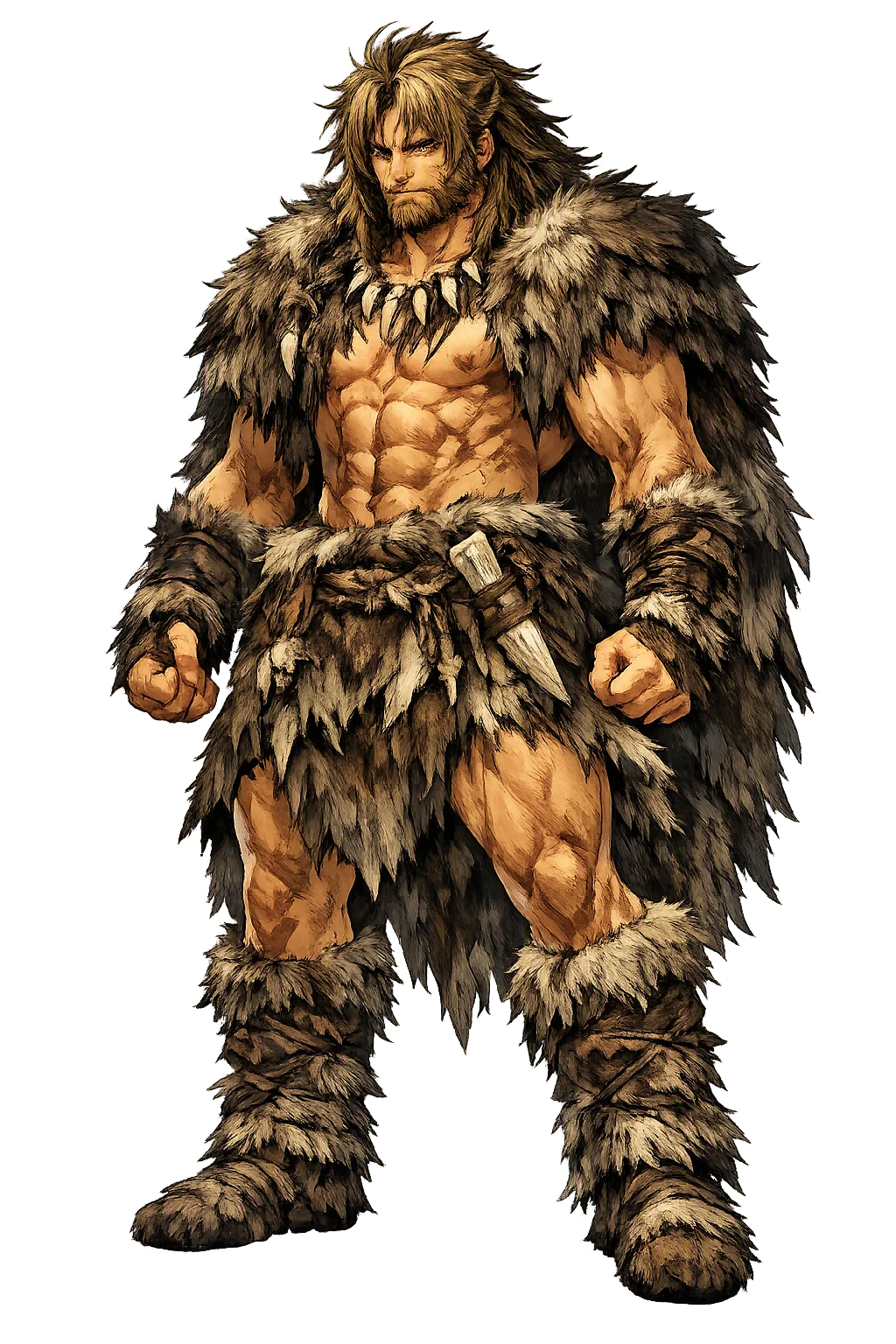
Enkidu is the man who began as a beast and became a brother. Molded from clay by the goddess Aruru, he ran with gazelles, drank at the watering hole, and broke the traps of the hunters until a woman taught him to be human. His friendship with Gilgamesh is the pivot on which the Mesopotamian epic turns: it transforms a tyrant into a seeker, and it ends with the first great lament for a dead friend in world literature.
PuniCodex restores the name as Enkidu and serves its temple at its temple. The restoration needs no distinctive letters or diacritics its ASCII form would lose, which places the name in Tier 2. The plain ASCII form enkidu survives as a modern convenience imposed by the early domain-name system; the restoration, not the fallback, is the form the project defends as philologically complete.
The Name
The name is attested in Cuneiform as 𒂗𒆠𒄭. Etymologically it means "Lord of the pleasant place".
The ASCII form enkidu survives only because the early domain-name system could not carry diacritics; it is a technological compromise, not an ancient spelling. The Unicode restoration Enkidu recovers the full diacritic detail of the scholarly transliteration directly in the address bar. The restoration needs no distinctive letters or diacritics its ASCII form would lose, which places the name in Tier 2.
The letter-by-letter transformation runs:
- e → E — Same, capitalized
- n → n — Same
- k → k — Same
- i → i — Same
- d → d — Same
- u → u — Same
The Original Script
The name is preserved in Cuneiform as 𒂗𒆠𒄭.
The scholarly transliteration is Enkidu.
The rendering proceeds step by step:
- 𒂗 (EN) = 'lord'
- 𒆠 (KI) = 'place, earth'
- 𒄭 (DU10) = 'good, pleasant'
- EN.KI.DU10 means 'lord of the good/pleasant place', the wild companion of Gilgamesh
The name is written in Sumerian cuneiform as 𒂗𒆠𒆕 (En-ki-du). Unlike Greek or Indic scripts, cuneiform does not encode vowel quality or stress in a way that yields a single registrable Unicode restoration. The standard Assyriological transliteration is Enkidu; variant forms include Enkimdu in some god-lists. PuniCodex therefore presents the name in plain Latin capitals, avoiding invented diacritics.
Pronunciation
The reconstructed pronunciation of the name is /ˈen.ki.du/ — Sumerian/Akkadian Reconstruction.
Phoneme by phoneme:
- En- — Short [e] plus nasal [n] — the Sumerian word for 'lord' (en), though its function here is disputed; some read it as part of a theophoric compound.
- -ki- — Voiceless velar stop [k] plus close front vowel [i]; the element is sometimes understood as 'place' (Sumerian ki) or as a meaningless syllable in an old name.
- -du — Voiced alveolar stop [d] plus close back rounded vowel [u]; the ending has been compared to Sumerian du 'to go' and to various onomastic patterns.
For the modern speaker, the closest approximation is: 'EN-kee-doo' — three light syllables with even stress; the name has no surviving pitch or length mark in the cuneiform sources.
Kindred and historical forms of the name:
- Sumerian — 𒂗𒆠𒆕 (Enkidu), the name of the wild companion in the earliest poems
- Akkadian (Standard Babylonian) — Enkidû, the form used in the twelve-tablet Epic of Gilgamesh
- Etymology — Traditional interpretation 'lord of the pleasant place' (en ki du) is now widely questioned; the name may be a pre-Sumerian or foreign theonym.
Enkidu is Tier 2: the canonical form preserves only the plain Latin alphabet with initial capitalization. The cuneiform source gives no reliable vowel length or distinctive phoneme that can be registered in Unicode, and no diacritic or special letter is philologically defensible for the primary restoration. The name is therefore presented in its simplest readable form.
Mythology
Enkidu's story is told in Sumerian poems and in the Standard Babylonian Epic of Gilgamesh. He is not a king or a god but the necessary other: the mirror in which Gilgamesh first sees himself, and the corpse that teaches him that no human life is endless.
Fashioned from Clay by Aruru (Creation)
When the people of Uruk cry out against Gilgamesh's tyranny, the gods instruct the birth-goddess Aruru to create a rival. She washes her hands, pinches off a lump of clay, and throws it into the wilderness. Thus Enkidu is born — a hairy wild man, covered with hair like an animal, ignorant of people and bread, drinking from the water-holes with the gazelles (Epic of Gilgamesh, Tablet I; cf. Sumerian Bilgames and the Netherworld, ETCSL 1.8.1.4).
Shamhat at the Watering Hole (Civilization)
A hunter sees Enkidu destroying his traps and complains to Gilgamesh. The king sends Shamhat, a temple prostitute of Ishtar, to tame him. For six days and seven nights she lies with him beside the watering hole; afterward the gazelles flee from him, and he learns to eat bread and drink beer. She dresses him in clothes, teaches him speech, and brings him to Uruk to meet Gilgamesh (Epic of Gilgamesh, Tablet I).
The Wrestling Match (Friendship)
At the door of a bridal chamber Gilgamesh is about to exercise his iḫtu — the royal right to sleep with a bride first — when Enkidu blocks his way. They grapple in the street like two bulls, shattering the doorposts, until Gilgamesh prevails. Instead of enmity, the fight begets friendship; they embrace as brothers and swear loyalty. The tyrant finds his equal, and the wild man finds his city (Epic of Gilgamesh, Tablet II).
The Cedar Forest and Humbaba (Adventure)
Gilgamesh proposes a journey to the Cedar Forest to slay Humbaba, the giant warden appointed by Enlil. Enkidu has lived there and warns of the danger, but he accompanies his friend. With the help of the sun-god Shamash's winds, they defeat Humbaba and fell the cedars. Enkidu urges Gilgamesh to kill the captive demon; the act wins them glory but seals their fate (Epic of Gilgamesh, Tablets III–V).
The Bull of Heaven (Hubris)
After Gilgamesh rejects the goddess Ishtar, she demands the Bull of Heaven from Anu to destroy Uruk. Enkidu and Gilgamesh kill the bull. Enkidu tears off its right thigh and throws it in Ishtar's face, shouting that he would do the same to her if he could lay hands on her. The gods assemble and decide that one of the two friends must die: Enkidu, the lesser, is chosen (Epic of Gilgamesh, Tablet VI).
The Dream of the House of Dust (Death)
Enkidu sickens for twelve days. In a dream he sees the underworld, the House of Dust, where the dead wear feathers like birds and sit in darkness. He curses the hunter and Shamhat who civilized him, then blesses Shamhat when Shamash reminds him that she gave him Gilgamesh. He dies in Gilgamesh's arms. His friend covers his face like a bride, heaps dust on his own head, and refuses for seven days to let the corpse be buried (Epic of Gilgamesh, Tablets VII–VIII).
Symbols & Iconography
The iconography associated with Enkidu concentrates in a small set of recurring attributes, each a compressed statement about the name:
- Clay body — His origin from the goddess's hands; humanity as shaped earth
- Animal pelts and long hair — The wild state before Shamhat's civilizing touch
- Watering hole — The place where wild and civilized meet; the site of his first seduction and first separation from nature
- Cedar door — The timber he and Gilgamesh bring from the Cedar Forest; victory and hubris together
- Bull's thigh — The insult Enkidu hurls at Ishtar after killing the Bull of Heaven
- Dust and silence — The House of Dust he sees in his death-dream, Mesopotamia's image of the underworld
Archaeology & Evidence
The Standard Babylonian Epic of Gilgamesh is preserved on tablets from Nineveh's Library of Ashurbanipal (British Museum K.3375 and related fragments), from Hattusa, Uruk, Sippar, and Babylon. Older Sumerian poems about Bilgames and his companion come from Nippur and Ur. Representations of the hero and his animal companion appear on cylinder seals and reliefs, though no image can be securely identified as Enkidu rather than another hairy hero or demon.
Realm & Domain
Enkidu is the man who began as a beast and became a brother. Molded from clay by the goddess Aruru, he ran with gazelles, drank at the watering hole, and broke the traps of the hunters until a woman taught him to be human. His friendship with Gilgamesh is the pivot on which the Mesopotamian epic turns: it transforms a tyrant into a seeker, and it ends with the first great lament for a dead friend in world literature.
The Wild Man
Born from clay and running with animals, he is the untamed self before language, bread, and law.
Friend and Brother
His bond with Gilgamesh is the epic's moral center; they fight, embrace, and never leave one another.
Guardian of the Cedar Forest
He fights beside Gilgamesh against Humbaba, the demon-warden of the sacred timber.
Mortality's Witness
His death — chosen by the gods as punishment — sets Gilgamesh on the quest for eternal life.
Across Cultures
Enkidu has no direct counterpart in later pantheons because he is not a god but a literary figure. Yet his type — the wild man civilized by love and friendship — recurs across cultures: the Greek Daphnis, the Roman Silvanus, medieval wild men of the woods, and the noble savage of Enlightenment thought. In the Epic he is sometimes read as Gilgamesh's alter ego or double, the instinctive self that the king must integrate. Some scholars compare him to the biblical Adam formed from dust, though the parallels are thematic rather than genetic.
Within the Mesopotamian tradition, closely related names in the corpus include Adad, Anû, Apsû, Aššur, Dumuzid, and Ēa.
Cultural Legacy
Enkidu is one of the oldest fully realized characters in literature. He gives the Epic of Gilgamesh its emotional engine: not the quest for immortality, but the love between two men and the grief of separation. In modern retellings — novels, films, comics, games, and role-playing settings — he appears as the wild companion, the voice of conscience, and the sacrifice whose death launches the hero's final trial. His trajectory from beast to beloved remains a template for stories about humanization, friendship, and loss.
The Scholarly Record
The account of Enkidu given in this edition rests on the witnesses and reference works listed below. Lexica and etymological dictionaries secure the form and meaning of the name; the literary and religious texts supply the narrative evidence.
- Epic of Gilgamesh (Standard Babylonian version, Tablets I–VIII). Full text
- ETCSL — Electronic Text Corpus of Sumerian Literature.
- CAD (Chicago Assyrian Dictionary).
- Black & Green, Gods, Demons and Symbols of Ancient Mesopotamia.
- George, The Babylonian Gilgamesh Epic: Introduction, Critical Edition and Cuneiform Texts.
- Foster, Before the Muses: An Anthology of Akkadian Literature.
- Jacobsen, The Treasures of Darkness.
- Tigay, The Evolution of the Gilgamesh Epic.
- Sumerian poem 'Bilgames and the Netherworld' (ETCSL 1.8.1.4).
- Sumerian poem 'Bilgames and Huwawa' / 'Gilgamesh and Humbaba' (ETCSL 1.8.1.5).
A Meditation
Enkidu asks what it costs to become human. Before Shamhat he is innocent but alone, speechless among his animals. After her he is clothed, fed, eloquent, and friend to a king — but also mortal, exiled from the watering hole, and sentenced to die for his loyalty. Civilization, the epic suggests, is bought with separation: from the wild, from the body, from the illusion that the gods will spare those we love.
His friendship with Gilgamesh is the rare bond in which each becomes more himself by becoming less alone. Gilgamesh learns humility because Enkidu stands up to him; Enkidu learns purpose because Gilgamesh calls him outward. Their love is not romantic in the surviving text, but it is absolute: the death of one unmakes the other's world. In that sense Enkidu is the first great witness to what grief does to a human heart.
The Unicode Restoration
Enkidu is classified as Tier 2: the restoration needs no distinctive letters or diacritics its ASCII form would lose. The ASCII fallback enkidu still resolves everywhere, but it is the restored form that carries the name's full information. That is the whole thesis of this temple: the marks are the message.
Character by Character
The journey from enkidu to Enkidu, one character at a time:
- e → E — Same, capitalized
- n → n — Same
- k → k — Same
- i → i — Same
- d → d — Same
- u → u — Same
The Mesopotamian Pantheon
Enkidu is one of 30 entries the PuniCodex lexicon catalogues under the Mesopotamian pantheon. The Pantheon page gathers the tradition's major figures in one place, and the Lexicon lets you filter all 980 restorations by tradition, tier, or script — the fastest way to see where this name sits among its kin.
Frequently Asked Questions
What does Enkidu mean? The traditional gloss is "Lord of the pleasant place."
Which tradition does Enkidu belong to? Enkidu is catalogued in the Mesopotamian pantheon of the PuniCodex lexicon.
Why is Enkidu classified as Tier 2? Because the restoration needs no distinctive letters or diacritics its ASCII form would lose — and the marks in the restored spelling preserve exactly that evidence.
Can I use Enkidu in a normal browser? Yes. The DNS resolves the punycode form automatically, and the type tool on this site converts enkidu to Enkidu for copying and pasting.
Where does the scholarly information come from? The entry is built from lexica, inscriptional evidence, and reviewed scholarly sources listed in the Scholarly Edition. Every claim is traceable to a canonical source.
Typing Enkidu
You do not need a special keyboard to use this restoration. The PuniCodex Type Tool converts the ASCII form enkidu into Enkidu as you type, and the browser extension offers the same conversion inside any text field. Copy the restored form, paste it into the address bar, and the DNS does the rest.
Sister Temples
Other temples in the Mesopotamian pantheon include Ḫumbaba, and Kingu — each with its own restoration story, its own scholarly record, and its own place in the lexicon.
Why This Restoration Matters
The story of Enkidu did not end in antiquity; it changed medium. Names that survive for millennia do so because each generation finds a new carrier for them — clay, papyrus, print, and now DNS. The PuniCodex restoration simply makes the carrier honest: the spelling that resolves is the spelling the evidence supports. If this post showed anything, it is that enkidu and Enkidu are not the same name with different styling. They are a summary and the text it summarizes. The web can now serve the text.
Explore Further
This post is one doorway into the temple. The home page carries the full character breakdown and the ambient canvas; the lore page tells the myths in long form; the Scholarly Edition preserves the sources, pronunciation data, and revision history; and the patron wall supports the restoration directly. For the wider map, browse the Lexicon, explore the Pantheon, or return to the PuniCodex blog.
A Closer Look at the Marks
A restored name is a small map. In the case of Enkidu, the map does not lead through diacritics or special letters, because the source tradition wrote the name in Cuneiform rather than in the Latin alphabet. The ASCII form enkidu and the restored form share the same letters; the restoration is a decision about which conventional spelling should serve as the public reference.
That decision is not cosmetic. The original script attestation carries semantic and phonetic information that no romanization can fully reproduce. By fixing one conventional spelling as the canonical domain form, the project prevents the drift that happens when a name is romanized differently in every article, map, and database. The breakdown still lists each character — e, n, k, i, d, u — so visitors can see exactly what is being carried forward and what is not. What looks like "no change" is, in fact, a deliberate choice to keep the name stable, searchable, and addressable.
Related Names
Sources
The full scholarly apparatus — every citation, revision, and review — lives in the Scholarly Edition. Key references for this post:
- Epic of Gilgamesh (Standard Babylonian version, Tablets I–VIII).
- Epic of Gilgamesh, Standard Babylonian version, 1300 BCE.
- ETCSL — Electronic Text Corpus of Sumerian Literature.
- CAD (Chicago Assyrian Dictionary).
- Black & Green, Gods, Demons and Symbols of Ancient Mesopotamia.
- George, The Babylonian Gilgamesh Epic: Introduction, Critical Edition and Cuneiform Texts.
- Lexicon authorities for this entry: Epic of Gilgamesh, Black-Green.