
Why Aštart is spelled that way — and what it costs to get it right
There is a version of this name the early internet had to settle for: astart. This is the file on how Aštart replaced it.
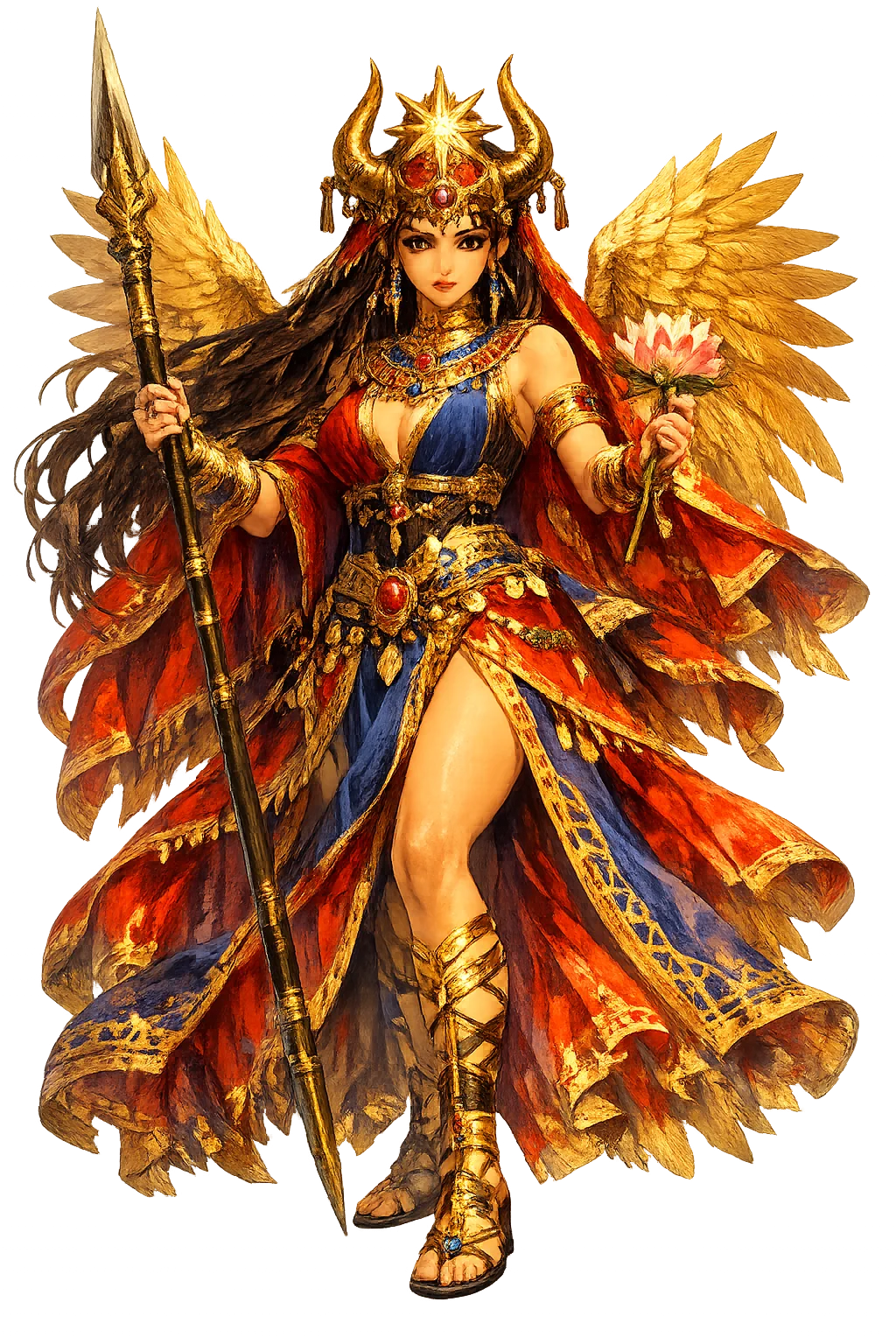
Aštart's mythology is more dispersed than centralized. She appears in Ugaritic texts as a huntress and member of Ēl's household, but her full fame comes from Phoenician, Egyptian, and later Greco-Roman cult. She is the goddess who crosses borders as easily as the Phoenician ships that carried her.
At a Glance
- Restored name: Aštart
- ASCII form: astart
- Meaning: "She of the womb. The planet Venus as deity. Queen of heaven."
- Domain of influence: Love, War, Fertility, Venus
- Pantheon: Phoenician
- Restoration: Preserves distinctive marks
- Original script: 𐤏𐤔𐤕𐤓𐤕
- Series: The Restoration Files, No. 65 of 597
The Name Before the Marks
Spoken, the name runs `/ʔaʃ.taːrt/` — 'ash-TART' or 'ASH-tart' — with a crisp 'sh' and a drawn-out second syllable; the final t is pronounced.
The Temple That Stands Now
The restored name is not a plaque; it is an address. The temple of Aštart lives at /astart/, with its mythology in the lore halls, its peer-reviewed record in the Scholarly Edition, and its place in the pattern atlas on the patterns floor.
preserves distinctive marks
Where the Name Stood First
Ugaritic KTU 1.92 casts her as a huntress in alphabetic cuneiform, while Phoenician inscriptions from Sidon, Tyre, Kition, and the Carthage tophet invoke her as a civic and funerary goddess. In Egypt, New Kingdom reliefs and statuettes from Tanis, Memphis, and Pi-Ramesses present her as a chariot warrior and horse goddess. The Pyrgi gold tablets record a joint dedication to Uni/Aštart, and the Karatepe bilingual names her alongside Baʿal. The temple on the web is the newest of these addresses — the first one that fits in a pocket.
The Archetype at Work
The pattern atlas seats this temple in 4 industries, each match argued and weighted: Love, Dating & Relationships (the Levant’s lady of love.); Beauty, Fashion & Cosmetics (the Phoenician face of beauty and desire.); Defense, Military & Security (war goddess of the Phoenician city-states.). The Resonance File reads those seats through the myths themselves.
The File Continues
The temple's founding dispatch tells the name's story; its Resonance File reads the myths into the industries; the blog index holds the whole archive.
Continue the series — previous file: Asklēpiós (read it here) · next file: Athēnâ (read it here).
The Restoration Files are written from the same canonical record as the temples themselves: the lexicon, the lore catalog, the pattern atlas, and the cited scholarly sources. If a file ever disagrees with its temple, the temple is right — tell us, and the file will be corrected.