
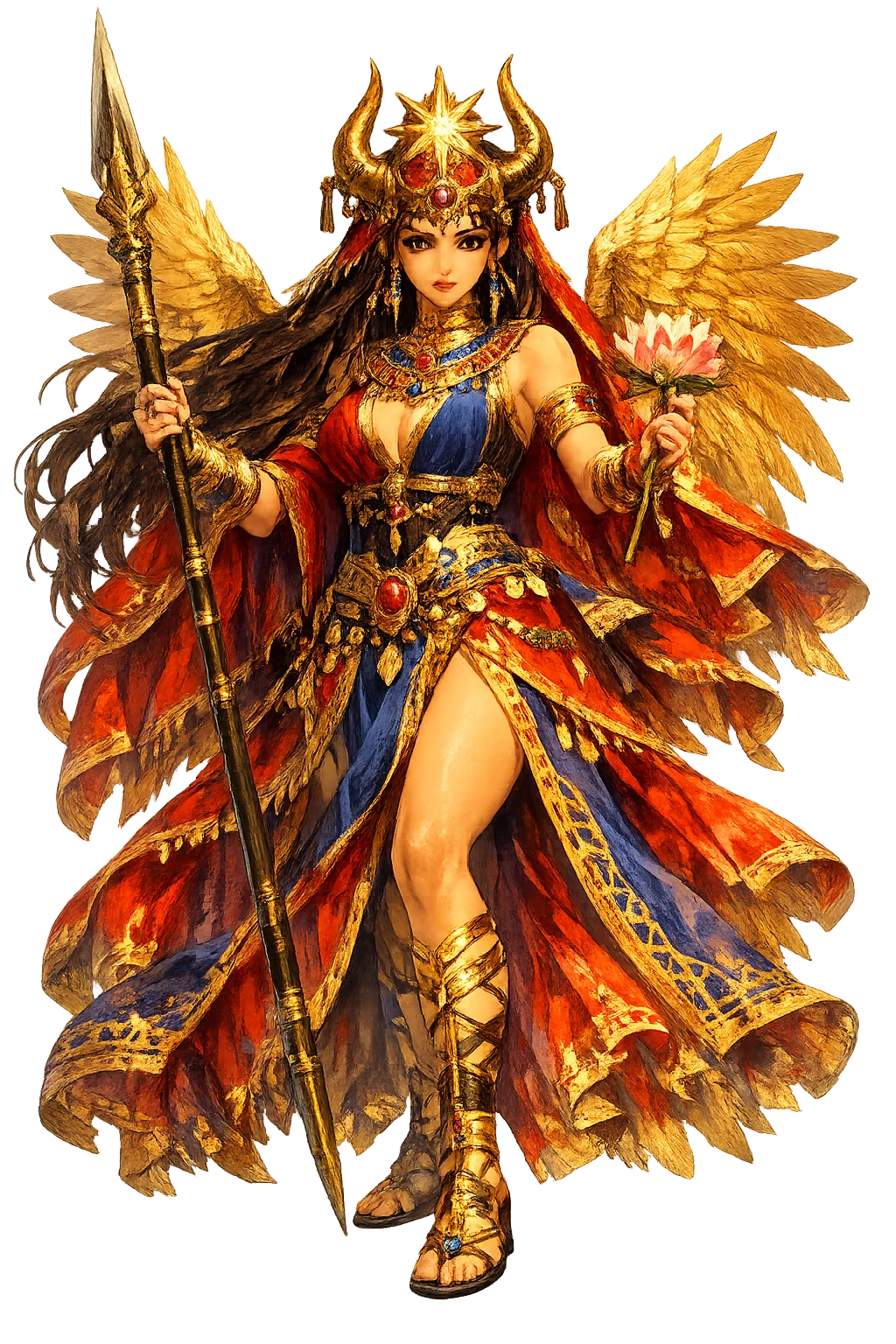
The Cult
Aštart received civic and funerary cult across the Phoenician Mediterranean. Sidon, Tyre, and Kition left dedicatory inscriptions naming her as queen of heaven, while the Carthage tophet preserves the ash-and-urn context in which she was invoked alongside child-vow rituals. In Egypt she was worshipped as a chariot warrior and horse goddess from the New Kingdom onward, attested in reliefs and bronze statuettes from Tanis, Memphis, and Pi-Ramesses. The Pyrgi gold tablets record a joint dedication to Uni-Aštart at Caere’s port sanctuary, binding Etruscan and Punic cult calendars. Ugaritic KTU 1.92 casts her as a divine huntress, but no standing temple at Ugarit has been securely identified as hers. No continuous modern pilgrimage exists, though her Punic and Etruscan junctions are studied as evidence of inter-city religion.