
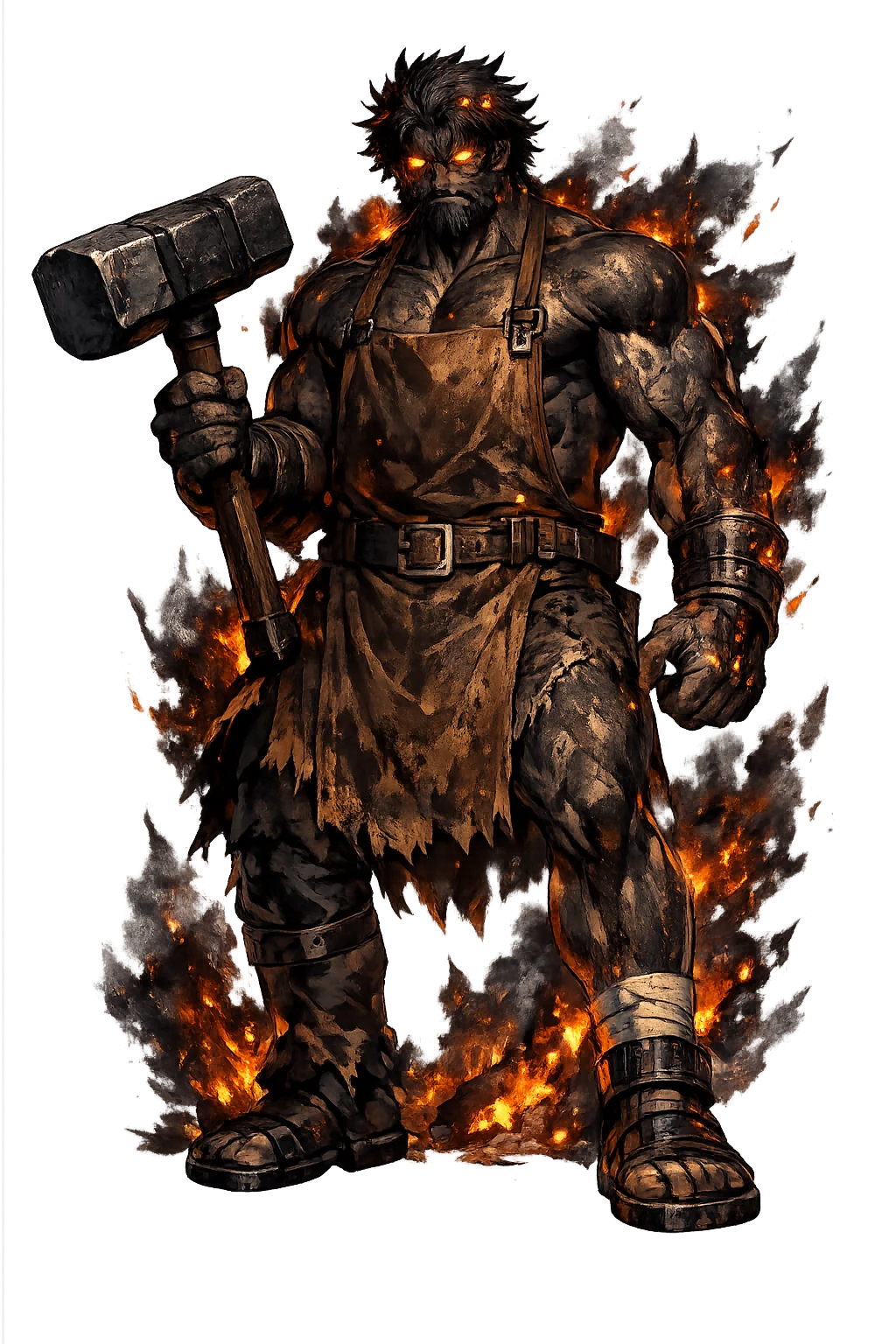
The appointments Vulcānus made — and who is keeping them
One myth is a story. A cycle of myths is a specification. Read Vulcānus's cycle in order and the industries fall out of it one by one.
At a Glance
- Temple: Vulcānus
- Pantheon: Roman
- Domain of influence: Fire, Forge, Craft
- Pattern seats: 3
- Sectors touched: Technology & Innovation · Energy & Natural World · Commerce & Governance
- Strongest seat: Manufacturing, Craft & Automation
- Series: The Resonance Files, No. 521 of 546
The Cycle, Read Forward
Manufacturing, Craft & Automation — through The Fish Fires
At the Volcanalia of August 23, when the stored grain stood at its driest and the city's risk of fire peaked, the Romans kindled bonfires for Vulcānus and threw live fish into the flames. Plutarch, puzzling over the rite in his Roman Questions (47), records the substitution plainly: the fish — creatures of the opposite element — were consumed in place of living things, so that the fire's hunger was answered without paying it a human debt.
The atlas states the seat in one line: The smith-flame of Rome, tamed to the anvil; every forge and furnace works under his name. The story above is the long version of the same sentence. Industries do not invent their archetypes; they inherit them and call them best practice.
Thermal, Geothermal & Fire Energy — through Venus and Mars
The finest comedy in the mythic stock became Roman property. Vulcānus, told by the Sun of his wife Venus' affair with Mars, forged a net of bronze links finer than spider-silk and spread it unseen over the marriage bed; the lovers were caught and exhibited, and the gods — Ovid tells it in the Metamorphoses (4.
The atlas states the seat in one line: Rome’s ambivalent fire — the destructive flame banished beyond the walls, the volcano and the conflagration bargained with. The story above is the long version of the same sentence. The trade thinks it is optimizing a process. It is re-enacting a charter.
Disaster Resilience & Recovery — through The Binding Chair
The Roman cycle kept the revenge of the lame smith on the mother who had thrown him from heaven. Vulcānus, scorned at birth and hurled from Olympos, answered with a gift: a golden throne for Iūnō, which seized her fast the moment she sat — springs, bands and hidden fetters closing on the queen of the gods.
The atlas states the seat in one line: The fire bargained with; the bonfire of aversion as insurance rite. The story above is the long version of the same sentence. Industries do not invent their archetypes; they inherit them and call them best practice.
The Theme That Runs the Cycle
Roman myth borrowed Hēphaistos' stories for him, but his cult is older and darker than the smith of Olympos: Vulcānus is first the fire that must be averted. The myths Rome gave him are the comedies and commissions of the forge — the net that caught Venus and Mars, the chair that bound Iūnō, the shield that carried Rome's future — played against a festival that treated him, above all, as a danger to be bought off.
The Method, Stated Plainly
The atlas is not a horoscope. Seats are earned from the sources — argued, weighted, published — and every one of them can be challenged at the methodology page. A match that cannot survive an argument does not survive review. That is the whole trick: the patterns are claims, and claims can be tested.
For the Ones Who Work There
If you work in manufacturing, craft & automation, thermal, geothermal & fire energy, or any trade this temple holds a seat in, this is the honest version of what a placement means: your industry beside the story it has been re-telling all along — on the temple floor itself, before an audience that came specifically to read it. The patron tier and the advertising terms describe the mechanics; the resonance above describes the fit.
The File Continues
One of 546 Resonance Files — the series where the pantheon goes to work. Read the founding dispatch for the name, the Restoration File for the spelling, or the whole archive end to end.
Continue the series — previous: Vǫr (read it) · next: Wꜣḏyt (read it).
The Resonance Files are argued from the same canonical record as the pattern atlas itself: the lexicon, the lore catalog, and the cited sources. Every seat can be challenged at the methodology page — and the challenge is the point.