
How Ullr was rebuilt, mark by mark
Bench notes, Ullr: what we found, what we rejected, and what we finally set down. Kept in the open, because a restoration you cannot audit is just a spelling with confidence.
What We Found
The attestation runs through the tradition's own sources: ᚢᛚᛚᚱ. Meaning: "Glory, splendor".
The figure behind the name: Ullr's dossier is a paradox: among the best-attested gods in the Scandinavian place-name record and among the least narrated in the literature.
What the Name Carried In
The Yew-Dales. In Grímnismál's numbered survey of the gods' dwellings, the fifth hall belongs to Ullr: Ýdalir heita þar er Ullr hefir sér of görva sali — 'Yew-Dales is the name of the place where Ullr has made himself a hall. ' The poem gives him no lineage, no wife, no adventure — only an address.
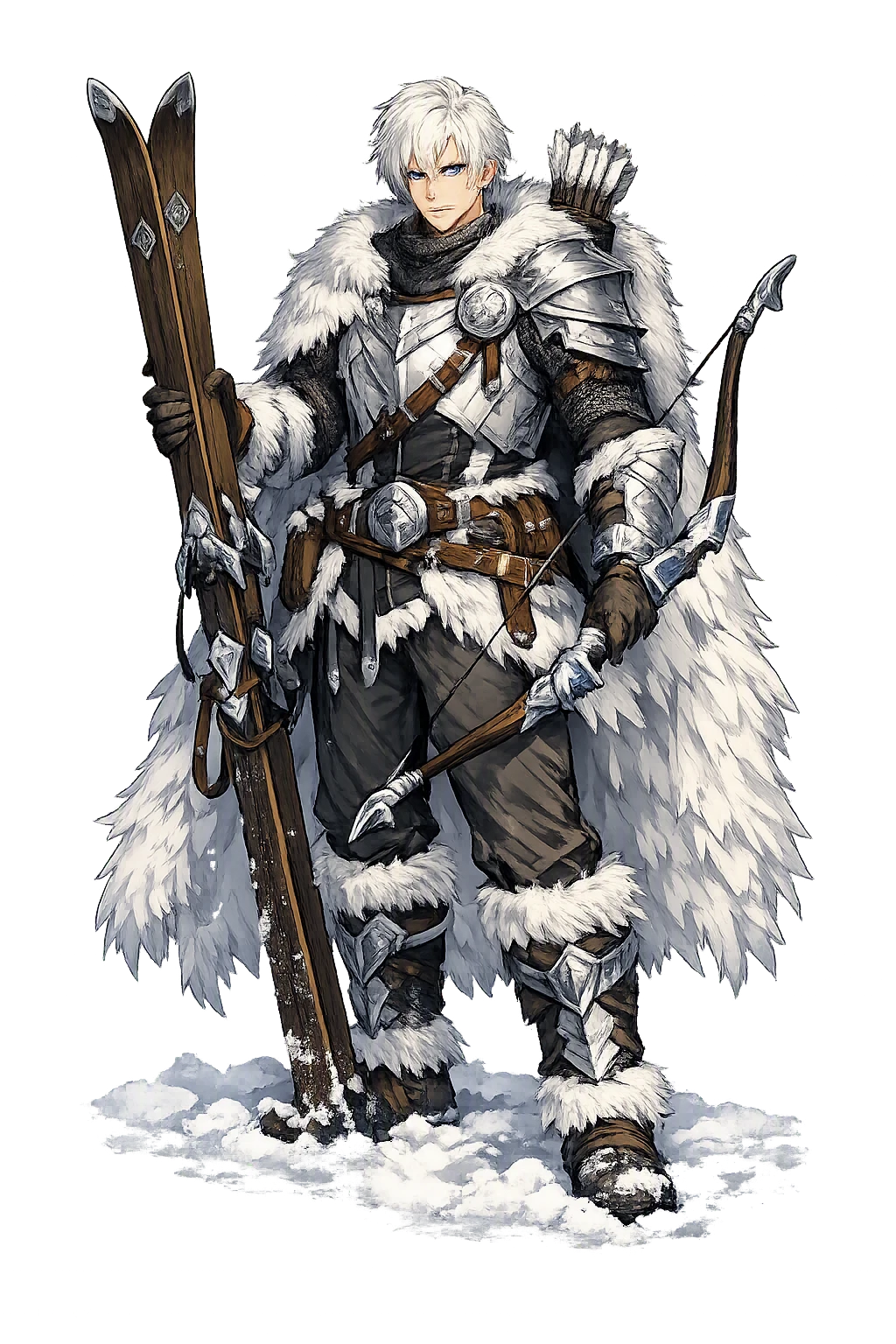
The Snowshoe God. Snorri's whole account of Ullr is one packed sentence: 'One is called Ullr, son of Sif and stepson of Thor. He is such a good bowman and so fast on skis that no one can compete with him.
A spelling that has to carry stories like these is not a label. It is equipment.
Where It Stood Before Us
Ullr's archaeology is written across two countries rather than buried in any one of them: no image and no votive hoard can be securely assigned to him, but the Scandinavian place-name record is the densest of any god outside the great three. Norway keeps Ullensaker ('Ullr's field'), Ullern ('Ullr's meadow' or from Ullarvin), Ullensvang, and the lost Ullarhof; Sweden keeps Ullevi and Lilla Ullevi ('Ullr's sanctuary'), Ulleråker ('Ullr's field'), Ullvi and their kin — a cult landscape spread across south-eastern Norway and eastern middle Sweden, with not one secure Ullr-name in Denmark or Iceland. At Lilla Ullevi in Bro parish, Uppland, excavations in the 2000s uncovered an Iron Age cult building rich in amulet rings — a rare look at the kind of site the name advertises, though the identification with the god rests on the place-name alone. The oldest possible attestation is runic and continental: the third-century Thorsberg shield-chape (Schleswig) reads owlþuþewaz, whose first element is the *wulþu- 'glory' that became the name Ullr — whether theonym or personal name is disputed, but it proves the name's antiquity. Later antiquarian tradition supplied the familiar image: seventeenth- and eighteenth-century Icelandic paper manuscripts (the 'Edda oblongata' type) picture Ullr on skis with his bow — an early modern reconstruction, not a medieval witness. The bench inherits all of it — the web temple is the newest site, not the first.
What We Rejected
Any form invented for availability. The rule on the bench: if the evidence does not carry it, the domain does not get it — whatever the registrar has in stock.
What We Set Down
Ullr — One decisive feature survives — a single, honest mark — which places the restoration in Tier-2: exact, and exactly labeled.
For the voice: 'ULL-r' — one firm beat, the vowel short and rounded as in 'pull', the double l held a fraction long, and the final r sounded; as in modern Icelandic Ullur.
The temple stands at /ullr/ — the notes above are public in its Scholarly Edition, sources and all.
At a Glance
- Restored name: Ullr
- ASCII form: ullr
- Meaning: "Glory, splendor"
- Domain of influence: Archery, Hunting, Skiing
- Pantheon: Norse
- Classification: Tier 2
- Original script: ᚢᛚᛚᚱ
- Series: The Restoration Files, No. 506 of 548
The File Continues
The temple's founding dispatch tells the name's story; its Resonance File reads the myths into the industries; the blog index holds the whole archive.
Continue the series — previous file: Ugayafukiaezu (read it here) · next file: Uppsala (read it here).
The Restoration Files are written from the same canonical record as the temples themselves: the lexicon, the lore catalog, the pattern atlas, and the cited scholarly sources. If a file ever disagrees with its temple, the temple is right — tell us, and the file will be corrected.