
Trengtreng: the stories first, then the spelling
The marks in Trengtreng make the most sense standing next to the myths they have to carry. So the myths come first.
The Stories That Carry the Name
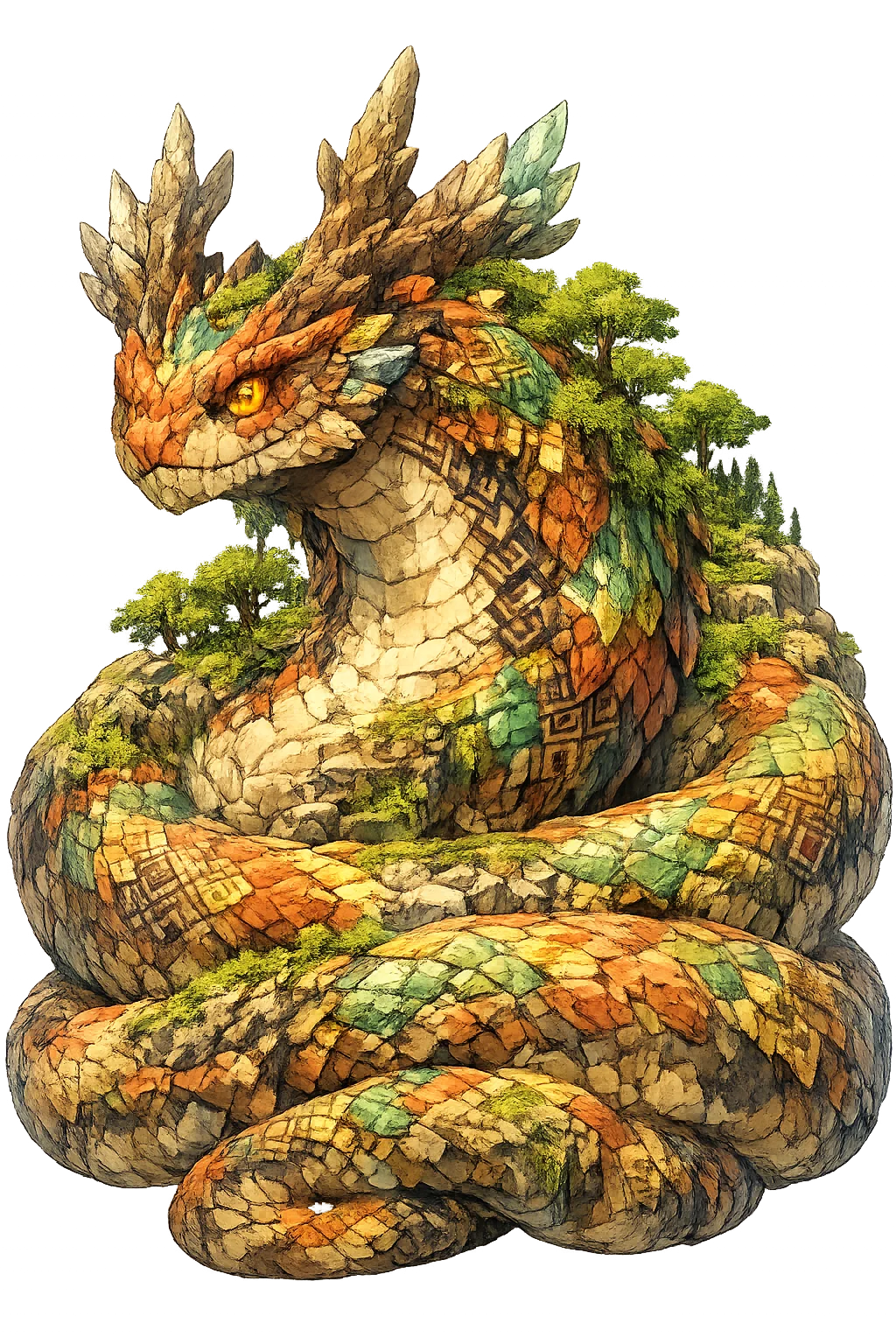
The Flood and the Volcanic Pillars. Mapuche tradition tells of a primordial deluge driven by Caicai Vilu, the water-serpent, enemy of the earth-serpent Trentren and of humankind. As Caicai made the sea rise to drown the world, Trentren raised the hills in answer, each power straining against the other until the mountains out-topped the waters; the peaks of Trengtreng and Kai-Kai became refuges above the flood, while above the serpents stood Pillán, lord of volcano and storm. Those who reached the heights survived and became the ancestors of the Mapuche.
Pillán and the Sacred Heights. Pillán, the Mapuche thunder-and-volcano spirit, is the power whose name crackles in storms and whose fire runs down the cordillera. The voice of the volcano is his voice, its eruption his weapon; the chroniclers describe the thunder spirits waging war from the heights with fire and storm. Trengtreng belongs to his storm-world twice over — as one of the peaks raised in the flood-duel, and as a name that rattles like the thunder it imitates — which is why colonial sources sometimes blur the mountain, the thunder-sound, and the god into a single figure.
The Ancestors on the Heights. In the flood narrative the survivors who climbed Trengtreng, Kai-Kai, and the other sacred heights became the ancestors of the later communities — so the mountain functions as an origin place, the point where a living people connects to a mythic past of catastrophe and renewal. The tradition keeps its geography exact and inhabited: the volcanoes of the southern cordillera are named, known, and visited, and oral genealogy runs through them rather than around them. Pilgrimage, storytelling, and the everyday toponymy of Araucanía — where mountain names are spoken in Mapudungun, not Spanish — keep the peak active in Mapuche identity long after the flood has receded.
And Here Is What the Spelling Preserves
At a Glance
- Restored name: Trengtreng
- ASCII form: trengtreng
- Meaning: "Mapuche thunder and war god"
- Domain of influence: Flood, Land-Shaping
- Pantheon: Mapuche
- Classification: Tier 2
- Original script: —
- Series: The Restoration Files, No. 495 of 546
The Name Travels
Colonial Spanish missionaries interpreted Mapuche thunder spirits through Christian ideas of divine punishment, while Mapuche communities resisted by preserving Pillan and Trengtreng in oral tradition and ritual. The reduplicated thunder name parallels onomatopoeic storm words across the Andes, and the figure of a deity who raises mountains during a world flood has affinities with widespread South American cosmologies of catastrophe and renewal.
The Address It Earned
The temple of Trengtreng stands at /trengtreng/ — lore, scholars, patterns — because a name carrying this much story deserves more than a parking page. The restoration keeps one feature the ASCII form drops. One is enough to matter, and the label says so plainly: Tier-2.
The File Continues
Read the founding dispatch for the name's full story, the Resonance File for the archetype at work — or the whole archive in one sitting.
Continue the series — previous file: Toyotama (read it here) · next file: Troíā (read it here).
The Restoration Files are written from the same canonical record as the temples themselves: the lexicon, the lore catalog, the pattern atlas, and the cited scholarly sources. If a file ever disagrees with its temple, the temple is right — tell us, and the file will be corrected.