
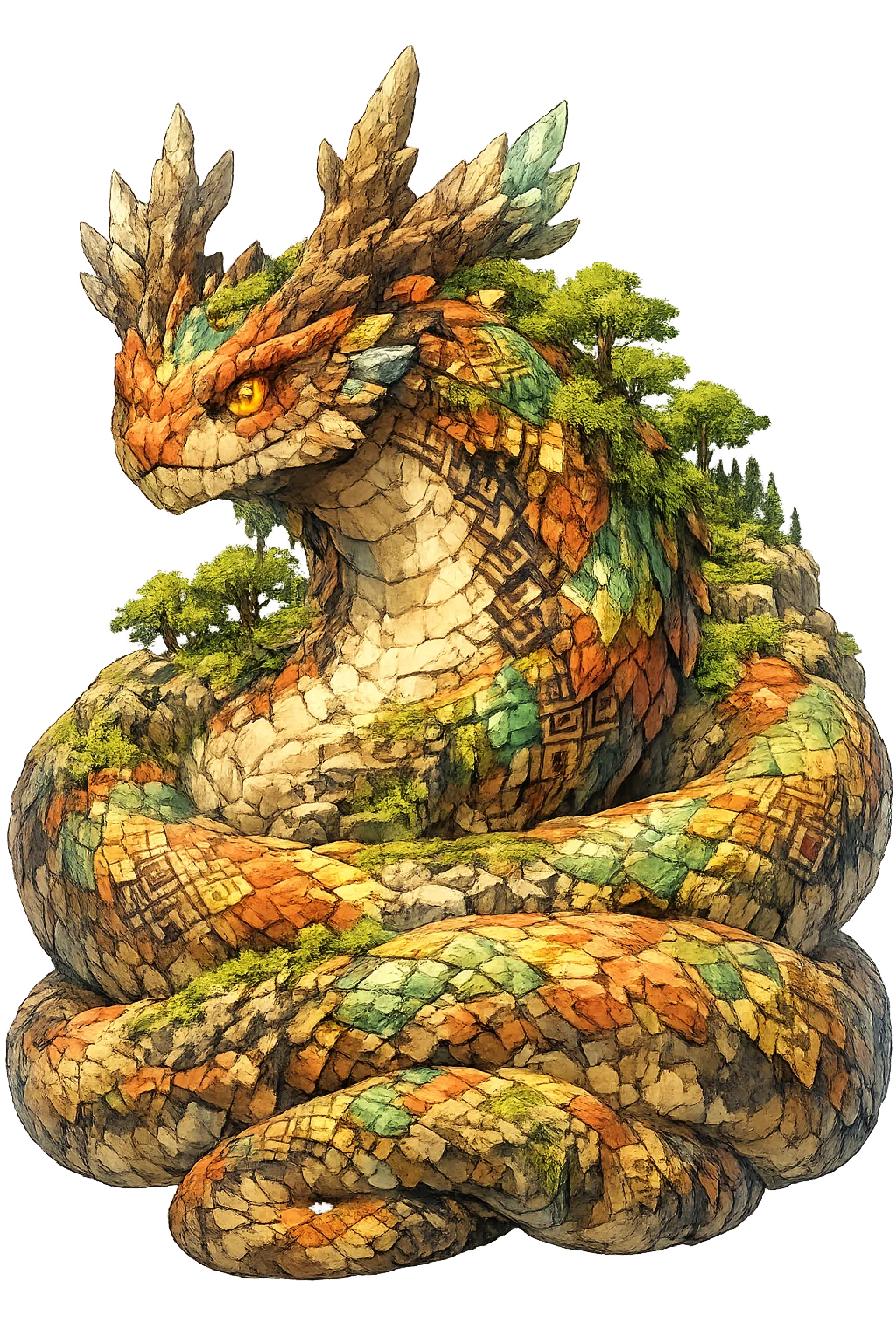
The name Trengtreng and the world it opens
A name is a door. Trengtreng opens onto the domain of flood, land-shaping, the Mapuche tradition, and centuries of storytelling, worship, and scholarship. This post moves through that world room by room — the name and its roots, the original script, the sound of it, the myths, the symbols, the sites, and its afterlife — before arriving at the digital temple that makes the record addressable. The letters are plain; the evidence is not.
At a Glance
- Canonical name: Trengtreng
- ASCII form: trengtreng
- Meaning: "Mapuche thunder and war god"
- Domain of influence: Flood, Land-Shaping
- Pantheon: Mapuche
- Restoration: ASCII-equivalent form
- Live domain: trengtreng.com
Overview
Trengtreng (trengtreng) — The Thunder of the Mapuche — belongs to the Mapuche tradition, where it is catalogued under the domain "Flood, Land-Shaping". The name means "Mapuche thunder and war god".
Trengtreng is one of the primordial volcanic peaks of Mapuche cosmology — a sacred height raised by the earth-serpent Trentren above the flood-waters of Caicai Vilu. Its thunder-name crackles like the storms that roll across the southern Andes: with its counterpart Kai-Kai it embodies the living power of the volcano and the sacred geography that anchors Mapuche identity.
PuniCodex records the canonical scholarly spelling Trengtreng and serves its temple at trengtreng.com. The displayed form is ASCII-equivalent — a description computed from the displayed form itself. The plain ASCII form trengtreng contains the same letters: no recovered diacritics or special encoding is claimed. The work here is consistent citation, capitalization, provenance, and cultural context.
The Name
No indigenous written attestation survives for this name; Trengtreng is a scholarly transliteration of the reconstructed spoken form. Etymologically the name means "Mapuche thunder and war god".
A Mapuche theonym for the thunder-and-war god; its formation is best explained as onomatopoeic or descriptive within Mapuche oral tradition, with no known external cognates.
The canonical spelling Trengtreng matches the conventional scholarly romanization. The plain ASCII form trengtreng contains the same letters, so no lost diacritics or encoding transition is claimed. The editorial work is to fix one reviewed reference spelling, preserve capitalization and provenance, and keep the original evidence visible. The displayed form is ASCII-equivalent — a description computed from the displayed form itself.
The letter-by-letter transformation runs:
- t → T — Same
- r → r — Same
- e → e — Same
- n → n — Same
- g → g — Same
- t → t — Same
- r → r — Same
- e → e — Same
- n → n — Same
- g → g — Same
The project holds the domain trengtreng.com (trengtreng.com) as the canonical home of this name.
Etymology & Roots
The recorded derivation reads: A Mapuche theonym for the thunder-and-war god; its formation is best explained as onomatopoeic or descriptive within Mapuche oral tradition, with no known external cognates.
The reconstruction is classed as speculative.
The Original Script
No indigenous writing system is securely attested for individual mapuche names. The form shown is a modern scholarly transliteration.
The form Trengtreng is therefore a scholarly transliteration rather than an attested ancient spelling; it encodes the reconstructed sound of the name for modern use, and no mark in it is decorative.
Pronunciation
The reconstructed pronunciation of the name is /tɾeŋˈtɾeŋ/ — Mapudungun Reconstruction.
Phoneme by phoneme:
- tɾeŋ — Alveolar onset followed by close-mid [e] and a velar nasal [ŋ]; the first syllable of the reduplicated thunder name.
- - — Reduplication divider; the name is doubled to intensify sound and power.
- tɾeŋ — Repeated syllable, producing the rattling, drum-like effect of rolling thunder.
For the modern speaker, the closest approximation is: TRENG-TRENG — a rattling, drum-like reduplication that mimics successive thunderclaps.
Kindred and historical forms of the name:
- Mapuche serpent-duel — Trentren Vilu, the earth-serpent (in some records Trengtreng Vilu) — his rising hills against Caicai Vilu’s rising sea raised the flood-mountains.
- Storm-complex — Pillán — the thunder-and-volcano spirit in whose storm-world the peak’s thunder-name belongs; reduplicated treng-treng is the sound of his voice.
- Colonial record — Treng-treng, recorded by Alonso de Ovalle in the Histórica Relación del Reino de Chile (1646).
Trengtreng is a reduplicated, onomatopoeic Mapuche name for thunder; reduplication is a productive device for intensification in Mapudungun. Because the Latin alphabet renders all of its sounds without diacritics, the canonical restoration coincides with the ASCII form, so the name is a plain form by tradition rather than by restored marks.
Mythology
Trengtreng is a sacred volcanic peak in Mapuche cosmology, one of the primordial heights raised during the great flood. Together with its counterpart Kai-Kai, it embodies the volcanic forces that shaped the southern Andes and the sacred geography that still anchors Mapuche identity.
The Flood and the Volcanic Pillars (Flood)
Mapuche tradition tells of a primordial deluge driven by Caicai Vilu, the water-serpent, enemy of the earth-serpent Trentren and of humankind. As Caicai made the sea rise to drown the world, Trentren raised the hills in answer, each power straining against the other until the mountains out-topped the waters; the peaks of Trengtreng and Kai-Kai became refuges above the flood, while above the serpents stood Pillán, lord of volcano and storm. Those who reached the heights survived and became the ancestors of the Mapuche. The thunder spirit Pillán stood above the serpents, lord of volcano and storm, lending the earth-serpent his fire. The fullest colonial record of the duel is Alonso de Ovalle’s Histórica Relación (1646), drawing on Mapuche informants of the Arauco frontier. The myth means the Andes themselves are a rescue — the cordillera is not scenery but the shape of survival, raised on purpose against the sea.
Pillán and the Sacred Heights (Theophany)
Pillán, the Mapuche thunder-and-volcano spirit, is the power whose name crackles in storms and whose fire runs down the cordillera. The voice of the volcano is his voice, its eruption his weapon; the chroniclers describe the thunder spirits waging war from the heights with fire and storm. Trengtreng belongs to his storm-world twice over — as one of the peaks raised in the flood-duel, and as a name that rattles like the thunder it imitates — which is why colonial sources sometimes blur the mountain, the thunder-sound, and the god into a single figure. Later Andean Catholicism read the same volcanoes as signs of divine anger, while Mapuche communities kept Pillán in oral tradition and ritual. The myth means a mountain can be at once geology and presence: the peak is where the sky’s violence touches the earth’s.
The Ancestors on the Heights (Ancestry)
In the flood narrative the survivors who climbed Trengtreng, Kai-Kai, and the other sacred heights became the ancestors of the later communities — so the mountain functions as an origin place, the point where a living people connects to a mythic past of catastrophe and renewal. The tradition keeps its geography exact and inhabited: the volcanoes of the southern cordillera are named, known, and visited, and oral genealogy runs through them rather than around them. Pilgrimage, storytelling, and the everyday toponymy of Araucanía — where mountain names are spoken in Mapudungun, not Spanish — keep the peak active in Mapuche identity long after the flood has receded. The myth means ancestry here is not abstract: it is a specific slope you can climb, a horizon you can point to from the valley floor.
The Living Mountain (Legacy)
Today Trengtreng remains a landmark of the southern Andean landscape and a point of reference in Mapuche oral geography. The flood myth survives in several colonial witnesses — Alonso de Ovalle’s Histórica Relación del Reino de Chile (1646), Pedro Mariño de Lobera’s Crónica del reino de Chile, and Alonso de Góngora Marmolejo’s Historia de Chile (1575) — the earliest written records of a far older oral tradition. Modern Mapuche writers, musicians, and territorial movements invoke the flood mountains as symbols of resilience and sacred land, and the name endures in local toponymy, and the volcano chain itself — Llaima, Villarrica, Lonquimay — still performs the myth with smoke and tremor. The myth means the tradition proved more durable than the empire that wrote it down: the chroniclers’ pages closed, and the mountains kept the story.
Symbols & Iconography
The iconography associated with Trengtreng concentrates in a small set of recurring attributes, each a compressed statement about the name:
- Volcanic peak — The living mountain raised by Pillan; its eruption and thunder are the visible body of the god.
- Reduplicated thunder name — The doubled treng-treng mimics the rolling of successive thunderclaps and signals intensified power.
- War club / macana — A hardwood club associated with Mapuche warriors and the thunderer's striking force.
Archaeology & Evidence
Mapuche material culture is attested at fortified pukará sites in the Araucanía and at the sacred hill of Cerro Ñielol near Temuco. Colonial chronicles by Alonso de Ovalle, Pedro Mariño de Lobera, and Alonso de Góngora Marmolejo record the flood myth and the thunder mountain. The active volcanic chain—Villarrica, Llaima, and Lonquimay—supplies the geological anchor for the Trengtreng tradition.
Realm & Domain
Trengtreng is one of the primordial volcanic peaks of Mapuche cosmology — a sacred height raised by the earth-serpent Trentren above the flood-waters of Caicai Vilu. Its thunder-name crackles like the storms that roll across the southern Andes: with its counterpart Kai-Kai it embodies the living power of the volcano and the sacred geography that anchors Mapuche identity.
Thunder
The reduplicated name is onomatopoeic for rolling thunder; the spirit's voice is heard in storms and volcanic eruptions.
Sacred Mountain
Trengtreng is one of the volcanic peaks raised by Pillan to save the people from the primordial deluge.
Warrior Spirit
As a thunder-and-war power, the spirit lends Mapuche fighters the striking force of the storm and the macana club.
Flood Survivor
Those who climbed the sacred peaks during the flood became the ancestors of later Mapuche communities.
Across Cultures
Colonial Spanish missionaries interpreted Mapuche thunder spirits through Christian ideas of divine punishment, while Mapuche communities resisted by preserving Pillan and Trengtreng in oral tradition and ritual.
The reduplicated thunder name parallels onomatopoeic storm words across the Andes, and the figure of a deity who raises mountains during a world flood has affinities with widespread South American cosmologies of catastrophe and renewal.
Kindred figures in the PuniCodex cross-tradition index include Adad, Baꜥal, Enlīl, Illapa, Keraunós, and Marduk, each linked through thunder / storm sovereignty.
Cultural Legacy
Trengtreng remains a touchstone of Mapuche identity in the southern Andes, from the Bio-Bío river to the volcanic cordillera of Araucanía.
Modern Mapuche writers, musicians, and territorial movements invoke Pillan and the flood mountains as symbols of resilience and sacred land. The peak's name also survives in local toponymy, keeping the thunder spirit present in everyday geography.
The Scholarly Record
The account of Trengtreng given in this edition rests on the witnesses and reference works listed below. Lexica and etymological dictionaries secure the form and meaning of the name; the literary and religious texts supply the narrative evidence.
- Alonso de Ovalle, Histórica Relación del Reino de Chile (1646).
- Pedro Mariño de Lobera, Crónica del reino de Chile.
- Alonso de Góngora Marmolejo, Historia de Chile (1575).
- Mapuche oral tradition, Oral tradition, various.
- Bengoa, Historia de los antiguos mapuches del sur.
A Meditation
Trengtreng is the myth that looks most like its own landscape. A flood-mountain raised by a serpent against the sea explains, in one image, why the southern Andes erupt, why the coast is deadly, and why the people’s ancestors lived — and it does so in a grammar of height: survive by climbing. The doubled name is the sound of the thunder the volcano makes; the tradition heard the mountain before it theorized it.
There is a quiet modern lesson here that the chroniclers never intended. The colonial writers recorded the flood myth as a curiosity of the people they were conquering; four centuries later the chronicles are footnotes and the mountains are still there — still erupting, still named in Mapudungun. Trengtreng teaches that sacred geography is the hardest thing a colonizer can fail to erase: you can burn the temples, but the horizon keeps preaching.
The Canonical Spelling
Trengtreng is the canonical spelling used by this temple. The plain ASCII form trengtreng contains the same letters, so there are no lost diacritics to recover and no special encoding transition to explain. What the temple preserves is the reviewed reference form: capitalization, conventional romanization, original evidence, and a stable place to inspect them. The value here is not added decoration; it is fidelity to the attested record.
Character by Character
The canonical form Trengtreng and the plain ASCII form trengtreng share the same letters. The character list therefore documents continuity rather than recovery: every character is carried forward deliberately, with capitalization serving as the proper-noun convention. No additional mark is inserted merely to make the restoration appear more elaborate.
The Domain Name
The canonical name has a working digital address at trengtreng.com. Because the spelling already uses ordinary Latin letters, visitors and machines read the same address without a special encoding step. The important engineering fact is not transformation but continuity: the temple's public address preserves the reviewed spelling exactly as written.
The Mapuche Pantheon
Trengtreng is one of 1 entries the PuniCodex lexicon catalogues under the Mapuche pantheon. The Pantheon page gathers the tradition's major figures in one place, and the Lexicon lets you filter all 983 restorations by tradition or script — the fastest way to see where this name sits among its kin.
Frequently Asked Questions
What does Trengtreng mean? The traditional gloss is "Mapuche thunder and war god."
Which tradition does Trengtreng belong to? Trengtreng is catalogued in the Mapuche pantheon of the PuniCodex lexicon.
Does this name need recovered diacritics? No. Trengtreng is already an ASCII-form canonical spelling. The scholarly work is to preserve the attested convention and its evidence, not to add marks.
Can I use Trengtreng in a normal browser? Yes. The spelling works directly in an ordinary browser, and the type tool can confirm and copy the canonical form.
Where does the scholarly information come from? The entry is built from lexica, inscriptional evidence, and reviewed scholarly sources listed in the Scholarly Edition.
Typing Trengtreng
You do not need a special keyboard to use this name. Trengtreng already uses ordinary Latin letters. The PuniCodex Type Tool lets you confirm the canonical spelling and copy it cleanly, while the original-script notes in the temple show the evidence behind the romanization.
Sister Temples
Other temples in the Mapuche pantheon include Ḥnḫsšwj, Hēphaistos, and Ḥqt — each with its own restoration story, its own scholarly record, and its own place in the lexicon.
Why This Record Matters
A door matters when people can walk through it. trengtreng.com is open, and everything behind it — the myths, the scholarship, the canvas, the patrons — hangs on a spelling the evidence supports. The PuniCodex project bets that the web will make room for names as they are actually documented, and Trengtreng is one of its standing proofs. Visit, share, cite, and use the whole record.
Explore Further
This post is one doorway into the temple. The home page carries the full character breakdown and the ambient canvas; the lore page tells the myths in long form; the Scholarly Edition preserves the sources, pronunciation data, and revision history; and the patron wall supports the restoration directly. For the wider map, browse the Lexicon, explore the Pantheon, or return to the PuniCodex blog.
A Closer Look at the Spelling
A canonical name is a small map. In the case of Trengtreng, the route does not lead through diacritics or special letters, because the conventional scholarly spelling already uses the Latin alphabet. The original evidence — the tradition's transmitted record — carries semantic and phonetic information that no romanization can fully reproduce.
By fixing one reviewed spelling as the public reference, the project prevents the drift that occurs when a name is romanized differently in every article, map, and database. The character list shows exactly what is carried forward. "No change" here means a deliberate choice to keep the name stable, searchable, and faithful to the record.
Trengtreng in Its Tradition
Trengtreng does not stand alone. It belongs to the Mapuche tradition, where it is counted among 1 names in the PuniCodex lexicon. Its sphere — Flood, Land-Shaping — places it beside other figures who govern similar aspects of experience. The canonical spelling keeps the name in the company of its kin and gives researchers one stable reference across the temples, the APIs, and the scholarly record.
Related Names
Sources
The full scholarly apparatus — every citation, revision, and review — lives in the Scholarly Edition. Key references for this post:
- Alonso de Ovalle, Histórica Relación del Reino de Chile (1646).
- Pedro Mariño de Lobera, Crónica del reino de Chile.
- Alonso de Góngora Marmolejo, Historia de Chile (1575).
- Mapuche oral tradition, Oral tradition, various.
- Lexicon authorities for this entry: Mapuche oral tradition.