
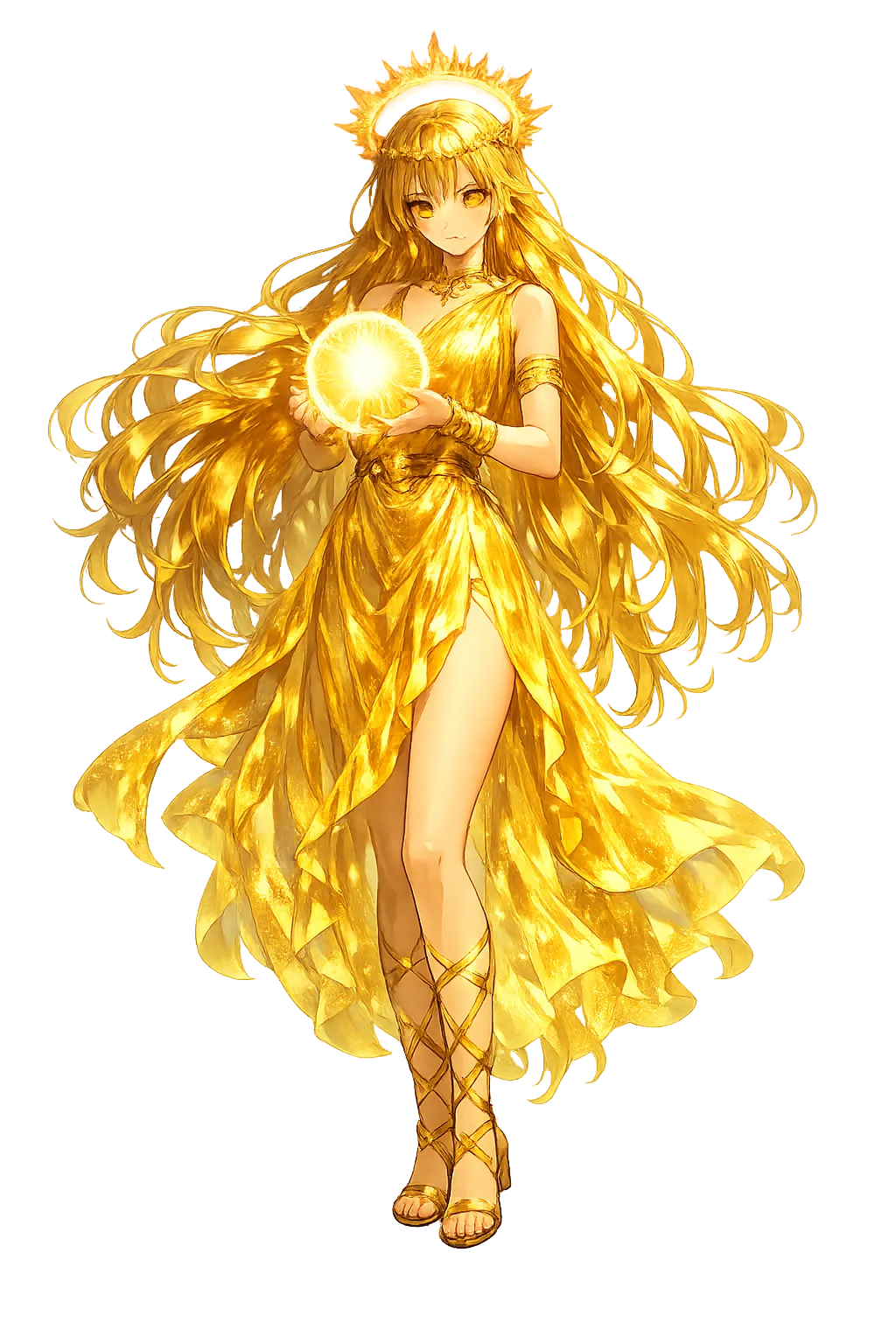
From Greek to Unicode: the journey of Theía
Long before it was a domain, this name traveled through scripts. Theía begins in Greek, passes through scholarly transliteration, and ends — for now — inside the punycode machinery of the global DNS. Each stage of that journey preserves some information and loses some, and the craft of restoration is knowing exactly which marks matter. This post follows the name stage by stage: the original script, the reconstructed pronunciation, the mythological record, the material evidence, and finally the Unicode form that carries all of it into the address bar. Think of it as a biography of a name, told through its spelling.
At a Glance
- Restored name: Theía
- ASCII form: theia
- Meaning: "Goddess, divine"
- Domain of influence: Shining, Mother of the Sun, Moon and Dawn
- Pantheon: Greek
- Restoration: Preserves stress
- Original script: Θεία (Greek)
- Live domain: theía.com
Overview
Theía (theia) — The Sight that Sees the Light — belongs to the Greek tradition, where it is catalogued under the domain "Titaness of Sight". The name means "Goddess, divine".
Theía is the Titaness of sight, shining, and the bright ether. Though less famous than her children Hēlios, Selḗnē, and Ēōs, she is the luminous source from which they spring — the divine principle that makes seeing and being seen possible. Hesiod gives her one marriage and three children; Pindar gives her a golden hymn; the rest is inference.
PuniCodex restores the name as Theía and serves its temple at theía.com. The restoration preserves stress — a description computed from the displayed form itself. The plain ASCII form theia survives as a modern convenience imposed by the early domain-name system; the restoration, not the fallback, is the form the project defends as philologically complete.
The Name
The name is attested in Greek as Θεία. Etymologically it means "Goddess, divine".
The ASCII form theia survives only because the early domain-name system could not carry diacritics; it is a technological compromise, not an ancient spelling. The Unicode restoration Theía recovers the stress accent of the original directly in the address bar. The restoration preserves stress — a description computed from the displayed form itself.
The letter-by-letter transformation runs:
- t → T — T uppercase
- h → h — h same
- e → e — e same
- i → í — Acute on í — in Θεία the accent falls on the second element of the diphthong ει
- a → a — a same
The project holds the domain theía.com (xn--thea-xpa.com) as the canonical home of this name.
The Original Script
The name is written in Greek as Θεία. This original script is the form against which the ASCII fallback theia and the PuniCodex restoration Theía are measured: the restoration preserves its pitch accent of the written form, so that a reader typing the modern address still speaks the ancient name.
Pronunciation
The reconstructed pronunciation of the name is /tʰeː.ía/ — Attic Greek Reconstruction.
Phoneme by phoneme:
- Th- — Aspirated theta [tʰ], the breathy initial consonant.
- -ē- — Long eta [ɛː], the first syllable's length.
- -ía — Short iota with acute plus alpha — the pitch peak on the second syllable.
For the modern speaker, the closest approximation is: 'thay-EE-ah' — the first syllable is long and level, the second pitched high and bright.
Kindred and historical forms of the name:
- Greek — Θεία (Theía), Titaness of sight, shining, and the bright upper air
- Root — θέα (théa), 'sight, view'; related to θεάομαι, 'to gaze'
- Children — Hēlios, Selēnē, and Eōs — sun, moon, and dawn
Theía preserves both features because the Greek Θεία contains both length (η in the first syllable) and stress (acute on the ι of the second). She is the Titaness whose children are the celestial lights.
Mythology
Theía has no independent narrative myths; her importance is genealogical and cosmological. Through her, the Titans bequeath light to the Olympian cosmos — and the tradition is honest enough to leave her otherwise silent. Two lines of Hesiod, an ode of Pindar, and a name that became a science are her whole surviving estate.
Birth of the Luminaries (Genealogy)
Hesiod mentions Theía exactly where her meaning lives. First, in the Titan catalogue, she is simply 'Theía, crowned with gold' (Theogony 135) — one word of ornament, and the only one he ever gives her. Then, at 371–374: 'Hyperion lay in love with Theía of the gold crown, and she bore him great Hēlios and bright Selḗnē and Ēōs, who brings light to all mortals and to the deathless gods.' That is the entirety of her recorded mythology — a birth, a marriage, three children — and it is enough to found a cosmology: the upper air wed to the high one, and every light that crosses the sky as their offspring. Later Greek poets repeat the triad without ever adding a scene; the goddess's silence in the tradition may itself be the myth — the medium of light does not appear; it makes appearing possible.
Pindar's Theia of Many Names (The Golden Hymn)
Pindar opens Isthmian 5 with the most vivid address Theía ever received: 'Mother of the Sun, Theia of many names' — and immediately explains the 'many names': it is because of her that mortals count gold as the most powerful of things, for the radiance of her doings shows upon gold and its gleam. The ancient scholiasts add the practical detail: sailors at sea see Theía in the sun's distant flash on the waves, reading the horizon by her. The logic is antique and precise — the goddess of the shining ether is present wherever light becomes visible as radiance: on metal, on water, on the glint that betrays a ship over the horizon. Her epithet also hints at a theological elasticity: the same luminous principle answers to whatever the moment requires — sight, splendor, the flash of gold. Theía is not a character but an optics, and Pindar hymns her as such.
Sight, Wonder, and the Divine (Name and Vision)
Ancient and modern scholars alike connect Theía's name with θέα, 'sight', and the verb θεάομαι, 'to gaze in wonder' — the same root family as θέατρον, 'theater', and θεωρία, 'contemplation'. Later Greek writers could not resist the further step: that θεά, 'goddess', belongs to the same family — the divine as that which shines forth and is seen. The second derivation is linguistically shaky, and a scholarly entry must say so plainly; but the intuition was deeply Greek, and Plato's vocabulary of the knowable as 'visible in its radiance' lives in the same semantic field. Her gold crown completes the picture: the goddess of sight wears the substance that most resembles what sight loves. If her cult was negligible, her word-family conquered the language — theory, theater, and theology are all, etymologically, her daughters too.
Among the Fallen Titans (The Fall)
Hesiod does not show Theía fighting in the Titanomachy, but the arithmetic of Theogony 717–720 leaves her no exemption: after the ten-year war, Zeus's side bound the Titans and hurled them 'into murky Tartarus, as far beneath the earth as earth is beneath heaven'. The Titanesses as a group disappear from the poem into that fall — while their luminous children ride on overhead, untouchable. Theía's fate, if she shared it, is the cosmic version of her own nature: the ether cannot be imprisoned, but the personification can. Later tradition quietly released her: she survives in Pindar and in the scholia as the ever-present mother of light, unshrined by any city but unexcluded from any sky — a goddess whose temple is whatever the light touches, and whose only liturgy is the daybreak itself.
Symbols & Iconography
The iconography associated with Theía concentrates in a small set of recurring attributes, each a compressed statement about the name:
- The gold crown — Her Hesiodic attribute — 'Theía, crowned with gold' (Theogony 135) — radiance worn as royalty.
- Radiant eyes — The organs of sight, her namesake province; she is the light by which seeing happens.
- Sun, moon, and dawn — Her three children — the visible proof of her marriage to Hyperion, and her true portrait.
- The bright ether — The luminous upper air she personifies, through which every ray descends to the world.
- Flash on gold and water — Pindar's image (Isthmian 5): her radiance glimpsed on metal and on the sea — the sun's distant gleam that sailors read.
Vase painting, sculpture, and votive reliefs disseminate the visual identity of Theía. Artists returned to attributes such as The gold crown, Radiant eyes, Sun, moon, and dawn, creating a recognizable iconographic shorthand.
The restored spelling Theía reproduces in text the same precision that painters sought in image. Each attribute encodes a claim about power, identity, or function.
Epithets & Cult Titles
Greek gods and heroes accumulate epithets — cultic titles that specify place, function, or quality. For Theía, the tradition preserves epithets that stress titaness of sight.
Epicleses connected with The gold crown, Radiant eyes, Sun, moon, and dawn sharpen the name for local worship and literary invocation. The restored form Theía carries the same vowel quantities that these epithets inherited in oral performance.
The Homeric Hymns
The Homeric Hymns, a collection of ancient Greek hexameter poems, include invocations and narratives that shape the reception of Theía. While Theía does not always receive a separate, surviving hymn, the figure appears in the broader epic and hymnic environment that celebrates the Olympian order.
The hymns map divine genealogy, power, and cultic honor, and Theía's role as titaness of sight places the name within that hexameter world. The PuniCodex restoration Theía preserves the prosodic features that rhapsodes would have articulated.
Oracle Sites & Sanctuaries
Sanctuaries and oracular centers anchored the cult of Theía in the Greek landscape. Major sites include locations where the domain of titaness of sight was ritually honored.
Pilgrims, offerings, and festival calendars tied the name to specific topography. The restoration Theía gives the figure a stable address in the digital landscape analogous to those ancient centers.
Archaeology & Evidence
No sanctuary of Theía is securely attested — Pausanias, who tours hundreds of shrines across Greece, offers her not one — and no independent image of her survives. She is visible only indirectly: in the countless representations of her children, Hēlios rising in his chariot, Selḗnē with billowing veil, Ēōs ascending in saffron, whose very ubiquity is her monument. Her name is fixed for us instead by the earliest Greek poetry — the two lines of Hesiod and the opening of Pindar's fifth Isthmian — a reminder that some gods are monuments of language rather than stone.
Realm & Domain
Theía is the Titaness of sight, shining, and the bright ether. Though less famous than her children Hēlios, Selḗnē, and Ēōs, she is the luminous source from which they spring — the divine principle that makes seeing and being seen possible. Hesiod gives her one marriage and three children; Pindar gives her a golden hymn; the rest is inference.
Mother of Lights
By Hyperion she bore the sun, moon, and dawn — every light that crosses the sky (Theogony 371–374).
Goddess of Sight
Her name belongs to the root θέα, 'sight'; she is the shining by which anything is seen at all.
Shining Ether
She personifies the bright upper air through which light travels to the eye — the medium, not the lamp.
Titanic Lineage
Daughter of Ouranos and Gaia, sister of Kronos and Rhea, aunt of Zeus — born with the first generation.
Across Cultures
Rome produced no Theía — Latin mythographers list her among the Titans (Hyginus, Fabulae praefatio), but no Roman cult developed and no Roman equivalent was invented; her name crossed into Latin only as a learned genealogy. In later antique thought her province was absorbed by the radiance-cults around Sol and by Neoplatonic meditations on light as the first emanation. Her most striking reception is modern: planetary scientists named the Mars-sized protoplanet of the giant-impact hypothesis — the body whose collision with the infant Earth threw up the debris that became the Moon — 'Theia'. It is a strangely perfect tribute: the Titaness of shining, invoked at the birth of the very moon her mythology first explained.
Within the Greek tradition, closely related names in the corpus include Achérōn, Achilleús, Adámas, Ádōnis, Aḗr, and Aígyptos.
Cultural Legacy
Theía's afterlife is linguistic and scientific rather than cultic. From her root-family come theory, theater, and theorem — the Greek conviction that to see is to know, and that the highest knowing is a kind of beholding. Her children gave her a permanent gallery: every classical depiction of Hēlios rising, Selḗnē veiled, or Ēōs in her saffron robe is, indirectly, her portrait. In the twenty-first century her name passed permanently into the scientific lexicon through the Theia impact hypothesis — one of the few Titanesses whose name now appears in planetary-science textbooks. Restoring Theía restores the name of the brightness that makes brightness possible: the light before the lamp.
The Scholarly Record
The account of Theía given in this edition rests on the witnesses and reference works listed below. Lexica and etymological dictionaries secure the form and meaning of the name; the literary and religious texts supply the narrative evidence.
- Liddell-Scott-Jones Greek-English Lexicon, 9th ed. with 1996 supplement, 1940. Full text
- Beekes, Etymological Dictionary of Greek.
- Hesiod, Theogony 135, 371–374.
- Pindar, Isthmian 5.
- Hyginus, Fabulae praefatio.
- Orphic Fragments.
A Meditation
Theía is the unseen source of all that is seen. She has no myths because her power is too basic for narrative: it is the condition under which any story can be witnessed. To honor her is to recognize that light is not merely physical but epistemic — we know by seeing, and we are known by being seen.
Her restoration in Unicode is fitting. The very act of reading a restored Greek name on a screen depends on light, on sight, on luminous technology that her children prefigured. Theía reminds us that behind every visible marvel there is an older, quieter power: the brightness that makes brightness possible. The Greeks rarely prayed to her; they simply saw everything by her — which may be the purest form of worship there is.
The Unicode Restoration
Theía preserves stress. The ASCII fallback theia still resolves everywhere, but it is the restored form that carries the name's full information. Across the 5 characters of the name, the restoration adjusts 1: 1 mark of stress (í). That is the whole thesis of this temple: the marks are the message.
Character by Character
The journey from theia to Theía, one character at a time:
- t → T — T uppercase
- h → h — h same
- e → e — e same
- i → í — Acute on í — in Θεία the accent falls on the second element of the diphthong ει
- a → a — a same
The Domain Name
The restored name is live as a working domain: theía.com, which the DNS carries in punycode form as xn--thea-xpa.com — an ASCII-compatible encoding that lets a non-ASCII name travel the global network without breaking older infrastructure. The visitor sees Theía; the machines see the encoding. That duality is the engineering compromise on which the entire restoration rests, and it is why a name written the way its own tradition wrote it in Greek can now be typed into any browser on earth.
The Greek Pantheon
Theía is one of 269 entries the PuniCodex lexicon catalogues under the Greek pantheon. The Pantheon page gathers the tradition's major figures in one place, and the Lexicon lets you filter all 983 restorations by tradition or script — the fastest way to see where this name sits among its kin.
Why This Restoration Matters
Every stage of the journey from Greek to Unicode was an act of care: the scribe who first wrote the name, the lexicographer who glossed it, the engineer who taught the DNS to carry it. The PuniCodex restoration is the latest stage, not the last word — the Scholarly Edition is revised as the evidence improves. What does not change is the principle: a name deserves to be written the way its own tradition wrote it. Theía in the address bar is that principle, made routable.
Explore Further
This post is one doorway into the temple. The home page carries the full character breakdown and the ambient canvas; the lore page tells the myths in long form; the Scholarly Edition preserves the sources, pronunciation data, and revision history; and the patron wall supports the restoration directly. For the wider map, browse the Lexicon, explore the Pantheon, or return to the PuniCodex blog.
Related Names
Sources
The full scholarly apparatus — every citation, revision, and review — lives in the Scholarly Edition. Key references for this post:
- Liddell-Scott-Jones Greek-English Lexicon, 9th ed. with 1996 supplement, 1940.
- Beekes, Etymological Dictionary of Greek.
- Hesiod, Theogony 135, 371–374.
- Pindar, Isthmian 5.
- Hyginus, Fabulae praefatio.
- Lexicon authorities for this entry: Hesiod, LSJ.