
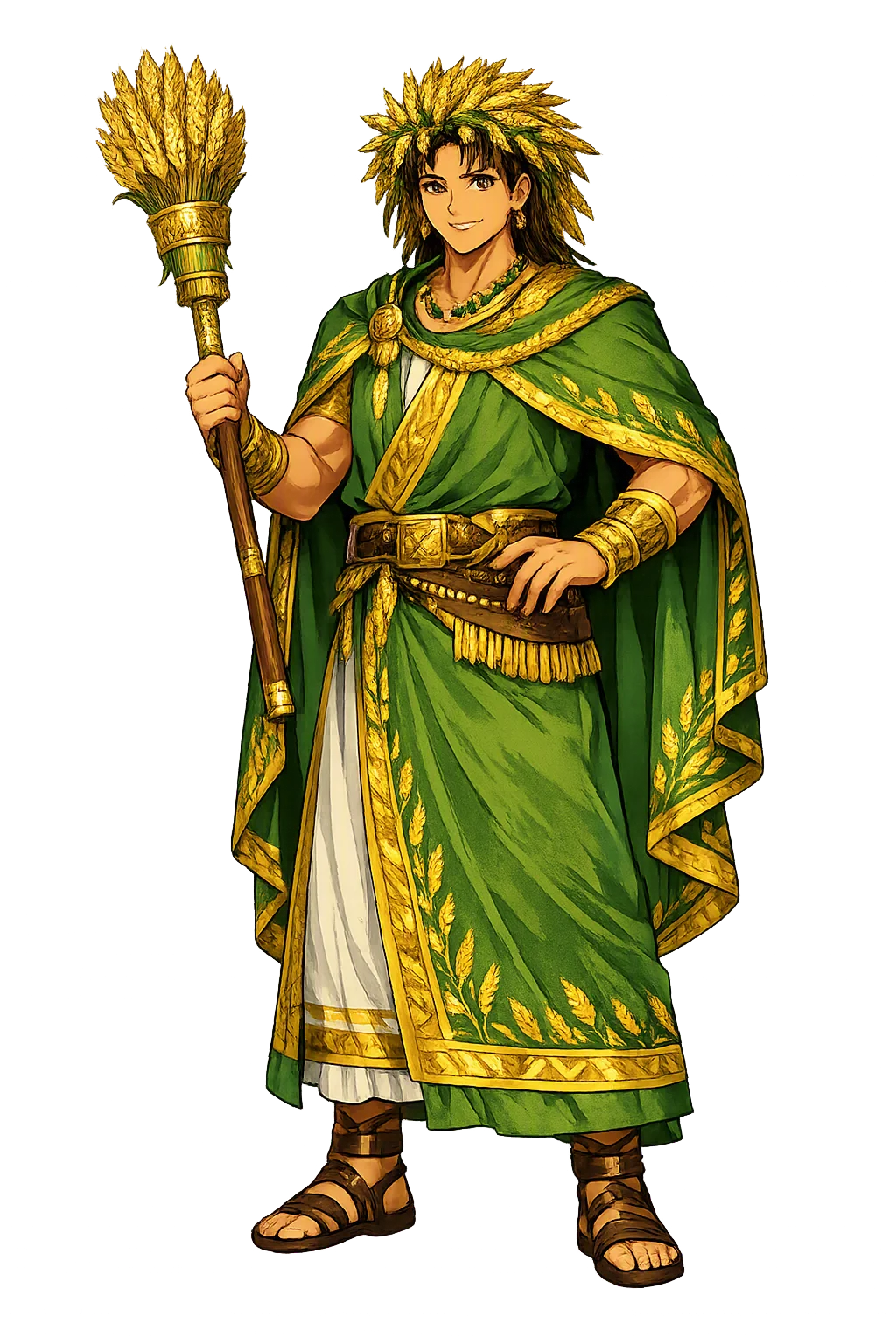
The many faces of Telipinu
No important name has only one face. Telipinu appears as a figure of myth, a scholarly reconstruction, a piece of material culture, a memory carried across languages, and — most recently — a Unicode domain. This post looks at each face in turn: the name and its roots, the Cuneiform (Hittite) original, the reconstructed pronunciation, the mythological record, the symbols and sanctuaries, the cross-cultural afterlife, and the engineering that lets the restored spelling resolve in a browser. Taken together, those faces explain why telipinu was never going to be enough — and why the restored form is worth a domain of its own.
At a Glance
- Restored name: Telipinu
- ASCII form: telipinu
- Meaning: "Unknown"
- Domain of influence: Agriculture, Vanishing God
- Pantheon: Hittite
- Classification: Tier 2
- Original script: 𒀭𒋼𒂊𒇷𒁉𒉡𒌑 (Cuneiform (Hittite))
Overview
Telipinu (telipinu) — Agriculture, Vanishing God · Unknown — belongs to the Hittite tradition, where it is catalogued under the domain "Agriculture, Vanishing God". The name means "Unknown".
Telipinu is the Hittite god who makes the grain grow — and the god who, when offended, takes his gift away. His myth is not a cosmic battle but a domestic crisis of divine temper: the deity storms out of the assembly, slams the door, and wanders off in a rage. Behind him the fields wither, cattle abandon their calves, mothers forget their children, and even the cooking fire goes out. The world does not end by flood or dragon; it ends because a god has left the room.
The Telipinu Myth (CTH 324) is one of the best-preserved Hittite religious narratives. It is also a ritual text: the story is performed in order to undo the very disaster it describes. Telipinu is therefore a god of restorable order — his absence is catastrophic, but his return, properly negotiated by magic and apology, brings everything back.
PuniCodex restores the name as Telipinu and serves its temple at its temple. The restoration needs no distinctive letters or diacritics its ASCII form would lose, which places the name in Tier 2. The plain ASCII form telipinu survives as a modern convenience imposed by the early domain-name system; the restoration, not the fallback, is the form the project defends as philologically complete.
The Name
The name is attested in Cuneiform (Hittite) as 𒀭𒋼𒂊𒇷𒁉𒉡𒌑. Etymologically it means "Unknown".
The ASCII form telipinu survives only because the early domain-name system could not carry diacritics; it is a technological compromise, not an ancient spelling. The Unicode restoration Telipinu recovers the full diacritic detail of the scholarly transliteration directly in the address bar. The restoration needs no distinctive letters or diacritics its ASCII form would lose, which places the name in Tier 2.
The letter-by-letter transformation runs:
- t → T — Same, capitalized
- e → e — Same
- l → l — Same
- i → i — Same
- p → p — Same
- i → i — Same
- n → n — Same
- u → u — Same
The Original Script
The name is preserved in Cuneiform (Hittite) as 𒀭𒋼𒂊𒇷𒁉𒉡𒌑 — Sumero-Akkadian cuneiform (Hittite scribal tradition), attested Hittite Empire, c. 1400–1180 BCE, in Anatolia (Ḫattuša). The script is written left-to-right.
The scholarly transliteration is ᵈte(-e)-li-pí-nu(-ú) (Hittitological), giving the normalized reading /teˈlipinu/.
The rendering proceeds step by step:
- Written ᵈte(-e)-li-pí-nu(-ú) (Beckman, RlA 13, 2012)
Pronunciation
The reconstructed pronunciation of the name is /teliˈpiːnu/ — Hittite Reconstruction.
Phoneme by phoneme:
- Te- — Voiceless alveolar stop [t] followed by close-mid front vowel [e]; the first syllable is light and unstressed in the Hittite accent.
- -li- — Alveolar lateral [l] between two light vowels; the name's melodic center.
- -pī- — Bilabial stop [p] plus long close front vowel [iː]; the macron marks a reconstructed length, not a sign-given fact.
- -nu — Nasal [n] plus close back rounded vowel [u]; the name's calm, open ending.
For the modern speaker, the closest approximation is: 'teh-lee-PEE-noo' — stress the long third syllable and let the final vowel settle gently, like rain returning to a field.
Kindred and historical forms of the name:
- Hittite cuneiform — 𒀭𒋾𒇷𒁉𒉡 (dTe-li-pi-nu), the vanishing god of agriculture and vegetation
- Hattic — Telipinu is probably a Hattic loan or theonym, like many central Anatolian deities adopted into Hittite cult
- Luwian comparison — Parallel 'disappearing god' myths attach to other Anatolian weather and vegetation deities
Telipinu is Tier 2: the canonical Unicode form preserves only capitalization against the ASCII form, with no distinctive diacritic or non-Latin letter. The macron in /teliˈpiːnu/ is a philological reconstruction of vowel length; it is not part of the registrable restoration and therefore does not change the tier.
Mythology
The mythology of Telipinu survives in Hittite tablets from Ḫattuša, above all in CTH 324. It is a myth about the fragility of fertility: the grain, the cattle, and the family all depend on a god who can choose to leave. The drama is not cosmic combat but divine temperament and its ritual repair.
The God Who Stormed Out (CTH 324)
The myth opens in the divine assembly, where something unknown offends Telipinu. He rises, puts his shoes on the wrong feet, and leaves in a fury. As he goes, 'the mist seized the windows, smoke seized the house, in the fireplace the logs were stifled, at the altars the gods were stifled, in the fold the sheep were stifled, in the corral the cattle were stifled; the mother ignored her child, the ewe ignored her lamb.' The cosmos does not collapse; it simply forgets how to flourish.
The Search in the Wilderness (CTH 324)
The great gods send out the Storm-God of Heaven, the Sun-Goddess of Arinna, and others to find Telipinu, but none can locate him. Finally the bee is dispatched: 'Go, search for Telipinu in the high country, in the meadow, in the swamp, and st him!' The bee finds him asleep in a meadow or among the mountains, stings him, and wakes him — but this only enrages him further. He multiplies the disasters he has already caused.
Kamrušepa's Spell (CTH 324)
The goddess Kamrušepa, 'mother of the gods' and expert in magic, takes charge. She performs a ritual of appeasement: she anoints Telipinu, sprinkles him with fine oil, and recites formulae that transfer his anger to objects of no consequence — a spindle, a reed, a pot, or the underworld itself. 'Let Telipinu's anger, his wrath, his sin, and his vexation depart!' With each symbolic action the god's fury is peeled away and the world is prepared for his return.
The Return of Plenty (CTH 324)
When Telipinu comes home, the myth turns to restoration: 'The mist let go of the windows, the smoke let go of the house, the logs in the fireplace let go of their stifling, the gods at the altars let go of their stifling.' The grain grows thick, the vines heavy, the sheep and cattle multiply, and the king and queen are blessed. The ritual re-enacts this return, making the myth a performance that heals the land by rehearsing its healing.
Symbols & Iconography
The iconography associated with Telipinu concentrates in a small set of recurring attributes, each a compressed statement about the name:
- Plough — The agricultural tool that defines Telipinu's blessing and the furrow he makes fertile
- Bee — The divine messenger that finds Telipinu in hiding; also an emblem of Anatolian ritual language
- Pine or staff — Telipinu is often depicted leaning on a staff; the pine is associated with his resting and return
- Reversed shoes — The sign of a world turned upside-down when the god leaves in anger
- Wagon or chariot — The vehicle in which Telipinu is ceremonially brought back to the city and the temple
- Bee — The divine messenger that finds Telipinu in hiding; also an emblem of Anatolian ritual language
Archaeology & Evidence
The Telipinu myth is attested on cuneiform tablets excavated at Ḫattuša (modern Boğazkale), the Hittite capital, and in fragments from other Anatolian sites. The best-preserved manuscripts belong to the archives of the Great Temple and the House on the Slope. Telipinu also had a cult seat at the city of Tawiniya, and offerings to him appear in Hittite festival texts and royal oracle inquiries.
Realm & Domain
Telipinu is the Hittite god who makes the grain grow — and the god who, when offended, takes his gift away. His myth is not a cosmic battle but a domestic crisis of divine temper: the deity storms out of the assembly, slams the door, and wanders off in a rage. Behind him the fields wither, cattle abandon their calves, mothers forget their children, and even the cooking fire goes out. The world does not end by flood or dragon; it ends because a god has left the room.
The Telipinu Myth (CTH 324) is one of the best-preserved Hittite religious narratives. It is also a ritual text: the story is performed in order to undo the very disaster it describes. Telipinu is therefore a god of restorable order — his absence is catastrophic, but his return, properly negotiated by magic and apology, brings everything back.
The Vanishing God
When offended, Telipinu puts his right shoe on his left foot and his left shoe on his right foot, then storms into the wilderness — a formal gesture of inverted order.
Famine & Forgetfulness
His absence dries up springs, kills the grain, and unbinds social bonds: sheep reject their lambs and mothers turn away from their children.
The Bee Messenger
The gods send a bee to find Telipinu in the meadow; it stings him awake, inflaming his rage until the goddess Kamrušepa performs the calming ritual.
Ritual Return
Kamrušepa, goddess of magic and healing, recites the ritual that turns Telipinu's anger aside and leads him home, restoring fertility and plenty.
Across Cultures
Telipinu belongs to a broader Anatolian type: the 'disappearing god' (der verschwundene Gott), a category first named by Hittitologists for deities whose absence causes agricultural and social collapse. Similar patterns appear for the weather-god of Nerik, the vegetation god Halki, and, in Greek Anatolia, figures such as Attis and Adonis whose death or departure marks the failing year. Unlike the Mesopotamian flood or the Egyptian solar eclipse, the Hittite crisis is not cosmic but relational: the god is offended, leaves, and must be coaxed back. This pattern influenced later Anatolian and Greek conceptions of dying-and-rising vegetation gods, though direct genealogical links remain debated.
Within the Hittite tradition, closely related names in the corpus include Alalu, Cerēs, Dēmētēr, Gefjun, Hoori, and Ninurta.
Cultural Legacy
Telipinu is one of the most accessible Hittite deities for modern readers because his myth is so recognisably human: a family member storms out, the household falls apart, and a careful apology is required to restore harmony. In Assyriology and Hittitology, the Telipinu Myth is a standard text for teaching Hittite language and religion. Its legacy is the idea that fertility is a relationship, not a machine — maintained by ritual attention and capable of being ruptured by neglect or offense. For PuniCodex, Telipinu also illustrates the plain Tier-2 form: a name whose restoration preserves only its proper capitalization, inviting visitors to ask what the cuneiform recorded and what the voice once said.
The Scholarly Record
The account of Telipinu given in this edition rests on the witnesses and reference works listed below. Lexica and etymological dictionaries secure the form and meaning of the name; the literary and religious texts supply the narrative evidence.
- CTH 324 — Telipinu Myth.
- Hoffner, Hittite Myths (2nd ed., 1998).
- CHD (Chicago Hittite Dictionary).
- KBo and KUB editions of the Telipinu tablets.
- Collins, The Hittites and Their World.
- Bryce, Life and Society in the Hittite World.
- Haas, Geschichte der hethitischen Religion.
A Meditation
The myth of Telipinu is a meditation on absence as an active force. When the god leaves, nothing is destroyed; everything is merely left. The fire smothers, the mother forgets, the ewe rejects her lamb — these are not attacks but withdrawals. Fertility, in this theology, is not a default state of nature; it is a gift that requires divine presence and human care. The ritual that brings Telipinu back does not overpower him; it persuades him, soothes him, and offers him a way to return without losing face.
In this sense Telipinu is the god of reconciliation with the source of life. His anger is legitimate, his departure understandable, and his restoration conditional. The Hittite king and queen participate in the ritual not as tyrants commanding nature but as householders mending a quarrel. Every farm that depends on rain, every family that depends on patience, and every society that depends on the return of spring rehearses, in its own way, the return of Telipinu.
The Unicode Restoration
Telipinu is classified as Tier 2: the restoration needs no distinctive letters or diacritics its ASCII form would lose. The ASCII fallback telipinu still resolves everywhere, but it is the restored form that carries the name's full information. That is the whole thesis of this temple: the marks are the message.
Character by Character
The journey from telipinu to Telipinu, one character at a time:
- t → T — Same, capitalized
- e → e — Same
- l → l — Same
- i → i — Same
- p → p — Same
- i → i — Same
- n → n — Same
- u → u — Same
The Hittite Pantheon
Telipinu is one of 8 entries the PuniCodex lexicon catalogues under the Hittite pantheon. The Pantheon page gathers the tradition's major figures in one place, and the Lexicon lets you filter all 980 restorations by tradition, tier, or script — the fastest way to see where this name sits among its kin.
Frequently Asked Questions
What does Telipinu mean? The traditional gloss is "Unknown."
Which tradition does Telipinu belong to? Telipinu is catalogued in the Hittite pantheon of the PuniCodex lexicon.
Why is Telipinu classified as Tier 2? Because the restoration needs no distinctive letters or diacritics its ASCII form would lose — and the marks in the restored spelling preserve exactly that evidence.
Can I use Telipinu in a normal browser? Yes. The DNS resolves the punycode form automatically, and the type tool on this site converts telipinu to Telipinu for copying and pasting.
Where does the scholarly information come from? The entry is built from lexica, inscriptional evidence, and reviewed scholarly sources listed in the Scholarly Edition. Every claim is traceable to a canonical source.
Typing Telipinu
You do not need a special keyboard to use this restoration. The PuniCodex Type Tool converts the ASCII form telipinu into Telipinu as you type, and the browser extension offers the same conversion inside any text field. Copy the restored form, paste it into the address bar, and the DNS does the rest.
Sister Temples
Other temples in the Hittite pantheon include Inaras, and Arinna — each with its own restoration story, its own scholarly record, and its own place in the lexicon.
Why This Restoration Matters
Myth, script, sound, cult, legacy, domain: the faces of Telipinu add up to a single argument — that a name is a record, and records deserve fidelity. The PuniCodex restoration keeps that record in working order: the temple presents it, the Scholarly Edition footnotes it, the lexicon catalogs it, and the domain makes it addressable. telipinu will always exist as a fallback. But fallback is not identity. Telipinu is the name; everything else is a convenience.
Explore Further
This post is one doorway into the temple. The home page carries the full character breakdown and the ambient canvas; the lore page tells the myths in long form; the Scholarly Edition preserves the sources, pronunciation data, and revision history; and the patron wall supports the restoration directly. For the wider map, browse the Lexicon, explore the Pantheon, or return to the PuniCodex blog.
A Closer Look at the Marks
A restored name is a small map. In the case of Telipinu, the map does not lead through diacritics or special letters, because the source tradition wrote the name in Cuneiform (Hittite) rather than in the Latin alphabet. The ASCII form telipinu and the restored form share the same letters; the restoration is a decision about which conventional spelling should serve as the public reference.
That decision is not cosmetic. The original script attestation carries semantic and phonetic information that no romanization can fully reproduce. By fixing one conventional spelling as the canonical domain form, the project prevents the drift that happens when a name is romanized differently in every article, map, and database. The breakdown still lists each character — t, e, l, i, p, i, n, u — so visitors can see exactly what is being carried forward and what is not. What looks like "no change" is, in fact, a deliberate choice to keep the name stable, searchable, and addressable.
Related Names
Sources
The full scholarly apparatus — every citation, revision, and review — lives in the Scholarly Edition. Key references for this post:
- CTH 324 — Telipinu Myth.
- Hoffner, Hittite Myths (2nd ed., 1998).
- CHD (Chicago Hittite Dictionary).
- Beckman, RlA 13 (2012).
- Lexicon authorities for this entry: Hittite texts, CHD.