
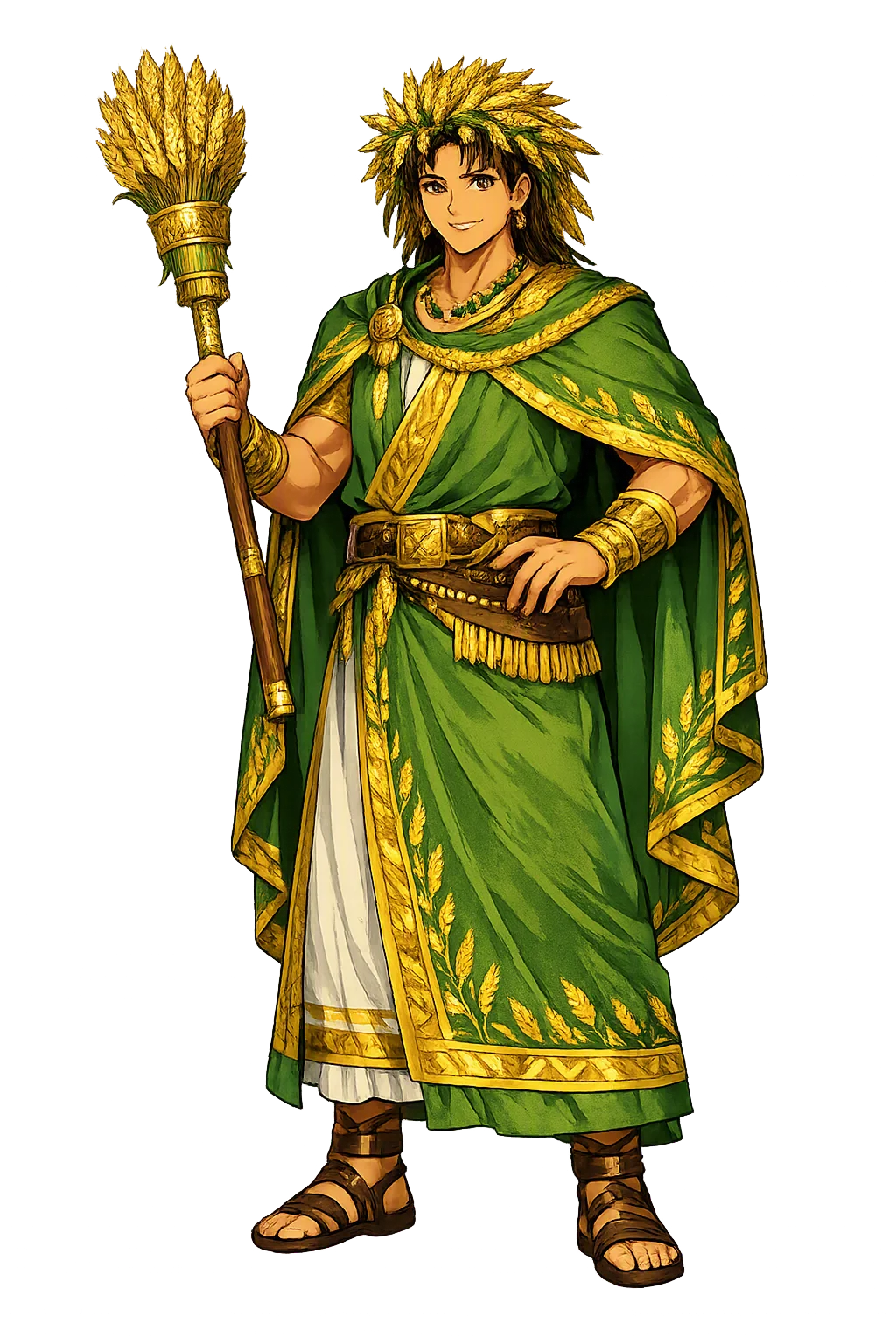
Telipinu — the one true spelling, and the forms that fail it
A letter to a colleague, 31 July 2026 — on the name Telipinu, and on the forms that keep failing it.
Your note said, roughly: surely the marks are a nicety. Permit me to use Telipinu to show they are not.
First, the attestation. The attested form is 𒀭𒋼𒂊𒇷𒁉𒉡𒌑, from the tradition's own record. The canonical transliteration is Telipinu.
Say it aloud as the sources heard it: 'teh-lee-PEE-noo' — stress the long third syllable and let the final vowel settle gently, like rain returning to a field. The marks are what carry that sound to a reader who has never heard it spoken.
On the plain form — and I want to be precise, because you pushed on this. The plain form telipinu differs from the canonical Telipinu only by convention of display — case, not content. It is acceptable everywhere: in legacy systems, in plain-text citation, in the DNS itself. What is not acceptable is what follows in the register: respellings that change the letters, not just their case.
One more thing, because it always surprises: the name did not stay home. Telipinu belongs to a broader Anatolian type: the 'disappearing god' (der verschwundene Gott), a category first named by Hittitologists for deities whose absence causes agricultural and social collapse. Similar patterns appear for the weather-god of Nerik, the vegetation god Halki, and, in Greek Anatolia, figures such as Attis and Adonis whose death or departure marks the failing year.
And it never stopped working. Telipinu is one of the most accessible Hittite deities for modern readers because his myth is so recognisably human: a family member storms out, the household falls apart, and a careful apology is required to restore harmony. In Assyriology and Hittitology, the Telipinu Myth is a standard text for teaching Hittite language and religion.
The Convention's Own History
Every tradition in this register has its own scholarly transliteration standard, built by its own specialists over decades or centuries, and the register follows each on its own terms: the tradition’s own standard. The principle that unifies them is the one the whole project stands on: a name is evidence, and evidence is not negotiable — not for keyboards, not for convenience, not for anyone.
Where Protocol Meets Practice
The technical answer is simple: the canonical marks are legal IDNA 2008 characters, encoded as punycode under `xn--`. The practical answer is messier: legal does not mean stocked (registrar inventory is partial), and stocked does not mean typeable (stacked diacritics defeat mobile keyboards).
So the register's rule is a hierarchy of attested forms — full restoration, circumflex, macron-only, attested variant, and finally plain ASCII for the systems that cannot carry marks. Every rung is defensible because every rung is attested. The forms this register rules against are not rungs; they are errors, and errors do not get rungs.
Write back when you have checked the sources; they are better company than I am.
— The Register
The Verdict
Telipinu is the canonical form: attested, checkable, and enforced across the temple, the lexicon, the cards, the APIs, and this register. The plain form telipinu shares that standing — the two are the same name in every system. The false forms above are documented so that no reader has to take the temple's word on faith — the violations are stated, the sources are named, and the register stands open to challenge on every line.
The temple of Telipinu stands at /telipinu/.
The docket for this ruling: no false forms on the docket; no contested forms attested; the attestation rests on 7 cited sources — CTH 324 — Telipinu Myth, Hoffner, Hittite Myths (2nd ed., 1998), CHD (Chicago Hittite Dictionary).
The Register Continues
This is one of 548 entries in the Canonical Register — the authoritative reference for every flagship temple. The temple's founding dispatch tells the name's story; its Restoration File details the marks; its Resonance File reads the archetype into the industries. The blog index holds the whole archive, and the Rulebook states the convention this register enforces.
Continue the register — previous entry: Tártaros (read it) · next entry: Tēzcatlīpōca (read it).
The Canonical Register is written from the same canonical record as the lexicon itself. If a false form is missing from this page, it is because the evidence does not support calling it false — or because we have not seen it yet. Show us, with a citation, and the register will answer.