
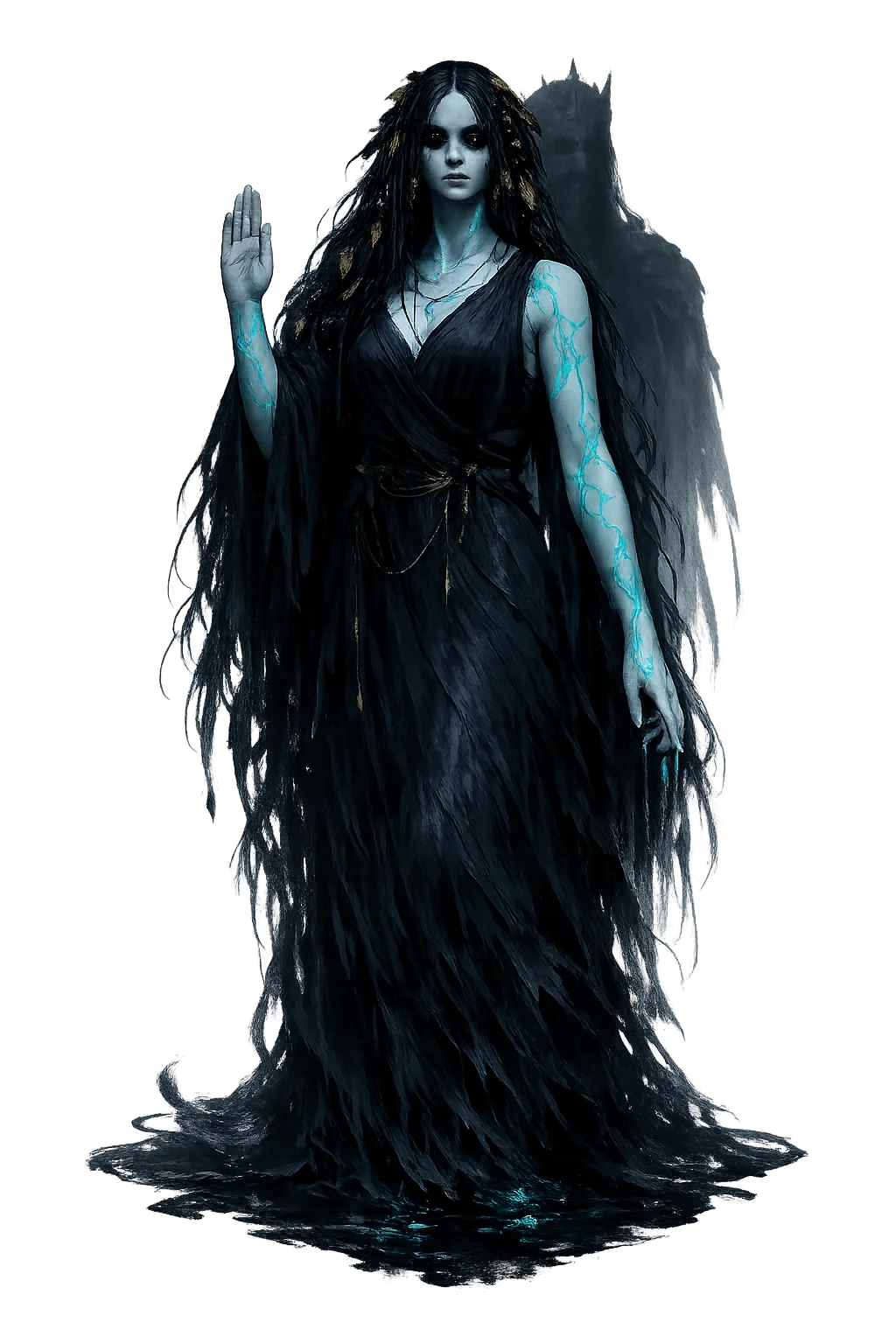
Stress-testing Stýx: do the industry seats hold?
Audit notes, Stýx: we took every seat the atlas claims for this temple and tried to break it against the myths. What survived is below.
At a Glance
- Temple: Stýx
- Pantheon: Greek
- Domain of influence: River of Hate, Oaths
- Pattern seats: 5
- Sectors touched: Commerce & Governance · Society & Spirit · Culture & Entertainment · Energy & Natural World
- Strongest seat: Legal, Justice & Compliance
- Series: The Resonance Files, No. 458 of 546
The Test
Seat 1: Legal, Justice & Compliance
Claim: The river of the oath — the original binding agreement. Exhibit: The Water the Gods Swear By — The Iliad's formula runs through the epic: when Zeus wishes to make an oath unanswerable, he swears 'by the earth and the broad heaven above and the down-flowing water of Styx' (Iliad 15.
Verdict: stands. Strip both to their function and the functions match.
Seat 2: Faith & Spiritual Organizations
Claim: The oath-water; the oldest contract cult in the West. Exhibit: The Mother of the Reign — Hesiod's Theogony (383–403) makes her the hinge of Zeus' kingdom.
Verdict: stands. Strip both to their function and the functions match.
Seat 3: Philosophy, Ethics & Standards
Claim: The binding word; the philosophy of promises. Exhibit: The Stream of the Under — Her water is the underworld's own.
Verdict: holds under load. The correspondence is functional, not decorative.
Seat 4: Travel, Tourism & Place Branding
Claim: The Arcadian waterfall; the oath-cliff of Nonakris. Exhibit: The Water the Gods Swear By — The Iliad's formula runs through the epic: when Zeus wishes to make an oath unanswerable, he swears 'by the earth and the broad heaven above and the down-flowing water of Styx' (Iliad 15.
Verdict: stands. Strip both to their function and the functions match.
Seat 5: Freshwater & Hydrology
Claim: The boundary stream; the underworlds own waterworks. Exhibit: The Mother of the Reign — Hesiod's Theogony (383–403) makes her the hinge of Zeus' kingdom.
Verdict: survives scrutiny. The myth and the trade do the same work.
The Control Group
Against the seats that survived, one control: the temple's own summary of its figure — Stýx's myths are about the one thing stronger than the gods: the word that cannot be taken back. The seats do not drift far from it. That is the audit's cleanest result.
The Method, Stated Plainly
None of this is numerology. A seat exists only where the match can be argued from the deity’s documented domains and deeds — weighted, published, and falsifiable. The derivation, the weights, and the challenge process are public on the methodology page. If a seat in this file reads wrong, the atlas itself tells you how to prove it — and the correction becomes part of the record.
For the Ones Who Work There
For a sponsor in legal, justice & compliance, the fit here is not adjacency — it is inheritance. Your trade already tells this story every working day; the temple simply holds the original. The patron tier and the advertising terms carry the mechanics; the myths above carry the reason.
The File Continues
This is one of 546 Resonance Files — the third dispatch from every flagship temple, where the myths meet the markets. The temple's founding dispatch tells the name's story; its Restoration File tells the spelling's; the blog index holds the whole archive.
Continue the series — previous: Stribog (read it) · next: Sukunahikona (read it).
The Resonance Files are argued from the same canonical record as the pattern atlas itself: the lexicon, the lore catalog, and the cited sources. Every seat can be challenged at the methodology page — and the challenge is the point.