
Why Rāma is spelled that way — and what it costs to get it right
Some restorations are cosmetic. Rāma is not — the marks in this name are the difference between reading the sources and guessing at them.
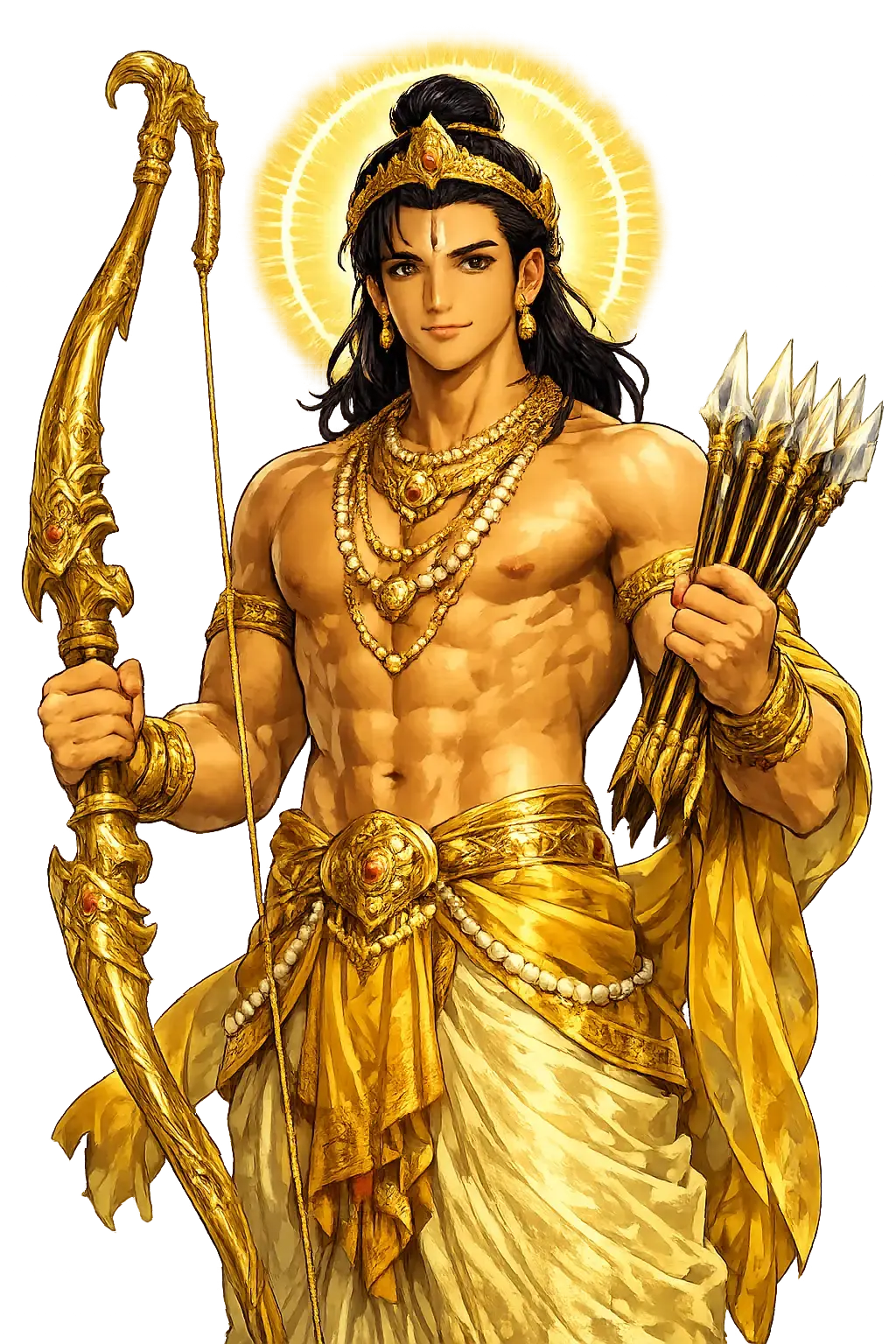
Rāma's mythology is anchored in Vālmīki's Rāmāyaṇa and retold across languages, religions, and centuries. It is a story of exile, fidelity, alliance, and the recovery of righteousness through suffering. On the eve of Rāma's coronation, his stepmother Kaikeyī demands that her own son Bharata be crowned and that Rāma be banished for fourteen years. Rāma's father Daśaratha, bound by an old promise, is heartbroken.
That is the figure this file is about — and the temple now standing at its restored name.
At a Glance
- Restored name: Rāma
- ASCII form: rama
- Meaning: "The beloved prince of Ayodhyā — hero of the Rāmāyaṇa and seventh avatāra of Viṣṇu (from √ram, to delight)"
- Domain of influence: Virtue, Kingship, Avatar of Vishnu
- Pantheon: Sanskrit
- Classification: Tier 1
- Original script: राम
- Series: The Restoration Files, No. 208 of 271
The Name Before the Marks
Strip Rāma to rama and one piece of evidence vanishes:
- a → ā — Macron: long /aː/: the vowel length the ASCII form cannot show.
None of these marks is decoration. Each one is a fact about how the name was spoken, and each one is checkable against the scholarly record the temple cites.
The Temple That Stands Now
The restored name is not a plaque; it is an address. The temple of Rāma lives at /sites/rama/, with its mythology in the lore halls, its peer-reviewed record in the Scholarly Edition, and its place in the pattern atlas on the patterns floor.
The restoration preserves more than the ASCII form can say — stress, length, or a letter the Latin keyboard lost — which places it in Tier-1: mechanically verifiable, information-rich.
Every flagship temple is hand-built to the same standard: the original script displayed with its provenance, the pronunciation reconstructed phoneme by phoneme, the sources named — because a restoration you cannot audit is just a spelling with confidence.
The Archetype at Work
A temple is also a reading of what this figure means — and meanings have addresses in the modern world. The pattern atlas maps Rāma to the industries its archetype genuinely resonates with, each match argued, weighted, and open to challenge:
- Leadership, Governance & Public Administration — Rama Rajya — the ideal reign — is still the benchmark of good governance.
- Defense, Military & Security — The righteous warrior-king of the Rāmāyaṇa.
- Faith & Spiritual Organizations — The avatar whose name is still sung in every temple.
This is the part of the file that surprises people: a four-thousand-year-old name, mapping cleanly onto twenty-first-century trades. The patterns are not marketing — they are the same myths, read forward.
In the Sacred Texts
The Sanskrit tradition is not a vibe; it is a library. The Sacred Texts collection holds Rig Veda and Ramayana — the primary sources the temple's scholarship is built on, free to read, cross-linked back to the names they mention. The temple is the argument; the texts are the evidence.
The File Continues
This is one of 271 Restoration Files — a second dispatch from every flagship temple in the fleet. The temple's first dispatch tells the founding story of the name; the blog index holds the whole archive.
Continue the series — previous file: Ragnarǫk (read it here) · next file: Rhéā (read it here).
The Restoration Files are written from the same canonical record as the temples themselves: the lexicon, the lore catalog, the pattern atlas, and the cited scholarly sources. If a file ever disagrees with its temple, the temple is right — tell us, and the file will be corrected.