
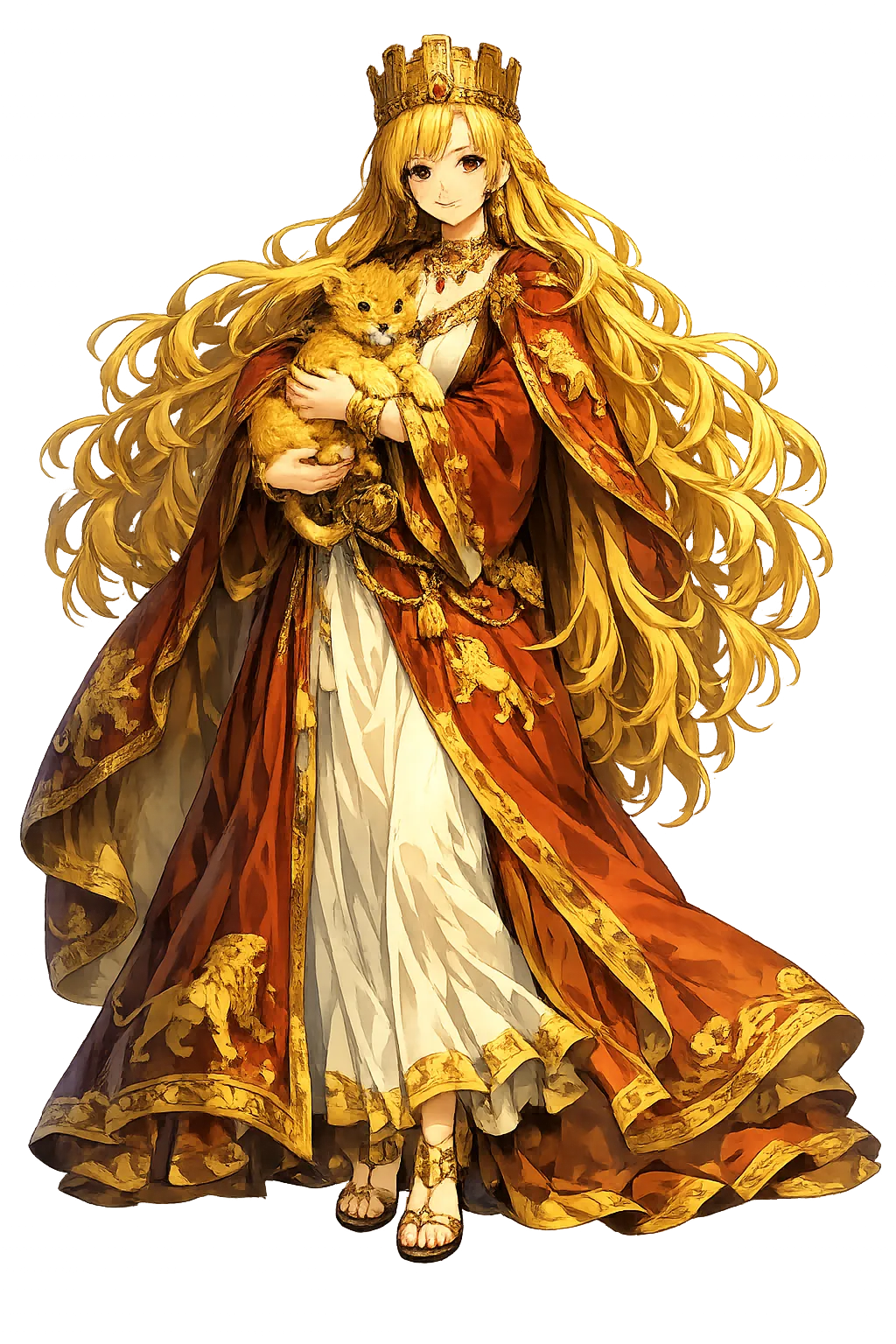
Rhéā: the stories first, then the spelling
Before the spelling, the story. Rhéā earns its restoration the old way — through what was actually told.
The Stories That Carry the Name
The Swallowed Children. Kronos, warned that one of his children would overthrow him, swallowed each infant as Rhea bore them. Rhea wept but was powerless until the birth of Zeus. Then she turned from grieving mother to strategist.
The Ruse of the Stone. Rhea asked her parents Gē and Ouranos for advice. They sent her to Crete, where she gave birth to Zeus in a hidden cave. She wrapped a great stone in swaddling clothes and presented it to Kronos, who swallowed it unaware.
The Kouretes. To hide the infant Zeus's cries, Rhea's attendants the Kouretes clashed their weapons and danced. The ritual became a Cretan mystery: the birth of the god was protected by noise, movement, and collective vigilance.
And Here Is What the Spelling Preserves
Against those stories, the attestation: Ῥέα, in the attestation LSJ and Beekes, Etymological Dictionary of Greek give us. The name means "Flow, ease (from ῥέω)".
The restoration keeps 2 features the ASCII form rhea cannot show:
- e → é — Acute on e: where the voice peaks.
- a → ā — Macron on a: how long the vowel is held.
A storyteller pronouncing the name would restore every one of them by instinct. The file only writes down what the voice already knows.
At a Glance
- Restored name: Rhéā
- ASCII form: rhea
- Meaning: "Flow, ease (from ῥέω)"
- Domain of influence: Motherhood, Fertility, Titans
- Pantheon: Greek
- Classification: Tier 1
- Original script: Ῥέα
- Series: The Restoration Files, No. 209 of 271
The Name Travels
Rhéā was identified with the Anatolian Great Mother Cybele and, to some extent, with the Cretan mother of Zeus. The Romans called her Ops, the goddess of abundance and the consort of Saturn.
The Address It Earned
The temple of Rhéā stands at /sites/rhea/ — lore, scholars, patterns — because a name carrying this much story deserves more than a parking page. Tier-1 is not a compliment; it is a measurement. This restoration keeps something the ASCII form provably loses, and the measurement is repeatable.
The Sources Are Open
The myths above are retold from the temple's record; the primary voices are in the Sacred Texts: Theogony, Homeric Hymns, and Works and Days. Nothing in this file outranks them.
The File Continues
Read the founding dispatch for the name's full story, the Resonance File for the archetype at work — or the whole archive in one sitting.
Continue the series — previous file: Rāma (read it here) · next file: Ṛta (read it here).
The Restoration Files are written from the same canonical record as the temples themselves: the lexicon, the lore catalog, the pattern atlas, and the cited scholarly sources. If a file ever disagrees with its temple, the temple is right — tell us, and the file will be corrected.