The Authentic Orthography
Virtue, Kingship, Avatar of Vishnu · of various mythical personages (in Veda two Rāmas are mentioned with the patr. Mārgaveya and Aupatasvini; another R˚s with the patr. Jāmadagnya [cf. below] is the supposed author
Unicode restoration and ASCII comparison
राम
The name in its original Sanskrit form. Rāma (राम) is attested in the source tradition — “of various mythical personages (in Veda two Rāmas are mentioned with the patr. Mārgaveya and Aupatasvini; another R˚s with the patr. Jāmadagnya [cf. below] is the supposed author”. Its macron-length vowels carry the full phonetic and orthographic weight of the source tradition.
rama
Reduced to plain rama, the name loses everything that made it specific: macron-length vowels. What remains is an ASCII string that machines can parse but that no longer speaks with its original voice.
Rāma
The Unicode restoration recovers what ASCII flattened. Rāma restores macron-length vowels, returning the name to its original written dignity. The domain encodes to Punycode, but the browser displays the truth.
Rāma.com → xn--rma-1oa.com
The non-ASCII characters in Rāma are encoded while the ASCII remains visible. To the DNS, it is Punycode. To humanity, it is Rāma.
How Rāma travels from ancient script to the modern URL
Sanskrit Rāma; from the root ram- “to delight, to be pleasing"; the hero of the Rāmāyaṇa and an avatar of Viṣṇu.
Virtue, Kingship, Avatar of Vishnu
The IAST form Rāma uses registrable Latin diacritics; the Devanagari form is not supported in .com.
How Rāma was spoken
Virtue, Kingship, Avatar of Viṣṇu
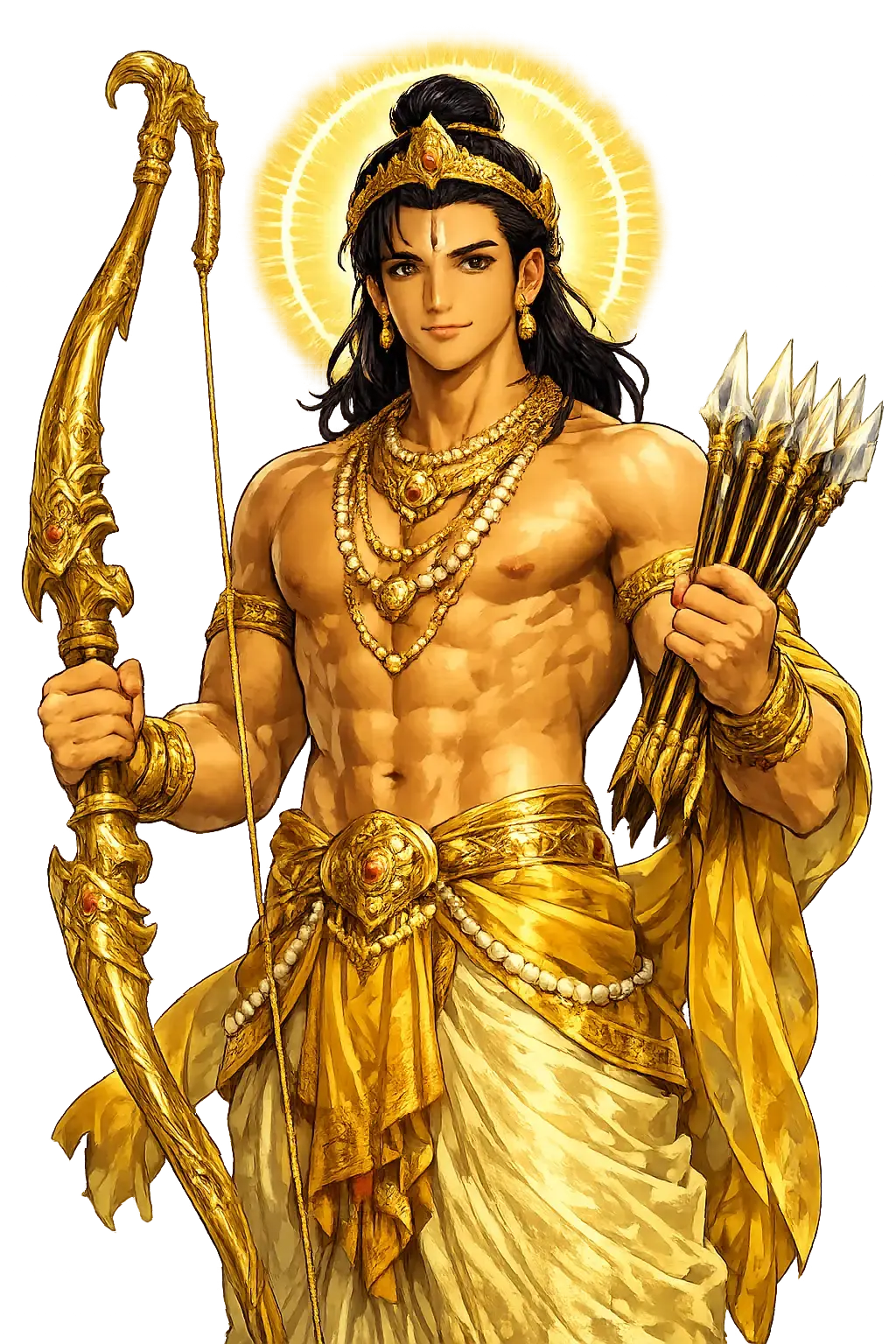
Rāma is the prince who became the pattern of righteous kingship. In the Sanskrit tradition he is the seventh avatāra of Viṣṇu, descending to earth to destroy the demon Rāvaṇa and restore the rule of dharma. But he is also something rarer: a hero whose greatness lies not in battle fury but in obedience, sacrifice, and the willingness to suffer for the sake of duty.
His story, told in Vālmīki's Rāmāyaṇa, has shaped Indian ideals of son, husband, brother, king, and warrior for more than two millennia. To name Rāma is to invoke an entire ethical universe.
He is the king for whom law is not policy but personal discipline; even family feeling yields to righteousness.
'The best of men within limits' — he never transgresses the moral boundaries that define civilized life.
He accepts fourteen years of banishment without protest, showing that a king's first obligation is to his word.
With the aid of monkeys, bears, and his brother Lakṣmaṇa, he crosses the sea to defeat the ten-headed demon.
Stories of Rāma
Rāma's mythology is anchored in Vālmīki's Rāmāyaṇa and retold across languages, religions, and centuries. It is a story of exile, fidelity, alliance, and the recovery of righteousness through suffering.
On the eve of Rāma's coronation, his stepmother Kaikeyī demands that her own son Bharata be crowned and that Rāma be banished for fourteen years. Rāma's father Daśaratha, bound by an old promise, is heartbroken. Rāma accepts the decree calmly, giving up throne, palace, and comfort without reproach. His wife Sītā and brother Lakṣmaṇa insist on accompanying him, and the three enter the forest as the kingdom weeps.
In the forest of Pañcavaṭī, the demoness Śūrpaṇakhā desires Rāma and is mutilated by Lakṣmaṇa. Her brother Rāvaṇa, king of Laṅkā, avenges her by tricking Rāma away from the hermitage and carrying Sītā across the ocean in his aerial chariot. Rāma's grief and determination set in motion the great war that will end Rāvaṇa's reign.
Rāma allies with the exiled monkey king Sugrīva and the divine monkey Hanumān. Hanumān leaps to Laṅkā, finds Sītā, and burns the city with his flaming tail. The monkey army builds a causeway across the sea, and Rāma confronts Rāvaṇa in a battle that shakes the earth. After Rāvaṇa's death, Rāma rescues Sītā but tests her purity in fire before accepting her before the assembled armies.
Rāma is the hero who suffers duty rather than asserting will. At every turning point — exile, the loss of Sītā, the doubt of his people — he chooses the harder path because it is the right one. His perfection is not exciting; it is austere, even heartbreaking.
Enter Extended Lore