
Why Pān is spelled that way — and what it costs to get it right
There is a version of this name the early internet had to settle for: pan. This is the file on how Pān replaced it.
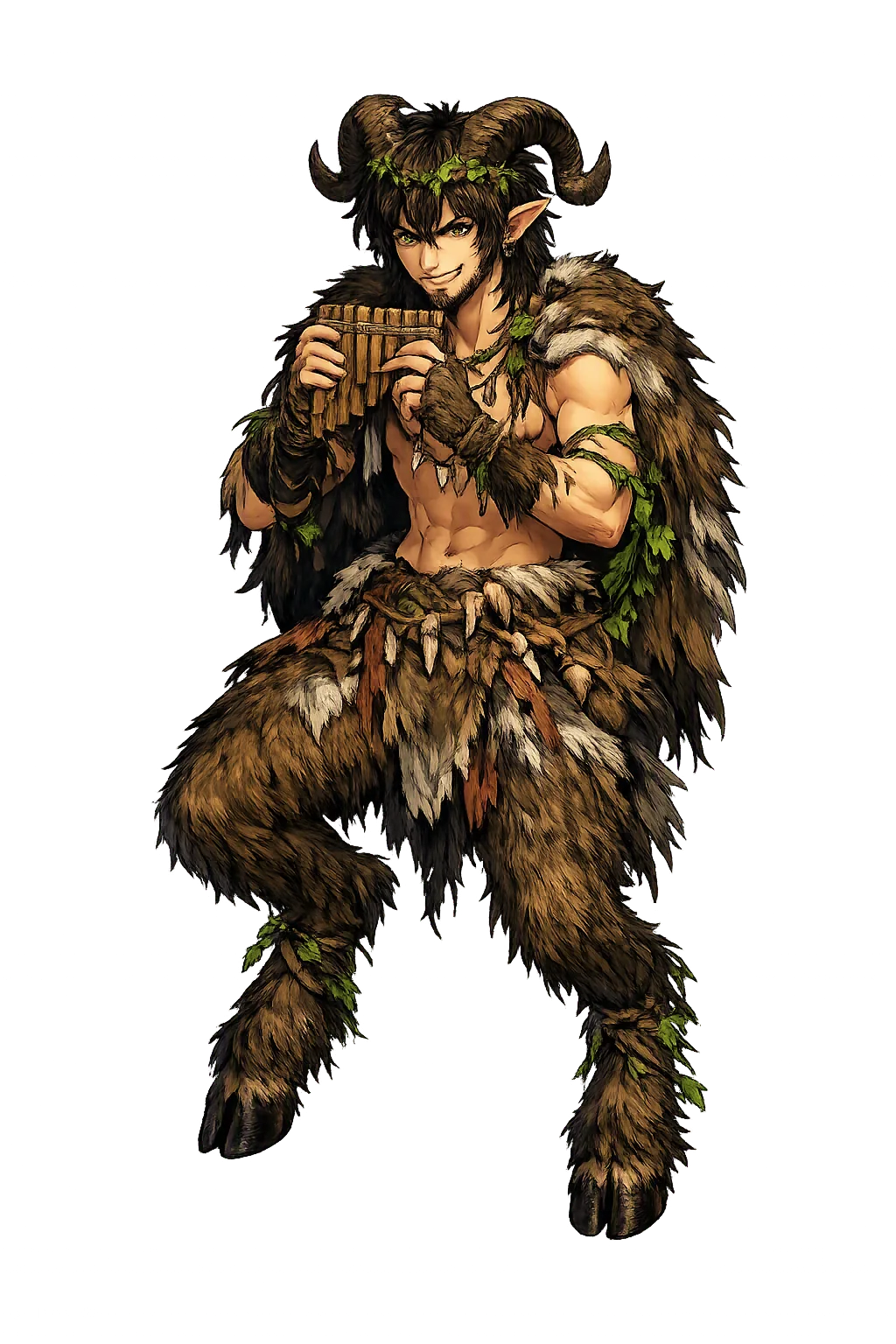
Pān is late to Olympus and always half outside it: a god of the threshold between pasture and wilderness, music and dread, whose stories are told by shepherds, runners, and sailors — never by kings.
At a Glance
- Restored name: Pān
- ASCII form: pan
- Meaning: "God of shepherds, flocks, mountain wilds, and the panic that strikes lonely places; his name was popularly derived from Greek πᾶν ("all") but likely originated in Arcadian Πάων ("shepherd")"
- Domain of influence: Wilderness, Shepherds, Flocks
- Pantheon: Greek
- Classification: Tier 2
- Original script: Πάν
- Series: The Restoration Files, No. 194 of 282
The Name Before the Marks
The name is attested as Πάν, as LSJ and Beekes record. On the evidence, it means "God of shepherds, flocks, mountain wilds, and the panic that strikes lonely places; his name was popularly derived from Greek πᾶν ("all") but likely originated in Arcadian Πάων ("shepherd")".
Strip Pān to pan and one piece of evidence vanishes:
- a → ā — Macron marks the long alpha: the vowel length the ASCII form cannot show.
A reader who knows the marks hears the name correctly on the first try. A reader who never sees them never gets the chance.
Spoken, the name runs `/pán/` — 'PAHN' — one clean syllable; let the pitch lift on the á rather than hammering it, and keep the vowel open and pure.
The Temple That Stands Now
The restored name is not a plaque; it is an address. The temple of Pān lives at /sites/pan/, with its mythology in the lore halls, its peer-reviewed record in the Scholarly Edition, and its place in the pattern atlas on the patterns floor.
One decisive feature survives — a single, honest mark — which places the restoration in Tier-2: exact, and exactly labeled.
Where the Name Stood First
The Athenian cult begins exactly where Herodotus leaves it: a cave-shrine cut into the north slope of the Acropolis, founded after Marathon and honored with a torch-race (Hdt. 6.106). Above Delphi the great Corycian Cave was sacred to Pān and the nymphs together, and Pausanias (10.32.7) saw their statues standing inside it. In Arcadia itself his cult was everywhere — Pausanias's eighth book records grotto-shrines, altars, and temples of Pān in every corner of the mountain country he called home. The temple on the web is the newest of these addresses — the first one that fits in a pocket.
The Archetype at Work
The pattern atlas seats this temple in 4 industries, each match argued and weighted: Forestry, Conservation & Outdoor Industries (the mountain wilds made god — shepherds, flocks, and the forest's own dread; conservation is his daily domain.); Music, Arts & Performance (the syrinx is his — the reed-pipes cut from a transformed nymph; pastoral music begins on his breath.); Agriculture, Food & Harvest (god of shepherds and flocks; the pasture economy is his oldest congregation.). The Resonance File reads those seats through the myths themselves.
In the Sacred Texts
The Greek tradition is not a vibe; it is a library. The Sacred Texts collection holds Theogony, Homeric Hymns, and Works and Days — the primary sources the temple's scholarship is built on. The temple is the argument; the texts are the evidence.
The File Continues
The temple's founding dispatch tells the name's story; its Resonance File reads the myths into the industries; the blog index holds the whole archive.
Continue the series — previous file: Ọya (read it here) · next file: Pángǔ (read it here).
The Restoration Files are written from the same canonical record as the temples themselves: the lexicon, the lore catalog, the pattern atlas, and the cited scholarly sources. If a file ever disagrees with its temple, the temple is right — tell us, and the file will be corrected.