
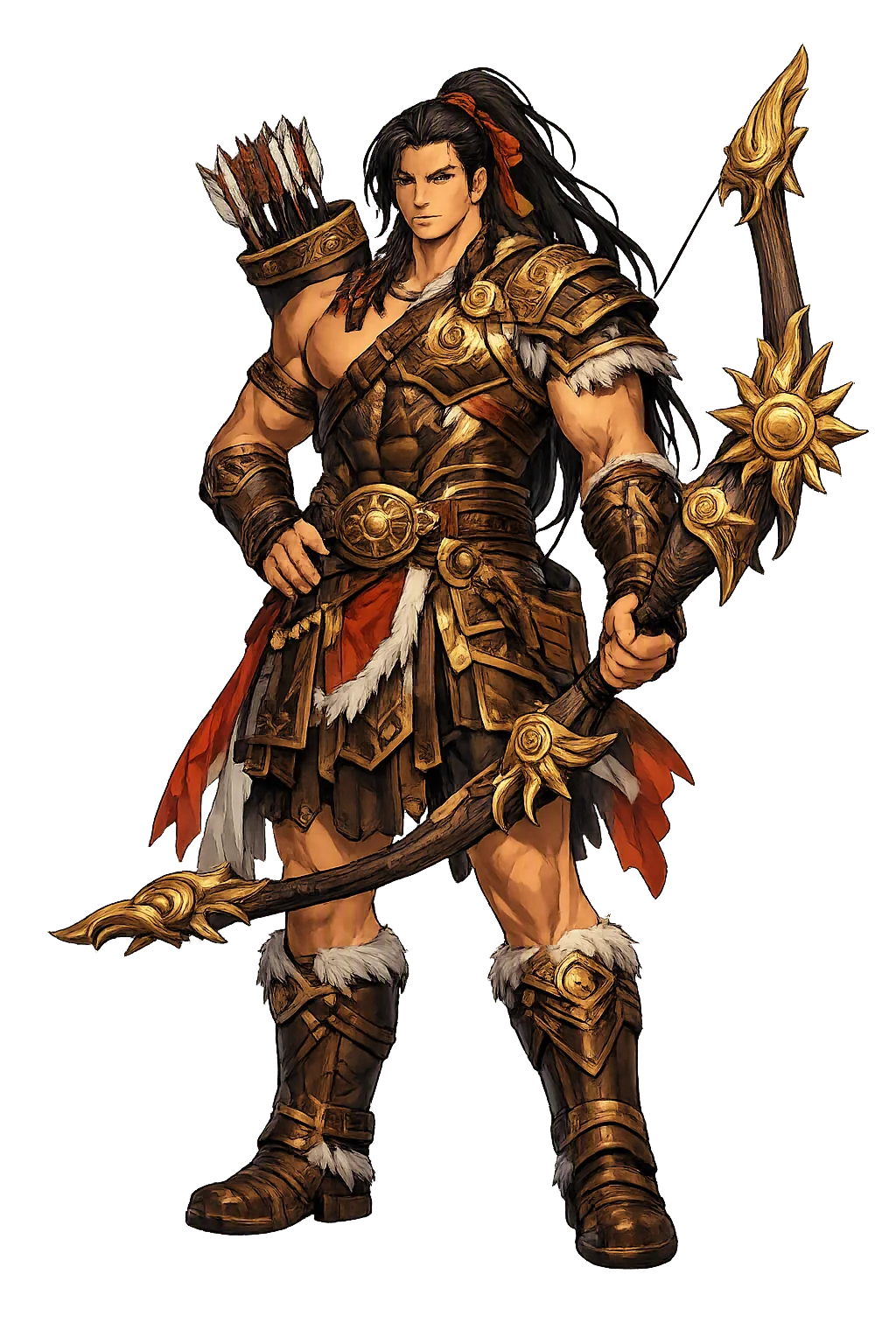
The hidden history behind Hòuyì
Behind the modern ASCII form houyi hides a much longer story. Hòuyì reaches back through manuscripts, inscriptions, and oral tradition long before it ever touched a keyboard, and every mark in the restored spelling is a receipt from that journey. In what follows we trace the name from its Chinese characters attestations through its mythology, its cult, its symbols, and its afterlife in other cultures — and we show how the PuniCodex project turned that philological record into a Unicode domain that resolves today. The history was never lost. It was only waiting for the infrastructure to catch up.
At a Glance
- Restored name: Hòuyì
- ASCII form: houyi
- Meaning: "The divine archer who shot down nine suns"
- Domain of influence: Archery, Suns, Heroism
- Pantheon: Chinese
- Classification: Tier 1
- Original script: 后羿 (Chinese characters)
- Live domain: hòuyì.com
Overview
Hòuyì (houyi) — Archery, Suns, Heroism · The divine archer who shot down nine suns — belongs to the Chinese tradition, where it is catalogued under the domain "Archery, Suns, Heroism". The name means "The divine archer who shot down nine suns".
Hòuyì is the divine archer of Chinese myth, the hero who stood between heaven's excess and the earth's survival. In the age of the sage-emperor Yáo, the ten suns — three-legged crows, sons of Dìjùn and the sun-mother Xīhé — rose all at once instead of taking their appointed turns. Rivers dried, crops failed, and monsters crawled out of the scorched wilderness. Hòuyì drew his great bow and shot nine suns from the sky, sparing one so that day and night, sowing and harvest, could keep their order.
His story is a hinge between worlds: the same bow that cleared the earth of monsters also won him the elixir of immortality from Xīwángmǔ, the Queen Mother of the West — the elixir his wife Cháng'é would ultimately take, fleeing to the moon. The archer who saved the earth lost heaven, and Chinese myth has never stopped telling both halves of that story.
PuniCodex restores the name as Hòuyì and serves its temple at hòuyì.com. The restoration preserves at least one distinctive feature — a diacritic or a distinctive letter — that the ASCII form loses, and exactly one historically valid Unicode restoration exists, which places the name in Tier 1. The plain ASCII form houyi survives as a modern convenience imposed by the early domain-name system; the restoration, not the fallback, is the form the project defends as philologically complete.
The Name
The name is attested in Chinese characters as 后羿. Etymologically it means "The divine archer who shot down nine suns".
The ASCII form houyi survives only because the early domain-name system could not carry diacritics; it is a technological compromise, not an ancient spelling. The Unicode restoration Hòuyì recovers the stress accent of the original directly in the address bar. The restoration preserves at least one distinctive feature — a diacritic or a distinctive letter — that the ASCII form loses, and exactly one historically valid Unicode restoration exists, which places the name in Tier 1.
The letter-by-letter transformation runs:
- h → H — Same, capitalized
- o → ò — Stress on o
- u → u — Same
- y → y — Same
- i → ì — Stress on i
The project holds the domain hòuyì.com (xn--huy-pma1a.com) as the canonical home of this name.
The Original Script
The name is written in Chinese characters as 后羿. This original script is the form against which the ASCII fallback houyi and the PuniCodex restoration Hòuyì are measured: the restoration preserves its pitch accent of the written form, so that a reader typing the modern address still speaks the ancient name.
The original script is 后羿, identical in traditional and simplified Chinese (the character 后 'sovereign' must not be confused with 後 'after', which simplifies to 后 — in the archer's name it is the archaic title, 'lord'). Pinyin Hòuyì (both syllables Tone 4) is the Modern Standard Mandarin reading, recorded in the Unihan Database and standard dictionaries. The registrable Unicode restoration uses the tone-marked Pinyin Hòuyì rather than the hanzi because PUNICODEX renders the original characters in the temple's 'Original Script' card while keeping the domain label pronounceable and internationally registrable; the name carries no apostrophe, so the display form and the domain form differ only in the tone marks. Baxter & Sagart (2014) reconstruct the Old Chinese reading of 羿 as *N-ŋ(r)ik-s.
Pronunciation
The reconstructed pronunciation of the name is /xoʊ̯˥˩.i˥˩/ — Modern Standard Mandarin (Pinyin).
Phoneme by phoneme:
- hòu — Syllable with voiceless velar fricative [x] (Pinyin 'h'), diphthongal final [oʊ̯] (Pinyin 'ou'), and Tone 4 (falling, ˥˩).
- yì — Syllable with high front unrounded vowel [i] (Pinyin 'yi' writes a bare [i] with a glide onset), and Tone 4 (falling, ˥˩).
For the modern speaker, the closest approximation is: HOH-yee — two crisp syllables, each spoken with a sharp falling tone, like a decisive command: 'HOE! YEE!'
Kindred and historical forms of the name:
- Traditional — 后羿
- Simplified — 后羿
- Wade-Giles — Hou⁴-i⁴
- Cantonese (Jyutping) — hau⁶ ji⁶
- Related terms — 十日 shí rì (the ten suns); 后羿射日 Hòuyì shè rì (Yi shoots the suns); 嫦娥 Cháng'é (his wife, the moon goddess)
后羿 names the divine archer: 后 is an archaic title meaning 'lord, sovereign' (not the later sense 'empress', for which 皇后 is used), and 羿 is the archer's given name. The Modern Standard Mandarin reading is Hòuyì (both syllables Tone 4), as recorded in the Unihan Database (Unicode Consortium, kMandarin) and standard Mandarin dictionaries. Baxter & Sagart (2014) reconstruct the Old Chinese reading of 羿 as *N-ŋ(r)ik-s. The tone-marked Pinyin restoration Hòuyì preserves the citation falling tone of both syllables; in connected speech the contour may be compressed, but the lexical tones remain Tone 4.
Mythology
The cycle of Hòuyì is the great Chinese myth of cosmic correction: a heaven that gives too much, an earth that suffers for it, and one archer whose arrows restore the mean. Its episodes run from the scorched world of the ten suns to the cold moon where his wife still dwells.
The Shooting of the Nine Suns (Shanhaijing / Huainanzi)
In the reign of Emperor Yáo, the ten suns — three-legged crows roosting in the Fusang tree, sons of Dìjùn and the sun-mother Xīhé — abandoned their orderly rotation and rose together. The earth burned: rivers dried, crops withered, and the people starved. Yáo called on Hòuyì, the divine archer, who climbed to the heights and loosed his arrows. One by one nine suns fell from the sky in their crow forms, and the tenth — spared — resumed its solitary, lawful journey. The myth is told across the Shān Hǎi Jīng tradition and given its fullest early form in the Huáinánzǐ.
The Clearing of the Monsters (Huainanzi)
The drought had loosed terrors on the world, and the Huáinánzǐ lists the archer's second labor: he slew Yàyǔ, the man-eating beast of the wilds; Záochǐ in the waters of Chouhua; Jiǔyīng, the nine-headed monster of the Xiong river; the great wind-bird Dàfēng in the marshes of Qingqiu; the giant serpent Xiūshé at Lake Dongting; and the monstrous boar Fēngxī in the mulberry groves of Sanglin. Only when the last beast fell could the people plow in peace.
The Elixir and the Flight of Cháng'é (Huainanzi)
For his service, Xīwángmǔ, Queen Mother of the West, granted Hòuyì the elixir of immortality. He brought it home — and there the story turns. His wife Cháng'é took the elixir and rose to the moon, leaving the archer mortal and alone on the earth he had saved. Early versions are spare about her motive; later tellers made her a thief, a fugitive, or a wife protecting the elixir from the archer's treacherous disciple. However it is told, this is the hinge of the cycle: the hero of the suns becomes the earthbound husband of the moon.
The Betrayal of Féngméng (Mengzi and Later Tradition)
The darker strand of the cycle is preserved already in the Mèngzǐ, which records that Féngméng (逢蒙) studied archery under Yì and, once he had learned all that Yì could teach, killed his master — in the fuller later accounts, clubbing him to death with a peachwood staff. The student murders the teacher the moment the teaching is complete. The Mèngzǐ itself weighs how far Yì shared the blame for trusting such a man, and Chinese moralists have debated the lesson ever since: mastery without loyalty is the surest way to unmake a hero.
Symbols & Iconography
The iconography associated with Hòuyì concentrates in a small set of recurring attributes, each a compressed statement about the name:
- The great bow and arrows — Heaven-sent precision; the power to correct cosmic disorder without destroying the cosmos
- The three-legged crow — The true form of each sun; nine were shot down, and the tenth still crosses the sky
- The Fusang tree — The cosmic mulberry at the eastern edge of the world where the ten suns roosted between journeys
- The elixir of immortality — Xīwángmǔ's reward and the pivot of loss — the gift that carried Cháng'é to the moon
- The spared sun — Measured judgment; the hero preserves the order he restores rather than abolishing it
Archaeology & Evidence
Hòuyì's deeds are textual before they are pictorial. The earliest witnesses are Warring States literature: the Shān Hǎi Jīng preserves the ten-suns framework and the suns' parentage, the Chǔ Cí poem Tiān Wèn (Heavenly Questions, c. 4th–3rd century BCE) interrogates Yì's shooting of the suns and his tangled fate, and the Mèngzǐ records the Féngméng betrayal. The fullest surviving narrative is the Huáinánzǐ (139 BCE), which sets the archer in Emperor Yáo's reign and catalogs the slain monsters. In Han dynasty art the cycle became a staple of funerary iconography: tomb reliefs and painted stones at sites such as the Wu Liang shrines (Shandong, 2nd century CE) show the archer drawing against crow-bearing suns, while Mawangdui funerary art (168 BCE) depicts the solar crow and the moon's toad-and-hare company that would gather around Cháng'é. Han mirrors and later pictorial stones continued the imagery, fixing the bow, the crows, and the moon as the archer's permanent attributes.
Realm & Domain
Hòuyì is the divine archer of Chinese myth, the hero who stood between heaven's excess and the earth's survival. In the age of the sage-emperor Yáo, the ten suns — three-legged crows, sons of Dìjùn and the sun-mother Xīhé — rose all at once instead of taking their appointed turns. Rivers dried, crops failed, and monsters crawled out of the scorched wilderness. Hòuyì drew his great bow and shot nine suns from the sky, sparing one so that day and night, sowing and harvest, could keep their order.
His story is a hinge between worlds: the same bow that cleared the earth of monsters also won him the elixir of immortality from Xīwángmǔ, the Queen Mother of the West — the elixir his wife Cháng'é would ultimately take, fleeing to the moon. The archer who saved the earth lost heaven, and Chinese myth has never stopped telling both halves of that story.
The Divine Bow
The great bow and its arrows are heaven's instruments of correction — not conquest, but the precise removal of what has grown excessive.
The Ten Suns
Ten three-legged crow-suns, sons of Dìjùn and Xīhé, once took turns crossing the sky; their simultaneous rising nearly ended the world.
Slayer of Monsters
With the suns subdued, Yi cleared the earth of the beasts the drought had unleashed: Yàyǔ, Záochǐ, Jiǔyīng, Dàfēng, the serpent Xiūshé, and the boar Fēngxī.
The Elixir
Xīwángmǔ's gift of immortality, earned by the archer's service — and lost when Cháng'é drank it and rose to the cold palace of the moon.
Across Cultures
Hòuyì's myth traveled with Chinese civilization itself. In Japan the story of the archer and the ten suns was known through Chinese texts and pictorial art, where it informed depictions of solar catastrophe alongside native Amaterasu lore; Korea received the cycle through the same classical canon, and its own founding archer figure Jumong — whose very name is glossed as 'skilled archer' — shows how deeply the archer-hero type resonated on the peninsula. Vietnamese tradition likewise absorbed the ten-suns narrative through Chinese literature. Within China, Taoist tradition folded Yì into its cosmology of solar regulation and immortality elixirs, while the Queen Mother of the West, his benefactor, rose to become one of the highest deities of the Taoist pantheon. The myth also furnished Buddhist and popular writers with a ready vocabulary for speaking of cosmic excess and karmic reversal, though Yì himself remained a figure of the native classical tradition rather than a Buddhist convert. Scholars have long noted the parallel with other great archers — Apollo's plague-bringing arrows in Greece, Rama's bow in India — but the Chinese version is distinctive: the archer's target is not a rival god but disorder itself.
Within the Chinese tradition, closely related names in the corpus include Bāguà, Cháng'é, Fúxī, Guāndì, Guānyīn, and Lóng.
Cultural Legacy
Hòuyì never left the Chinese imagination. The shooting of the suns is among the first myths Chinese children learn, retold in primers, animated films, and television dramas, and the Cháng'é sequel anchors the Mid-Autumn Festival, when families gaze at the moon where the archer's wife is said to dwell. Modern China has written the pair onto the sky itself: the national lunar exploration program is named Cháng'é, and its missions are spoken of as the moon goddess finally receiving visitors — a deliberate bridal of myth and engineering. The idiom of 'shooting the suns' survives as a metaphor for cutting down excess and correcting what has grown monstrous. In art, from Han dynasty tomb reliefs to contemporary illustration, the archer drawing his bow against a wheel of suns remains one of the most recognizable images in the Chinese visual canon.
The Scholarly Record
The account of Hòuyì given in this edition rests on the witnesses and reference works listed below. Lexica and etymological dictionaries secure the form and meaning of the name; the literary and religious texts supply the narrative evidence.
- Shān Hǎi Jīng (Classic of Mountains and Seas). Full text
- Huáinánzǐ. Full text
- Chǔ Cí — Tiān Wèn (Heavenly Questions). Full text
- Mèngzǐ (Mencius). Full text
- Xúnzǐ. Full text
- Birrell, Chinese Mythology: An Introduction. Full text
- Yang & An, Handbook of Chinese Mythology. Full text
- Unihan Database (Unicode Consortium). Full text
A Meditation
Hòuyì teaches the hardest lesson of heroism: that power must know when to stop. Nine arrows were justice; a tenth would have been annihilation. The archer's greatness lies not in what he destroyed but in the one sun he spared — the judgment that the world needs light, only not too much of it. Chinese thought found in this a parable of the mean: excess, even of a good thing, is the true monster, and correction, not eradication, is the hero's work.
And yet the myth refuses him a clean triumph. The savior of the earth loses immortality, loses his wife, and in the darker telling dies at the hand of his own student. To name a domain Hòuyì is to claim that double inheritance: the steadiness to draw the bow against a burning sky, and the humility to accept that even perfect aim cannot hold everything it wins.
The Unicode Restoration
Hòuyì is classified as Tier 1: the restoration preserves at least one distinctive feature — a diacritic or a distinctive letter — that the ASCII form loses. The ASCII fallback houyi still resolves everywhere, but it is the restored form that carries the name's full information. Across the 5 characters of the name, the restoration adjusts 2: 2 marks of stress (ò, ì). That is the whole thesis of this temple: the marks are the message.
The Domain Name
The restored name is live as a working domain: hòuyì.com, which the DNS carries in punycode form as xn--huy-pma1a.com — an ASCII-compatible encoding that lets a non-ASCII name travel the global network without breaking older infrastructure. The visitor sees Hòuyì; the machines see the encoding. That duality is the engineering compromise on which the entire restoration rests, and it is why a name written the way its own tradition wrote it in Chinese characters can now be typed into any browser on earth.
Why This Restoration Matters
The story of Hòuyì did not end in antiquity; it changed medium. Names that survive for millennia do so because each generation finds a new carrier for them — clay, papyrus, print, and now DNS. The PuniCodex restoration simply makes the carrier honest: the spelling that resolves is the spelling the evidence supports. If this post showed anything, it is that houyi and Hòuyì are not the same name with different styling. They are a summary and the text it summarizes. The web can now serve the text.
Explore Further
This post is one doorway into the temple. The home page carries the full character breakdown and the ambient canvas; the lore page tells the myths in long form; the Scholarly Edition preserves the sources, pronunciation data, and revision history; and the patron wall supports the restoration directly. For the wider map, browse the Lexicon, explore the Pantheon, or return to the PuniCodex blog.
Related Names
Sources
The full scholarly apparatus — every citation, revision, and review — lives in the Scholarly Edition. Key references for this post:
- Shān Hǎi Jīng (Classic of Mountains and Seas).
- Huáinánzǐ.
- Chǔ Cí — Tiān Wèn (Heavenly Questions).
- Mèngzǐ (Mencius).
- Xúnzǐ.
- Birrell, Chinese Mythology: An Introduction.
- Lexicon authorities for this entry: Shan Hai Jing, Huainanzi.