
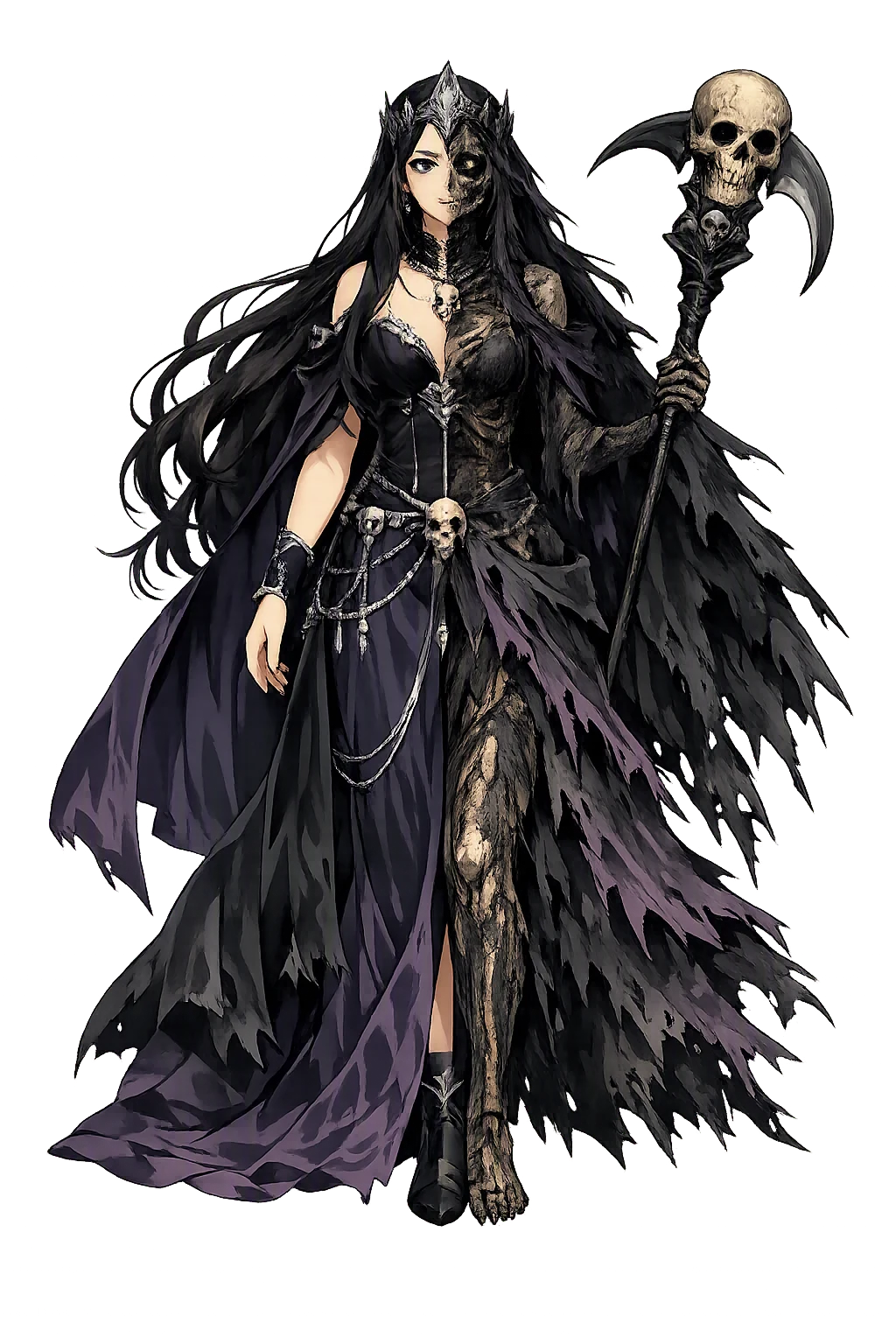
The appointments Hel made — and who is keeping them
One myth is a story. A cycle of myths is a specification. Read Hel's cycle in order and the industries fall out of it one by one.
At a Glance
- Temple: Hel
- Pantheon: Norse
- Domain of influence: Death, Underworld, Souls
- Pattern seats: 3
- Sectors touched: Society & Spirit · Health & Wellbeing · Home & Lifestyle
- Strongest seat: Funerary & Memorial Services
- Series: The Resonance Files, No. 150 of 397
The Cycle, Read Forward
Funerary & Memorial Services — through The Casting Down
Loki got three children on the giantess Angrboða in Jötunheimr: the wolf Fenrir, the serpent Jǫrmungandr, and Hel. When the gods learned that this brood was being raised, and read in the prophecies that great harm would come of them, Óðinn sent for the children and disposed of each: the serpent he threw into the deep sea that circles all lands, the wolf the Æsir kept to bind, and Hel he cast down into Niflheimr.
The atlas states the seat in one line: The goddess of the dead entire — ruler of Éljúðnir, keeper of all who die of age and sickness. The story above is the long version of the same sentence. That is the cycle working: story becomes duty, duty becomes trade.
Healthcare, Pharma & Medicine — through The Weeping Condition
When Baldr lay dead and Hermóðr the Bold had ridden nine nights down the dark road, he came to Helgrindr, the barred gate, spurred Sleipnir, and leapt it unopened. In the hall he found Baldr seated in the high seat — the most honoured of the dead already given Hel's highest place — and he stayed the night.
The atlas states the seat in one line: Hunger her dish, Famine her knife, Sick-bed her hall — the household of Éljúðnir is the corpus’s starkest personification of illness. The story above is the long version of the same sentence. The trade thinks it is optimizing a process. It is re-enacting a charter.
Home, Hearth & Real Estate — through The Geography of the Hidden
The Poetic Edda keeps her realm on the map rather than on the stage. When Óðinn, disguised, wagers his head against the giant Vafþrúðnir's wisdom, his proof that he has travelled farther than any god is this: 'Nine worlds I came through, down below Niflhel; thither men die out of Hel.
The atlas states the seat in one line: Benches strewn with arm-rings, mead brewed for the guest — her hall receives the dead as its permanent residents. The story above is the long version of the same sentence. That is the cycle working: story becomes duty, duty becomes trade.
The Theme That Runs the Cycle
Hel acts rarely and presides always. The corpus gives her one origin, one judgment, and a standing geography — and in exchange she receives nearly everyone. The myths agree that the gods could not kill her; they could only give her what they most wanted hidden, and make her keeper of it forever.
The Method, Stated Plainly
The atlas is not a horoscope. Seats are earned from the sources — argued, weighted, published — and every one of them can be challenged at the methodology page. A match that cannot survive an argument does not survive review. That is the whole trick: the patterns are claims, and claims can be tested.
For the Ones Who Work There
If you work in funerary & memorial services, healthcare, pharma & medicine, or any trade this temple holds a seat in, this is the honest version of what a placement means: your industry beside the story it has been re-telling all along — on the temple floor itself, before an audience that came specifically to read it. The patron tier and the advertising terms describe the mechanics; the resonance above describes the fit.
The File Continues
One of 397 Resonance Files — the series where the pantheon goes to work. Read the founding dispatch for the name, the Restoration File for the spelling, or the whole archive end to end.
Continue the series — previous: Hekátē (read it) · next: Helénē (read it).
The Resonance Files are argued from the same canonical record as the pattern atlas itself: the lexicon, the lore catalog, and the cited sources. Every seat can be challenged at the methodology page — and the challenge is the point.