
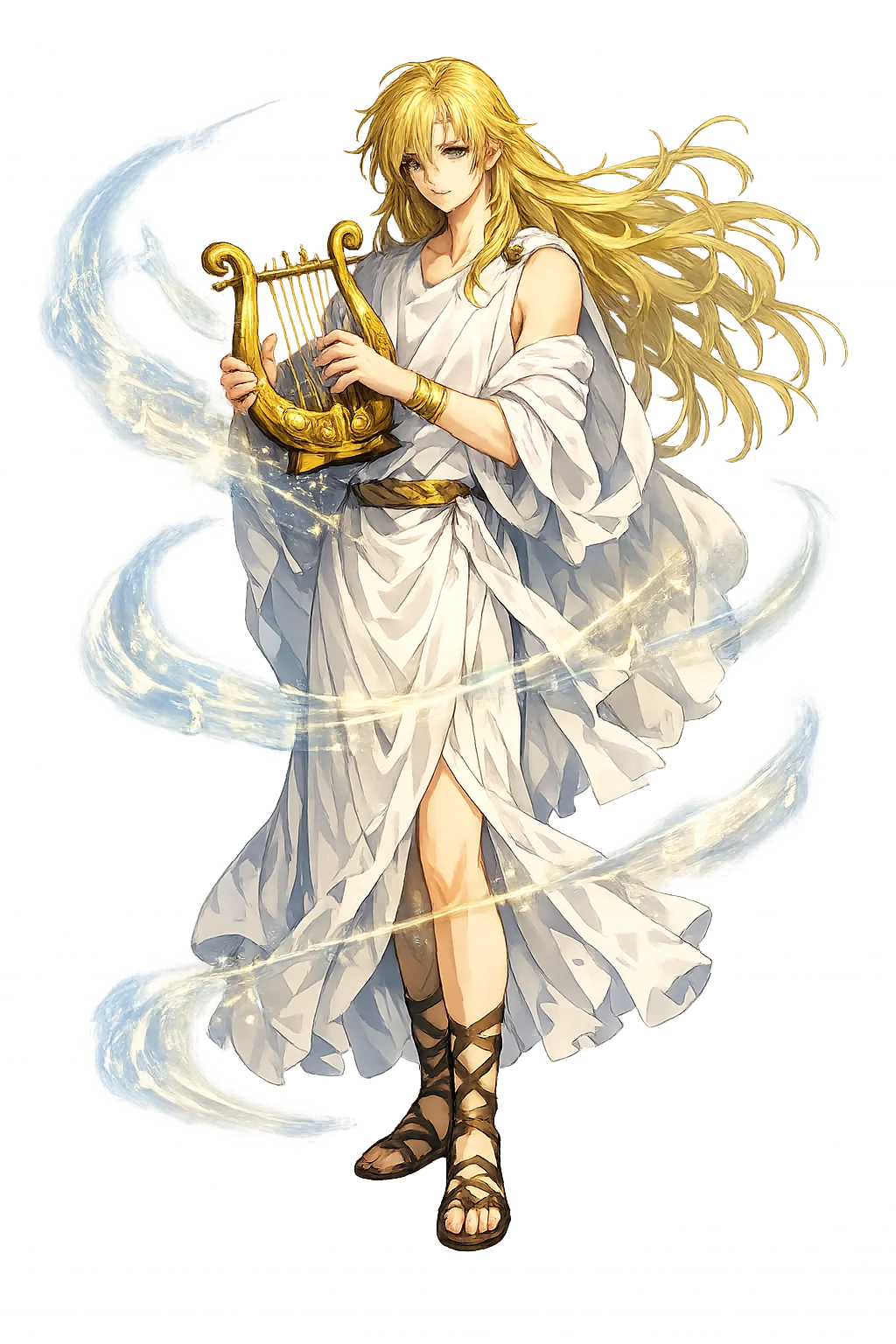
Stress-testing Orpheús: do the industry seats hold?
Audit: Orpheús, seat by seat. The atlas makes claims; the myths decide which ones stand. This is the record of what held.
At a Glance
- Temple: Orpheús
- Pantheon: Greek
- Domain of influence: Poet, Musician, Underworld
- Pattern seats: 4
- Sectors touched: Culture & Entertainment · Home & Lifestyle · Society & Spirit
- Strongest seat: Music, Arts & Performance
- Series: The Resonance Files, No. 366 of 546
The Test
Seat 1: Music, Arts & Performance
Claim: The Thracian singer whose lyre moved stones and stopped rivers — music’s power made myth, the art’s own archetype. Exhibit: The Song that Moves Stones — Genealogy made him art's aristocrat — son of Kalliopē, Muse of epic, by the Thracian king Oeagrus; or, in the version that flatters him more, by Apóllōn himself (Apollodorus 1.
Verdict: holds under load. The correspondence is functional, not decorative.
Seat 2: Love, Dating & Relationships
Claim: The descent for Eurydikē is the West's founding love story — devotion that would not accept loss. Exhibit: The Singer on the Argo — Apollonius Rhodius gives the hero's gift its most practical use.
Verdict: holds under load. The correspondence is functional, not decorative.
Seat 3: Astrology, Tarot & Esoteric Services
Claim: Orphism is the mystery tradition he anchors; his severed head prophesied at Lesbos until Apollo silenced it. Exhibit: The Look Back — Eurydíkē died of a viper's bite on their wedding day, and Orpheús answered with the act that defines him: he went down after her, alive.
Verdict: stands. Strip both to their function and the functions match.
Seat 4: Philosophy, Ethics & Standards
Claim: The look back; arts oldest parable of limits. Exhibit: The Song that Moves Stones — Genealogy made him art's aristocrat — son of Kalliopē, Muse of epic, by the Thracian king Oeagrus; or, in the version that flatters him more, by Apóllōn himself (Apollodorus 1.
Verdict: holds under load. The correspondence is functional, not decorative.
The Control Group
Against the seats that survived, one control: the temple's own summary of its figure — Orpheús' myths are all about what music can and cannot do: it charms everything in nature, opens the underworld's doors, and saves nothing except itself. The seats do not drift far from it. That is the audit's cleanest result.
The Method, Stated Plainly
Skeptical? Good — the system is built for you. Every seat in this file carries its why-line and its weight, the full derivation is public at the methodology page, and the challenge process is part of the design. Falsifiable is not a posture here; it is the mechanism.
For the Ones Who Work There
For a sponsor in music, arts & performance, the fit here is not adjacency — it is inheritance. Your trade already tells this story every working day; the temple simply holds the original. The patron tier and the advertising terms carry the mechanics; the myths above carry the reason.
The File Continues
This is one of 546 Resonance Files — the third dispatch from every flagship temple, where the myths meet the markets. The temple's founding dispatch tells the name's story; its Restoration File tells the spelling's; the blog index holds the whole archive.
Continue the series — previous: Óneiros (read it) · next: Ọrun (read it).
The Resonance Files are argued from the same canonical record as the pattern atlas itself: the lexicon, the lore catalog, and the cited sources. Every seat can be challenged at the methodology page — and the challenge is the point.