
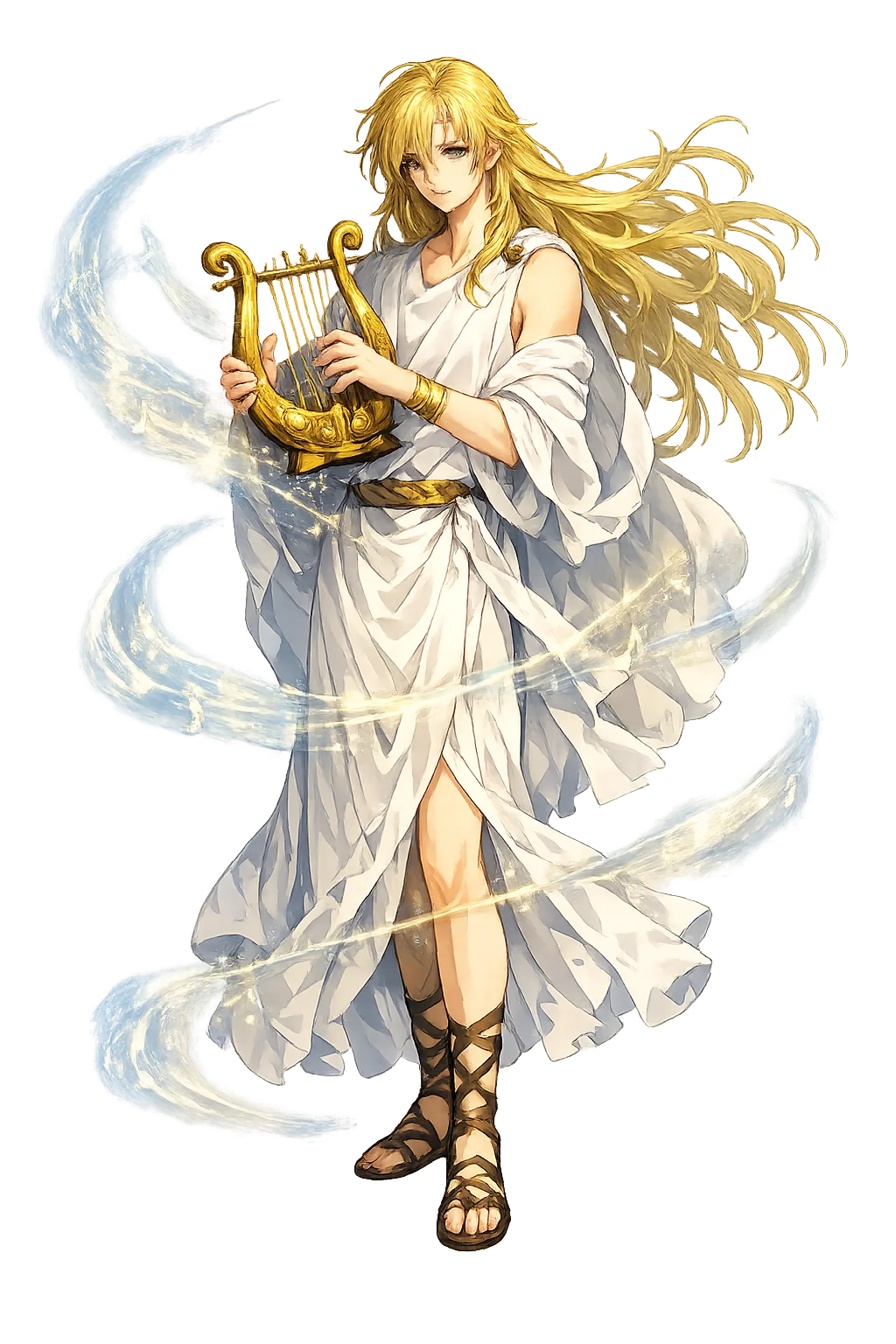
Why Orpheús is spelled that way — and what it costs to get it right
The domain you're reading about exists because someone refused to let Orpheús stay orpheus.
Orpheús' myths are all about what music can and cannot do: it charms everything, and it saves nothing except itself. The tradition is unanimous: when Orpheús played, the trees uprooted themselves to follow, the rivers halted, the wild beasts lay down beside the sheep. Simonides' line — "the birds flew above him, the fish leapt from the water" — is the oldest surviving witness.
That is the figure this file is about — and the temple now standing at its restored name.
At a Glance
- Restored name: Orpheús
- ASCII form: orpheus
- Meaning: "Darkness of the night"
- Domain of influence: Poet, Musician, Underworld
- Pantheon: Greek
- Classification: Tier 1
- Original script: Ὀρφεύς
- Series: The Restoration Files, No. 179 of 271
The Name Before the Marks
The name is attested as Ὀρφεύς. On the evidence, it means "Darkness of the night".
Strip Orpheús to orpheus and one piece of evidence vanishes:
- u → ú — Acute on the final syllable: the stress position the ASCII form cannot show.
A reader who knows the marks hears the name correctly on the first try. A reader who never sees them never gets the chance.
The Temple That Stands Now
The restored name is not a plaque; it is an address. The temple of Orpheús lives at /sites/orpheus/, with its mythology in the lore halls, its peer-reviewed record in the Scholarly Edition, and its place in the pattern atlas on the patterns floor.
The restoration preserves more than the ASCII form can say — stress, length, or a letter the Latin keyboard lost — which places it in Tier-1: mechanically verifiable, information-rich.
Every flagship temple is hand-built to the same standard: the original script displayed with its provenance, the pronunciation reconstructed phoneme by phoneme, the sources named — because a restoration you cannot audit is just a spelling with confidence.
The Archetype at Work
A temple is also a reading of what this figure means — and meanings have addresses in the modern world. The pattern atlas maps Orpheús to the industries its archetype genuinely resonates with, each match argued, weighted, and open to challenge:
- Music, Arts & Performance — The Thracian singer whose lyre moved stones and stopped rivers — music’s power made myth, the art’s own archetype.
- Love, Dating & Relationships — The descent for Eurydikē is the West's founding love story — devotion that would not accept loss.
- Astrology, Tarot & Esoteric Services — Orphism is the mystery tradition he anchors; his severed head prophesied at Lesbos until Apollo silenced it.
The mapping is conservative on purpose: only resonances that can be argued aloud. The rest of the atlas follows the same rule, industry by industry.
In the Sacred Texts
The Greek tradition is not a vibe; it is a library. The Sacred Texts collection holds Theogony, Homeric Hymns, and Works and Days — the primary sources the temple's scholarship is built on, free to read, cross-linked back to the names they mention. The temple is the argument; the texts are the evidence.
The File Continues
This is one of 271 Restoration Files — a second dispatch from every flagship temple in the fleet. The temple's first dispatch tells the founding story of the name; the blog index holds the whole archive.
Continue the series — previous file: Oṃ (read it here) · next file: Ọrun (read it here).
The Restoration Files are written from the same canonical record as the temples themselves: the lexicon, the lore catalog, the pattern atlas, and the cited scholarly sources. If a file ever disagrees with its temple, the temple is right — tell us, and the file will be corrected.