
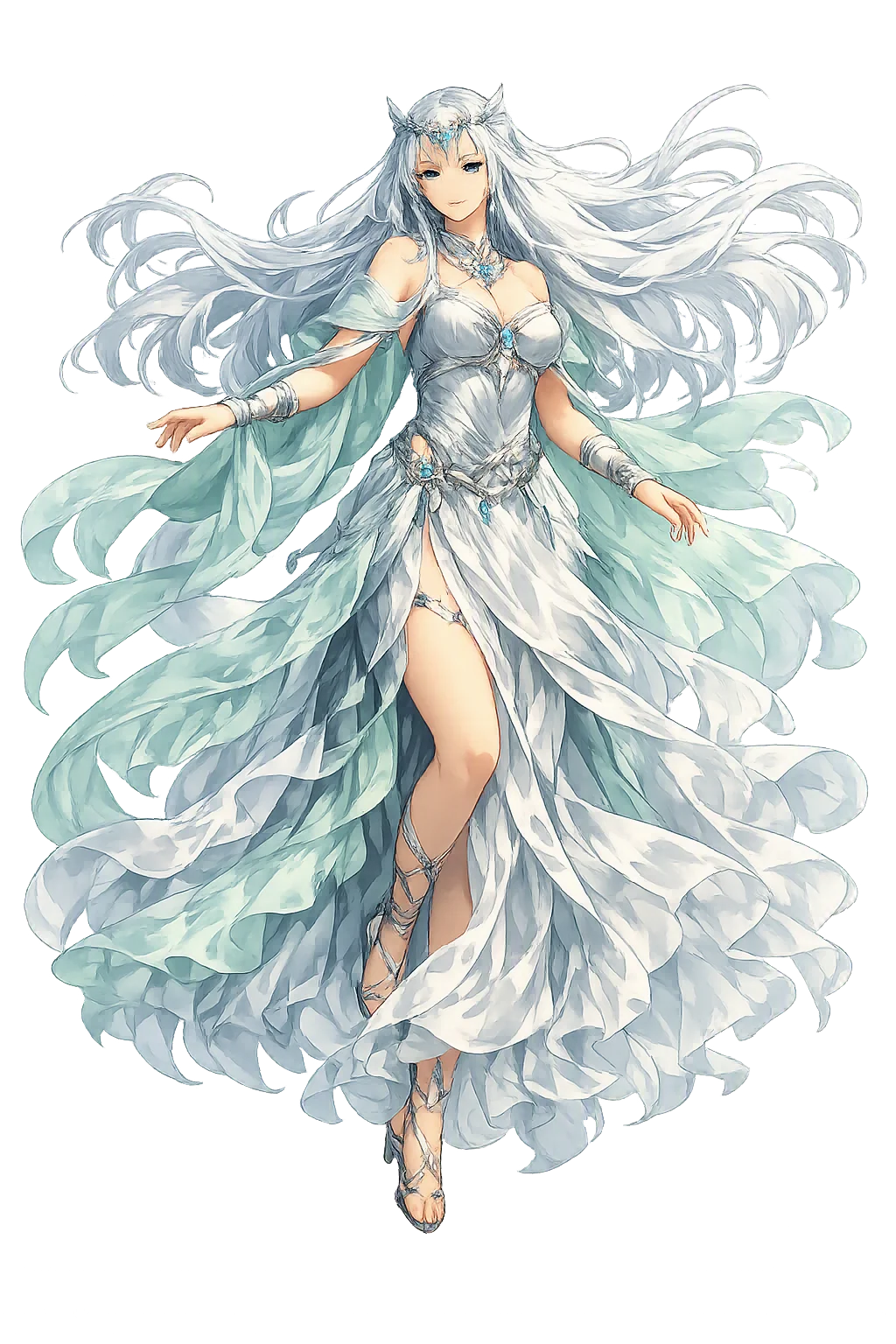
The many faces of Ninlil
No important name has only one face. Ninlil appears as a figure of myth, a scholarly reconstruction, a piece of material culture, a memory carried across languages, and — most recently — a Unicode domain. This post looks at each face in turn: the name and its roots, the Cuneiform original, the reconstructed pronunciation, the mythological record, the symbols and sanctuaries, the cross-cultural afterlife, and the engineering that lets the restored spelling resolve in a browser. Taken together, those faces explain why ninlil was never going to be enough — and why the restored form is worth a domain of its own.
At a Glance
- Restored name: Ninlil
- ASCII form: ninlil
- Meaning: "Lady of the wind"
- Domain of influence: Wind, Air
- Pantheon: Mesopotamian
- Classification: Tier 2
- Original script: 𒀭𒊩𒌆𒆤 (Cuneiform)
Overview
Ninlil (ninlil) — Wind, Air · Lady of the wind — belongs to the Mesopotamian tradition, where it is catalogued under the domain "Wind, Air". The name means "Lady of the wind".
Ninlil is the Sumerian goddess of the wind and the air, the consort of Enlil and queen of the Mesopotamian pantheon. Her name, written 𒀭𒊩𒌆𒆤, simply means 'Lady of the Wind' — nin ('lady, queen') plus lil ('wind, air'). Where Enlil commands the storm and the decree of kingship, Ninlil is the gentler sovereign of the moving air itself: the breath that fills the lungs, the breeze that carries pollen, and the unseen presence that links heaven and earth.
This temple honours Ninlil as both queen and mother. She is the mother of Nanna/Sîn the moon, of Nergal lord of the underworld, of Ninazu, and of Enbilulu the canal inspector. The myth Enlil and Ninlil (ETCSL 1.2.1) weaves her story together with the theological geography of Mesopotamia: even the queen of the air must know the underworld, because descent and generation are inseparable in the Sumerian cosmos.
PuniCodex restores the name as Ninlil and serves its temple at its temple. The restoration needs no distinctive letters or diacritics its ASCII form would lose, which places the name in Tier 2. The plain ASCII form ninlil survives as a modern convenience imposed by the early domain-name system; the restoration, not the fallback, is the form the project defends as philologically complete.
The Name
The name is attested in Cuneiform as 𒀭𒊩𒌆𒆤. Etymologically it means "Lady of the wind".
The ASCII form ninlil survives only because the early domain-name system could not carry diacritics; it is a technological compromise, not an ancient spelling. The Unicode restoration Ninlil recovers the full diacritic detail of the scholarly transliteration directly in the address bar. The restoration needs no distinctive letters or diacritics its ASCII form would lose, which places the name in Tier 2.
The letter-by-letter transformation runs:
- n → N — Same, capitalized
- i → i — Same
- n → n — Same
- l → l — Same
- i → i — Same
- l → l — Same
The Original Script
The name is preserved in Cuneiform as 𒀭𒊩𒌆𒆤 — Sumero-Akkadian cuneiform, attested Sumerian / Old Babylonian – Neo-Assyrian, c. 2600–600 BCE, in Mesopotamia. The script is written left-to-right / top-to-bottom.
The scholarly transliteration is Ninlil (Sumerian logogram + Akkadian scholarly), giving the normalized reading /ˈnin.lil/.
The rendering proceeds step by step:
- Sumerogram NIN.LÍL (𒊩𒌆𒆤), 'lady of the wind'
- Prefixed with divine determinative 𒀭
- Consort of Enlil and mother of Nanna/Sîn
Pronunciation
The reconstructed pronunciation of the name is /nɪnˈlɪl/ — Sumerian Reconstruction.
Phoneme by phoneme:
- Nin- — Voiceless alveolar stop [n] plus close front vowel [ɪ] — the Sumerian word for 'lady, queen,' marking her rank in the pantheon.
- -lil — Lateral approximant [l] repeated around a short [ɪ] — the Sumerian word for 'wind' or 'air,' the element she embodies and governs.
For the modern speaker, the closest approximation is: 'nin-LIL' — stress the second syllable and let the name end with a light, breathy lilt, like wind passing through reeds.
Kindred and historical forms of the name:
- Sumerian — 𒀭𒊩𒌆𒆤 (dnin-lil₂), 'lady of the wind/air' — queen of the Sumerian gods and consort of Enlil
- Akkadian — Mullil / Mullissu, the Akkadian rendering of Ninlil, later identified with the consort of Aššur
- Cuneiform — 𒀭𒊩𒌆𒆤, written with the divine determinative 𒀭 (dingir) prefixed to the name
Ninlil is Tier 2: the canonical Unicode restoration is identical to the ASCII form, with no distinctive diacritic or non-ASCII letter preserved. The name is the same in both forms; what the temple protects is not a phonological mark but the proper-name capitalization and the scholarly framing of a Sumerian theonym. Standard Assyriology writes Ninlil; PuniCodex presents the plain form as a baseline restoration of a Mesopotamian divine name.
Mythology
Ninlil's myths are stories of boundary-crossing: the wind that moves between worlds, the queen who descends into darkness, and the mother whose children personify moon, death, water, and order. She is not a passive consort; she is the necessary counterpart without whom Enlil's kingship would be incomplete.
Enlil and Ninlil (The Sacred Marriage)
The Sumerian poem Enlil and Ninlil (ETCSL 1.2.1) tells how the young god Enlil saw Ninlil by the canal at Nippur and desired her. After he impregnated her, the assembled gods banished him from the city for his offence. Ninlil followed him into exile. In the underworld Enlil met her three times in disguise — as the gatekeeper, the river-man, and the ferryman — and each union produced a child: Nergal, Ninazu, and Enbilulu. The story explains the origin of three underworld or chthonic deities and makes theological sense of descent: even the king and queen of the air must generate the powers of the depths.
Mother of the Moon (Maternity)
Ninlil is the mother of Nanna/Sîn, the moon god, and in some traditions also of Inanna/Ištar and Utu/Shamash. The moon's regular cycle becomes an extension of the air-queen's generative power: what moves unseen by day shines by night. Royal hymns from Ur and Nippur invoke Ninlil alongside Enlil as the divine parents who legitimate the king and protect the city.
Ninlil in the Netherworld (Descent)
In the myth The Descent of Enlil and related hymnic traditions, Ninlil accompanies or follows Enlil into the netherworld. Her presence there is not punishment but cosmic necessity: the queen of the upper air must also know the lower world, so that the breath of life and the breath of the dead remain in relation. This descent mirrors the better-known descent of Inanna, but it is told through the lens of divine sovereignty rather than individual transformation.
The Temples of Ninlil (Cult)
Ninlil's principal cult centre was at Nippur, where she shared the great sanctuary complex with Enlil. Sumerian temple hymns praise her house and link her authority to the Ekur, the 'Mountain House' of Enlil. In later Assyrian religion she was equated with Mullissu, the consort of Aššur, and her cult travelled with Assyrian kingship to cities such as Nineveh and Assur. Her worship thus spans Sumer, Babylonia, and Assyria across more than two millennia.
Symbols & Iconography
The iconography associated with Ninlil concentrates in a small set of recurring attributes, each a compressed statement about the name:
- Wind and breath — The invisible air that sustains life and carries the voice of command
- Crescent moon — The sign of her son Nanna/Sîn, the moon god
- Gate and canal — The liminal places where Ninlil meets Enlil in the myth of their union
- Grain and reed — The crops that bend in the wind and depend on air-borne pollination
- Horned crown — The crown of divine queenship worn by the chief consort of the king of gods
Archaeology & Evidence
Cuneiform tablets from Nippur, Ur, and Assur attest Ninlil's cult from the Early Dynastic period into the first millennium BCE. The Ekur sanctuary at Nippur, excavated by the University of Pennsylvania and Iraqi teams, preserves the architectural setting of her worship alongside Enlil. Assyrian royal inscriptions from Nineveh and Assur name Mullissu/Ninlil as the divine consort who legitimises the king, while cylinder seals and votive objects depict her wearing the horned crown of divine queenship.
Realm & Domain
Ninlil is the Sumerian goddess of the wind and the air, the consort of Enlil and queen of the Mesopotamian pantheon. Her name, written 𒀭𒊩𒌆𒆤, simply means 'Lady of the Wind' — nin ('lady, queen') plus lil ('wind, air'). Where Enlil commands the storm and the decree of kingship, Ninlil is the gentler sovereign of the moving air itself: the breath that fills the lungs, the breeze that carries pollen, and the unseen presence that links heaven and earth.
This temple honours Ninlil as both queen and mother. She is the mother of Nanna/Sîn the moon, of Nergal lord of the underworld, of Ninazu, and of Enbilulu the canal inspector. The myth Enlil and Ninlil (ETCSL 1.2.1) weaves her story together with the theological geography of Mesopotamia: even the queen of the air must know the underworld, because descent and generation are inseparable in the Sumerian cosmos.
The Wind
The moving air itself — breath, breeze, and the life-giving currents that cross the Mesopotamian plain.
Queenship
Consort of Enlil and queen of the gods; the divine matriarch from whom lunar and netherworld powers descend.
The Crescent Moon
Mother of Nanna/Sîn; the lunar crescent is her descendant's sign, linking wind-queen to night-light.
Descent and Return
The mythic journey into the underworld that generates new gods and new seasons of life.
Across Cultures
The Unicode form Ninlil is a baseline restoration: standard Assyriology writes the name without diacritics, and the canonical PuniCodex form preserves that plain spelling while asserting proper-name status. In Akkadian and Assyrian sources Ninlil was identified with Mullissu (also spelled Mulliltu), the consort of the national god Aššur. In Hittite and Hurrian milieus her functions were partly absorbed by the great goddess Hepat and by local consort deities. Greek and Roman writers had no direct equivalent for Ninlil, though her rank as queen of the gods and her association with air invite loose comparison with Hera or Juno; the comparison, however, is typological rather than historical.
Within the Mesopotamian tradition, closely related names in the corpus include Adad, Anû, Apsû, Aššur, Dumuzid, and Ēa.
Cultural Legacy
Ninlil survives in Assyriological scholarship and in the modern recovery of Sumerian religion through ETCSL and the great lexical projects of the twentieth and twenty-first centuries. She is less famous in popular culture than her daughter Ištar or her consort Enlil, yet her role as wind-queen and mother of lunar and netherworld powers makes her essential to any coherent picture of the Mesopotamian pantheon. The name Ninlil is sometimes adopted by fantasy settings and neopagan circles as an emblem of air, sovereignty, and the unseen. PuniCodex presents the plain ASCII form not as a deficiency but as a philologically honest baseline: there is no recovered diacritic to restore, only the name itself to remember.
The Scholarly Record
The account of Ninlil given in this edition rests on the witnesses and reference works listed below. Lexica and etymological dictionaries secure the form and meaning of the name; the literary and religious texts supply the narrative evidence.
- Electronic Text Corpus of Sumerian Literature, Oxford Oriental Institute, 1998. Full text
- Black & Green, Gods, Demons and Symbols of Ancient Mesopotamia.
- Jacobsen, The Treasures of Darkness.
- Kramer, Sumerian Literary Texts from Nippur.
- George, House Most High: The Temples of Ancient Mesopotamia.
- Enlil and Ninlil (ETCSL 1.2.1).
- Sumerian Temple Hymns.
A Meditation
Air is the most taken-for-granted element. We do not see it until it moves, do not value it until it fails. Ninlil is the goddess of that taken-for-grantedness made sacred: the breath in the body, the wind in the grain, the medium that carries both speech and storm. Her marriage to Enlil is the marriage of power to atmosphere: he decrees, she enables; he commands, she circulates.
To restore the name Ninlil is therefore to restore attention. There is no macron or circumflex to argue over here; the philological work is simply to keep the name from flattening into noise. In a world of brandable deities, a Tier-2 name is easily dismissed. But Ninlil reminds us that not every god needs a diacritic to matter. Some names carry their distinction in the thing they name: the wind itself, invisible and everywhere.
The Unicode Restoration
Ninlil is classified as Tier 2: the restoration needs no distinctive letters or diacritics its ASCII form would lose. The ASCII fallback ninlil still resolves everywhere, but it is the restored form that carries the name's full information. That is the whole thesis of this temple: the marks are the message.
Character by Character
The journey from ninlil to Ninlil, one character at a time:
- n → N — Same, capitalized
- i → i — Same
- n → n — Same
- l → l — Same
- i → i — Same
- l → l — Same
The Mesopotamian Pantheon
Ninlil is one of 30 entries the PuniCodex lexicon catalogues under the Mesopotamian pantheon. The Pantheon page gathers the tradition's major figures in one place, and the Lexicon lets you filter all 980 restorations by tradition, tier, or script — the fastest way to see where this name sits among its kin.
Frequently Asked Questions
What does Ninlil mean? The traditional gloss is "Lady of the wind."
Which tradition does Ninlil belong to? Ninlil is catalogued in the Mesopotamian pantheon of the PuniCodex lexicon.
Why is Ninlil classified as Tier 2? Because the restoration needs no distinctive letters or diacritics its ASCII form would lose — and the marks in the restored spelling preserve exactly that evidence.
Can I use Ninlil in a normal browser? Yes. The DNS resolves the punycode form automatically, and the type tool on this site converts ninlil to Ninlil for copying and pasting.
Where does the scholarly information come from? The entry is built from lexica, inscriptional evidence, and reviewed scholarly sources listed in the Scholarly Edition. Every claim is traceable to a canonical source.
Typing Ninlil
You do not need a special keyboard to use this restoration. The PuniCodex Type Tool converts the ASCII form ninlil into Ninlil as you type, and the browser extension offers the same conversion inside any text field. Copy the restored form, paste it into the address bar, and the DNS does the rest.
Sister Temples
Other temples in the Mesopotamian pantheon include Lahmu, Marduk, and Nabû — each with its own restoration story, its own scholarly record, and its own place in the lexicon.
Why This Restoration Matters
Myth, script, sound, cult, legacy, domain: the faces of Ninlil add up to a single argument — that a name is a record, and records deserve fidelity. The PuniCodex restoration keeps that record in working order: the temple presents it, the Scholarly Edition footnotes it, the lexicon catalogs it, and the domain makes it addressable. ninlil will always exist as a fallback. But fallback is not identity. Ninlil is the name; everything else is a convenience.
Explore Further
This post is one doorway into the temple. The home page carries the full character breakdown and the ambient canvas; the lore page tells the myths in long form; the Scholarly Edition preserves the sources, pronunciation data, and revision history; and the patron wall supports the restoration directly. For the wider map, browse the Lexicon, explore the Pantheon, or return to the PuniCodex blog.
A Closer Look at the Marks
A restored name is a small map. In the case of Ninlil, the map does not lead through diacritics or special letters, because the source tradition wrote the name in Cuneiform rather than in the Latin alphabet. The ASCII form ninlil and the restored form share the same letters; the restoration is a decision about which conventional spelling should serve as the public reference.
That decision is not cosmetic. The original script attestation carries semantic and phonetic information that no romanization can fully reproduce. By fixing one conventional spelling as the canonical domain form, the project prevents the drift that happens when a name is romanized differently in every article, map, and database. The breakdown still lists each character — n, i, n, l, i, l — so visitors can see exactly what is being carried forward and what is not. What looks like "no change" is, in fact, a deliberate choice to keep the name stable, searchable, and addressable.
Ninlil in Its Tradition
Ninlil does not stand alone. It belongs to the Mesopotamian tradition, where it is counted among 30 names in the PuniCodex lexicon. Its sphere — Wind, Air — places it beside other figures who govern similar aspects of experience. The restored spelling is therefore not only a philological decision; it is a way of keeping the name in the company of its kin. When the address bar shows Ninlil, it marks the boundary between a generic search term and a named entry in a living catalog of myth. That catalog is the point of the project. Every restored name is a vote for specificity: the web should know the difference between a figure and a keyword, between a tradition and a trend. Ninlil is one such vote.
Related Names
Sources
The full scholarly apparatus — every citation, revision, and review — lives in the Scholarly Edition. Key references for this post:
- Electronic Text Corpus of Sumerian Literature, Oxford Oriental Institute, 1998.
- Black & Green, Gods, Demons and Symbols of Ancient Mesopotamia.
- Jacobsen, The Treasures of Darkness.
- CAD, Ninlil.
- Chicago Assyrian Dictionary (CAD).
- Lexicon authorities for this entry: ETCSL, Black-Green.