
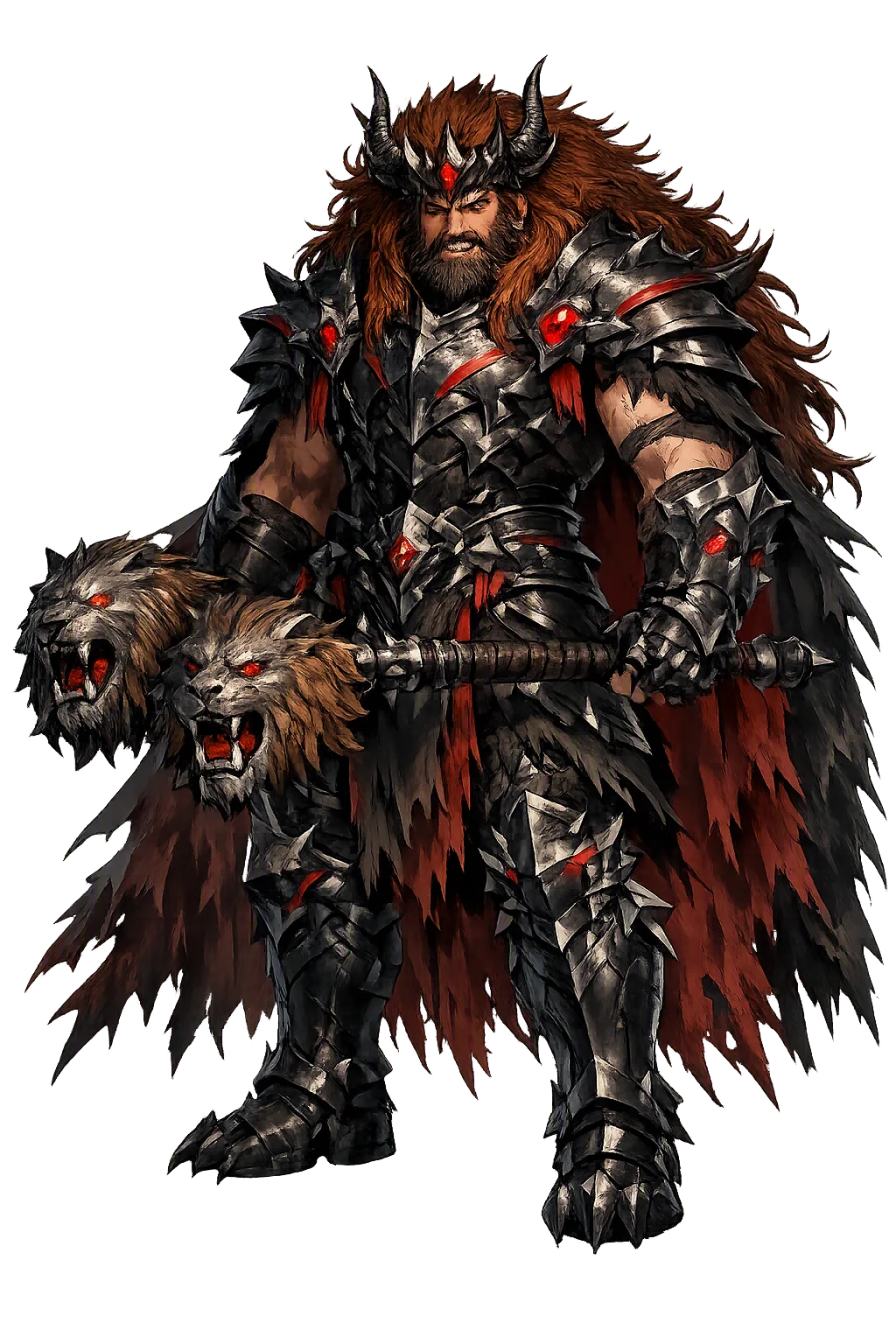
From Cuneiform to Unicode: the journey of Nergal
Long before it was a domain, this name traveled through scripts. Nergal begins in Cuneiform, passes through scholarly transliteration, and ends — for now — inside the punycode machinery of the global DNS. Each stage of that journey preserves some information and loses some, and the craft of restoration is knowing exactly which marks matter. This post follows the name stage by stage: the original script, the reconstructed pronunciation, the mythological record, the material evidence, and finally the Unicode form that carries all of it into the address bar. Think of it as a biography of a name, told through its spelling.
At a Glance
- Restored name: Nergal
- ASCII form: nergal
- Meaning: "Lord of the great city"
- Domain of influence: Underworld, War, Plague
- Pantheon: Mesopotamian
- Classification: Tier 2
- Original script: 𒀭𒄊𒀕 (Cuneiform)
Overview
Nergal (nergal) — Underworld, War, Plague · Lord of the great city — belongs to the Mesopotamian tradition, where it is catalogued under the domain "Underworld, War, Plague". The name means "Lord of the great city".
Nergal is the Mesopotamian god in whom three terrible jurisdictions meet: the battlefield, the epidemic, and the realm of the dead. His name means 'lord of the great city', and his great city is Kutha (modern Tell Ibrahim), the cult centre from which his authority radiated across Sumer, Akkad, Assyria, and Babylonia. Where other war gods personify the glory of victory, Nergal personifies the unstoppable force that cuts life down — the lion, the plague-wind, and the furnace-heat of the netherworld.
He is not merely a destroyer. In the myth Nergal and Ereshkigal he descends to the underworld and becomes the consort and co-ruler of its queen; in the Epic of Erra his violence is checked only by the counsel of the god Ishum. His mythology is therefore a meditation on the difference between raw destruction and the ordered power that even death requires.
PuniCodex restores the name as Nergal and serves its temple at its temple. The restoration needs no distinctive letters or diacritics its ASCII form would lose, which places the name in Tier 2. The plain ASCII form nergal survives as a modern convenience imposed by the early domain-name system; the restoration, not the fallback, is the form the project defends as philologically complete.
The Name
The name is attested in Cuneiform as 𒀭𒄊𒀕. Etymologically it means "Lord of the great city".
The ASCII form nergal survives only because the early domain-name system could not carry diacritics; it is a technological compromise, not an ancient spelling. The Unicode restoration Nergal recovers the full diacritic detail of the scholarly transliteration directly in the address bar. The restoration needs no distinctive letters or diacritics its ASCII form would lose, which places the name in Tier 2.
The letter-by-letter transformation runs:
- n → N — Same, capitalized
- e → e — Same
- r → r — Same
- g → g — Same
- a → a — Same
- l → l — Same
The Original Script
The name is preserved in Cuneiform as 𒀭𒄊𒀕 — Sumero-Akkadian cuneiform, attested Sumerian / Old Babylonian – Neo-Assyrian, c. 2600–600 BCE, in Mesopotamia. The script is written left-to-right / top-to-bottom.
The scholarly transliteration is Nergal (Sumerian logogram + Akkadian scholarly), giving the normalized reading /ˈner.ɡal/.
The rendering proceeds step by step:
- Logographic spelling of the underworld god
- Divine determinative 𒀭 marks the theonym
- Akkadian Nergal lord of the underworld city Kutha
Pronunciation
The reconstructed pronunciation of the name is /ˈnɛər.ɡæl/ — Modern Reconstruction.
Phoneme by phoneme:
- Ner- — Stressed first syllable [nɛər] — the name opens with force, like a command or a battle-cry.
- -gal — Unstressed second syllable [ɡæl]; in the underlying Sumerian the element means 'great' or 'lord'.
For the modern speaker, the closest approximation is: 'NAIR-gal' — stress the first syllable and let the second fall sharp, like a mace-stroke.
Kindred and historical forms of the name:
- Sumerian — 𒀭𒄊𒇽𒃲 (dGÌR.UNUG.GAL), 'lord of the great city' — the cuneiform writing used at his cult centre of Kutha
- Akkadian — Nergal / Nerigal, the warrior and underworld god of the first-millennium cult
- Syncretic name — Erra, the plague-warrior of the Akkadian Epic of Erra, often identified with Nergal
Nergal is Tier 2 because the restored form contains no distinctive diacritic, stress mark, or non-ASCII letter. The cuneiform original is conventionally transliterated with plain Latin characters; PuniCodex preserves that transparent spelling while noting that any vowel length or Sumerian accent must be reconstructed from comparative evidence.
Mythology
Nergal's myths are myths of descent and dominion. He begins as a god of the upper air — the son of Enlil — and ends as king of the underworld through violence that turns into sovereignty. His stories are preserved in Sumerian hymns, in the Akkadian Epic of Erra, and in the two major versions of the Nergal and Ereshkigal myth.
Nergal and Ereshkigal (Descent)
In the Standard Babylonian version of Nergal and Ereshkigal, the queen of the underworld sends her messenger Namtar to complain that Nergal has refused to bow before her. The gods order Nergal to descend, but warn him not to accept any gift or pleasure offered in the netherworld. At each of the seven gates he strips away a divine attribute, enters the throne room, seizes Ereshkigal by the hair, and raises his sword to kill her. She offers him kingship over the underworld and her hand in marriage; he accepts, and the two rule the dead together. The older Amarna version tells a similar story of banishment, seduction, and shared sovereignty.
The Epic of Erra (Plague)
The Akkadian Epic of Erra (also known as Erra and Ishum) opens with the warrior-god Erra, identified with Nergal, plotting to devastate Babylon. He persuades Marduk to leave his statue unadorned so that the city's protective power wanes, then unleashes war, fire, and plague across Mesopotamia. The god Ishum, 'the wise one', finally calms Erra by reminding him that excessive destruction is counterproductive and that his own reputation depends on the survival of civilization. The poem is a meditation on the limits of violence and the political theology of catastrophe.
Son of Enlil (Birth)
The Sumerian myth Enlil and Ninlil explains Nergal's origin through the exile of the young Enlil from Nippur. After Enlil impregnates Ninlil by the canal and is banished to the underworld, he meets her three times in disguise — as the gatekeeper, the river-man, and the ferryman — begetting three underworld gods. Nergal is the first of these children, born at the gate of the netherworld. The story makes him a legitimate descendant of the king of the gods while also binding him permanently to the realm of the dead.
The Lion of Kutha (Cult)
Nergal's principal cult centre was Kutha (Sumerian Ki-ut), where his temple Emeslam stood. Royal inscriptions from the Neo-Assyrian and Neo-Babylonian kings record repairs to the temple and offerings to 'Nergal of Kutha'. In hymns he is praised as the lion who strikes down enemies, the lord who burns the wicked, and the god who opens the earth to receive the dead. His worship persisted into the Hellenistic period, when Greek writers identified him with Ares and the planet Mars.
Symbols & Iconography
The iconography associated with Nergal concentrates in a small set of recurring attributes, each a compressed statement about the name:
- Lion — The kingly predator; Nergal's animal and the embodiment of merciless force
- Sword, mace, and bow — The weapons of the warrior-god who strikes in battle and in plague
- Scorpion — A creature of the hot desert and the threshold of death, associated with his underworld aspect
- Furnace and fire — The burning heat of the Mesopotamian underworld and the fever of epidemic disease
- Cuneiform wedge — The written sign 𒀭 (dingir) that marks his name as divine
Archaeology & Evidence
Nergal's principal cult centre was the city of Kutha (Tell Ibrahim), where the temple Emeslam was excavated and mentioned in royal inscriptions from the Neo-Assyrian and Neo-Babylonian periods. Votive objects, cylinder seals, and amulets depict him as a warrior armed with sword, mace, or bow, often accompanied by a lion. Bronze plaques and foundation deposits from Mesopotamian temples name him as the divine protector of kings, while cuneiform copies of the Epic of Erra and Nergal and Ereshkigal from Nineveh, Assur, and Sippar preserve his literary mythology.
Realm & Domain
Nergal is the Mesopotamian god in whom three terrible jurisdictions meet: the battlefield, the epidemic, and the realm of the dead. His name means 'lord of the great city', and his great city is Kutha (modern Tell Ibrahim), the cult centre from which his authority radiated across Sumer, Akkad, Assyria, and Babylonia. Where other war gods personify the glory of victory, Nergal personifies the unstoppable force that cuts life down — the lion, the plague-wind, and the furnace-heat of the netherworld.
He is not merely a destroyer. In the myth Nergal and Ereshkigal he descends to the underworld and becomes the consort and co-ruler of its queen; in the Epic of Erra his violence is checked only by the counsel of the god Ishum. His mythology is therefore a meditation on the difference between raw destruction and the ordered power that even death requires.
The Lion of Kutha
The lion is Nergal's animal; he is the kingly predator whose roar announces war and whose jaws close on the dying.
The Plague-Arrow
Nergal sends pestilence as a warrior sends arrows; epidemics are his invisible campaign against the living.
The Underworld Throne
By marriage to Ereshkigal, Nergal becomes king of the dead; his throne stands at the lowest gate of the cosmos.
The Epic of Erra
In the poem of Erra, Nergal's burning fury almost consumes Babylon until the subordinate god Ishum stays his hand.
Across Cultures
Nergal was so closely identified with the Akkadian plague-god Erra that the two names are often treated as a single figure, especially in the first millennium BCE. His underworld role made him a counterpart to Ereshkigal, whom he marries; together they form the ruling couple of the Mesopotamian dead. Greek and Roman authors equated him with Ares or Mars because of his warlike nature, and the planet Mars was associated with him in Babylonian astral theology. In later Jewish and Christian demonology, Nergal's name surfaces as one of the foreign gods condemned by the prophets and as a byword for heathen fire-cults.
Kindred figures in the PuniCodex cross-tradition index include Ereškigal (queen and king of the underworld), ꜣnpw (underworld / death), Kérberos (underworld / death), Garmr (underworld / death), Hádēs (underworld / death), and Hel (underworld / death).
Cultural Legacy
Nergal survives most visibly in Assyriology and in the continuing popular fascination with Mesopotamian underworld gods. His name has been adopted by bands, games, and fantasy settings as an emblem of infernal or martial power, though these modern uses rarely engage with the nuanced theology of the Epic of Erra or the Nergal and Ereshkigal myth. For PuniCodex, the name is a reminder that war, plague, and death were not separate departments in ancient Mesopotamia but a single jurisdiction personified by one god: the lion who rules both the battlefield and the grave.
The Scholarly Record
The account of Nergal given in this edition rests on the witnesses and reference works listed below. Lexica and etymological dictionaries secure the form and meaning of the name; the literary and religious texts supply the narrative evidence.
- Electronic Text Corpus of Sumerian Literature, Oxford Oriental Institute, 1998. Full text
- The Assyrian Dictionary of the Oriental Institute of the University of Chicago, 21 vols., Oriental Institute, Chicago (completed 2010), 1956. Full text
- Akkadisches Handwörterbuch, 3 vols., Harrassowitz, Wiesbaden (completed 1981), 1965.
- Black & Green, Gods, Demons and Symbols of Ancient Mesopotamia.
- Dalley, Myths from Mesopotamia.
- Foster, Before the Muses.
- Epic of Erra (Erra and Ishum).
- Nergal and Ereshkigal (Standard Babylonian and Amarna versions).
- Enlil and Ninlil (Sumerian, ETCSL 1.2.1).
- Hymn to Nergal (Sumerian royal hymn, ETCSL 4.16.1).
A Meditation
To name Nergal is to name the moment when destruction becomes authority. He is not a chaotic demon but a god who descends through every gate, strips away his own divine equipment, and still emerges as sovereign. That descent is not a fall; it is a claim. The underworld, in his theology, is not an absence of order but a realm with its own king, its own queen, and its own laws.
The Epic of Erra adds a further tension: Nergal's violence is necessary enough to be feared and terrible enough to require restraint. Civilization, the poem suggests, survives not because the destroyer is eliminated but because he listens to counsel. That is a darker vision of peace than many modern mythologies prefer, but it is also a more honest one. Nergal still means: the power that kills must itself be governed, or it will burn the world it rules.
The Unicode Restoration
Nergal is classified as Tier 2: the restoration needs no distinctive letters or diacritics its ASCII form would lose. The ASCII fallback nergal still resolves everywhere, but it is the restored form that carries the name's full information. That is the whole thesis of this temple: the marks are the message.
Character by Character
The journey from nergal to Nergal, one character at a time:
- n → N — Same, capitalized
- e → e — Same
- r → r — Same
- g → g — Same
- a → a — Same
- l → l — Same
The Mesopotamian Pantheon
Nergal is one of 30 entries the PuniCodex lexicon catalogues under the Mesopotamian pantheon. The Pantheon page gathers the tradition's major figures in one place, and the Lexicon lets you filter all 980 restorations by tradition, tier, or script — the fastest way to see where this name sits among its kin.
Frequently Asked Questions
What does Nergal mean? The traditional gloss is "Lord of the great city."
Which tradition does Nergal belong to? Nergal is catalogued in the Mesopotamian pantheon of the PuniCodex lexicon.
Why is Nergal classified as Tier 2? Because the restoration needs no distinctive letters or diacritics its ASCII form would lose — and the marks in the restored spelling preserve exactly that evidence.
Can I use Nergal in a normal browser? Yes. The DNS resolves the punycode form automatically, and the type tool on this site converts nergal to Nergal for copying and pasting.
Where does the scholarly information come from? The entry is built from lexica, inscriptional evidence, and reviewed scholarly sources listed in the Scholarly Edition. Every claim is traceable to a canonical source.
Typing Nergal
You do not need a special keyboard to use this restoration. The PuniCodex Type Tool converts the ASCII form nergal into Nergal as you type, and the browser extension offers the same conversion inside any text field. Copy the restored form, paste it into the address bar, and the DNS does the rest.
Sister Temples
Other temples in the Mesopotamian pantheon include Dumuzid, Enkidu, and Ereškigal — each with its own restoration story, its own scholarly record, and its own place in the lexicon.
Why This Restoration Matters
Every stage of the journey from Cuneiform to Unicode was an act of care: the scribe who first wrote the name, the lexicographer who glossed it, the engineer who taught the DNS to carry it. The PuniCodex restoration is the latest stage, not the last word — the Scholarly Edition is revised as the evidence improves. What does not change is the principle: a name deserves to be written the way its own tradition wrote it. Nergal in the address bar is that principle, made routable.
Explore Further
This post is one doorway into the temple. The home page carries the full character breakdown and the ambient canvas; the lore page tells the myths in long form; the Scholarly Edition preserves the sources, pronunciation data, and revision history; and the patron wall supports the restoration directly. For the wider map, browse the Lexicon, explore the Pantheon, or return to the PuniCodex blog.
A Closer Look at the Marks
A restored name is a small map. In the case of Nergal, the map does not lead through diacritics or special letters, because the source tradition wrote the name in Cuneiform rather than in the Latin alphabet. The ASCII form nergal and the restored form share the same letters; the restoration is a decision about which conventional spelling should serve as the public reference.
That decision is not cosmetic. The original script attestation carries semantic and phonetic information that no romanization can fully reproduce. By fixing one conventional spelling as the canonical domain form, the project prevents the drift that happens when a name is romanized differently in every article, map, and database. The breakdown still lists each character — n, e, r, g, a, l — so visitors can see exactly what is being carried forward and what is not. What looks like "no change" is, in fact, a deliberate choice to keep the name stable, searchable, and addressable.
Related Names
Sources
The full scholarly apparatus — every citation, revision, and review — lives in the Scholarly Edition. Key references for this post:
- Electronic Text Corpus of Sumerian Literature, Oxford Oriental Institute, 1998.
- The Assyrian Dictionary of the Oriental Institute of the University of Chicago, 21 vols., Oriental Institute, Chicago (completed 2010), 1956.
- Akkadisches Handwörterbuch, 3 vols., Harrassowitz, Wiesbaden (completed 1981), 1965.
- Black & Green, Gods, Demons and Symbols of Ancient Mesopotamia.
- CAD, Nergal.
- Chicago Assyrian Dictionary (CAD).
- Lexicon authorities for this entry: ETCSL, Black-Green.