
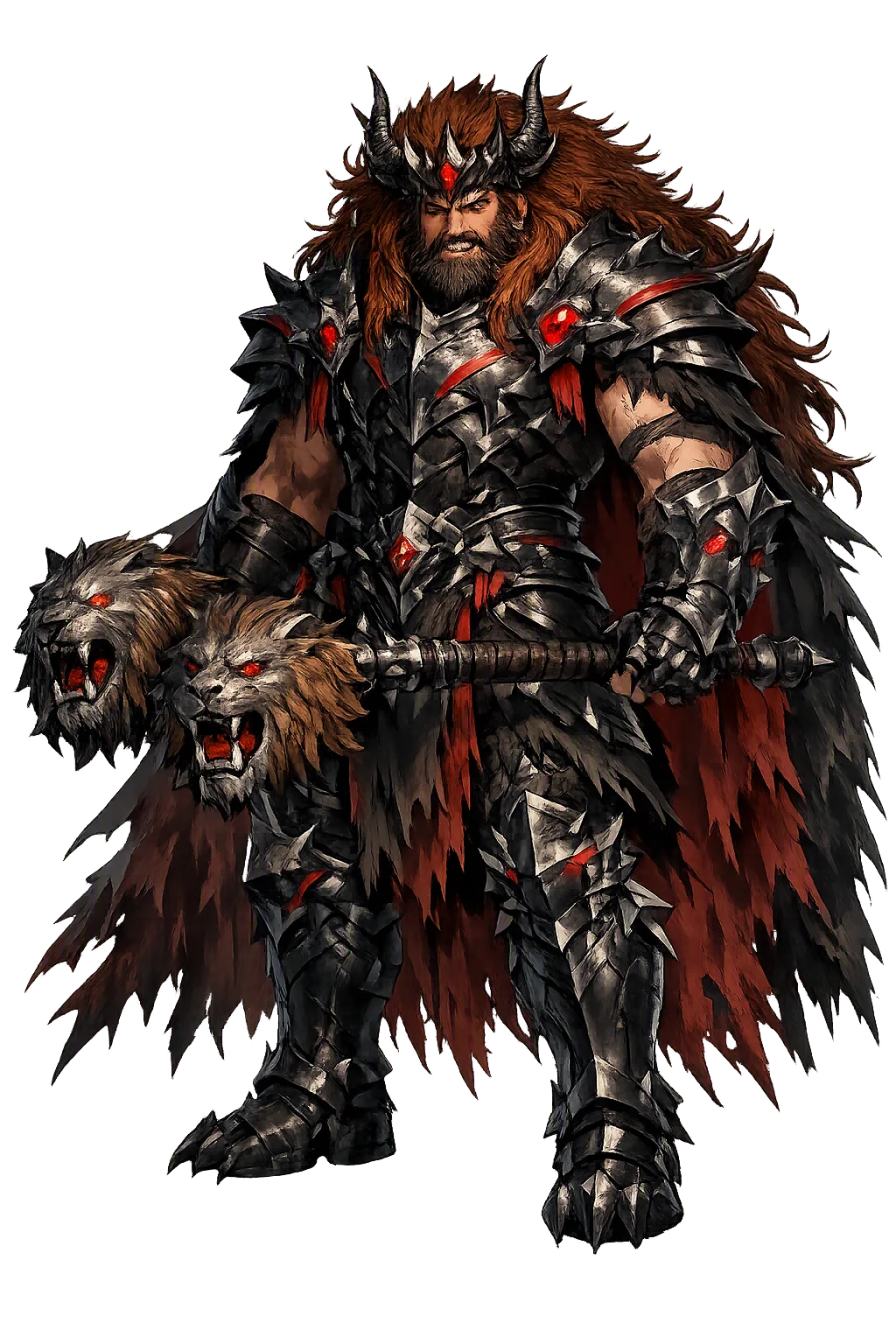
The appointments Nergal made — and who is keeping them
The mistake is reading myths as entertainment. Nergal's cycle reads more like a charter — each story assigning a duty the modern world still pays for.
At a Glance
- Temple: Nergal
- Pantheon: Mesopotamian
- Domain of influence: Underworld, War, Plague
- Pattern seats: 4
- Sectors touched: Commerce & Governance · Society & Spirit · Health & Wellbeing
- Strongest seat: Defense, Military & Security
- Series: The Resonance Files, No. 333 of 548
The Cycle, Read Forward
Defense, Military & Security — through Nergal and Ereshkigal
In the Standard Babylonian version of Nergal and Ereshkigal, the queen of the underworld sends her minister Namtar to the gods' assembly to complain that Nergal has refused to rise before her messenger. The gods order Nergal to descend and make amends, but Ea warns him: accept no throne, no bread, no bath, no bed in the netherworld, for each gift is a snare.
The atlas states the seat in one line: Nergal is the Mesopotamian god of war and plague; the lion of Kutha embodies the raw, sanctioned force that defense and strategic studies still theorize. The story above is the long version of the same sentence. Industries do not invent their archetypes; they inherit them and call them best practice.
Funerary & Memorial Services — through The Epic of Erra
The Akkadian Epic of Erra — also called Erra and Ishum — opens with the warrior Erra, identified with Nergal, restless on his throne. He persuades Marduk to leave his cult statue unadorned for refurbishment, so that Babylon's protective presence is withdrawn; then he and his seven personified weapons burn city after city across Mesopotamia, until the very gods of the land must flee to heaven.
The atlas states the seat in one line: By marriage to Ereshkigal, Nergal becomes king of the underworld — a ruler of the dead and the geography of grief. The story above is the long version of the same sentence. Industries do not invent their archetypes; they inherit them and call them best practice.
Disaster Resilience & Recovery — through Son of Enlil, Born at the Netherworld's Gate
The Sumerian myth Enlil and Ninlil explains Nergal's origin through the exile of the young god. Enlil seduces (or, in the telling's own harsh terms, takes) the goddess Ninlil by the canal-bank of Nippur; the assembly of the gods condemns him to the underworld in disgrace.
The atlas states the seat in one line: The Epic of Erra makes him the agent of war, fire, and epidemic catastrophe — the scenario the resilience sector plans against. The story above is the long version of the same sentence. Industries do not invent their archetypes; they inherit them and call them best practice.
Healthcare, Pharma & Medicine — through The Lion of Kutha
Nergal's principal cult centre was Kutha (Sumerian Ki-ut), modern Tell Ibrahim north of Babylon, where his temple Emeslam — 'House of the Warrior of the Netherworld' — stood. Royal inscriptions from the Neo-Babylonian kings, above all Nebuchadnezzar II, record its lavish restoration; Neo-Assyrian kings made offerings to 'Nergal of Kutha' on campaign, and the god's lion strode across cylinder seals and bronze plaques as the armed protector of kings.
The atlas states the seat in one line: As plague-bringer and the burning fever personified, Nergal names the ancient terror that public health and epidemiology exist to contain. The story above is the long version of the same sentence. That is the cycle working: story becomes duty, duty becomes trade.
The Theme That Runs the Cycle
Nergal's myths are myths of descent and dominion. He begins as a god of the upper world — a son of Enlil, lord of the air — and ends as king of the underworld through violence that turns into sovereignty. His stories survive in Sumerian hymns, in the Akkadian Epic of Erra, and in the two major versions of Nergal and Ereshkigal.
The Method, Stated Plainly
Skeptical? Good — the system is built for you. Every seat in this file carries its why-line and its weight, the full derivation is public at the methodology page, and the challenge process is part of the design. Falsifiable is not a posture here; it is the mechanism.
For the Ones Who Work There
If you work in defense, military & security, funerary & memorial services, or any trade this temple holds a seat in, this is the honest version of what a placement means: your industry beside the story it has been re-telling all along — on the temple floor itself, before an audience that came specifically to read it. The patron tier and the advertising terms describe the mechanics; the resonance above describes the fit.
The File Continues
One of 548 Resonance Files — the series where the pantheon goes to work. Read the founding dispatch for the name, the Restoration File for the spelling, or the whole archive end to end.
Continue the series — previous: Neptūnus (read it) · next: Nézhā (read it).
The Resonance Files are argued from the same canonical record as the pattern atlas itself: the lexicon, the lore catalog, and the cited sources. Every seat can be challenged at the methodology page — and the challenge is the point.