
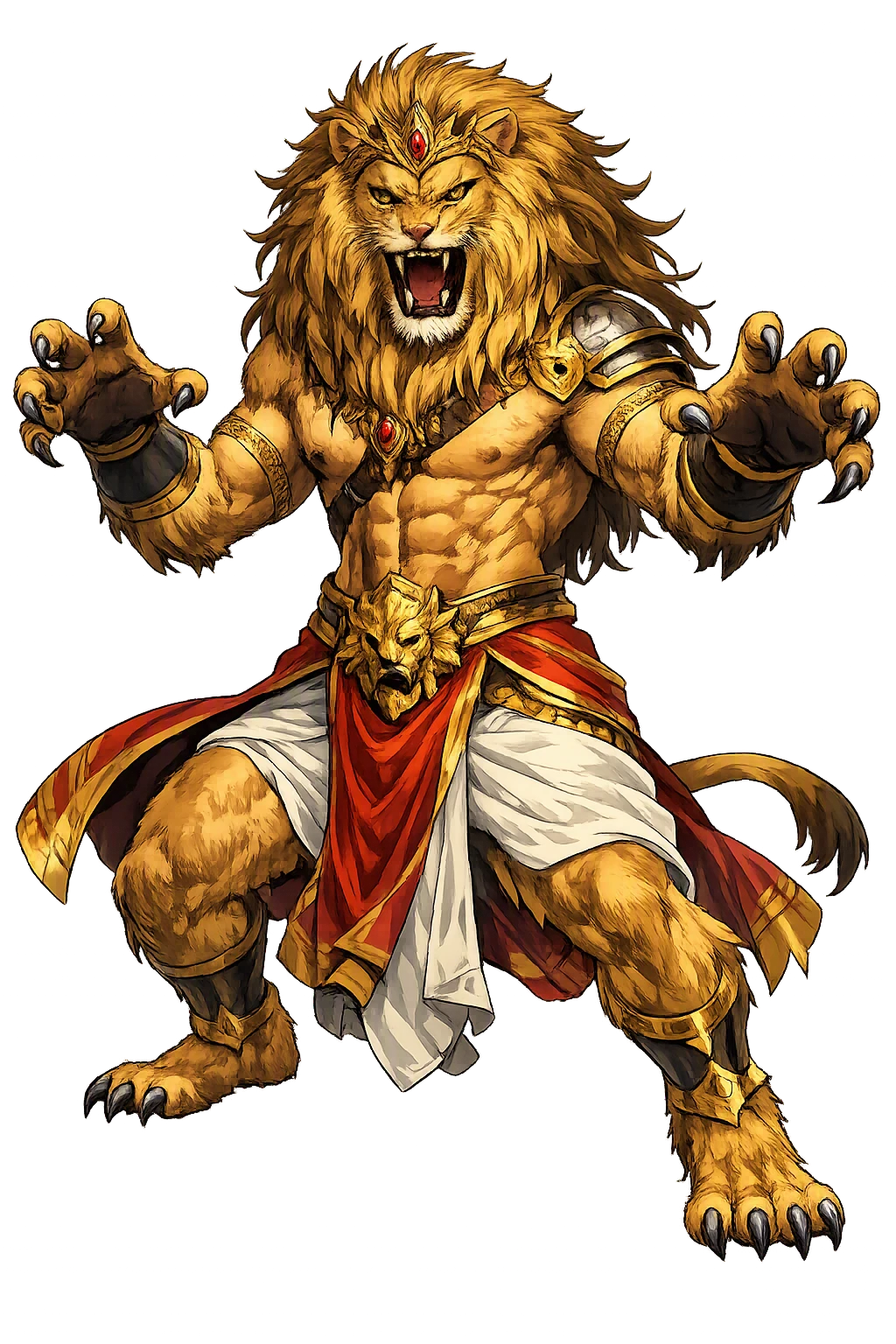
The provenance file on Narasiṃha
Provenance record 331 · Narasiṃha · one temple, fully accounted for.
Provenance
1. The attestation. नरसिंह, from the tradition's own record. On record: Bhāgavata Purāṇa 7.1–10, Viṣṇu Purāṇa 1.17–20, Narasimha Purāṇa, Śiva Purāṇa — the Śarabha episode (Śaiva counter-telling).
2. The narrative record. The Boon of Hiraṇyakaśipu — Hiraṇyakaśipu, king of the daityas, performed austerities so severe that Brahmā offered him a boon. Suspicious of every loophole, the demon stipulated that he should not die by day or night, indoors or outdoors, on earth or in the sky, by weapon or by hand, by man or beast, by god, demon, or nāga. Prahlāda, the Devotee — Prahlāda, the tyrant's son, refused the milk of his father's ideology along with his nurse's milk: asked what he had learned, the boy answered that the best of all teachings is devotion to Viṣṇu. Hiraṇyakaśipu tried to destroy him — poison in his milk, serpents in his bed, mantra-hurled weapons, a mountain dropped on his head, a fire fed by sorcery.
3. The physical record. The earliest monumental telling of the cycle stands at Udayagiri in Madhya Pradesh: Cave 6 (c. 400–401 CE, reign of Candragupta II) carves Narasiṃha disemboweling Hiraṇyakaśipu across his lap — one of the first dated images of the avatāra, and already iconographically complete. The sixth-century Dāśāvatāra temple at Deogarh adds a canonical panel within a full Viṣṇu program. In the far south, Ahobilam's nine shrines in the Nallamala hills embed the myth in living pilgrimage geography. The Vijayanagara capital at Hampi preserves the colossal monolithic Ugra-Narasimha, seated with the demon's body across his thighs, attributed to the early sixteenth century. Outside India, the Banteay Srei temple at Angkor (c. 967 CE) renders the same disemboweling in pink sandstone, with Prahlāda kneeling calmly beside the violence.
4. The current holding. The temple at /narasimha/, classified Tier 1. The restoration preserves more than the ASCII form can express — stress, length, or a letter the Latin keyboard lost — which places it, mechanically, in Tier-1.
5. The documented resonances. Defense, Military & Security, Faith & Spiritual Organizations, Mythic Name Restoration — seats argued and weighted in the pattern atlas, read through the myths in this temple's Resonance File.
6. The primary sources. Rig Veda, Ramayana — the library this file answers to, open at the Sacred Texts collection.
7. The continuing record. Narasiṃha remains among the most actively worshipped forms of Viṣṇu. Ahobilam's nine shrines and Simhachalam near Visakhapatnam — where the deity is kept under a coat of sandalwood paste renewed annually — anchor major pilgrimage circuits, and Narasimha Jayanti, falling on the full moon of Vaiśākha, celebrates the twilight of the boon.
At a Glance
- Restored name: Narasiṃha
- ASCII form: narasimha
- Meaning: "The Man-Lion — the fourth avatāra of Viṣṇu"
- Domain of influence: Man-Lion Avatar
- Pantheon: Sanskrit
- Classification: Tier 1
- Original script: नरसिंह
- Series: The Restoration Files, No. 331 of 548
The File Continues
Read the founding dispatch for the name's full story, the Resonance File for the archetype at work — or the whole archive in one sitting.
Continue the series — previous file: Nanna (read it here) · next file: Neptūnus (read it here).
The Restoration Files are written from the same canonical record as the temples themselves: the lexicon, the lore catalog, the pattern atlas, and the cited scholarly sources. If a file ever disagrees with its temple, the temple is right — tell us, and the file will be corrected.