
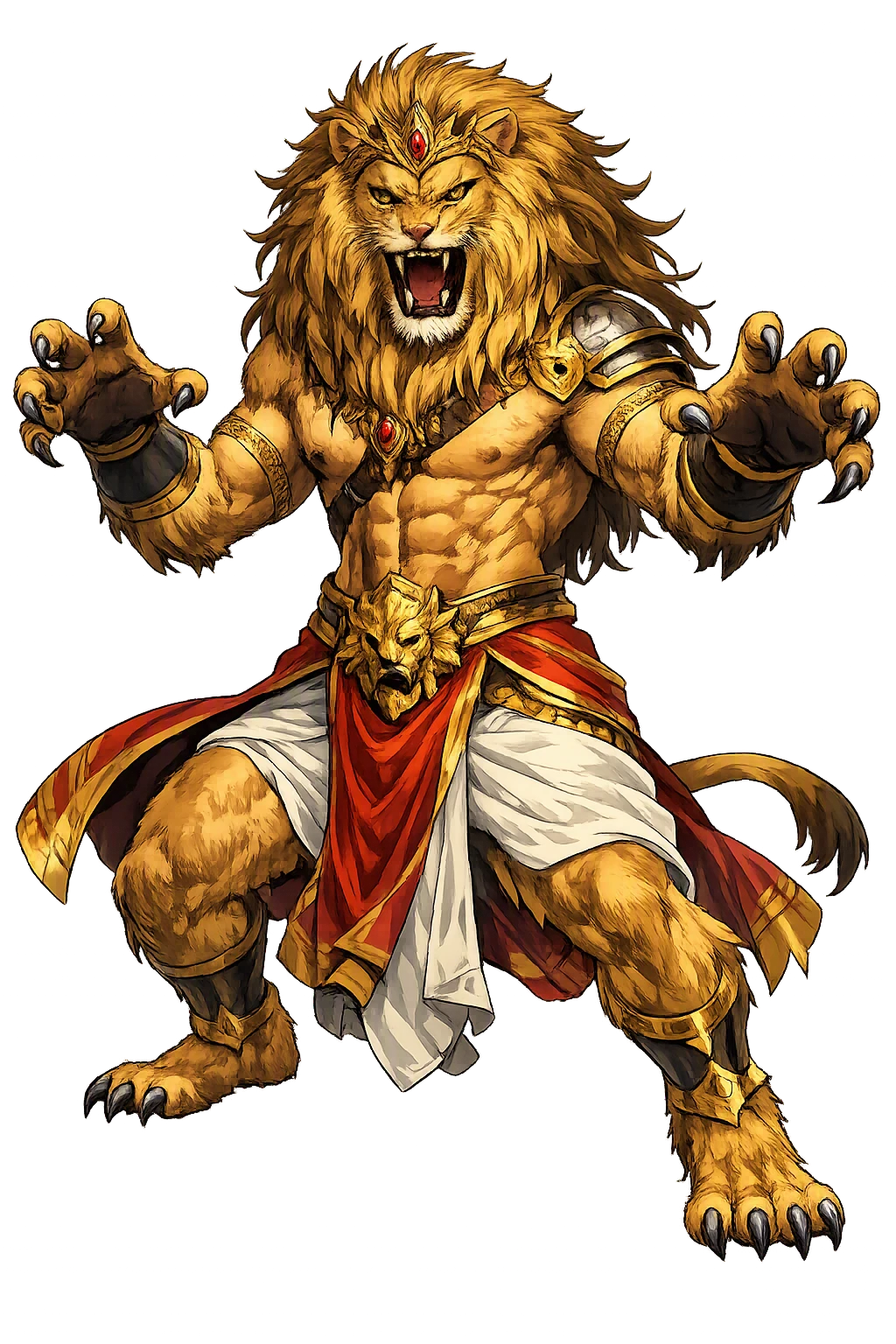
The Cult
Narasiṃha's cult is ancient and continuous. The Udayagiri cave inscription of 401 CE already witnesses courtly devotion under Candragupta II, and by the medieval period his temples anchored regional landscapes: the nine shrines of Ahobilam scattered through the Nallamala hills, Simhachalam above Visakhapatnam where the deity is kept invisible under a coat of sandalwood paste renewed each year, and — newly risen — Yadadri in Telangana. Because his ferocity is the point, worship is a study in controlled approach: most temples daily propitiate the pacified lord, Lakṣmī often beside him, while the fierce form receives its great festival, Narasimha Jayanti in the spring month of Vaiśākha, when the emergence from the pillar is celebrated as the god's birthday. The priests are ordinary Vaiṣṇava arcakas, but the vow belongs to everyone: the man-lion's protective mantra is among the most widely worn in Hindu practice — at thresholds, in wartime, in childbirth.