
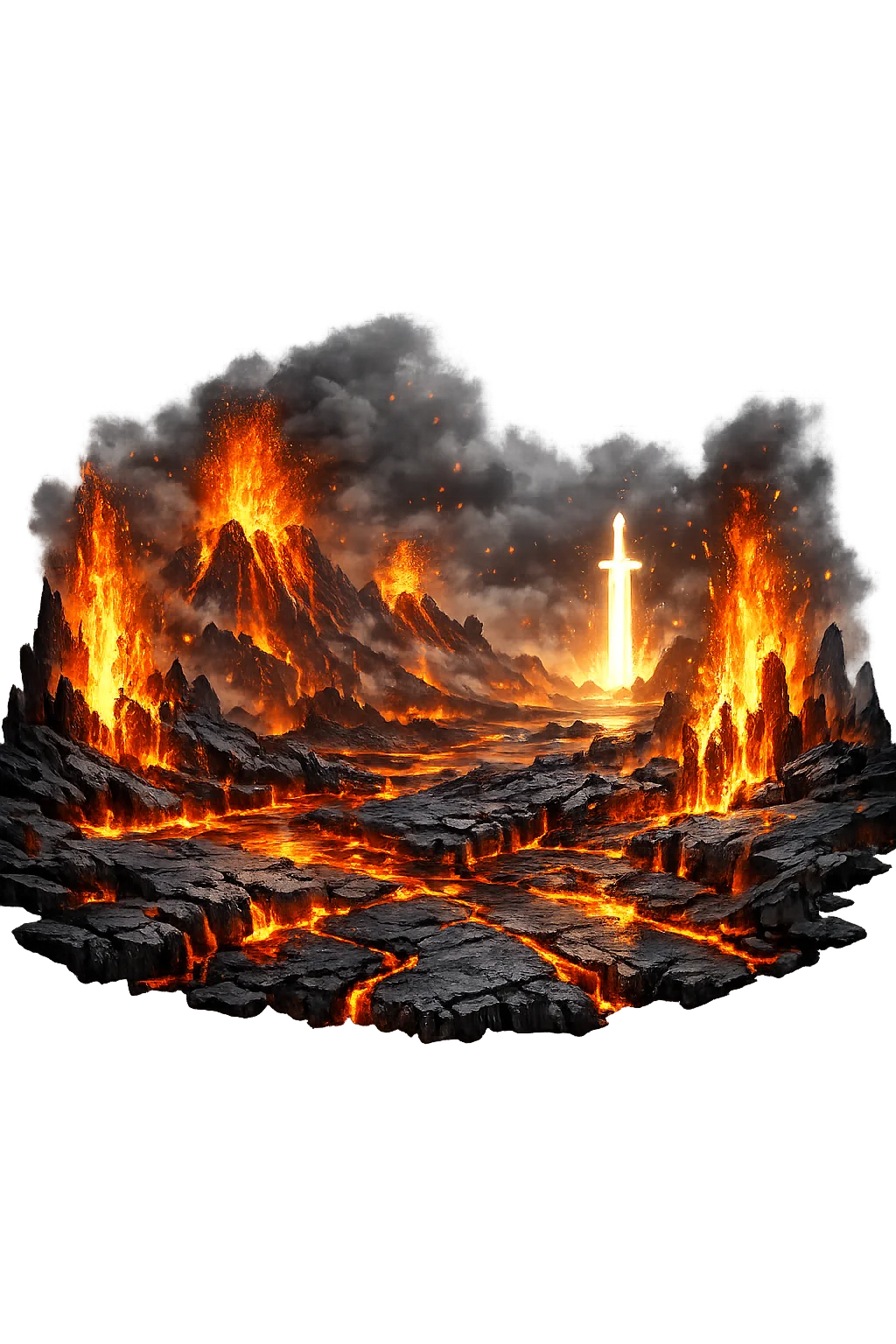
How Muspellheimr found its canonical form
The ASCII form muspellheimr is not missing anything that this name requires. Muspellheimr is the canonical spelling supported by the scholarly record and the tradition's scholarly conventions. This post explains what that form preserves, how it is pronounced, which narratives surround it, and why consistency matters. There are no recovered accents to celebrate; there is something more useful — a spelling whose history can actually be checked.
At a Glance
- Canonical name: Muspellheimr
- ASCII form: muspellheimr
- Meaning: "Muspel-home (world-ender)"
- Domain of influence: World of Fire
- Pantheon: Norse
- Restoration: ASCII-equivalent form
- Reconstructed form: ᛘᚢᛋᛒᛁᛚᛚᚼᛁᛘᚱ (Younger Futhark)
- Live domain: muspellheimr.com
Overview
Muspellheimr (muspellheimr) — The Furnace of the End — belongs to the Norse tradition, where it is catalogued under the domain "World of Fire". The name means "Muspel-home (world-ender)".
In the Norse cosmology, Muspellheimr is the southern world of fire — the realm that burned before the ordered cosmos existed and will burn it again at Ragnarǫk. It is the forge whose sparks quickened the primordial rime and the conflagration that ends the world, ruled from its border by the fire giant Surtr.
PuniCodex records the canonical scholarly spelling Muspellheimr and serves its temple at muspellheimr.com. The displayed form is ASCII-equivalent — a description computed from the displayed form itself. The plain ASCII form muspellheimr contains the same letters: no recovered diacritics or special encoding is claimed. The work here is consistent citation, capitalization, provenance, and cultural context.
The Name
The name is attested in Younger Futhark as ᛘᚢᛋᛒᛁᛚᛚᚼᛁᛘᚱ. Etymologically it means "Muspel-home (world-ender)".
The reconstructed proto-form is Muspell- (proto-indo-european, "world-destroying fire"). Uncertain; possibly from PGmc *muspell- "world-end fire". The realm of fire.
The canonical spelling Muspellheimr matches the conventional scholarly romanization. The plain ASCII form muspellheimr contains the same letters, so no lost diacritics or encoding transition is claimed. The editorial work is to fix one reviewed reference spelling, preserve capitalization and provenance, and keep the original evidence visible. The displayed form is ASCII-equivalent — a description computed from the displayed form itself.
The letter-by-letter transformation runs:
- m → M — Same, capitalized
- u → u — Same
- s → s — Same
- p → p — Same
- e → e — Same
- l → l — Same
- l → l — Same
- h → h — Same
- e → e — Same
- i → i — Same
- m → m — Same
- r → r — Same
The project holds the domain muspellheimr.com (muspellheimr.com) as the canonical home of this name.
Etymology & Roots
The recorded derivation reads: Uncertain; possibly from PGmc *muspell- "world-end fire". The realm of fire.
The reconstructed proto-form is *Muspell- (proto-indo-european), glossed as "world-destroying fire".
The reconstruction is classed as speculative.
The Original Script
The name is preserved in Younger Futhark as ᛘᚢᛋᛒᛁᛚᛚᚼᛁᛘᚱ — Germanic runic, attested Viking Age, c. 800–1100 CE, in Scandinavia. The script is written left-to-right, top-to-bottom.
The scholarly transliteration is Muspellheimr (normalized Old Norse), giving the normalized reading /ˈmus.pɛl.hɛi̯mr/.
The rendering proceeds step by step:
- The Younger Futhark form ᛘᚢᛋᛒᛁᛚᛚᚼᛁᛘᚱ provides a Viking-Age runic attestation or normalized reconstruction.
- Younger Futhark has only sixteen runes and does not distinguish short/long vowels or voiced/voiceless stops.
- The normalized Old Norse form is based on 13th-century manuscript tradition (Poetic and Prose Eddas).
- The canonical restoration Muspellheimr uses Thorn (Þ) and accented vowels registrable in .com.
Snorri attests the fiery world as Múspellsheimr in Gylfaginning, the home of the sons of Múspell; the plain-ASCII spelling used here drops only the acute of the long ú, so there is no diacritic or distinctive letter beyond that for a restoration to recover. No runic inscription preserves the name; a normalized Younger Futhark rendering would approximate ᛘᚢᛋᛒᛁᛚᛚᚼᛁᛘᚱ, the sixteen-rune row marking no vowel length. Because the name is pure ASCII, its domain was registered in the ordinary way: muspellheimr.com is held in the PuniCodex collection — the canonical address of the world of fire.
Pronunciation
The reconstructed pronunciation of the name is /ˈmus.pelˌhɛi̯mr/ — Old Norse Reconstruction.
Phoneme by phoneme:
- Mus- — Short [u] between voiced [m] and voiceless [s]; the first element Muspell- is of uncertain origin
- -pell- — Voiceless bilabial [p] plus short [ɛ] and alveolar lateral [l]
- -heimr — Diphthong [ɛi̯] in heimr, 'home, world', with bilabial [m] and tapped [r]
For the modern speaker, the closest approximation is: 'MOOS-pel-haymr' — stress the first syllable, keep the vowels short, and glide through the final 'haymer'.
Kindred and historical forms of the name:
- Old Norse — Muspell, the personified fire-world, possibly a loan or archaic word
- Poetic Edda — Muspells lýti, 'the destroyer of Muspell', a kenning for Surtr
- Old Saxon / Old High German — mutspelli, the day of the world's end in the Heliand, beside the OHG poem Muspilli
Muspellheimr keeps its restoration plain: no vowel is marked long or stressed. The first element Muspell is not a native transparent compound; its prehistory is debated, which is why the pronunciation stays conservative and the etymology is not invented.
Mythology
Muspellheimr is the world of fire, the southern realm that burned before the cosmos was shaped and will burn it again at Ragnarǫk. Home of Surtr and his sons, it is both the furnace whose sparks quickened Ymir's rime and the terminal conflagration that ends the ordered world.
Surtr Comes from the South (Völuspá 47–52)
The seeress of Völuspá ends her prophecy with Muspell's arrival: Surtr comes from the south, and the sun of the battle-gods shines from his sword. Behind him ride the sons of Muspell, and the rainbow bridge Bifröst breaks beneath their company as they cross. The wolf Fenrir has swallowed the sun; the ship Naglfar, built from the nails of the dead, sails with Loki at the helm; and in the tumult Surtr finds Freyr and kills him — the fertility god defenseless because he gave his own sword to his messenger Skírnir for love of Gerðr. Then Surtr casts fire over the earth: the sun grows dark, the land sinks in the sea, the bright stars vanish, and a life-nourishing flame licks against heaven itself until the sky splits. Fire here is not punishment but atmosphere — the world's element returning to claim it. The stanzas make Muspellheimr the last thing the seeress sees before the earth rises green from the sea: its fire ends the world and, by clearing it, permits the renewal.
The First Melting (Gylfaginning 5)
Snorri's Gylfaginning sets the physics of creation as a collision: from the north, the rivers of Niflheimr poured into Ginnungagap and froze into rime and hoarfrost; from the south, sparks and molten fragments blew out of Muspellheimr into the same void. Just as cold and all harsh things came from Niflheim, Snorri writes, so that which lay nearest Muspell was hot and glowing — and where the heat met the rime, the ice began to melt and drip. From the quickened drops came the sweat of Ymir, the primordial giant from whose body the worlds would later be built. Muspellheimr is thus written into the world's first paragraph as one of its two parents. Without its fire the rime of Niflheimr would have lain on the void forever, unmelting and lifeless; creation begins exactly at the frontier where the two realms touch. The realm that will destroy the world is, in the beginning, the reason the world can exist at all — the furnace and the funeral pyre are the same fire, seen from opposite ends of time.
Surt at the Border (Gylfaginning 4, 8)
Of Muspellheimr's interior Snorri says almost nothing, because nothing in it needs describing: it is brightness, heat, and flame, impassable to anyone not born to it. What matters is its border, where he who sits at the world's end to defend it is called Surt; he has a flaming sword, and at the end of the world he will go and wage war and defeat all the gods and burn the whole world with fire. The southern realm also gave the heavens their lamps: when the sons of Borr built the world, they caught the sparks and glowing embers that flew about loosely and had been cast out of Muspellheim, and set them in the sky — fixed in their places as sun, moon, and stars. The image is exact and beautiful: every star is a spark of Muspell caught and pinned. The realm's fire is therefore both guard and clock — the wall of flame at the world's edge and the burning points by which giants and men tell the hours until Surtr leaves his post. Muspellheimr never does anything; it simply is, at both ends of everything.
The Word Travels South (Muspilli)
The name escaped the north. Around 870 an anonymous monk in the south of the German-speaking world composed a poem on the Last Judgment in which muspilli means the destruction of the world by fire: Elias will fight the Antichrist, but bitter will be the muspilli for the souls unprepared — a word reused, evidently, from the old Germanic vocabulary of the world-ending blaze. The poem survives incomplete in a Munich manuscript (Clm 14098), and a generation earlier the Old Saxon Heliand had already used mūdspelli, 'day of doom,' in its gospel harmony. Whether the word itself is pre-Christian Germanic or a Christian coinage is a question scholars have argued for a century without settlement; what is certain is that the southern fire-realm of the Norse cosmos left its name in monasteries that had never heard of Surtr. Muspell crossed the frontier the way the myth says its sparks do — thrown outward from the burning world to lodge, still glowing, in foreign darkness.
Symbols & Iconography
The iconography associated with Muspellheimr concentrates in a small set of recurring attributes, each a compressed statement about the name:
- Surtr's flaming sword — The giant's bright blade that burns the world at Ragnarǫk
- Lava field — The volcanic landscape of Iceland that medieval Norse readers imagined as Muspell
- Spark-shower — The fire that flies from Muspellheimr to kindle sun, moon, and stars
- Fire-giant's crown — Surtr as the ruler of the flaming realm, sometimes shown with a crown of flames
- World-ash blackened — The burned Yggdrasil after the fire of Muspell has passed
Archaeology & Evidence
The fiery south is anchored in the volcanic geology witnessed by medieval Icelanders. The Eldgjá fissure eruption of c. 939 CE and repeated Hekla eruptions supplied an empirical model for a world of flame. The name Muspell itself echoes continental Germanic eschatological fire poems such as the Old High German Muspilli, preserved in the manuscript at the Bavarian State Library.
Realm & Domain
In the Norse cosmology, Muspellheimr is the southern world of fire — the realm that burned before the ordered cosmos existed and will burn it again at Ragnarǫk. It is the forge whose sparks quickened the primordial rime and the conflagration that ends the world, ruled from its border by the fire giant Surtr.
Surtr's Fire
The fire giant Surtr will lead Muspell's sons across Bifröst, burning the world at Ragnarǫk.
First Melting
Sparks from Muspellheimr met Niflheimr's ice in Ginnungagap, melting the primordial rime from which Ymir emerged.
Fire Giants
Muspellheimr's inhabitants are burning beings for whom order itself is fuel; no gods dwell there.
Apocalyptic South
The southern realm of flame is both the furnace of creation and the terminal conflagration of the cosmos.
Across Cultures
Muspellheimr's nearest relatives are continental Germanic rather than Norse: the Old High German Muspilli and the Old Saxon Heliand's mūdspelli reuse the word for the Christian Last Judgment, though whether muspilli is a native Germanic term for the world-fire or a learned coinage remains unsettled — the sources, as so often here, refuse certainty. Christian apocalyptic coloring of Völuspá's fire is debated in the same register: the poem's burning of the world may be old, may be medieval, likely both at once. On the ground, medieval Icelanders knew exactly what a fire-world looked like: the Eldgjá fissure eruption of c. 939 CE — one of the largest lava floods of the last two millennia — and repeated eruptions of Hekla, long rumored in European lore as an entrance to hell, gave the southern realm an empirical address. Later centuries moved the realm into fantasy literature and modern heathenry, where Muspel stands for the primal fire in games, novels, and neopagan cosmology.
Within the Norse tradition, closely related names in the corpus include Álfheimr, Andvari, Angrboða, Auðhumla, Baldr, and Baugi.
Cultural Legacy
The name lives on in modern fantasy, Neopagan practice, Scandinavian heritage, and the global reception of Viking-Age literature. Restoring Muspellheimr in canonical preserves the name's cultural specificity against the flattening force of plain ASCII. Muspell's fire resonates in apocalyptic imagination, volcanic disaster narratives, and climate change discourse. The Old Norse form Muspellheimr preserves a medieval intuition that creation and destruction are fueled by the same primordial heat.
The Scholarly Record
The account of Muspellheimr given in this edition rests on the witnesses and reference works listed below. Lexica and etymological dictionaries secure the form and meaning of the name; the literary and religious texts supply the narrative evidence.
- Poetic Edda: Völuspá 47–52.
- Snorri Sturluson, Prose Edda: Gylfaginning 4–8 (Muspellheimr, Surt, the first melting; the sparks fixed as stars).
- Poetic Edda: Vafþrúðnismál 50–51 (Surtalogi, the black flame).
- Das althochdeutsche Muspilli (Munich, BSB Clm 14098); the Heliand’s mūdspelli.
- Simek, Dictionary of Northern Mythology, s.v. Muspell(heimr), Surtr.
- de Vries, Altnordisches etymologisches Wörterbuch, s.v. muspell.
A Meditation
Names are not merely labels; they are compressed worlds. Muspellheimr carries within it a norse understanding of muspel-home (world-ender). canonical restoration returns that world to readable form.
The Canonical Spelling
Muspellheimr is the canonical spelling used by this temple. The plain ASCII form muspellheimr contains the same letters, so there are no lost diacritics to recover and no special encoding transition to explain. What the temple preserves is the reviewed reference form: capitalization, conventional romanization, original evidence, and a stable place to inspect them. The value here is not added decoration; it is fidelity to the attested record.
Character by Character
The canonical form Muspellheimr and the plain ASCII form muspellheimr share the same letters. The character list therefore documents continuity rather than recovery: every character is carried forward deliberately, with capitalization serving as the proper-noun convention. No additional mark is inserted merely to make the restoration appear more elaborate.
The Domain Name
The canonical name has a working digital address at muspellheimr.com. Because the spelling already uses ordinary Latin letters, visitors and machines read the same address without a special encoding step. The important engineering fact is not transformation but continuity: the temple's public address preserves the reviewed spelling exactly as written.
The Norse Pantheon
Muspellheimr is one of 101 entries the PuniCodex lexicon catalogues under the Norse pantheon. The Pantheon page gathers the tradition's major figures in one place, and the Lexicon lets you filter all 983 restorations by tradition or script — the fastest way to see where this name sits among its kin.
Frequently Asked Questions
What does Muspellheimr mean? The traditional gloss is "Muspel-home (world-ender)."
Which tradition does Muspellheimr belong to? Muspellheimr is catalogued in the Norse pantheon of the PuniCodex lexicon.
Does this name need recovered diacritics? No. Muspellheimr is already an ASCII-form canonical spelling. The scholarly work is to preserve the attested convention and its evidence, not to add marks.
Can I use Muspellheimr in a normal browser? Yes. The spelling works directly in an ordinary browser, and the type tool can confirm and copy the canonical form.
Where does the scholarly information come from? The entry is built from lexica, inscriptional evidence, and reviewed scholarly sources listed in the Scholarly Edition.
Why This Record Matters
The letters in Muspellheimr were never lost, and no replacement marks are needed to make them whole. The burden is instead one of fidelity: every use should carry the same attested spelling and the history attached to it. The PuniCodex temple keeps that form in circulation — as a digital address, a dataset entry, and a scholarly argument — so consistency becomes the easy choice rather than an accident of citation.
Explore Further
This post is one doorway into the temple. The home page carries the full character breakdown and the ambient canvas; the lore page tells the myths in long form; the Scholarly Edition preserves the sources, pronunciation data, and revision history; and the patron wall supports the restoration directly. For the wider map, browse the Lexicon, explore the Pantheon, or return to the PuniCodex blog.
Related Names
Sources
The full scholarly apparatus — every citation, revision, and review — lives in the Scholarly Edition. Key references for this post:
- Snorri Sturluson, Prose Edda, trans. Anthony Faulkes, Everyman / Viking Society for Northern Research, 1220.
- Poetic Edda: Völuspá 47–52.
- Snorri Sturluson, Prose Edda: Gylfaginning 4–8 (Muspellheimr, Surt, the first melting; the sparks fixed as stars).
- Poetic Edda: Vafþrúðnismál 50–51 (Surtalogi, the black flame).
- Das althochdeutsche Muspilli (Munich, BSB Clm 14098); the Heliand’s mūdspelli.
- Lexicon authorities for this entry: Prose Edda, Cleasby-Vigfusson.