
Muspellheimr — the one true spelling, and the forms that fail it
The internet spells Muspellheimr more ways than one, and only one of them is the name the sources wrote. This is the register's ruling — canonical, fallback, contested, and false, each in its proper place.
At a Glance
- Canonical form: Muspellheimr
- Original script: ᛘᚢᛋᛒᛁᛚᛚᚼᛁᛘᚱ
- Pantheon: Norse
- Convention: normalized Old Norse spelling — þ, ð, ǫ, æ and length marks preserved as the editions print them
- False forms on record: 1
- Contested forms: none attested
- Series: The Canonical Register, No. 323 of 546
The Canonical Form
The attested form is ᛘᚢᛋᛒᛁᛚᛚᚼᛁᛘᚱ, from the tradition's own record. The canonical transliteration is Muspellheimr.
No diacritics are required here: the canonical form is the exactness of the spelling itself, the form normalized Old Norse spelling — þ, ð, ǫ, æ and length marks preserved as the editions print them demands.
Where the Flattened Form Stands
The plain form muspellheimr differs from the canonical Muspellheimr only by convention of display — case, not content. It is acceptable everywhere: in legacy systems, in plain-text citation, in the DNS itself. What is not acceptable is what follows in the register: respellings that change the letters, not just their case.
The Register of False Forms
False form 1: muspelheimr
Origin: the anglicized respelling — the name written the way English guesses it sounds.
Violation: rewrites attested consonant clusters to fit English spelling habits; every cluster simplified this way erases a letter the sources write.
The Contested Forms
No alternate form of this name carries documented scholarly support in the lexicon's record. The convention here — normalized Old Norse spelling — þ, ð, ǫ, æ and length marks preserved as the editions print them — produces exactly one defensible transliteration: Muspellheimr. Forms that differ from it are not contested; they are simply wrong.
The Convention's Own History
Old Norse orthography is a primary source in itself: þ (thorn) and ð (eth) are letters the language used natively, not transliteration marks — English once had them too, and lost them. ǫ (o with ogonek) is a nasal vowel with its own saga-era history, and normalized Old Norse spelling preserves it because the Eddas' editors do. To write th for þ or o for ǫ is not modernization; it is a different spelling of a different word. The Eddic poems survive in one manuscript tradition each — the register spells the names the way those manuscripts do.
What the Address Bar Allows
IDNA 2008 permits the letters these restorations use — macrons, acutes, underdots, thorn, ogonek, the lot — and the DNS carries them as punycode (`xn--` labels). Two honest constraints remain. First, registrar inventory: the protocol permits a character; the registrar's stock decides whether the exact domain can be bought today. Second, combined marks: forms like Apṓllōn (acute stacked on a macron) are philologically ideal yet effectively untypeable on phones and unsupported across much of the registration system.
That is why the rulebook keeps a fallback hierarchy — full restoration first, then the circumflex when the source carries one, then the macron-only academic standard, then an attested variant, and only as a last resort the plain ASCII form. Every step down the ladder is still defensible; nothing on the ladder is a wrong mark. A fallback is a choice among attested forms. A false form is not on the ladder at all.
Where the Name Stood First
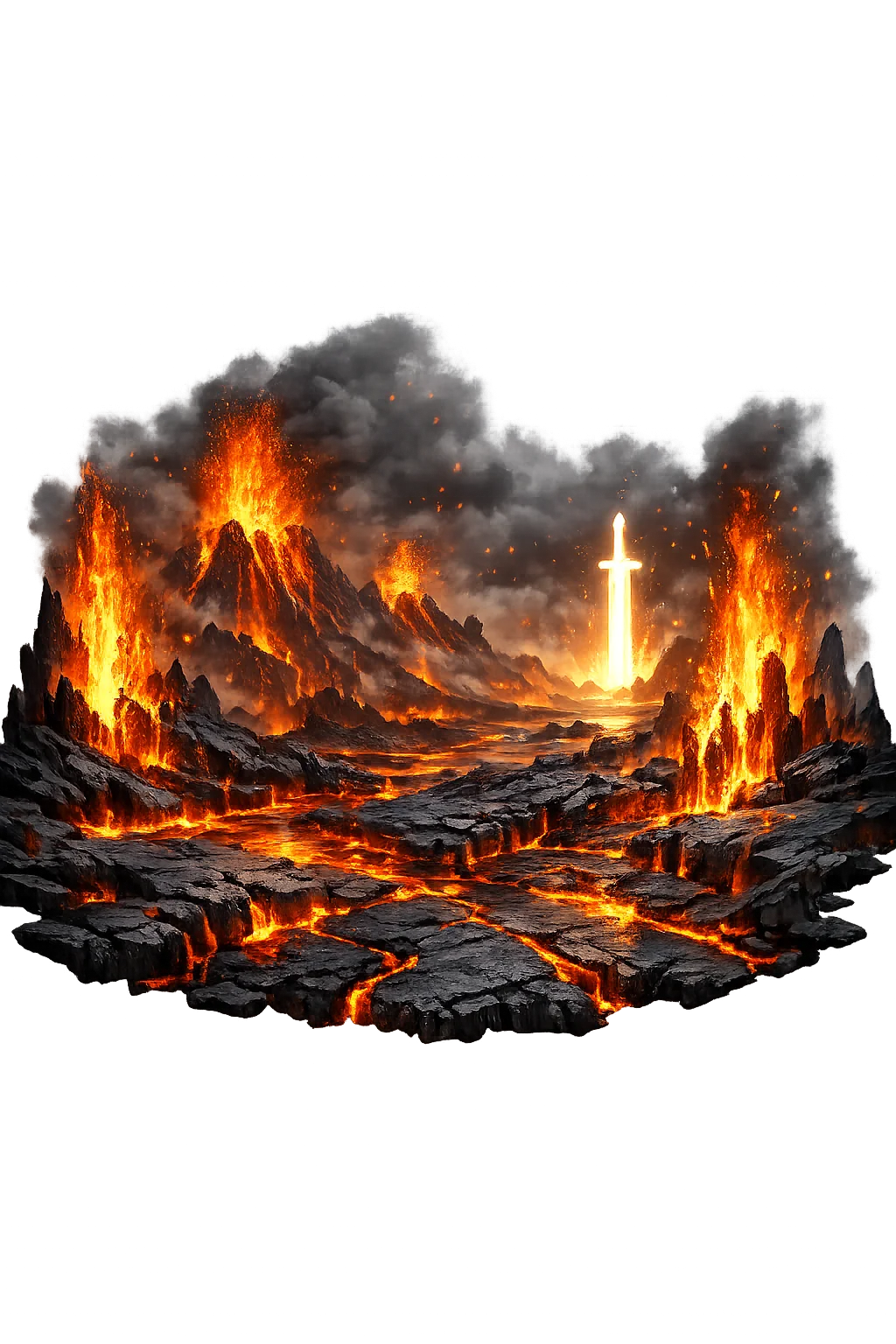
The fiery south is anchored in the volcanic geology witnessed by medieval Icelanders. The Eldgjá fissure eruption of c. 939 CE and repeated Hekla eruptions supplied an empirical model for a world of flame. The name Muspell itself echoes continental Germanic eschatological fire poems such as the Old High German Muspilli, preserved in the manuscript at the Bavarian State Library. The temple on the web is the newest of these addresses — the first one that fits in a pocket.
The Verdict
The register rules for Muspellheimr, and the ruling is checkable: every mark sourced, every violation stated, every borderline form given its honest standing. muspellheimr carries the name freely — it differs only in display, and the register says so without reservation. Anything else in circulation has its origin and its failure recorded above. That is the whole of the law on this name — and the temple at /muspellheimr/ enforces it.
The docket for this ruling: 1 false form ruled against, muspelheimr first on the docket; no contested forms attested; the attestation rests on 6 cited sources — Poetic Edda: Völuspá 47–52, Snorri Sturluson, Prose Edda: Gylfaginning 4–8 (Muspellheimr, Surt, the first melting; the sparks fixed as stars), Poetic Edda: Vafþrúðnismál 50–51 (Surtalogi, the black flame).
The Register Continues
Entry 323 of 546 in the Canonical Register. Around it: the temple's founding dispatch, the Restoration File on the marks themselves, the Resonance File on the archetype at work, and the Rulebook behind all of it.
Continue the register — previous entry: Mūt (read it) · next entry: Myrddin (read it).
The Canonical Register is written from the same canonical record as the lexicon itself. If a false form is missing from this page, it is because the evidence does not support calling it false — or because we have not seen it yet. Show us, with a citation, and the register will answer.