
Why Lahmu is spelled that way — and what it costs to get it right
There is a version of this name the early internet had to settle for: lahmu. This is the file on how Lahmu replaced it.
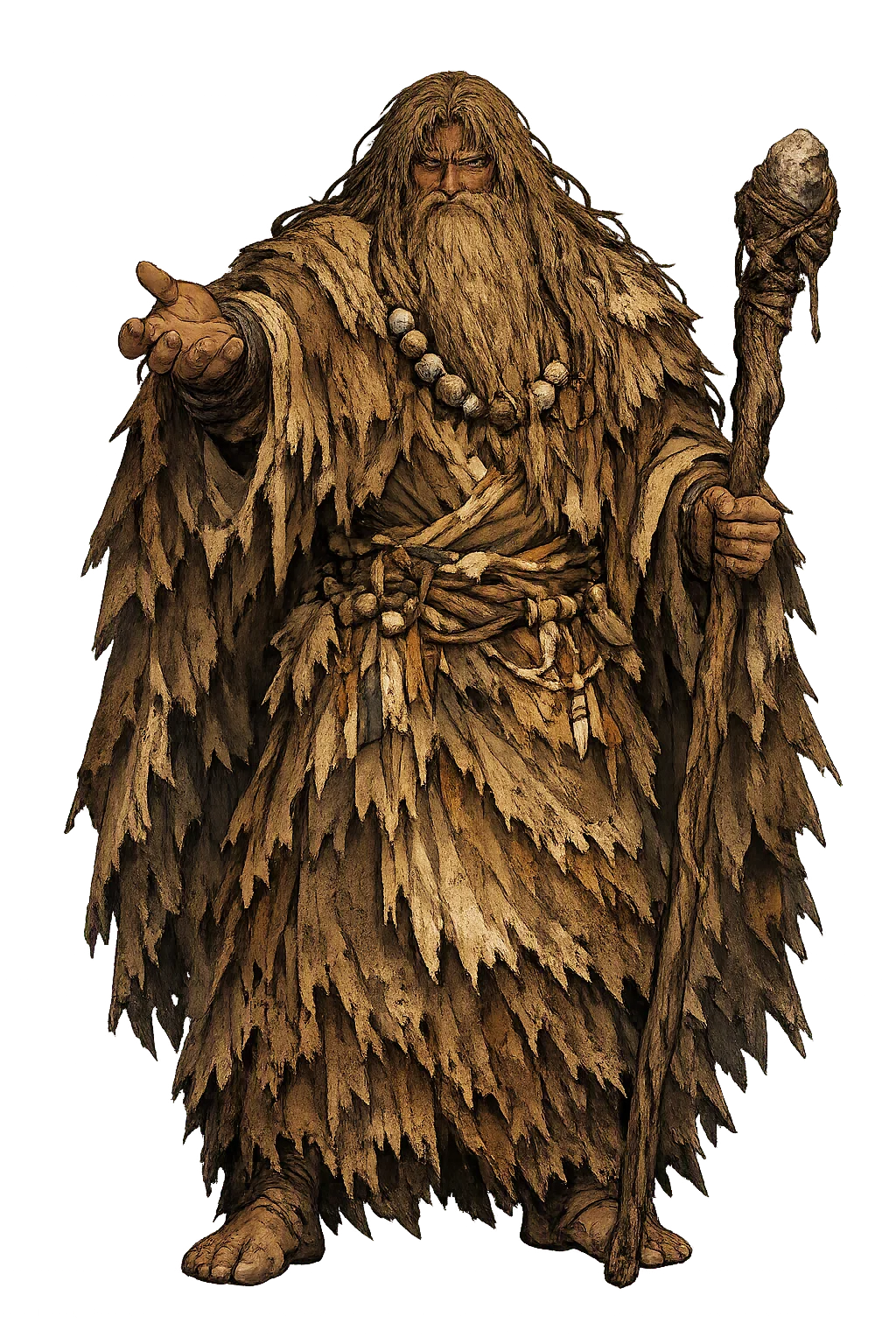
Lahmu is not a protagonist of long narrative cycles; his power is concentrated at origins and thresholds. He appears at the very beginning of the Babylonian cosmos, and he endures at the edges of the ordered world as a guardian.
At a Glance
- Restored name: Lahmu
- ASCII form: lahmu
- Meaning: "The hairy one"
- Domain of influence: Primordial Being
- Pantheon: Mesopotamian
- Classification: Tier 2
- Original script: 𒀭𒌓𒈬
- Series: The Restoration Files, No. 274 of 548
The Name Before the Marks
Spoken, the name runs `/ˈlax.mu/` — 'LAKH-moo' — the middle consonant is a dry, breathy 'kh' like the ch in Scottish 'loch', not a soft English h.
The Temple That Stands Now
The restored name is not a plaque; it is an address. The temple of Lahmu lives at /lahmu/, with its mythology in the lore halls, its peer-reviewed record in the Scholarly Edition, and its place in the pattern atlas on the patterns floor.
The restoration keeps one feature the ASCII form drops. One is enough to matter, and the label says so plainly: Tier-2.
Where the Name Stood First
Archaeological evidence for Lahmu consists chiefly of protective figurines, glazed brick reliefs, and seal impressions. Neo-Assyrian palace gateways, notably at Khorsabad and Nineveh, were flanked by apotropaic colossi whose iconography overlaps with the lahmu type. Clay figurines buried in foundation deposits and door sockets invoke his protective function. Cuneiform copies of the Enuma Elish from Nineveh and Babylon preserve his cosmogonic role. The temple on the web is the newest of these addresses — the first one that fits in a pocket.
The Archetype at Work
The pattern atlas seats this temple in 4 industries, each match argued and weighted: Defense, Military & Security (lahmu is the archetypal threshold guardian — the hairy protective spirit posted at temple and palace gates to turn back hostile forces and pollution.); Architecture & Spatial Design (his cult image frames doorways, gates, and thresholds; the guarded entrance is a foundational unit of sacred and defensive architecture.); History, Archives & Records (the figure survives only in cuneiform ritual texts, seal impressions, and glazed reliefs; reconstructing Lahmu is an exercise in Near Eastern philology and archaeology.). The Resonance File reads those seats through the myths themselves.
In the Sacred Texts
The Mesopotamian tradition is not a vibe; it is a library. The Sacred Texts collection holds Enūma Eliš and The Epic of Gilgamesh — the primary sources the temple's scholarship is built on. The temple is the argument; the texts are the evidence.
The File Continues
The temple's founding dispatch tells the name's story; its Resonance File reads the myths into the industries; the blog index holds the whole archive.
Continue the series — previous file: Lahamu (read it here) · next file: Lakṣmī (read it here).
The Restoration Files are written from the same canonical record as the temples themselves: the lexicon, the lore catalog, the pattern atlas, and the cited scholarly sources. If a file ever disagrees with its temple, the temple is right — tell us, and the file will be corrected.