
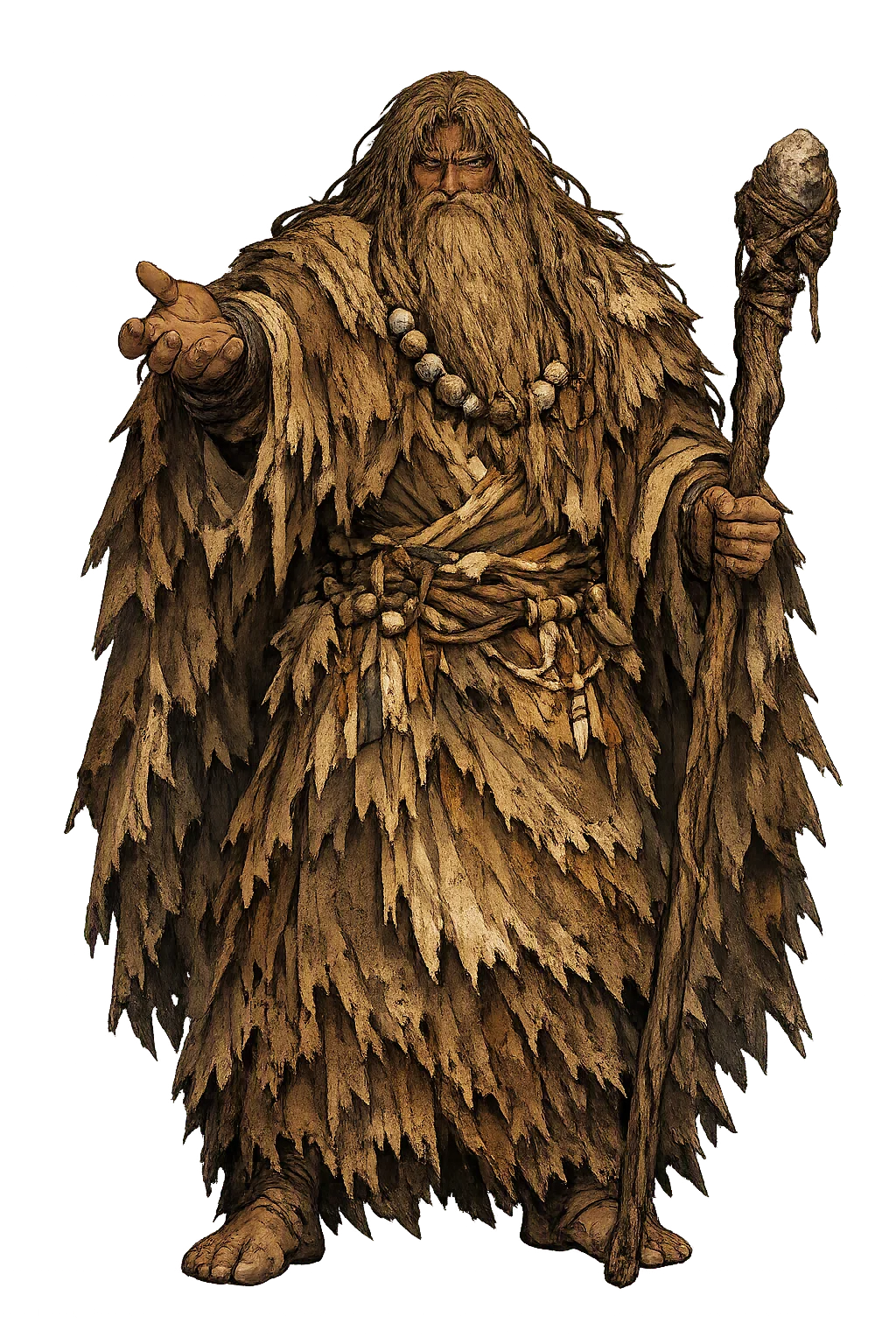
Why Lahmu belongs in your address bar
Every address bar is a choice. When you type Lahmu, you are not typing a novelty; you are restoring a name that the early DNS, built for English typewriters, could not carry. The plain ASCII form lahmu is a leftover of that constraint, not the name itself. This post is the long version of the restoration: where the name comes from, how the Cuneiform tradition wrote it, how it is pronounced, what the myths and the material record preserve, and why its Unicode form now lives as a working domain. The claim throughout is simple — the original spelling is not decoration. It is the name.
At a Glance
- Restored name: Lahmu
- ASCII form: lahmu
- Meaning: "The hairy one"
- Domain of influence: Primordial Being
- Pantheon: Mesopotamian
- Classification: Tier 2
- Original script: 𒀭𒌓𒈬 (Cuneiform)
Overview
Lahmu (lahmu) — Primordial Being · The hairy one — belongs to the Mesopotamian tradition, where it is catalogued under the domain "Primordial Being". The name means "The hairy one".
Lahmu is the Mesopotamian primordial being whose name simply means 'the hairy one'. In the Enuma Elish he is the firstborn of Apsû and Tiāmat, the earliest divine generation before sky and earth were fixed. Beyond cosmogony, he is a protective spirit: a bearded, hair-covered guardian posted at doorways, gates, and thresholds to turn aside demons and pollution.
He stands at the border between chaos and order — born from the mingled primordial waters, then stationed at the doors that keep the ordered world safe.
PuniCodex restores the name as Lahmu and serves its temple at its temple. The restoration needs no distinctive letters or diacritics its ASCII form would lose, which places the name in Tier 2. The plain ASCII form lahmu survives as a modern convenience imposed by the early domain-name system; the restoration, not the fallback, is the form the project defends as philologically complete.
The Name
The name is attested in Cuneiform as 𒀭𒌓𒈬. Etymologically it means "The hairy one".
The ASCII form lahmu survives only because the early domain-name system could not carry diacritics; it is a technological compromise, not an ancient spelling. The Unicode restoration Lahmu recovers the full diacritic detail of the scholarly transliteration directly in the address bar. The restoration needs no distinctive letters or diacritics its ASCII form would lose, which places the name in Tier 2.
The letter-by-letter transformation runs:
- l → L — Same, capitalized
- a → a — Same
- h → h — Same
- m → m — Same
- u → u — Same
The Original Script
The name is preserved in Cuneiform as 𒀭𒌓𒈬 — Sumero-Akkadian cuneiform, attested Old Babylonian, c. 1800 BCE (Enuma Elish), in Mesopotamia. The script is written left-to-right / top-to-bottom.
The scholarly transliteration is ᵈlaḫ-mu (Akkadian scholarly), giving the normalized reading /ˈlaːxmu/.
The rendering proceeds step by step:
- Written ᵈlaḫ-mu in Enuma Elish I (Wiggermann 1992); the UD sign supplies the rare laḫ value
Pronunciation
The reconstructed pronunciation of the name is /ˈlax.mu/ — Akkadian Reconstruction.
Phoneme by phoneme:
- La- — Open syllable with short [a], from the Akkadian root lahāmu, 'to be hairy'.
- -ḫ- — Voiceless velar fricative [x], written with the cuneiform ḫu sign — the consonant that separates Lahmu from a simple English h.
- -mu — Bilabial nasal [m] plus close back vowel [u], the masculine nominative ending.
For the modern speaker, the closest approximation is: 'LAKH-moo' — the middle consonant is a dry, breathy 'kh' like the ch in Scottish 'loch', not a soft English h.
Kindred and historical forms of the name:
- Akkadian — 𒀭𒆷𒄷𒈬 (dlaḫmu), 'the hairy one' — protective deity and primordial figure
- Akkadian feminine — Lahamu (dlaḫmu + feminine -atu), his paired counterpart at the threshold
- Akkadian verb — lahāmu, 'to be hairy, to be covered with hair'
Lahmu is Tier 2 because the registrable canonical form is plain ASCII: it preserves no distinctive diacritic or non-Latin letter. Scholarly Assyriological transliteration often writes Laḫmu with an underdot ḫ to mark the voiceless velar fricative, but the PuniCodex flagship temple displays the unadorned Latin form Lahmu.
Mythology
Lahmu is not a protagonist of long narrative cycles; his power is concentrated at origins and thresholds. He appears at the very beginning of the Babylonian cosmos, and he endures at the edges of the ordered world as a guardian.
Firstborn of the Primordial Waters (Cosmogony)
The Enuma Elish opens with Apsû, the freshwater abyss, and Tiāmat, the salt sea. Their waters mingled and produced the first generation of gods: Lahmu and Lahamu, then Anshar and Kishar, then Anu, and finally Ea (Enuma Elish I:1–10). Lahmu is therefore the first divine body to emerge from chaos, the earliest shape the cosmos takes after the waters meet.
The Hairy Doorkeeper (Apotropaic cult)
In ritual texts and iconography Lahmu is a protective demon stationed at doorways. His shaggy body and beard were believed to frighten away evil. Clay figurines and glazed reliefs show him as a muscular, bearded male with curled hair, often flanking an entrance. To pass his gate was to move from dangerous outside into protected inside.
The Six-Curled Guardian (Iconography)
Lahmu is recognizable in Mesopotamian art by his long beard arranged in six or seven rounded curls, a naked or lightly clad hairy body, and an aggressive stance. He sometimes grasps a weapon or a gatepost. These attributes made him instantly readable as an apotropaic figure: the hair that named him became the visual sign of his power.
Lahmu and Lahamu (Paired cult)
Lahmu is paired with Lahamu, a feminine counterpart whose name shares the same root. Together they guard entrances and thresholds, male and female aspects of a single protective function. In the Enuma Elish the pair is born together; in ritual art they are often depicted as matching figures on either side of a door.
Symbols & Iconography
The iconography associated with Lahmu concentrates in a small set of recurring attributes, each a compressed statement about the name:
- Hairy body and beard — The shaggy pelt that gives the demon his name and apotropaic force
- Doorpost or gate — The threshold he is posted to defend
- Curled locks — The six or seven stylized curls that identify him in art
- Apsû and Tiāmat — The primordial waters from which he first arose
Archaeology & Evidence
Archaeological evidence for Lahmu consists chiefly of protective figurines, glazed brick reliefs, and seal impressions. Neo-Assyrian palace gateways, notably at Khorsabad and Nineveh, were flanked by apotropaic colossi whose iconography overlaps with the lahmu type. Clay figurines buried in foundation deposits and door sockets invoke his protective function. Cuneiform copies of the Enuma Elish from Nineveh and Babylon preserve his cosmogonic role.
Realm & Domain
Lahmu is the Mesopotamian primordial being whose name simply means 'the hairy one'. In the Enuma Elish he is the firstborn of Apsû and Tiāmat, the earliest divine generation before sky and earth were fixed. Beyond cosmogony, he is a protective spirit: a bearded, hair-covered guardian posted at doorways, gates, and thresholds to turn aside demons and pollution.
He stands at the border between chaos and order — born from the mingled primordial waters, then stationed at the doors that keep the ordered world safe.
Primordial Firstborn
First child of Apsû and Tiāmat; the divine line that leads to Anshar, Kishar, Anu, and Ea begins with him.
Guardian of the Gate
In ritual and iconography Lahmu protects temple and palace doorways, the hairy sentinel at the threshold.
The Hairy One
His name and form declare the power of hair: the beard, the mane, the shaggy pelt that marks the apotropaic demon.
Paired with Lahamu
Lahmu and Lahamu appear together as a twin protective pair, male and female guardians of the entrance.
Across Cultures
Lahmu's double life — primordial ancestor and doorway demon — gave him a long afterlife in Mesopotamian religion.
As a cosmogonic figure he belongs to the same watery genealogy as Apsû and Tiāmat, and through them his memory survives in biblical and Near Eastern images of the primordial deep. As a guardian he anticipates the apotropaic figures of later traditions: the cherubim posted at Eden's east gate, the lion and bull colossi that guard Assyrian palace doors, and the sphinxes and lamassu that still flank temple entrances across the ancient Near East. The Greek daimon and the Roman genius loci partly overlap with his function, though none carry his distinctive hairy form.
Within the Mesopotamian tradition, closely related names in the corpus include Adad, Anû, Apsû, Aššur, Dumuzid, and Ēa.
Cultural Legacy
The hairy guardian never fully left the architectural imagination.
Every bearded gatekeeper figure, from Assyrian palace reliefs to medieval church gargoyles and the lion-headed knockers of later doors, preserves the old idea that a threshold needs a frightening friend. In cuneiform studies the name Lahmu remains a standard example of how a descriptive adjective — 'the hairy one' — could become a deity. Modern fantasy and games often borrow Mesopotamian 'hairy demons' without knowing their source, but the type is authentically ancient. PuniCodex keeps the plain Latin form Lahmu as a Tier-2 node: a reminder that not every restoration needs a diacritic; some names are powerful precisely because they are plain.
The Scholarly Record
The account of Lahmu given in this edition rests on the witnesses and reference works listed below. Lexica and etymological dictionaries secure the form and meaning of the name; the literary and religious texts supply the narrative evidence.
- Enuma Elish: The Babylonian Epic of Creation, Standard Babylonian version, 1200 BCE. Full text
- Black & Green, Gods, Demons and Symbols of Ancient Mesopotamia.
- CAD (Chicago Assyrian Dictionary), s.v. lahmu / lahāmu.
- Wiggermann, Mesopotamian Protective Spirits: The Ritual Texts.
- Jacobsen, The Treasures of Darkness.
- Foster, Before the Muses.
- George, House Most High: The Temples of Ancient Mesopotamia.
A Meditation
To contemplate Lahmu is to hold the idea of primordial Being in the mind and to ask what of it endures. The name means "The hairy one" — and a name that carries its meaning so openly invites meditation rather than mere recollection. The tradition remembers the name as primordial Being · The hairy one.
Sit with the restored form — Lahmu — and the diacritics themselves become the practice: each mark is a small act of attention, a refusal to let the plain ASCII form lahmu stand in for the whole. What the tradition preserved in this name, the restoration asks the reader to preserve in turn.
The Unicode Restoration
Lahmu is classified as Tier 2: the restoration needs no distinctive letters or diacritics its ASCII form would lose. The ASCII fallback lahmu still resolves everywhere, but it is the restored form that carries the name's full information. That is the whole thesis of this temple: the marks are the message.
Character by Character
The journey from lahmu to Lahmu, one character at a time:
- l → L — Same, capitalized
- a → a — Same
- h → h — Same
- m → m — Same
- u → u — Same
The Mesopotamian Pantheon
Lahmu is one of 30 entries the PuniCodex lexicon catalogues under the Mesopotamian pantheon. The Pantheon page gathers the tradition's major figures in one place, and the Lexicon lets you filter all 980 restorations by tradition, tier, or script — the fastest way to see where this name sits among its kin.
Frequently Asked Questions
What does Lahmu mean? The traditional gloss is "The hairy one."
Which tradition does Lahmu belong to? Lahmu is catalogued in the Mesopotamian pantheon of the PuniCodex lexicon.
Why is Lahmu classified as Tier 2? Because the restoration needs no distinctive letters or diacritics its ASCII form would lose — and the marks in the restored spelling preserve exactly that evidence.
Can I use Lahmu in a normal browser? Yes. The DNS resolves the punycode form automatically, and the type tool on this site converts lahmu to Lahmu for copying and pasting.
Where does the scholarly information come from? The entry is built from lexica, inscriptional evidence, and reviewed scholarly sources listed in the Scholarly Edition. Every claim is traceable to a canonical source.
Typing Lahmu
You do not need a special keyboard to use this restoration. The PuniCodex Type Tool converts the ASCII form lahmu into Lahmu as you type, and the browser extension offers the same conversion inside any text field. Copy the restored form, paste it into the address bar, and the DNS does the rest.
Sister Temples
Other temples in the Mesopotamian pantheon include Ēa, Enlīl, and Gilgameš — each with its own restoration story, its own scholarly record, and its own place in the lexicon.
Why This Restoration Matters
Restoring Lahmu is part of a larger effort to make the web multilingual by default. The PuniCodex project does not ask users to learn a new alphabet; it asks the infrastructure to respect the alphabets that already exist. Every section of this post — the script, the sound, the myths, the evidence — converges on the same point: the marks in Lahmu are information, and information deserves an address of its own. A single Unicode domain is a small proof, but it is a proof that scales: every name restored makes the next one easier, and every visit to the temple is a vote for the restored form.
Explore Further
This post is one doorway into the temple. The home page carries the full character breakdown and the ambient canvas; the lore page tells the myths in long form; the Scholarly Edition preserves the sources, pronunciation data, and revision history; and the patron wall supports the restoration directly. For the wider map, browse the Lexicon, explore the Pantheon, or return to the PuniCodex blog.
A Closer Look at the Marks
A restored name is a small map. In the case of Lahmu, the map does not lead through diacritics or special letters, because the source tradition wrote the name in Cuneiform rather than in the Latin alphabet. The ASCII form lahmu and the restored form share the same letters; the restoration is a decision about which conventional spelling should serve as the public reference.
That decision is not cosmetic. The original script attestation carries semantic and phonetic information that no romanization can fully reproduce. By fixing one conventional spelling as the canonical domain form, the project prevents the drift that happens when a name is romanized differently in every article, map, and database. The breakdown still lists each character — l, a, h, m, u — so visitors can see exactly what is being carried forward and what is not. What looks like "no change" is, in fact, a deliberate choice to keep the name stable, searchable, and addressable.
Lahmu in Its Tradition
Lahmu does not stand alone. It belongs to the Mesopotamian tradition, where it is counted among 30 names in the PuniCodex lexicon. Its sphere — Primordial Being — places it beside other figures who govern similar aspects of experience. The restored spelling is therefore not only a philological decision; it is a way of keeping the name in the company of its kin. When the address bar shows Lahmu, it marks the boundary between a generic search term and a named entry in a living catalog of myth. That catalog is the point of the project. Every restored name is a vote for specificity: the web should know the difference between a figure and a keyword, between a tradition and a trend. Lahmu is one such vote.
What You Will Find in the Temple
The temple page for Lahmu is more than a landing page. The home tab presents the character breakdown, the pronunciation guide, and the live domain status in a single view. The lore tab gathers the myths and narratives that give the name its depth. The Scholarly Edition tab publishes the sources, variant forms, and review history that justify the restoration. Industry patterns show where the name appears in modern commerce and culture, while the gallery and creatives tabs collect visual and sponsor material. The patron wall lets visitors support the restoration directly. Each tab is generated from the same canonical sources, so the domain, the blog, the scholars page, and the search index all agree. The result is a single source of truth about a name, delivered through several doors.
The Restoration on the Live Web
A domain name is a kind of publication. When Lahmu resolves, it proves that the restored spelling is not a theoretical exercise; it is a working address on the public internet. Search engines can index it, language models can encounter it, and anyone who copies it from a manuscript can paste it into a browser. That practical reality changes the status of the restoration. Before Unicode domains, a scholar could write the name correctly in an article while the public web flattened it to lahmu. Now the public web can carry the correct form end to end. The punycode translation happens silently, so the infrastructure remains compatible while the visible name keeps its marks. That compromise — human-readable restoration, machine-readable encoding — is the foundation of every PuniCodex temple.
Related Names
Sources
The full scholarly apparatus — every citation, revision, and review — lives in the Scholarly Edition. Key references for this post:
- Enuma Elish: The Babylonian Epic of Creation, Standard Babylonian version, 1200 BCE.
- Black & Green, Gods, Demons and Symbols of Ancient Mesopotamia.
- CAD (Chicago Assyrian Dictionary), s.v. lahmu / lahāmu.
- Wiggermann, Mesopotamian Protective Spirits (1992).
- Enuma Elish I.
- Lexicon authorities for this entry: Enuma Elish, Black-Green.