
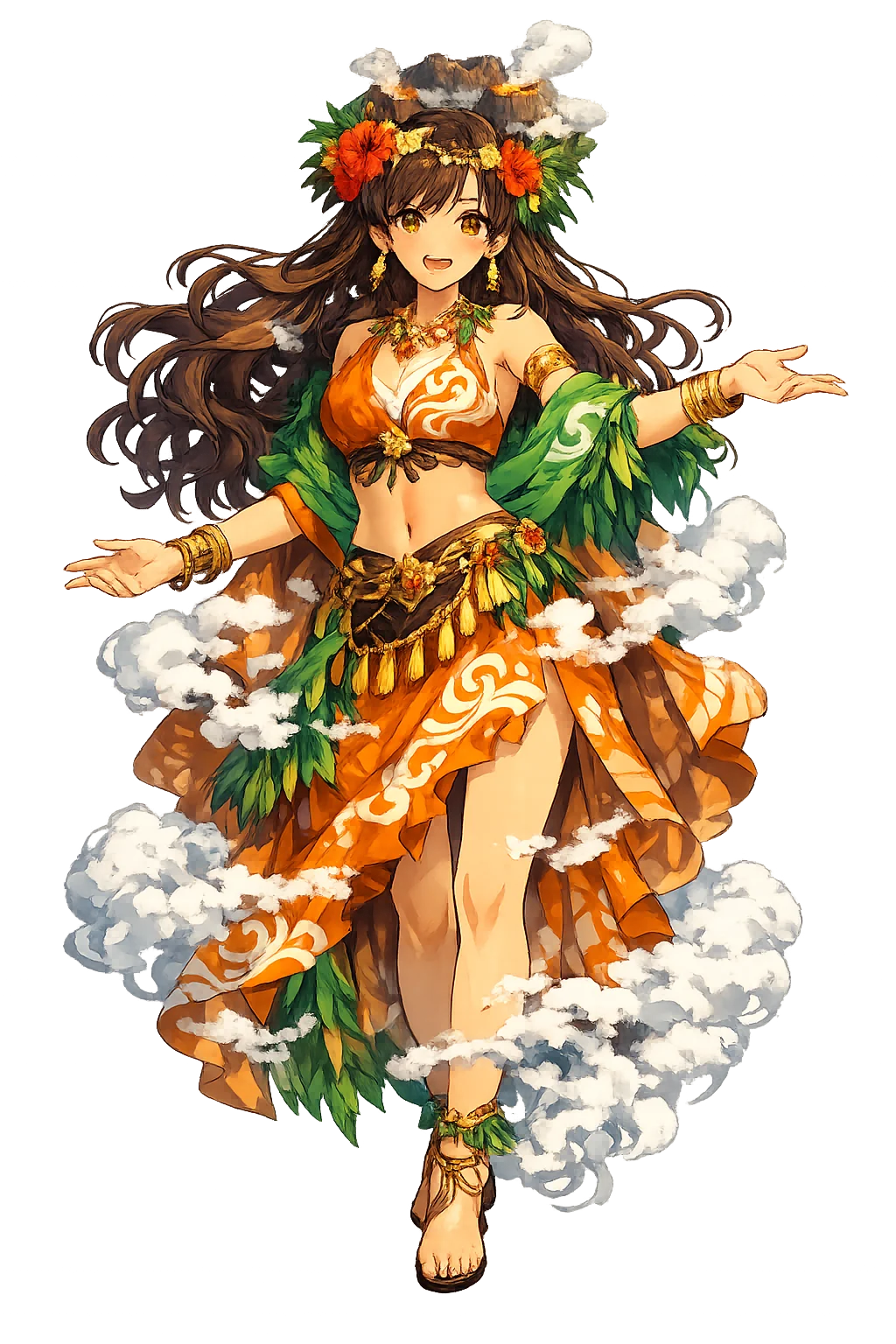
The appointments Kyūshū made — and who is keeping them
Take Kyūshū's stories in sequence. They are not episodes; they are appointments — and the modern trades are keeping them.
At a Glance
- Temple: Kyūshū
- Pantheon: Japanese
- Domain of influence: South, Volcanoes, Origins
- Pattern seats: 3
- Sectors touched: Culture & Entertainment · Technology & Innovation
- Strongest seat: Travel, Tourism & Place Branding
- Series: The Resonance Files, No. 270 of 546
The Cycle, Read Forward
Travel, Tourism & Place Branding — through Ninigi on Takachiho
The Kojiki and Nihon Shoki bring the heavenly grandson Ninigi down to earth on the peak of Takachiho — placed by tradition in Kyūshū's mountains — where he marries the blossom-princess Konohanasakuya-hime. She proves her divine conception by setting fire to the birthing hut and delivering three sons amid the flames; their line leads to Jimmu, the first emperor.
The atlas states the seat in one line: Japan’s front door, where rice, Buddhism, and iron first made landfall — the volcanic island of hot springs and first arrivals. The story above is the long version of the same sentence. The trade thinks it is optimizing a process. It is re-enacting a charter.
Manufacturing, Craft & Automation — through Jimmu's Departure
The chronicles begin Japan's history on this island. Jimmu, the great-grandson of Ninigi, tired of ruling only the Hyūga coast and resolved on the eastern expedition to Yamato: 'the land to the east is fair...
The atlas states the seat in one line: Arita porcelain and the gateway’s craft traditions. The story above is the long version of the same sentence. Industries do not invent their archetypes; they inherit them and call them best practice.
Communication, Messaging & Logistics — through The Divine Wind
Twice the Mongol-Chinese fleets of Kublai Khan reached Kyūshū — 1274 and 1281, the second numbering thousands of ships — and twice, after hard fighting on the Hakata beaches, typhoons destroyed the armadas. The shrines had prayed for deliverance, and the nation named the storm kamikaze, 'divine wind': weather as providence, and the coast of Hakata Bay as the sacrificial altar of the largest seaborne invasions the world had yet seen.
The atlas states the seat in one line: The gateway shore; two thousand years of trade through one strait. The story above is the long version of the same sentence. That is the cycle working: story becomes duty, duty becomes trade.
The Theme That Runs the Cycle
Kyūshū claims the mythology of beginnings: the chronicles land the sun goddess's grandson on its peaks, send the first emperor out from its shores, and let its storms write themselves into the national soul.
The Method, Stated Plainly
None of this is numerology. A seat exists only where the match can be argued from the deity’s documented domains and deeds — weighted, published, and falsifiable. The derivation, the weights, and the challenge process are public on the methodology page. If a seat in this file reads wrong, the atlas itself tells you how to prove it — and the correction becomes part of the record.
For the Ones Who Work There
If you work in travel, tourism & place branding, manufacturing, craft & automation, or any trade this temple holds a seat in, this is the honest version of what a placement means: your industry beside the story it has been re-telling all along — on the temple floor itself, before an audience that came specifically to read it. The patron tier and the advertising terms describe the mechanics; the resonance above describes the fit.
The File Continues
One of 546 Resonance Files — the series where the pantheon goes to work. Read the founding dispatch for the name, the Restoration File for the spelling, or the whole archive end to end.
Continue the series — previous: Kyōto (read it) · next: Lada (read it).
The Resonance Files are argued from the same canonical record as the pattern atlas itself: the lexicon, the lore catalog, and the cited sources. Every seat can be challenged at the methodology page — and the challenge is the point.