
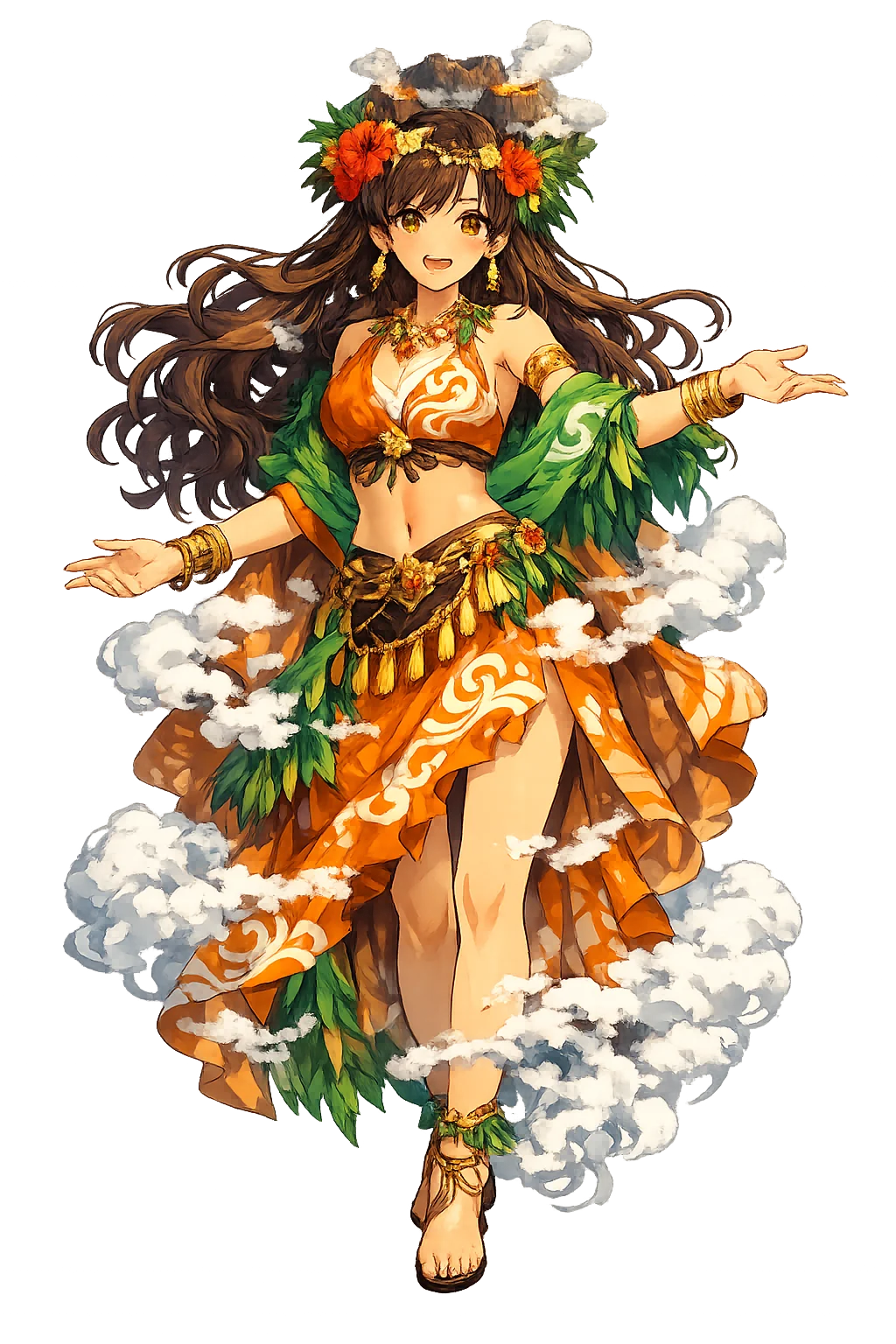
How Kyūshū was rebuilt, mark by mark
The workshop file for Kyūshū. Every rejected form is recorded here too — that is the point of keeping notes.
What We Found
The attestation, as Kojiki (Age of the Gods; Ninigi's descent; Jimmu's eastern expedition) and Nihon Shoki (the kamikaze of 1274 and 1281; the founding chronology) record: 九州. Meaning: "'Nine provinces' (九州)".
The figure behind the name: Kyūshū claims the mythology of beginnings: the chronicles land the sun goddess's grandson on its peaks, send the first emperor out from its shores, and let its storms write themselves into the national soul.
What the Name Carried In
Ninigi on Takachiho. The Kojiki and Nihon Shoki bring the heavenly grandson Ninigi down to earth on the peak of Takachiho — placed by tradition in Kyūshū's mountains — where he marries the blossom-princess Konohanasakuya-hime. She proves her divine conception by setting fire to the birthing hut and delivering three sons amid the flames; their line leads to Jimmu, the first emperor.
Jimmu's Departure. The chronicles begin Japan's history on this island. Jimmu, the great-grandson of Ninigi, tired of ruling only the Hyūga coast and resolved on the eastern expedition to Yamato: 'the land to the east is fair...
A spelling that has to carry stories like these is not a label. It is equipment.
Where It Stood Before Us
Yoshinogari, in Saga, is East Asia's great Yayoi site: a moated, towered settlement of two thousand years ago, with mass jar-burials and bronze-weapon caches — the archaeological face of the Wa people whom Chinese chronicles describe. The underwater archaeology of Takashima's Mongol wrecks — anchor stones, bombs, and hulls preserved in Imari Bay — has recovered the kamikaze fleets themselves. The hidden Christian sites of the Amakusa islands and Nagasaki's Ōura Cathedral (1864, built for the returned faith) are UNESCO-listed as the "Hidden Christian Sites in the Nagasaki Region." The bench inherits all of it — the web temple is the newest site, not the first.
What We Kept
The evidence, mark by mark — 2 features the keyboard form kyushu cannot hold:
- u → ū — Macron marks the long vowel. Kept.
- u → ū — Macron marks the long vowel. Kept.
What We Rejected
The plain ASCII kyushu — admissible as a fallback, never as the primary. A wrong accent would have been worse: the rulebook is explicit that a misplaced mark is worse than none.
What We Set Down
Kyūshū — The restoration preserves more than the ASCII form can express — stress, length, or a letter the Latin keyboard lost — which places it, mechanically, in Tier-1.
For the voice: kYOO-shoo, with the compressed ky- onset and long vowels.
The temple stands at /kyushu/ — the notes above are public in its Scholarly Edition, sources and all.
At a Glance
- Restored name: Kyūshū
- ASCII form: kyushu
- Meaning: "'Nine provinces' (九州)"
- Domain of influence: South, Volcanoes, Origins
- Pantheon: Japanese
- Classification: Tier 1
- Original script: 九州
- Series: The Restoration Files, No. 270 of 546
The File Continues
The temple's founding dispatch tells the name's story; its Resonance File reads the myths into the industries; the blog index holds the whole archive.
Continue the series — previous file: Kyōto (read it here) · next file: Lada (read it here).
The Restoration Files are written from the same canonical record as the temples themselves: the lexicon, the lore catalog, the pattern atlas, and the cited scholarly sources. If a file ever disagrees with its temple, the temple is right — tell us, and the file will be corrected.