
Why Kumano is spelled that way — and what it costs to get it right
There is a version of this name the early internet had to settle for: kumano. This is the file on how Kumano replaced it.
Kumano's mythology blends imperial foundation legend, mountain asceticism, and the medieval fusion of kami and Buddha. Its sources are chronicle, mandala, and ritual text rather than epic, and its stories are walked as much as told: the crow who guided an emperor, the hermits who heard sermons in waterfalls, and the retired sovereigns who came on foot to meet them.
At a Glance
- Restored name: Kumano
- ASCII form: kumano
- Meaning: "Bear plain"
- Domain of influence: Sacred Region, Three Shrines
- Pantheon: Japanese
- Classification: Tier 2
- Original script: 熊野
- Series: The Restoration Files, No. 269 of 548
The Name Before the Marks
The name is attested as 熊野, in the attestation Kojiki (712) and Nihon Shoki (720), Jimmu and Yatagarasu episodes and UNESCO, Sacred Sites and Pilgrimage Routes in the Kii Mountain Range (World Heritage listing, 2004) give us. On the evidence, it means "Bear plain".
Spoken, the name runs `/kɯ.ma.no/` — 'KOO-mah-noh' — three even syllables, with the first vowel soft and back.
The Temple That Stands Now
The restored name is not a plaque; it is an address. The temple of Kumano lives at /kumano/, with its mythology in the lore halls, its peer-reviewed record in the Scholarly Edition, and its place in the pattern atlas on the patterns floor.
The restoration keeps one feature the ASCII form drops. One is enough to matter, and the label says so plainly: Tier-2.
Where the Name Stood First
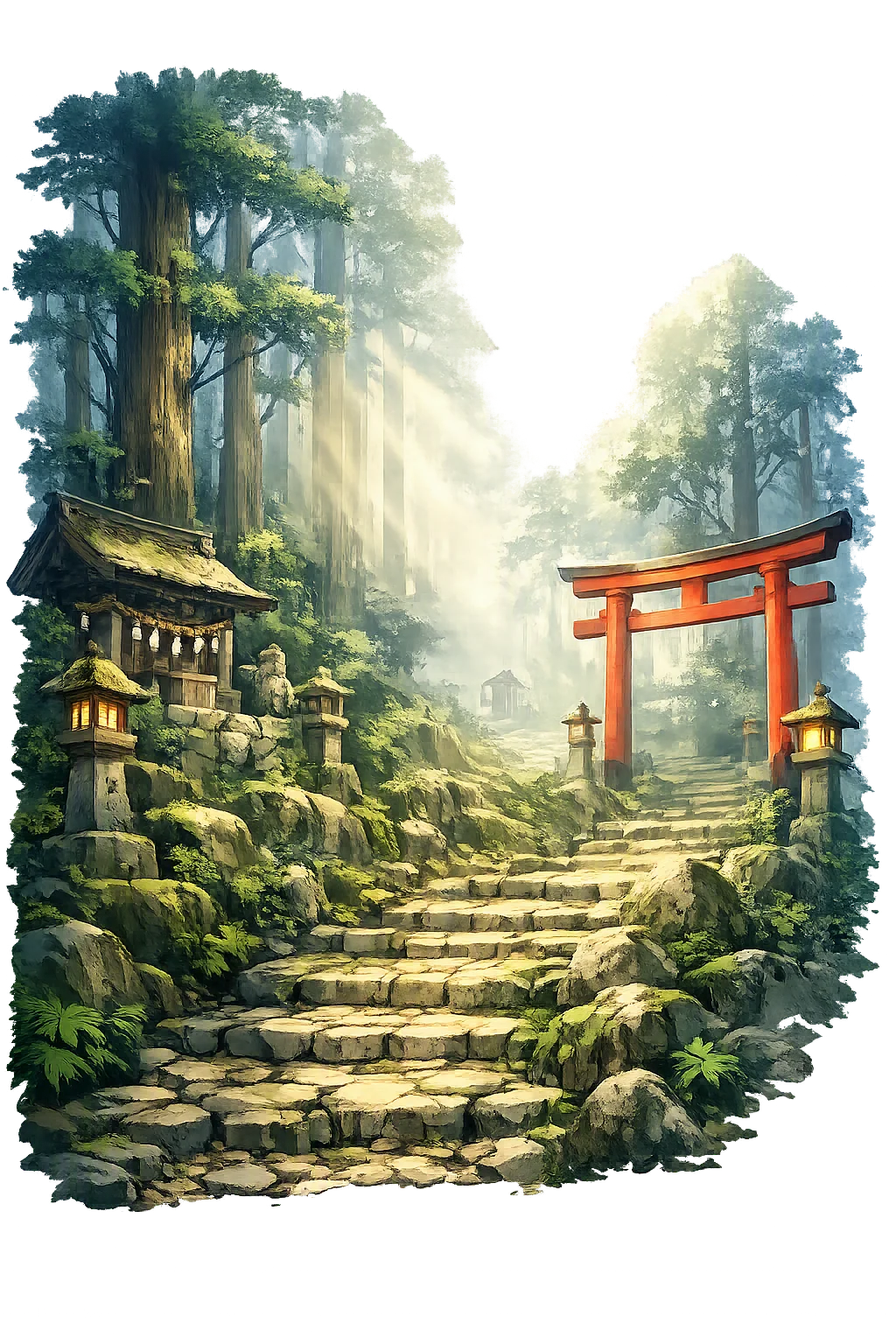
The Kumano Sanzan (Kumano Hongū Taisha, Kumano Hayatama Taisha, Kumano Nachi Taisha) and the Kumano Kodō pilgrimage routes preserve a landscape of shrines, stone pavements, ritual sites, and Nachi Falls. Archaeological and architectural study documents the region's importance from the Heian period onward. The temple on the web is the newest of these addresses — the first one that fits in a pocket.
The Archetype at Work
The pattern atlas seats this temple in 3 industries, each match argued and weighted: Faith & Spiritual Organizations (the three shrines of the Kumano Sanzan are one of Shintō's great pilgrimage circuits.); Travel, Tourism & Place Branding (the Kumano Kodō pilgrimage routes are a UNESCO World Heritage walking trail.); Forestry, Conservation & Outdoor Industries (the sacred mountain region whose cedar-lined trails are a UNESCO heritage corridor.). The Resonance File reads those seats through the myths themselves.
In the Sacred Texts
The Japanese tradition is not a vibe; it is a library. The Sacred Texts collection holds Kojiki and Nihon Shoki — the primary sources the temple's scholarship is built on. The temple is the argument; the texts are the evidence.
The File Continues
The temple's founding dispatch tells the name's story; its Resonance File reads the myths into the industries; the blog index holds the whole archive.
Continue the series — previous file: Kṣitigarbha (read it here) · next file: Kyōto (read it here).
The Restoration Files are written from the same canonical record as the temples themselves: the lexicon, the lore catalog, the pattern atlas, and the cited scholarly sources. If a file ever disagrees with its temple, the temple is right — tell us, and the file will be corrected.