
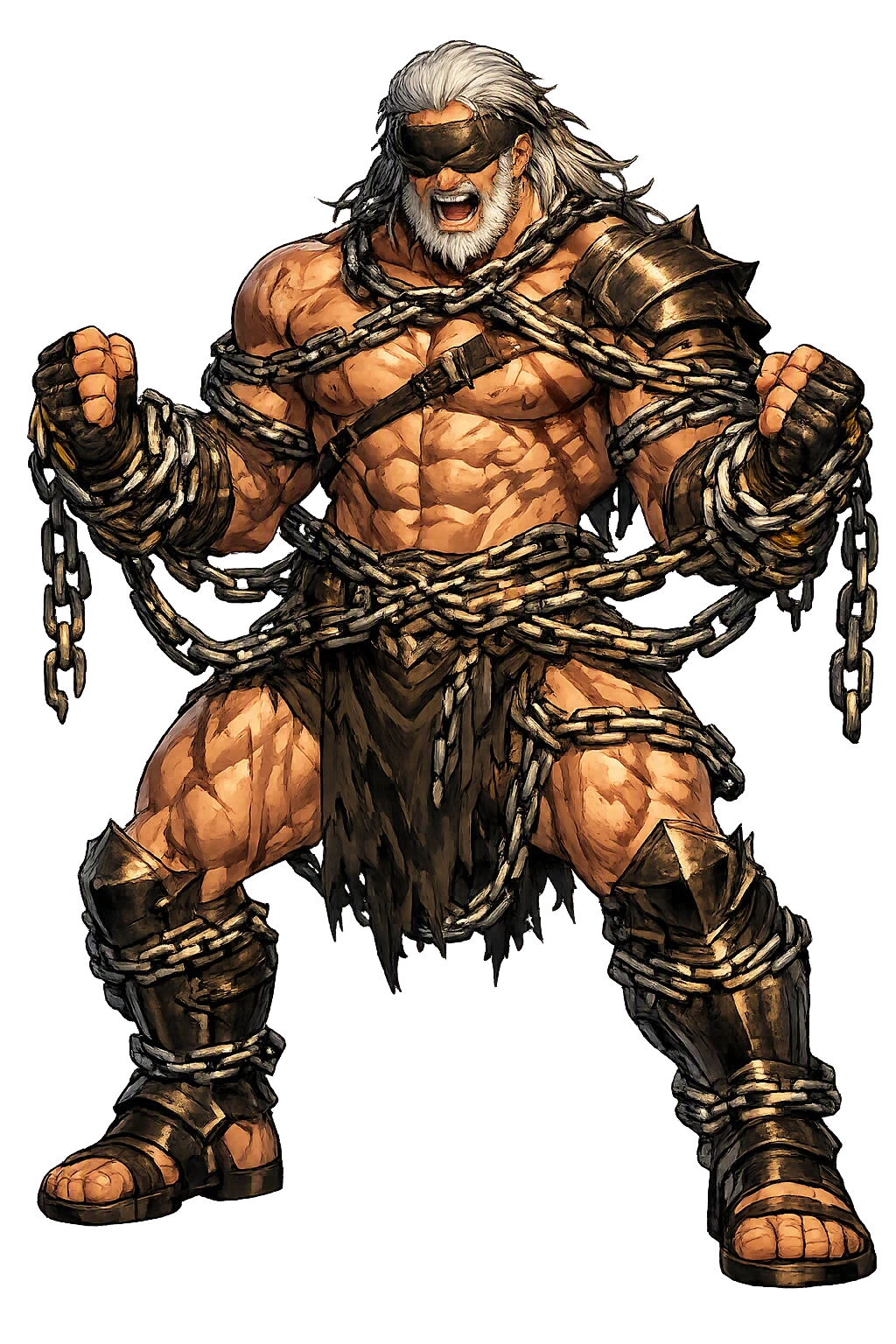
The provenance file on Krátos
The provenance file for Krátos. Nothing here is unsourced; that is what the file is for.
Provenance
1. The attestation. Κράτος — "Strength, power". On record: Hesiod, Theogony 375–403 (genealogy and honor) and 775–806 (the oath of Styx), Aeschylus, Prometheus Bound 1–87 (Krátos on stage), Hyginus, Fabulae, preface (children of Styx and Pallas, primos in omnibus), Homer, Iliad 8.18–31 and 478–483 (the kratos of Zeus).
2. The preserved evidence. a → á (Acute on alpha) — absent from the ASCII form kratos, present in the restoration, verifiable against the sources above.
3. The narrative record. The Children of Styx — Hesiod gives Krátos his family in the Theogony (375–383): the river Styx, daughter of Ocean, bore to Pallas four children — Zelos (Rivalry), trim-ankled Níkē (Victory), Krátos (Might), and Bía (Force). They are not decorative attendants. The Will of Zeus — Aeschylus stages Krátos in person. At the opening of Prometheus Bound, Might and Force — Krátos and Bía — drag the defiant Titan to a crag at the world's edge, and Krátos addresses the workman Hephaestus with the play's entire thesis: Zeus is new to power and ruthless; old loyalties count for nothing; 'there is no one free except Zeus' (Prometheus Bound 50–52).
4. The physical record. No temple, image, or votive of Krátos is attested; his entire material record is textual. The binding of Prometheus was a favorite of Attic vase painters from the sixth century BCE — Hephaestus strapping the Titan to the crag, the Oceanids wringing their hands — but the painters show the smith, not Might; the pairing of Krátos and Bía belongs to Aeschylus' stage, and papyri of Prometheus Bound from Roman Egypt are the god's only 'sites.' Even his mother left barely a footprint: Styx was honored at a single Arcadian spring and a hill in Elis (Pausanias 8.17–18) — a fitting inheritance for the family of oaths: real, but rarely visited.
5. The current holding. The temple at /kratos/, classified Tier 2. One decisive feature survives — a single, honest mark — which places the restoration in Tier-2: exact, and exactly labeled.
6. The documented resonances. Defense, Military & Security, Gaming, Fantasy & Entertainment IP, Mythic Name Restoration — seats argued and weighted in the pattern atlas, read through the myths in this temple's Resonance File.
7. The primary sources. Theogony, Homeric Hymns, Works and Days — the library this file answers to, open at the Sacred Texts collection.
8. The continuing record. Krátos's cult was nonexistent, but his word built a civilization's self-description. Classical Athens put his name in its constitution — dēmokratíā, the kratos of the dēmos — the same word, with the master changed, that Aeschylus' Krátos had claimed exclusively for Zeus.
At a Glance
- Restored name: Krátos
- ASCII form: kratos
- Meaning: "Strength, power"
- Domain of influence: Strength, Power, Sovereignty
- Pantheon: Greek
- Classification: Tier 2
- Original script: Κράτος
- Series: The Restoration Files, No. 266 of 548
The File Continues
Read the founding dispatch for the name's full story, the Resonance File for the archetype at work — or the whole archive in one sitting.
Continue the series — previous file: Kotoshironushi (read it here) · next file: Krónos (read it here).
The Restoration Files are written from the same canonical record as the temples themselves: the lexicon, the lore catalog, the pattern atlas, and the cited scholarly sources. If a file ever disagrees with its temple, the temple is right — tell us, and the file will be corrected.