
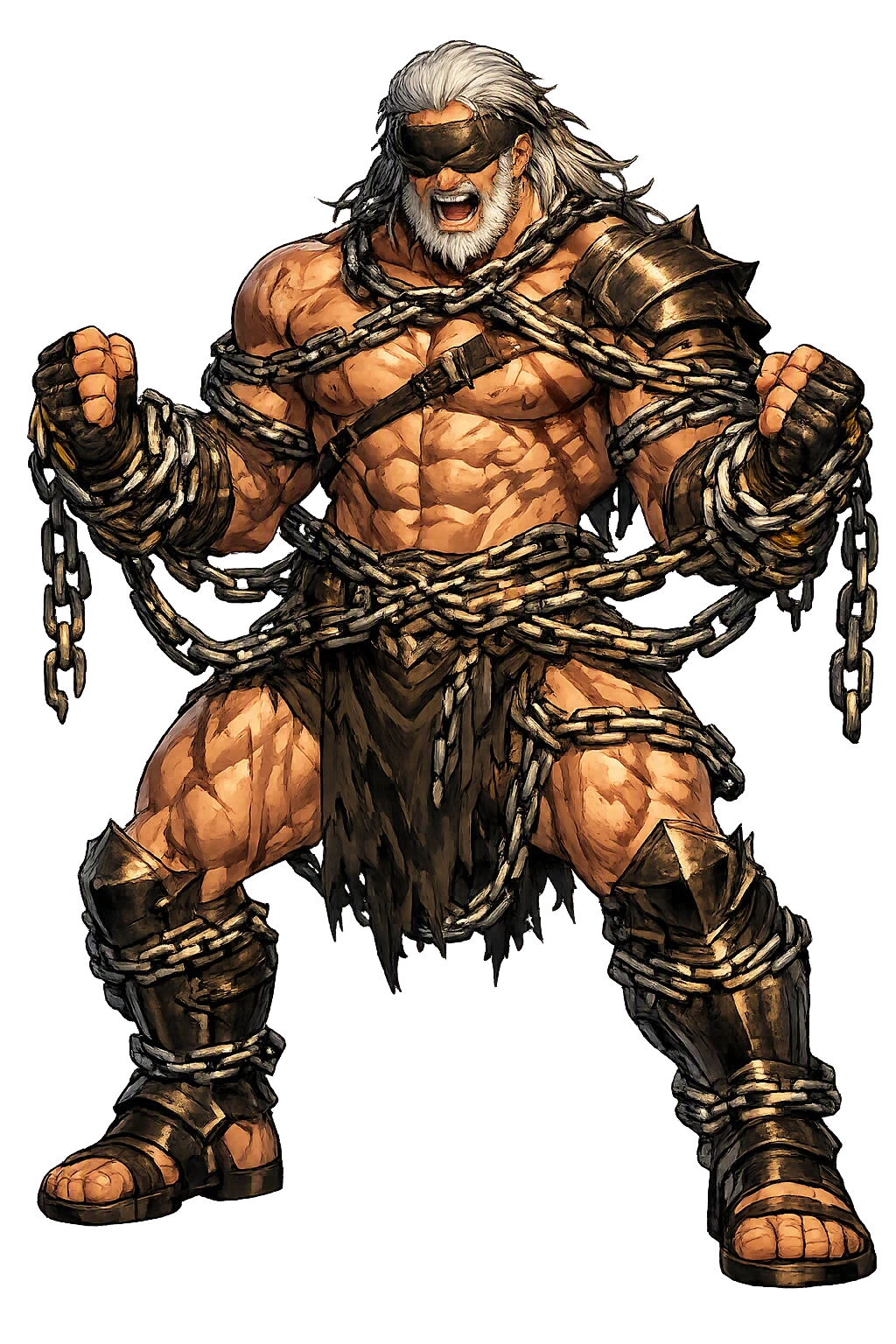
The many faces of Krátos
No important name has only one face. Krátos appears as a figure of myth, a scholarly reconstruction, a piece of material culture, a memory carried across languages, and — most recently — a Unicode domain. This post looks at each face in turn: the name and its roots, the Greek original, the reconstructed pronunciation, the mythological record, the symbols and sanctuaries, the cross-cultural afterlife, and the engineering that lets the restored spelling resolve in a browser. Taken together, those faces explain why kratos was never going to be enough — and why the restored form is worth a domain of its own.
At a Glance
- Restored name: Krátos
- ASCII form: kratos
- Meaning: "Strength, power"
- Domain of influence: Strength, Power, Sovereignty
- Pantheon: Greek
- Classification: Tier 2
- Original script: Κράτος (Greek)
- Live domain: kratos.com
Overview
Krátos (kratos) — Strength, Power, Sovereignty · Strength, power — belongs to the Greek tradition, where it is catalogued under the domain "Strength, Power, Sovereignty". The name means "Strength, power".
Krátos belongs to the Greek tradition, where it is associated with strength, power, sovereignty.
PuniCodex restores the name as Krátos and serves its temple at kratos.com. The original preserves one prosodic feature — stress or vowel length — rather than both, which places the name in Tier 2. The plain ASCII form kratos survives as a modern convenience imposed by the early domain-name system; the restoration, not the fallback, is the form the project defends as philologically complete.
The Name
The name is attested in Greek as Κράτος. Etymologically it means "Strength, power".
The reconstructed proto-form is kret- (proto-indo-european, "to be strong"). Greek κράτος 'strength, power, might'; personified as one of the children of the Titan Pallas and Styx.
The ASCII form kratos survives only because the early domain-name system could not carry diacritics; it is a technological compromise, not an ancient spelling. The Unicode restoration Krátos recovers the stress accent of the original directly in the address bar. The original preserves one prosodic feature — stress or vowel length — rather than both, which places the name in Tier 2.
The letter-by-letter transformation runs:
- k → K — Kappa
- r → r — Rho
- a → á — Acute on alpha
- t → t — Tau
- o → o — Omicron
- s → s — Sigma
The canonical temple for this name is served at kratos.com.
Etymology & Roots
The recorded derivation reads: Greek κράτος 'strength, power, might'; personified as one of the children of the Titan Pallas and Styx.
The reconstructed proto-form is *kret- (proto-indo-european), glossed as "to be strong".
The reconstruction is classed as attested.
The Original Script
The name is written in Greek as Κράτος. This original script is the form against which the ASCII fallback kratos and the PuniCodex restoration Krátos are measured: the restoration preserves its pitch accent of the written form, so that a reader typing the modern address still speaks the ancient name.
Pronunciation
The reconstructed pronunciation of the name is /kratos/ — Greek Reconstruction.
Phoneme by phoneme:
- K — Initial character of the restored form Krátos.
- rátos — Remainder of the name, preserving the distinctive marks of the Greek tradition.
For the modern speaker, the closest approximation is: 'KRATOS' — pronounce the restored form with attention to the preserved diacritics and length.
Kindred and historical forms of the name:
- Greek — Krátos, the restored Unicode form of the name
Krátos is Tier 2 because the Greek form preserves distinctive features that ASCII loses: stress, length, or special characters.
Mythology
The stories of Krátos circulate within the Greek corpus, where the figure embodies strength, power, sovereignty.
Primary Attestation (Sources)
Krátos is attested in the canonical Greek sources as a figure associated with strength, power, sovereignty.
Name and Meaning (Etymology)
The name means "Strength, power" and reflects the figure's role in the tradition. Krátos is the personification of strength or sovereign power in Greek poetry. In Aeschylus's Prometheus Bound he is the pitiless agent who compels Hephaestus to bind Prometheus, embodying the coercive force that even the craftsman-god cannot refuse. Unlike his brother Bía (Violence), Krátos represents institutionalized, legitimate might. His pairing with Bía in the binding of Prometheus shows that Greek tragedy could personify abstract forces and set them in dialogue with the gods.
Symbols & Iconography
The iconography associated with Krátos concentrates in a small set of recurring attributes, each a compressed statement about the name:
- Restored Name — The Unicode form Krátos carries the original marks of the Greek tradition.
- Source Script — Attested in the original script as Κράτος.
- Domain — Strength, Power, Sovereignty
- Etymology — Strength, power
Krátos is shown as a muscular, beardless youth wielding a hammer or club, often beside Hephaistos at the crucifixion of Prometheus. His attributes are bonds, anvil, and the reluctant tools of punishment.
The figure blends personification with the aesthetic of the divine craftsman's assistant.
Epithets & Cult Titles
Krátos is paired with Βία (Bia, Force) and called κραταιός (krataios, mighty), καρτερός (karteros, staunch), and δεσμοφύλαξ (desmophylax, guard of bonds). His name becomes an abstract noun for sovereign power, used of gods, kings, and armies.
The absence of cult epithets reflects his near-abstract role as the executive arm of Zeus's will.
The Homeric Hymns
Krátos appears in the opening of Aeschylus's Prometheus Bound as the personification of Strength, dragging the Titan to his punishment at Hephaistos's forge. While not the subject of a Homeric Hymn, his speech in the prologue is itself a hymnic assertion of Zeuss irresistible power.
The fragmentary Prometheus Unbound and Hesiod's Theogony name him a son of the Titan Pallas and the river Styx.
Oracle Sites & Sanctuaries
Krátos had no independent cult or oracle; his presence is felt wherever Zeus's authority is enforced. The Sicyonian temple of Zeus had an altar to Kratos and Bia, honouring the powers that underpinned oath and obedience.
He is therefore a theological personification rather than a sanctuary god.
Archaeology & Evidence
The material record for Krátos survives in a small number of securely identified remains, catalogued below; the corpus is thin but unambiguous, and each site is tied to the name by ancient testimony.
Krátos is attested in the textual and iconographic record of the Greek tradition.
Realm & Domain
Krátos belongs to the Greek tradition, where it is associated with strength, power, sovereignty.
Strength
The central domain of Krátos in the greek tradition.
Strength, power
The name signifies "Strength, power".
Unicode Restoration
The restoration Krátos recovers what plain ASCII kratos flattens.
Original Attestation
Attested in the sources as Κράτος. Krátos therefore names not raw muscle but the authorized capacity to enforce decree, distinguishing political order from mere violence.
Across Cultures
Krátos appears within the Greek tradition and has influenced later retellings, artistic depictions, and scholarly study. The Unicode restoration preserves the name's distinctive orthography for contemporary use.
Within the Greek tradition, closely related names in the corpus include Achérōn, Achilleús, Adámas, Aḗr, Aithḗr, and Anánkē.
Cultural Legacy
Krátos continues to appear in scholarship, art, and popular reception as a significant figure of the Greek tradition. Restoring the name in Unicode returns the original marks that ASCII removes. The name survives in modern Greek kratos (state) and in English derivatives such as "democracy" and "autocracy."
The Scholarly Record
The account of Krátos given in this edition rests on the witnesses and reference works listed below. Lexica and etymological dictionaries secure the form and meaning of the name; the literary and religious texts supply the narrative evidence.
- Liddell-Scott-Jones Greek-English Lexicon, 9th ed. with 1996 supplement, 1940. Full text
- Wörterbuch der griechischen Eigennamen, 3rd ed., 1863. Full text
- Etymological Dictionary of Greek, 2 vols., Brill, 2010. Full text
A Meditation
Krátos embodies strength, power, sovereignty in the Greek imagination. The name's restoration is not merely cosmetic: it recovers the stress, length, and script that make the figure recognizable in the source tradition.
The Unicode Restoration
Krátos is classified as Tier 2: the original carries only one of the two prosodic features — stress or vowel length — not both. The ASCII fallback kratos still resolves everywhere, but it is the restored form that carries the name's full information. Across the 6 characters of the name, the restoration adjusts 1: 1 mark of stress (á). That is the whole thesis of this temple: the marks are the message.
Character by Character
The journey from kratos to Krátos, one character at a time:
- k → K — Kappa
- r → r — Rho
- a → á — Acute on alpha
- t → t — Tau
- o → o — Omicron
- s → s — Sigma
The Domain Name
The restored name is live as a working domain: kratos.com. Behind the scenes the DNS carries it in punycode form — an ASCII-compatible encoding that lets a non-ASCII name travel the global network without breaking older infrastructure. The visitor sees Krátos; the machines see the encoding. That duality is the engineering compromise on which the entire restoration rests, and it is why a name written the way its own tradition wrote it in Greek can now be typed into any browser on earth.
The Greek Pantheon
Krátos is one of 274 entries the PuniCodex lexicon catalogues under the Greek pantheon. The Pantheon page gathers the tradition's major figures in one place, and the Lexicon lets you filter all 974 restorations by tradition, tier, or script — the fastest way to see where this name sits among its kin.
Frequently Asked Questions
What does Krátos mean? The traditional gloss is "Strength, power."
Which tradition does Krátos belong to? Krátos is catalogued in the Greek pantheon of the PuniCodex lexicon.
Why is Krátos classified as Tier 2? Because the original carries only one of the two prosodic features — stress or vowel length — not both — and the marks in the restored spelling preserve exactly that evidence.
Is Krátos a working domain? Yes — kratos.com resolves today and routes to this temple.
Can I use Krátos in a normal browser? Yes. The DNS resolves the punycode form automatically, and the type tool on this site converts kratos to Krátos for copying and pasting.
Where does the scholarly information come from? The entry is built from lexica, inscriptional evidence, and reviewed scholarly sources listed in the Scholarly Edition. Every claim is traceable to a canonical source.
Typing Krátos
You do not need a special keyboard to use this restoration. The PuniCodex Type Tool converts the ASCII form kratos into Krátos as you type, and the browser extension offers the same conversion inside any text field. Copy the restored form, paste it into the address bar, and the DNS does the rest.
Sister Temples
Other temples in the Greek pantheon include Elpís, Epistḗmē, and Erymánthios Kápros — each with its own restoration story, its own scholarly record, and its own place in the lexicon.
Why This Restoration Matters
Myth, script, sound, cult, legacy, domain: the faces of Krátos add up to a single argument — that a name is a record, and records deserve fidelity. The PuniCodex restoration keeps that record in working order: the temple presents it, the Scholarly Edition footnotes it, the lexicon catalogs it, and the domain makes it addressable. kratos will always exist as a fallback. But fallback is not identity. Krátos is the name; everything else is a convenience.
Explore Further
This post is one doorway into the temple. The home page carries the full character breakdown and the ambient canvas; the lore page tells the myths in long form; the Scholarly Edition preserves the sources, pronunciation data, and revision history; and the patron wall supports the restoration directly. For the wider map, browse the Lexicon, explore the Pantheon, or return to the PuniCodex blog.
A Closer Look at the Marks
A restored name is a small map. In Krátos, the journey from the ASCII fallback kratos to the Unicode form can be read letter by letter, and each letter tells a story. Of the 6 characters, 5 remain unchanged; they anchor the name to its modern shape. The remaining adjustments recover marks the source tradition used to distinguish this name from every other word built from the same letters.
The k stays as it is — Kappa.
The r stays as it is — Rho.
The a becomes á — Acute on alpha.
The t stays as it is — Tau.
The o stays as it is — Omicron.
The s stays as it is — Sigma.
Together these changes are not decoration. They are the minimum set of marks needed to keep the name legible in its own tradition. Remove them and you still have a string of letters; you no longer have the name as it was written.
Krátos in Its Tradition
Krátos does not stand alone. It belongs to the Greek tradition, where it is counted among 274 names in the PuniCodex lexicon. Its sphere — Strength, Power, Sovereignty — places it beside other figures who govern similar aspects of experience. The restored spelling is therefore not only a philological decision; it is a way of keeping the name in the company of its kin. When the address bar shows Krátos, it marks the boundary between a generic search term and a named entry in a living catalog of myth. That catalog is the point of the project. Every restored name is a vote for specificity: the web should know the difference between a figure and a keyword, between a tradition and a trend. Krátos is one such vote.
What You Will Find in the Temple
The temple page for Krátos is more than a landing page. The home tab presents the character breakdown, the pronunciation guide, and the live domain status in a single view. The lore tab gathers the myths and narratives that give the name its depth. The Scholarly Edition tab publishes the sources, variant forms, and review history that justify the restoration. Industry patterns show where the name appears in modern commerce and culture, while the gallery and creatives tabs collect visual and sponsor material. The patron wall lets visitors support the restoration directly. Each tab is generated from the same canonical sources, so the domain, the blog, the scholars page, and the search index all agree. The result is a single source of truth about a name, delivered through several doors.
The Restoration on the Live Web
A domain name is a kind of publication. When Krátos resolves, it proves that the restored spelling is not a theoretical exercise; it is a working address on the public internet. Search engines can index it, language models can encounter it, and anyone who copies it from a manuscript can paste it into a browser. That practical reality changes the status of the restoration. Before Unicode domains, a scholar could write the name correctly in an article while the public web flattened it to kratos. Now the public web can carry the correct form end to end. The punycode translation happens silently, so the infrastructure remains compatible while the visible name keeps its marks. That compromise — human-readable restoration, machine-readable encoding — is the foundation of every PuniCodex temple.
Related Names
Sources
The full scholarly apparatus — every citation, revision, and review — lives in the Scholarly Edition. Key references for this post:
- Liddell-Scott-Jones Greek-English Lexicon, 9th ed. with 1996 supplement, 1940.
- Wörterbuch der griechischen Eigennamen, 3rd ed., 1863.
- Etymological Dictionary of Greek, 2 vols., Brill, 2010.
- Aeschylus, Prometheus Bound 1–81.
- Hesiod, Theogony 383–385.
- Pausanias, Description of Greece 2.4.5.
- Lexicon authorities for this entry: Hesiod, LSJ.