
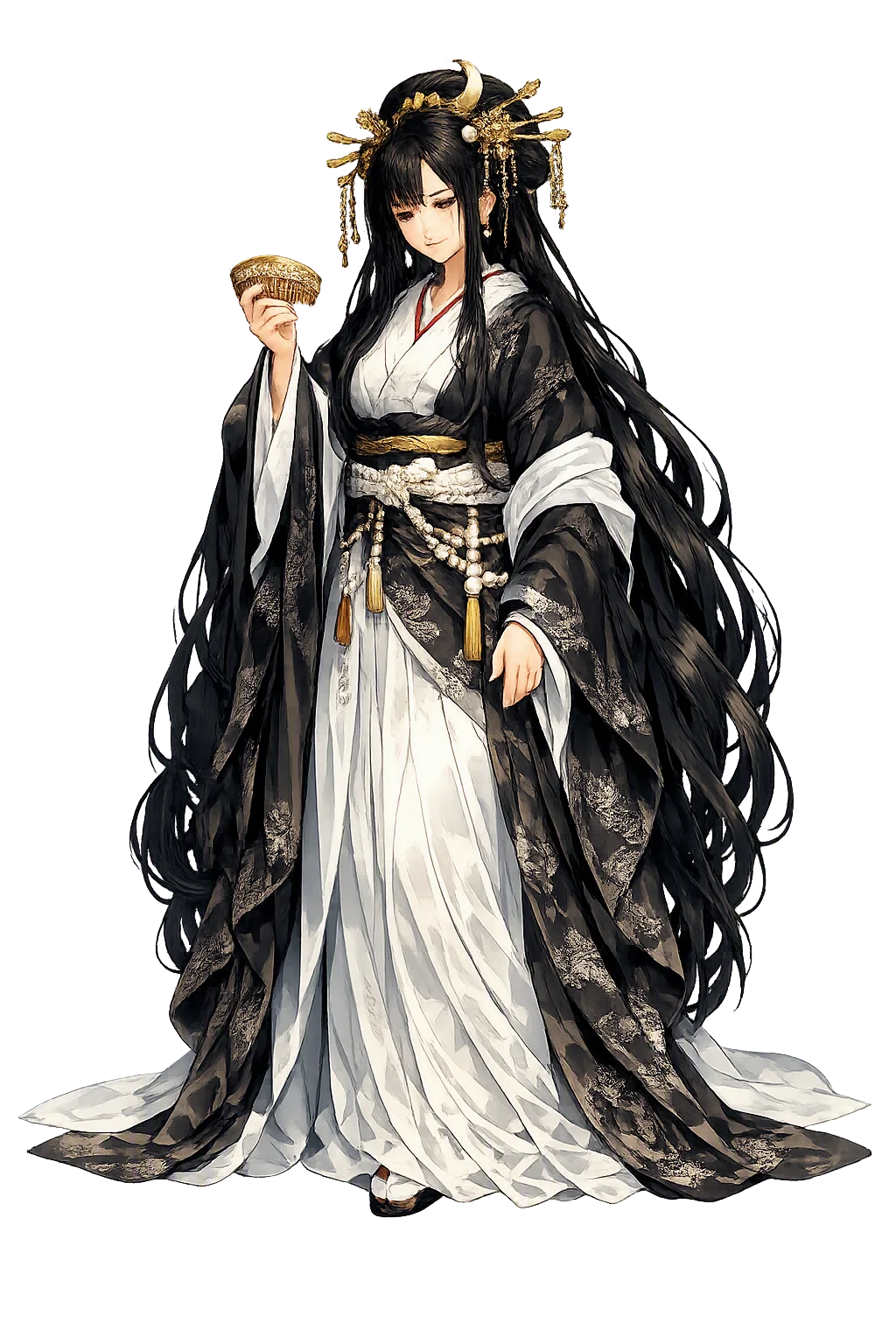
The appointments Izanami made — and who is keeping them
One myth is a story. A cycle of myths is a specification. Read Izanami's cycle in order and the industries fall out of it one by one.
At a Glance
- Temple: Izanami
- Pantheon: Japanese
- Domain of influence: Creation, Death, Earth
- Pattern seats: 3
- Sectors touched: Society & Spirit · Energy & Natural World
- Strongest seat: Faith & Spiritual Organizations
- Series: The Resonance Files, No. 244 of 548
The Cycle, Read Forward
Faith & Spiritual Organizations — through She Who Stirred the Brine
The heavenly kami gave the command to the pair, but it was Izanami who set her hand on the spear. Standing upon the Floating Bridge of Heaven, she and Izanagi lowered the jeweled Ame-no-Nuboko into the formless ocean and stirred; the brine dripping from its tip congealed into Onogoroshima, and upon that first island the couple founded their union and their hall (Kojiki 1).
The atlas states the seat in one line: The female creator whose death founded the underworld and whose body became the land. The story above is the long version of the same sentence. That is the cycle working: story becomes duty, duty becomes trade.
Funerary & Memorial Services — through Hiruko, the Leech-Child
When the couple circled the heavenly pillar to greet each other and beget, Izanami spoke first; their firstborn, Hiruko, was a boneless child who could not stand even at the age of three, and they set him adrift in a reed boat (Kojiki 1). Consulting the heavenly kami, they learned the error — the man's voice must come first — and repeated the rite in the proper order; Izanami then bore the eight great islands and the gods of wind, river, sea, and mountain.
The atlas states the seat in one line: She who died giving birth and became queen of Yomi; death and return are her myth. The story above is the long version of the same sentence. The trade thinks it is optimizing a process. It is re-enacting a charter.
Agriculture, Food & Harvest — through Death by the Fire Child
Her last birth was Kagutsuchi, the fire god. The child burned her as he was born, and Izanami lay dying, her lower body seared.
The atlas states the seat in one line: The creation goddess whose body became the earth; soil and fertility are her afterlife. The story above is the long version of the same sentence. The trade thinks it is optimizing a process. It is re-enacting a charter.
The Theme That Runs the Cycle
Izanami's mythology is central to Japanese understandings of creation, death, and the boundary between the living and the dead — and it never forgives her for speaking first at the pillar.
The Method, Stated Plainly
The atlas is not a horoscope. Seats are earned from the sources — argued, weighted, published — and every one of them can be challenged at the methodology page. A match that cannot survive an argument does not survive review. That is the whole trick: the patterns are claims, and claims can be tested.
For the Ones Who Work There
If you work in faith & spiritual organizations, funerary & memorial services, or any trade this temple holds a seat in, this is the honest version of what a placement means: your industry beside the story it has been re-telling all along — on the temple floor itself, before an audience that came specifically to read it. The patron tier and the advertising terms describe the mechanics; the resonance above describes the fit.
The File Continues
One of 548 Resonance Files — the series where the pantheon goes to work. Read the founding dispatch for the name, the Restoration File for the spelling, or the whole archive end to end.
Continue the series — previous: Izanagi (read it) · next: Jagannātha (read it).
The Resonance Files are argued from the same canonical record as the pattern atlas itself: the lexicon, the lore catalog, and the cited sources. Every seat can be challenged at the methodology page — and the challenge is the point.