
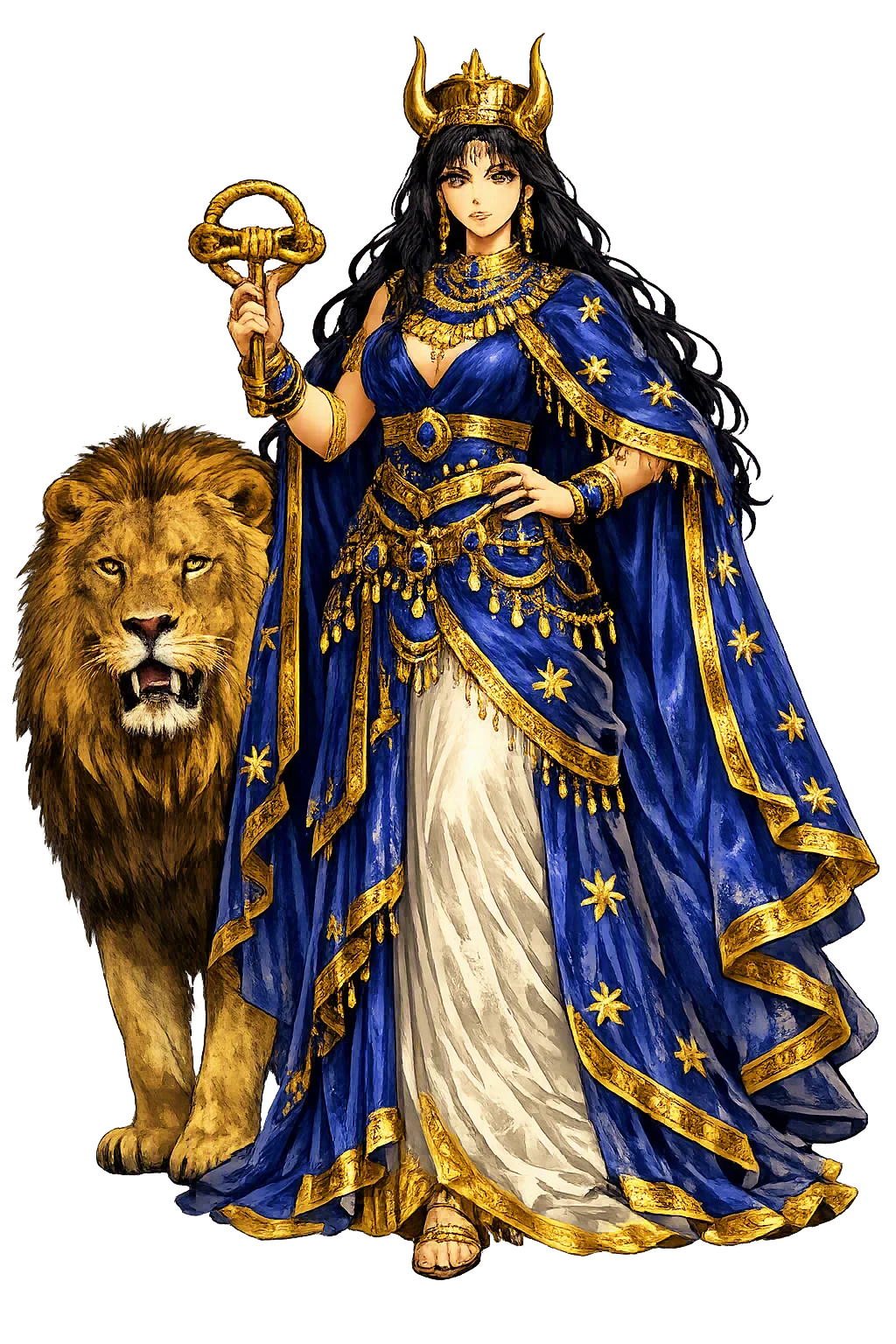
Why Inanna is spelled that way — and what it costs to get it right
There is a version of this name the early internet had to settle for: inanna. This is the file on how Inanna replaced it.
Inanna's myths are stories of extremity and transformation. She descends into the underworld, demands the impossible, and returns from death. She chooses a shepherd-king as her bridegroom and then sends him to the realm of the dead for half the year. Her narratives are not morality tales; they are meditations on sovereignty, desire, death, and the price of rebirth.
At a Glance
- Restored name: Inanna
- ASCII form: inanna
- Meaning: "Lady of heaven"
- Domain of influence: Love, War, Venus
- Pantheon: Mesopotamian
- Classification: Tier 2
- Original script: 𒀭𒈹
- Series: The Restoration Files, No. 231 of 548
The Name Before the Marks
Spoken, the name runs `/iˈnan.na/` — 'ee-NAHN-nah' — stress the second syllable, keep the vowels bright, and let the double n sound like a held tongue against the ridge.
The Temple That Stands Now
The restored name is not a plaque; it is an address. The temple of Inanna lives at /inanna/, with its mythology in the lore halls, its peer-reviewed record in the Scholarly Edition, and its place in the pattern atlas on the patterns floor.
Tier-2 here means one preserved truth — not less important, just singular. The temple shows it and names it.
Where the Name Stood First
The Eanna precinct at Uruk — 'House of Heaven' — preserves the sequence of Inanna temples from the Uruk period onward, source of the archaic cylinder seals that first display her star, lion, and rosette. Thousands of personal names, royal inscriptions, and incantations attest her presence in daily religion from the third millennium to the last generations of cuneiform scribes. The temple on the web is the newest of these addresses — the first one that fits in a pocket.
The Archetype at Work
The pattern atlas seats this temple in 5 industries, each match argued and weighted: Defense, Military & Security (primary seat: Inanna embodies love, war, venus — the core of defense.); Beauty, Fashion & Cosmetics (resonant seat: Inanna shares symbolic territory with beauty fashion.); Gaming, Fantasy & Entertainment IP (resonant seat: Inanna shares symbolic territory with gaming entertainment.). The Resonance File reads those seats through the myths themselves.
In the Sacred Texts
The Mesopotamian tradition is not a vibe; it is a library. The Sacred Texts collection holds Enūma Eliš and The Epic of Gilgamesh — the primary sources the temple's scholarship is built on. The temple is the argument; the texts are the evidence.
The File Continues
The temple's founding dispatch tells the name's story; its Resonance File reads the myths into the industries; the blog index holds the whole archive.
Continue the series — previous file: Illapa (read it here) · next file: Inaras (read it here).
The Restoration Files are written from the same canonical record as the temples themselves: the lexicon, the lore catalog, the pattern atlas, and the cited scholarly sources. If a file ever disagrees with its temple, the temple is right — tell us, and the file will be corrected.