
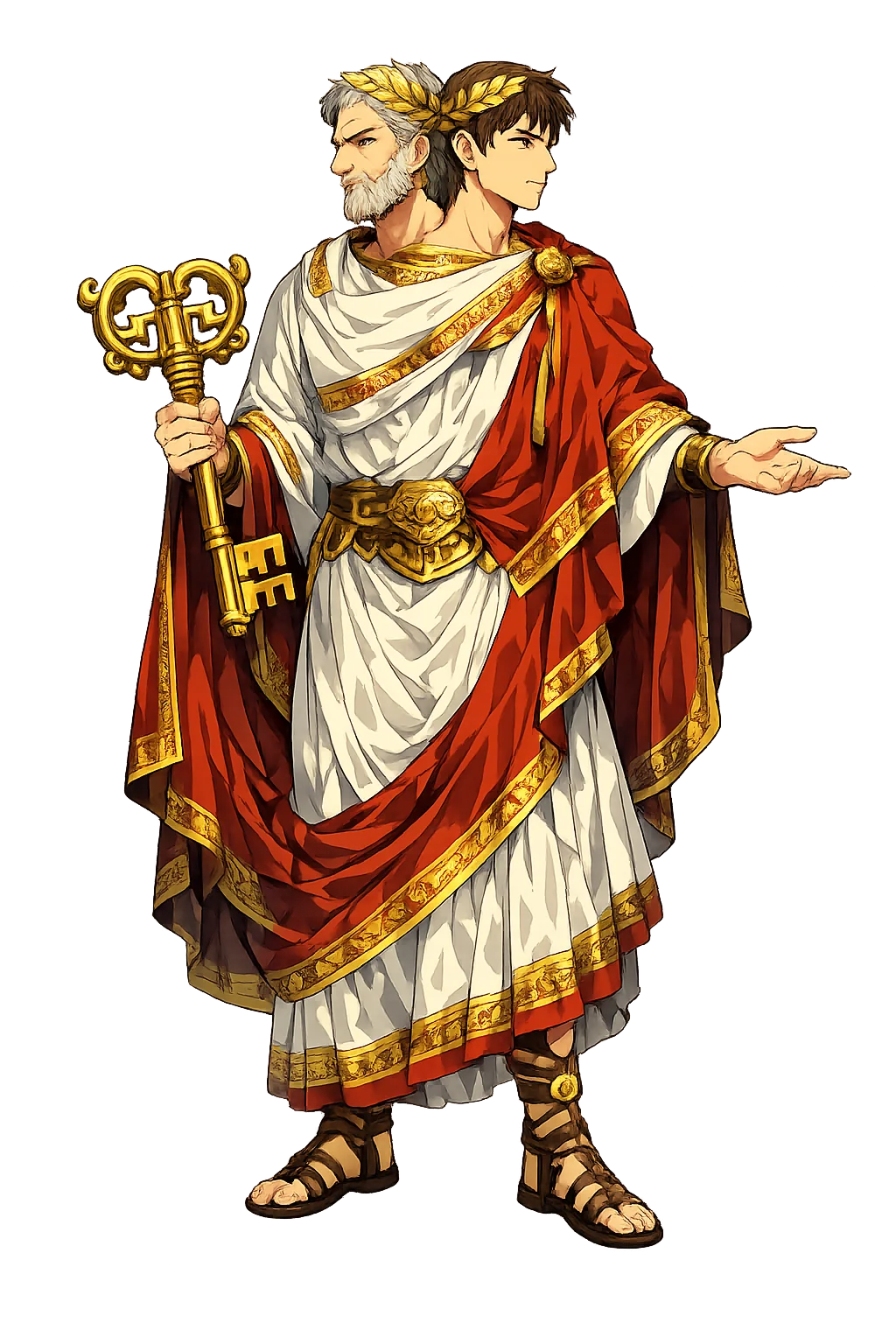
Stress-testing Iānus: do the industry seats hold?
The stress test for Iānus. Every seat in the atlas was attacked with the same question — is the match real, or is it poetry? — and the survivors are recorded with their evidence.
At a Glance
- Temple: Iānus
- Pantheon: Roman
- Domain of influence: Beginnings, Doors, Transitions
- Pattern seats: 3
- Sectors touched: Technology & Innovation · Culture & Entertainment · Commerce & Governance
- Strongest seat: Cybersecurity & Digital Protection
- Series: The Resonance Files, No. 227 of 546
The Test
Seat 1: Cybersecurity & Digital Protection
Claim: The gate and its keeper; access control’s oldest patron. Exhibit: Fasti 1: The God Explains Himself — Ovid opens his calendar with the boldest interview in Roman poetry: he asks Iānus why, alone among the gods, he sees both behind and before (Fasti 1.
Verdict: stands. Strip both to their function and the functions match.
Seat 2: Timekeeping & Calendar Systems
Claim: January keeps his name; the year’s door is his. Exhibit: Ianus Geminus: The Open Door of Empire — Numa, the peace-king who followed Romulus, founded the rite that made the god a barometer of war: the double gates of the Ianus Geminus in the Forum stood open while Rome was at war and closed only in peace (Livy 1.
Verdict: holds under load. The correspondence is functional, not decorative.
Seat 3: Startups & Venture Creation
Claim: The god of beginnings; every launch is his threshold. Exhibit: Carna and the Hawthorn — Ovid's second January of folklore concerns the goddess of the hinge (Fasti 6.
Verdict: survives scrutiny. The myth and the trade do the same work.
The Control Group
Against the seats that survived, one control: the temple's own summary of its figure — Ovid's Fasti gives him the one great scene: the poet asks the two-faced god why he looks both ways, and Iānus answers for himself — the only extended self-explanation any Roman god gets in verse. The seats do not drift far from it. That is the audit's cleanest result.
The Method, Stated Plainly
The atlas is not a horoscope. Seats are earned from the sources — argued, weighted, published — and every one of them can be challenged at the methodology page. A match that cannot survive an argument does not survive review. That is the whole trick: the patterns are claims, and claims can be tested.
For the Ones Who Work There
For a sponsor in cybersecurity & digital protection, the fit here is not adjacency — it is inheritance. Your trade already tells this story every working day; the temple simply holds the original. The patron tier and the advertising terms carry the mechanics; the myths above carry the reason.
The File Continues
This is one of 546 Resonance Files — the third dispatch from every flagship temple, where the myths meet the markets. The temple's founding dispatch tells the name's story; its Restoration File tells the spelling's; the blog index holds the whole archive.
Continue the series — previous: Hýpnos (read it) · next: Iásōn (read it).
The Resonance Files are argued from the same canonical record as the pattern atlas itself: the lexicon, the lore catalog, and the cited sources. Every seat can be challenged at the methodology page — and the challenge is the point.