
Pronouncing Hrungnir: a guide for the curious
Saying Hrungnir aloud requires more than reading Latin letters on a screen. The conventional spelling is only the entry point into a reconstructed sound and a much older tradition. This post unpacks that sound, the evidence assembled in the scholarly record, the kindred forms, and the mythological record, then shows how the temple preserves the whole argument without pretending that a diacritic was ever lost.
At a Glance
- Canonical name: Hrungnir
- ASCII form: hrungnir
- Meaning: "Brawler"
- Domain of influence: Giant, Duel with Thor
- Pantheon: Norse
- Restoration: ASCII-equivalent form
- Reconstructed form: ᚼᚱᚢᚾᚴᚾᛁᛦ (Younger Futhark)
Overview
Hrungnir (hrungnir) — Giant, Duel with Thor · Brawler — belongs to the Norse tradition, where it is catalogued under the domain "Giant, Duel with Thor". The name means "Brawler".
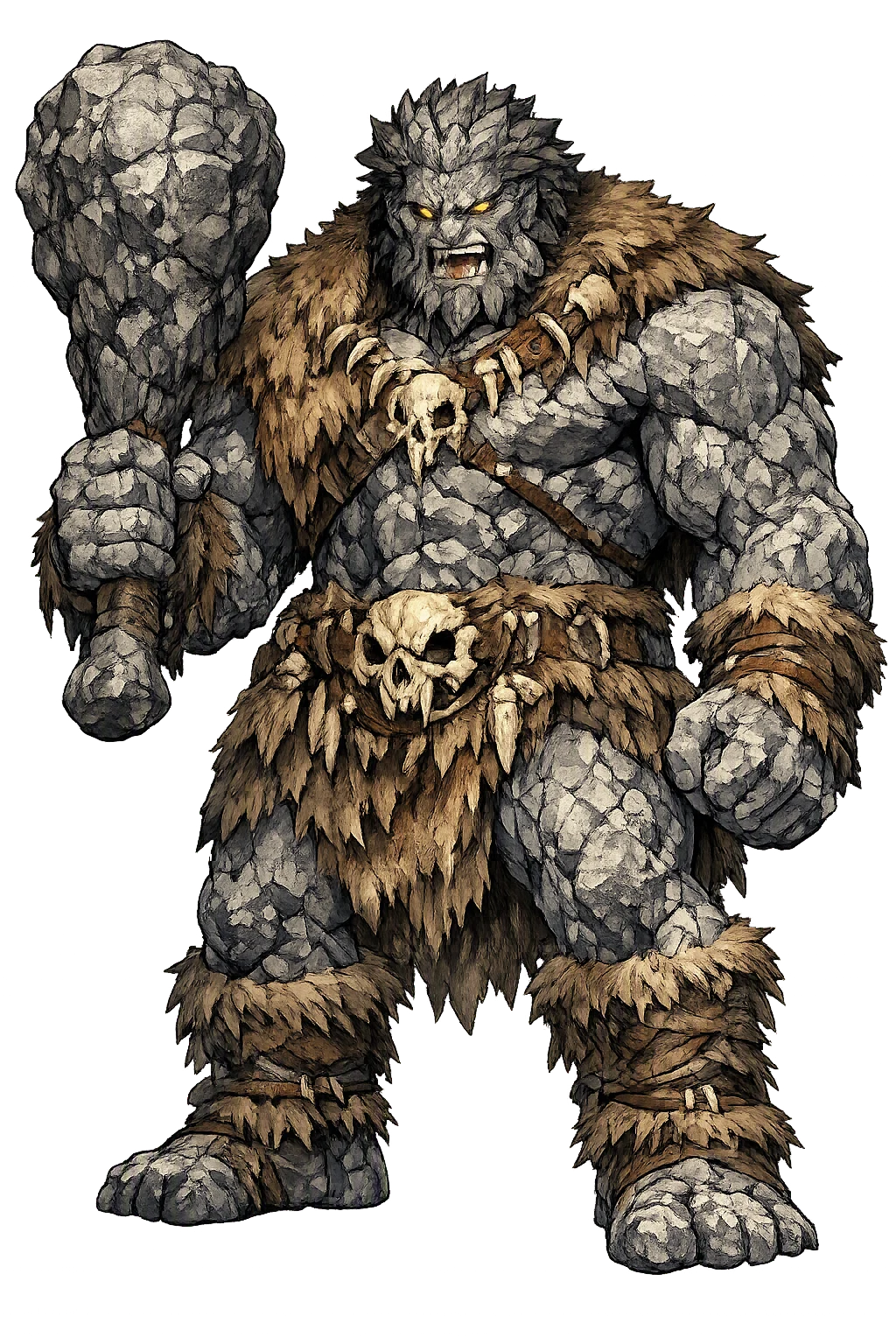
Hrungnir is the strongest of the jötnar — the stone-hearted giant who rode his gold-maned stallion Gullfaxi into Ásgarðr on a wager of heads, drank Thor's liquor from the god's own horns, boasted he would carry off Valhǫll, and met Mjǫllnir at Grjótúnagarðar with nothing in his hand but a whetstone. His duel is the most fully narrated single combat between god and giant in the Old Norse corpus.
PuniCodex records the canonical scholarly spelling Hrungnir and serves its temple at its temple. The displayed form is ASCII-equivalent — a description computed from the displayed form itself. The plain ASCII form hrungnir contains the same letters: no recovered diacritics or special encoding is claimed. The work here is consistent citation, capitalization, provenance, and cultural context.
The Name
The name is attested in Younger Futhark as ᚼᚱᚢᚾᚴᚾᛁᛦ. Etymologically it means "Brawler".
The canonical spelling Hrungnir matches the conventional scholarly romanization. The plain ASCII form hrungnir contains the same letters, so no lost diacritics or encoding transition is claimed. The editorial work is to fix one reviewed reference spelling, preserve capitalization and provenance, and keep the original evidence visible. The displayed form is ASCII-equivalent — a description computed from the displayed form itself.
The letter-by-letter transformation runs:
- h → H — Same
- r → r — Same
- u → u — Same
- n → n — Same
- g → g — Same
- n → n — Same
- i → i — Same
- r → r — Same
The Original Script
The name is preserved in Younger Futhark as ᚼᚱᚢᚾᚴᚾᛁᛦ.
The scholarly transliteration is hrunknir.
The rendering proceeds step by step:
- ᚼ (hagall) writes /h/
- ᚱ (reið) writes /r/
- final ᛦ (yr) writes the nominative -r ending
- ᚢ (úr) writes the rounded back vowels /u, o, ø, ǫ, y/ and /w/
- The spelling hrunknir is a normalized phonetic reconstruction; Younger Futhark does not distinguish voiced/voiceless stops or separate short and long vowels
The normalized Old Norse form is Hrungnir — already plain ASCII, with no diacritic or distinctive letter for the restoration to recover; in the Younger Futhark the name would have been carved ᚼᚱᚢᚴᚾᛁᛦ (h-r-u-k-n-i-R, the ᚴ-rune writing g and ᛦ the final nominative -r). Because the name is pure ASCII, its domain was registered in the ordinary way long ago: hrungnir.com is held by a third party outside the PuniCodex collection and is watched for release — no form of the name is currently owned, and this temple claims none.
Pronunciation
The reconstructed pronunciation of the name is /ˈhruŋɡ.nir/ — Old Norse Reconstruction.
Phoneme by phoneme:
- Hr- — Aspirate [h] running straight into the trilled [r] — an initial cluster Old Norse kept but English dropped, as in hringr 'ring' versus its silent-h descendants.
- -u- — Short close back rounded [u], the vowel of 'put', held brief between the r and the nasal.
- -ng- — Velar nasal [ŋ] plus a fully sounded stop [g] — Old Norse sounded both, as in English 'finger', never the bare nasal of 'singer'.
- -nir — Second [n], short [i], and the final nominative -r, lightly trilled — the masculine agent ending that marks him as a doer.
For the modern speaker, the closest approximation is: 'HRUNG-nir' — begin with a breathy h, roll the r straight into a short 'oo' as in 'put', sound both the ng and the g as in 'finger', and trill the final r.
Kindred and historical forms of the name:
- Old Norse — Hrungnir, the strongest of the jötnar; no secure cognate or agreed etymology survives in the handbooks.
- Younger Futhark — ᚼᚱᚢᚴᚾᛁᛦ (h-r-u-k-n-i-R), the Viking-Age carving of the name; ᚴ writes both k and g, and ᛦ the final nominative -r.
- Skaldic attestation — Hrungnir, named and fought in Þjóðólfr of Hvin's Haustlöng (early 10th c.), the oldest sustained witness to the duel.
Hrungnir is a plain restoration by the mechanical rule: the normalized Old Norse form is already plain ASCII — no diacritic, no distinctive letter — so the restoration preserves nothing the ASCII form loses. The name's obscurity is a statement about etymology, never about the giant: the handbooks register Hrungnir's origin as uncertain while his duel with Þórr is among the best-attested single combats in the corpus.
Mythology
Hrungnir has essentially one story, and it is the greatest fight in the Edda: the wager, the drunken boasting in the hall of the gods, the appointed duel at Grjótúnagarðar, the shattered whetstone, and the fall that left even victorious Thor pinned beneath his enemy's leg. Snorri tells it in Skáldskaparmál, and the skald Þjóðólfr of Hvin had carved it into verse three centuries earlier.
The Wager of Heads (Skáldskaparmál 17)
It begins with a boast Óðinn could not keep to himself. Riding Sleipnir through Jötunheimr, he met the giant Hrungnir, who asked who this man was with the golden helmet, riding so well over sea and air, and praised the horse. Óðinn answered with the stake that decides everything after: he wagered his head that no horse in Jötunheimr was Sleipnir's equal. Hrungnir sprang to his own stallion Gullfaxi, the gold-maned, and gave chase in a fury. The race ran to the very gates of Ásgarðr — and Hrungnir, carried past his own turning, galloped through them and in among the gods.
Drunk in the Hall of the Gods (Skáldskaparmál 17)
The Æsir received him with the hospitality due an uninvited guest: they set before him the great horns Thor himself drank from, and Hrungnir emptied them one after another. Drunk, he let the boasts out — he would take Valhǫll up and carry it off to Jötunheimr, he would sink Ásgarðr, he would kill all the gods, save only Freyja and Sif, whom he would carry home; and the mead, he said, he would drink up all by himself. The Æsir, tired of the noise, named Thor; and Thor came in swinging his hammer, demanding who had given jötnar leave to drink in Valhǫll. Hrungnir, looking at him with anything but friendly eyes, answered that Óðinn had invited him and he stood under Óðinn's protection — then claimed his rights: Thor would gain little honour from killing him unarmed. It would be a greater trial of courage, he said, if Thor dared meet him in single combat at the frontier, at Grjótúnagarðar. And Thor, Snorri says, would by no means refuse a challenge to single combat.
Grjótúnagarðar: The Whetstone and the Hammer (Skáldskaparmál 17–19)
The giants made much of the appointment, for Hrungnir was the strongest of them and they expected one outcome or the other to be decisive. For his second they built a champion of clay: Mǫkkurkálfi, nine leagues tall and three leagues broad across the chest, with no heart big enough for the frame — so they gave him a mare's heart, and it quaked within him when Thor came. Hrungnir stood with his heart of stone, three-cornered and sharp-edged, his head of stone, and his broad shield of stone, holding his hone — the whetstone — before him. Þjálfi ran ahead and called out that Thor was coming from below, and Hrungnir, fearing a strike through the earth, set the shield beneath his feet and stood on it.
Then Thor came in an ásmegin-fury, lightning running before him, and hurled Mjǫllnir from afar. Hrungnir threw the hone with both hands, and the weapons met in the air. The hone burst in two: one half fell to earth, and from it come all the whetstone rocks in the world; the other half drove into Thor's head, and he fell forward. But Mjǫllnir did not stop — it struck Hrungnir's head and crushed the skull to small pieces, and the giant fell forward across Thor, his foot lying on Thor's neck. Þjálfi went at Mǫkkurkálfi, and the clay giant fell with little glory.
The Foot No God Could Lift (Skáldskaparmál 19)
Then the strangest aftermath in the corpus: Thor lay pinned, and neither he nor Þjálfi could shift the giant's foot from his neck. All the Æsir came, when they learned, and together they could not lift it. At last came Magni, son of Thor and the giantess Járnsaxa — three nights old — and threw Hrungnir's foot off his father, saying it was a pity he had come so late: he thought he would have struck the giant dead with his fist. Thor gave him Gullfaxi for the deed, and Óðinn objected that he had given the fine horse to a giantess's son rather than to his own father. The hone stayed in Thor's head. The völva Gróa, wife of Aurvandill the Bold, came to sing it loose with her spells, and the stone was already working free — until Thor, to please her, told how he had carried Aurvandill in a basket out of Jötunheimr, and how the man's frozen toe, broken off and thrown into the sky, became the star called Aurvandill's Toe. Gróa rejoiced so greatly at the news that she forgot her spells; the hone stirs in Thor's head to this day. Therefore, Snorri warns, whetstones must never be thrown across the floor.
The Skaldic Witness (Haustlöng)
Snorri quotes his sources, and for this myth the source is Þjóðólfr of Hvin's Haustlöng — a shield-poem composed in the early tenth century, among the oldest mythological verse we have. Þjóðólfr tells the whole combat in dense dróttkvætt: the 'defier of the gods' who rode to the fight, the earth shaking beneath the giant's host, the whetstone bitten from the hard stone of the heart, the hammer answering. That a skald within living memory of the Viking Age's pagan courts could assume his hearers knew the whetstone, the clay giant, and the fall proves the story was not Snorri's construction: it was already old, already fixed, already the standard account of the hardest fight Thor ever fought.
Symbols & Iconography
The iconography associated with Hrungnir concentrates in a small set of recurring attributes, each a compressed statement about the name:
- The whetstone — The honing-stone hurled against the hammer — stone against iron, and the shard still buried in Thor's head
- Gullfaxi — The gold-maned stallion whose speed was worth a giant's head — and ended in the hands of three-night-old Magni
- The three-cornered stone heart — Courage of the wrong material: resolve that is hard, sharp, and entirely without flexibility
- Mǫkkurkálfi — The nine-league clay giant with a mare's heart — the giants' engineered champion, terror to look at and nothing within
- The fallen foot — Hrungnir's leg across Thor's neck, which all the Æsir together could not lift — the weight of the foe after the foe is dead
Archaeology & Evidence
Hrungnir is a textual figure: no runestone invokes him, no votive deposit names him, and no picture stone can be securely tied to the duel — though the tradition of carving mythic combat on picture and rune stones is exactly the world his skald belonged to. His material witness is instead a poem about an object: Þjóðólfr of Hvin's Haustlöng was composed for a painted shield, a Viking-Age prestige object bearing mythic scenes, and the verses Snorri quotes are our evidence that the Hrungnir combat belonged to that visual repertoire in the early tenth century. The myth's own materiality is geological: Snorri anchors the shattered whetstone in the landscape — the hone-rocks of the world are its debris — and the taboo against throwing whetstones across the floor entered Scandinavian folk custom as the myth's trace in daily practice. The literary witnesses hang by the usual threads: Skáldskaparmál in the Codex Regius of the Prose Edda and its sister manuscripts, and the Haustlöng stanzas preserved nowhere else but in Snorri's quotation.
Realm & Domain
Hrungnir is the strongest of the jötnar — the stone-hearted giant who rode his gold-maned stallion Gullfaxi into Ásgarðr on a wager of heads, drank Thor's liquor from the god's own horns, boasted he would carry off Valhǫll, and met Mjǫllnir at Grjótúnagarðar with nothing in his hand but a whetstone. His duel is the most fully narrated single combat between god and giant in the Old Norse corpus.
Gullfaxi
'Golden mane' — the stallion Óðinn envied aloud, whose speed Hrungnir wagered his head against Sleipnir to disprove.
The Whetstone
His weapon of stone — hurled against Mjǫllnir, it shattered in mid-air; one shard fathered every whetstone rock on earth, one lodged in Thor's skull.
The Stone Heart
Three-cornered, sharp-edged, and hard — the Edda says his heart, head, and shield were all of stone, a giant made of his own weapon's material.
Grjótúnagarðar
The 'stone-fence-yard' at the edge of heaven and giantland, where the single combat was appointed — the oldest named duelling-ground in the myths.
Across Cultures
Hrungnir resists the usual syncretic moves. Attempts to read him as a reflex of an Indo-European dragon-slaying have been made — a stone-bodied chaos-being struck down by the thunderer's missile does resemble the Vedic Vṛtra pattern — but the fit is partial, since Hrungnir steals nothing, hoards nothing, and threatens no waters; scholars treat the combat as a native Norse contest-epic rather than an inherited myth. His truer company is within the corpus itself: he is one of the named great fights of Þórr, standing between Geirrøðr, killed by a thrown glowing iron, and Hymir, fished with and nearly killed by the sea. The whetstone lodged in Thor's head has been compared with the embedded weapons of other mythologies — the fragment that will not come out — but no source identifies a borrowing, and the handbooks register Hrungnir as a distinctively Norse invention, a giant built of the very landscape the North knew: stone, clay, and weather.
Within the Norse tradition, closely related names in the corpus include Álfheimr, Andvari, Angrboða, Auðhumla, Baldr, and Baugi.
Cultural Legacy
Hrungnir's afterlife runs through the skalds before it runs through anyone else: Haustlöng made his fall one of the foundation-texts of Norse poetics, and Snorri cites the poem as the authority for the myth, so that every handbook of Old Norse literature meets him early. The Victorians took up the clay giant — Mǫkkurkálfi recurs in retellings as the archetype of the hollow colossus, all size and mare's heart — and the detail that whetstones must not be thrown across the floor survived in folklore collections as a curiosity of thunder-lore. In modern reception he is the template for every stone-hearted boss the genre has built since: fantasy games and novels cast his duel whenever a hero must fight a mountain that can throw back. His name never entered living use the way Baldr's or Thor's did; it remains exactly what the Edda made it — the name of the strongest thing the hammer ever had to kill.
The Scholarly Record
The account of Hrungnir given in this edition rests on the witnesses and reference works listed below. Lexica and etymological dictionaries secure the form and meaning of the name; the literary and religious texts supply the narrative evidence.
- Snorri Sturluson, Prose Edda: Skáldskaparmál 17–19 (the wager, the boasting in Valhǫll, the duel at Grjótúnagarðar, Magni and Gróa), trans. Anthony Faulkes.
- Þjóðólfr of Hvin, Haustlöng (the shield-poem's account of the Hrungnir combat, quoted in Skáldskaparmál).
- Cleasby–Vigfusson, An Icelandic-English Dictionary, s.v. Hrungnir, Gullfaxi, Grjótúnagarðar, hein.
- Zoëga, A Concise Dictionary of Old Icelandic, s.v. Hrungnir.
- Simek, Dictionary of Northern Mythology, s.v. Hrungnir, Mǫkkurkálfi; Orchard, Dictionary of Norse Myth and Legend, s.v. Hrungnir.
- Lindow, Norse Mythology: A Guide to the Gods, Heroes, Rituals, and Beliefs, s.v. Hrungnir, Thor.
A Meditation
Hrungnir is the Edda's essay on confidence without flexibility. Every part of him is the hardest available material — heart of stone, head of stone, shield of stone — and the myth's arithmetic is that hardness is not the same as strength. The whetstone is the perfect weapon for him: a stone whose entire purpose is to sharpen other things, hurled once, shattering on the first iron it meets. Against him the Edda sets two counter-images. Mǫkkurkálfi, the engineered champion, enormous and empty, a mare's heart quaking in nine leagues of clay — the warning about size without courage. And Magni, three nights old, lifting what all the gods together could not — the warning about measuring strength by age, rank, or expectation. Hrungnir wagered his head on a horse race and lost it in a duel. The name survives, etymology unknown, as the corpus's permanent reminder that being the strongest thing in the room is a wager too — and someone always holds the hammer.
The Canonical Spelling
Hrungnir is the canonical spelling used by this temple. The plain ASCII form hrungnir contains the same letters, so there are no lost diacritics to recover and no special encoding transition to explain. What the temple preserves is the reviewed reference form: capitalization, conventional romanization, original evidence, and a stable place to inspect them. The value here is not added decoration; it is fidelity to the attested record.
Why This Record Matters
Pronunciation turns out to be central to the matter. The canonical spelling of Hrungnir is a guide to the voice, not an incomplete shell awaiting marks. The temple hands the instructions back: say the name as the evidence suggests, write it as the scholarly convention records it, and let the original sources remain visible beside it. That is the work of preservation here — and every reader can inspect it.
Explore Further
This post is one doorway into the temple. The home page carries the full character breakdown and the ambient canvas; the lore page tells the myths in long form; the Scholarly Edition preserves the sources, pronunciation data, and revision history; and the patron wall supports the restoration directly. For the wider map, browse the Lexicon, explore the Pantheon, or return to the PuniCodex blog.
Related Names
Sources
The full scholarly apparatus — every citation, revision, and review — lives in the Scholarly Edition. Key references for this post:
- An Icelandic-English Dictionary, 2nd ed. with supplement, 1874.
- Poetic Edda (Eddukvæði), ed. Neckel-Kuhn; trans. Carolyn Larrington, Oxford World's Classics (2014), 1270.
- Snorri Sturluson, Prose Edda, trans. Anthony Faulkes, Everyman / Viking Society for Northern Research, 1220.
- Snorri Sturluson, Prose Edda: Skáldskaparmál 17–19 (the wager, the boasting in Valhǫll, the duel at Grjótúnagarðar, Magni and Gróa), trans. Anthony Faulkes.
- Þjóðólfr of Hvin, Haustlöng (the shield-poem's account of the Hrungnir combat, quoted in Skáldskaparmál).
- Cleasby–Vigfusson, An Icelandic-English Dictionary, s.v. Hrungnir, Gullfaxi, Grjótúnagarðar, hein.
- Zoëga, A Concise Dictionary of Old Icelandic, s.v. Hrungnir.
- Lexicon authorities for this entry: Cleasby-Vigfusson, Zoëga.