
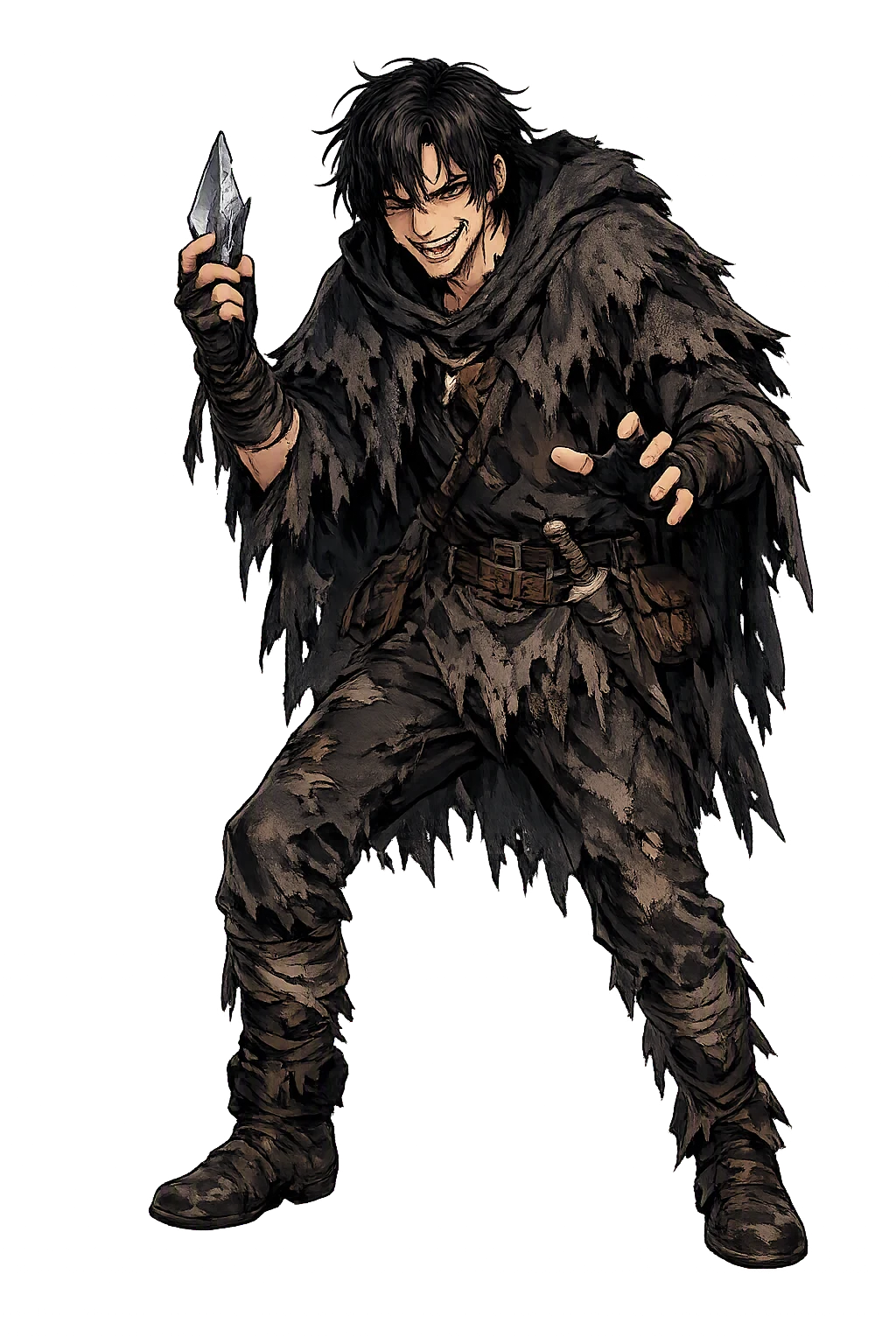
The register rules: Efnysien
The internet spells Efnysien more ways than one, and only one of them is the spelling the scholarly record supports. This is the register's ruling — canonical, fallback, contested, and false, each in its proper place.
At a Glance
- Canonical form: Efnysien
- Scholarly Transliteration: no original script securely attested — the romanized form is the primary record
- Pantheon: Celtic
- Convention: the tradition's scholarly romanization, kept exactly as recorded
- False forms on record: 0
- Contested forms: none attested
- Series: The Canonical Register, No. 150 of 597
The Canonical Form
The tradition's record preserves this name in its romanized scholarly form: Efnysien — no older script survives to transcribe, so the canonical content is the exactness of the spelling itself.
No diacritics exist to require: the canonical form is the exactness of the spelling itself — plain Latin letters kept exactly as the scholarly convention records them.
Where the Flattened Form Stands
The plain form efnysien differs from the canonical Efnysien only by convention of display — case, not content. It is acceptable everywhere: in legacy systems, in plain-text citation, in the DNS itself. What is not acceptable is what follows in the register: respellings that change the letters, not just their case.
The Register of False Forms
No circulating form of this name currently qualifies as false under the register's standard — a rare standing. The spelling is short, sturdy, and rarely mangled.
The Contested Forms
No alternate form of this name carries documented scholarly support in the lexicon's record. The scholarly record here produces exactly one defensible reference spelling: Efnysien. Forms that differ from it are not contested; they are simply wrong.
The Convention's Own History
The canonical spelling of Efnysien rests on the tradition's own scholarly record, not on a marks convention: the name's forms are documented, compared, and one reference spelling is fixed so that citations agree across the temple, the lexicon, and this register. The principle that unifies every entry is the one the whole project stands on: a name is evidence, and evidence is not negotiable — not for keyboards, not for convenience, not for anyone.
The Address, Without an Encoding Detour
The canonical form Efnysien already uses ordinary Latin letters, so the address bar needs no special encoding narrative. The digital temple can preserve the spelling exactly as the scholarly record presents it. That is the practical point here: consistency between the source, the citation, and the public address.
This does not make every romanization equally valid. A wrong letter remains wrong even when it is easy to type. Canonical status still depends on the attested convention, never on convenience or registrar inventory.
Where the Name Stood First
Efnysien is an entirely literary figure: no inscription, cult site, or votive deposit names him, and the Welsh theonymic record of the period survives in literature rather than stone. His evidence is manuscript evidence — the Second Branch complete in the White Book of Rhydderch (Aberystwyth, NLW Peniarth MSS 4–5, c. 1350) and the Red Book of Hergest (Oxford, Jesus College MS 111, c. 1382–1410), with the tales' composition argued to the later eleventh or early twelfth century. The geography of his story is real and walkable: Aberffraw, the royal court of Gwynedd where the horses were maimed; Harlech, where Brân's court sat; and the shore of Anglesey where the survivors landed. The tradition's one material anchor is Bedd Branwen, a cairn on the bank of the Afon Alaw in Anglesey identified since the Middle Ages with Branwen's 'four-sided grave' — excavated by Frances Lynch in 1969 and found to hold Early Bronze Age cremations, far older than any Mabinogi event: the identification is the folklore, not the archaeology, and it is precisely that honesty the record keeps. The temple on the web is the newest of these addresses — the first one that fits in a pocket.
The Verdict
The register rules for Efnysien, and the ruling is checkable: every letter traced, every violation stated, every borderline form given its honest standing. efnysien carries the name freely — it differs only in display, and the register says so without reservation. Anything else in circulation has its origin and its failure recorded above. That is the whole of the law on this name — and the temple at /efnysien/ enforces it.
The docket for this ruling: no false forms on the docket; no contested forms attested; the attestation rests on 6 cited sources — The Mabinogi, Second Branch (Branwen ferch Llŷr), trans. Sioned Davies (Oxford, 2007); Welsh text ed. Ifor Williams, Pedeir Keinc y Mabinogi (1930) — the whole dossier: the two brothers, the horses, the bags, Gwern, the cauldron, The Mabinogion, trans. Lady Charlotte Guest, 3 vols. (London, 1838–49) — the first Englishing of the Second Branch, Mac Cana, Proinsias, Branwen Daughter of Llŷr: A Study of the Irish Affinities and of the Composition of the Second Branch of the Mabinogi (Cardiff, 1958), and The Mabinogi, 2nd ed. (Cardiff, 1992).
The Register Continues
The register holds 597 entries like this one — each temple with its own ruling. Read the temple's founding dispatch for the story, its Restoration File for the philology, its Resonance File for the industries, or the whole archive end to end.
Continue the register — previous entry: Ecne (read it) · next entry: Eggþér (read it).
The Canonical Register is written from the same canonical record as the lexicon itself. If a false form is missing from this page, it is because the evidence does not support calling it false — or because we have not seen it yet. Show us, with a citation, and the register will answer.