
Why Efnysien is spelled that way — and what it costs to get it right
There is no broken version of this name to repair. There is a record to preserve: Efnysien, exactly as the scholarly convention supports it.
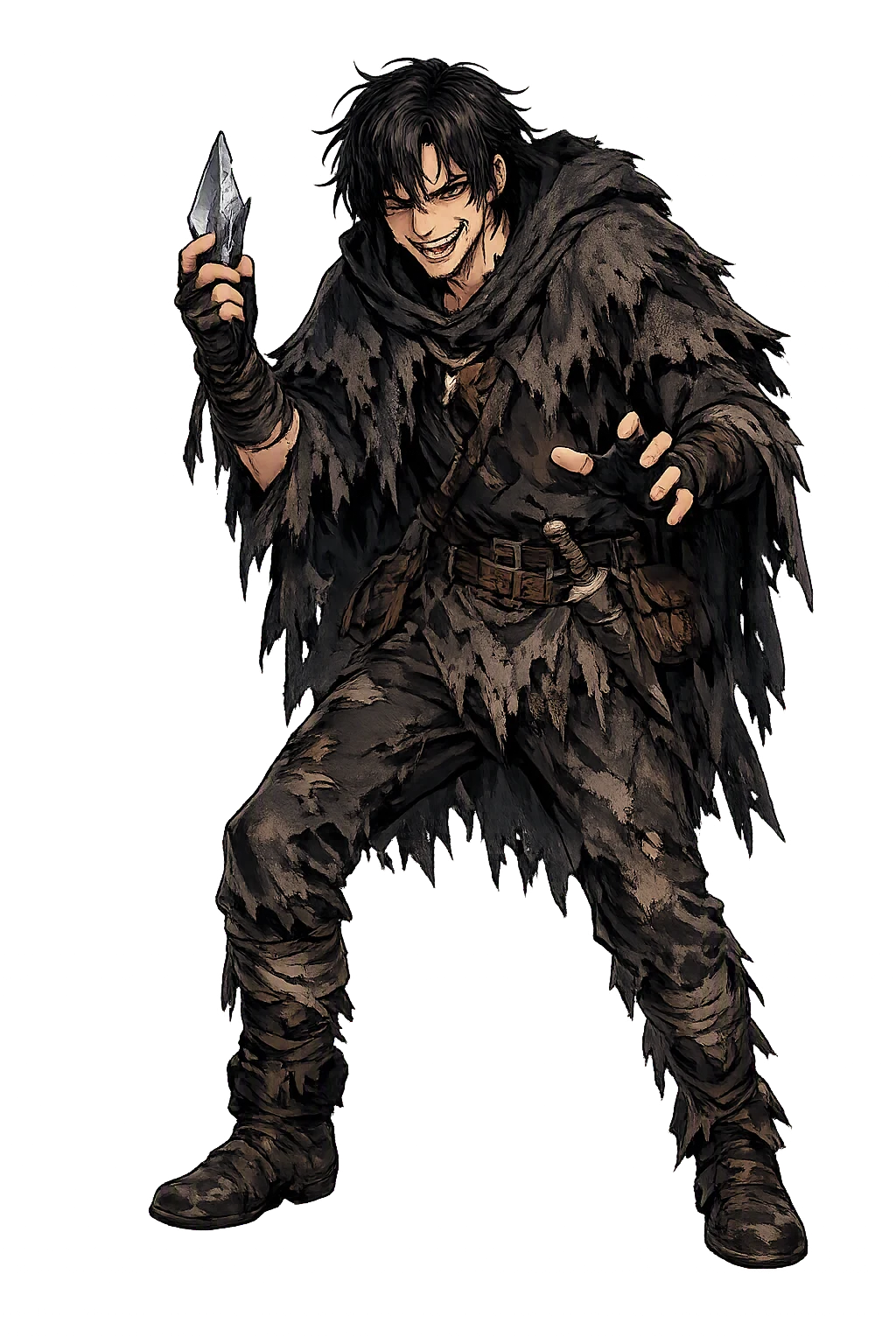
Efnysien belongs to one tale and fills it: the Second Branch of the Mabinogi, Branwen ferch Llŷr. The branch is the story of a compensation that failed, and Efnysien is the reason — twice over the author of the injury, and at the end the author of the only sacrifice that stopped the ruin.
At a Glance
- Canonical name: Efnysien
- ASCII form: efnysien
- Meaning: "Double enemy"
- Domain of influence: Trouble, Mischief
- Pantheon: Celtic
- Restoration: ASCII-equivalent form
- Scholarly Transliteration: no original script securely attested — the romanized form is the primary record
- Series: The Restoration Files, No. 150 of 597
The Name, Plain and Exact
Spoken, the name runs `/ɛvˈnɪs.jɛn/` — 'ev-NIS-yen' — the f sounds as v, the stress lands on the middle syllable, and the last syllable is a quick, light 'yen'.
The Temple That Stands Now
The canonical name is not a plaque; it is an address. The temple of Efnysien lives at /efnysien/, with its mythology in the lore halls, its peer-reviewed record in the Scholarly Edition, and its place in the pattern atlas on the patterns floor.
The displayed form is ASCII-equivalent.
Where the Name Stood First
Efnysien is an entirely literary figure: no inscription, cult site, or votive deposit names him, and the Welsh theonymic record of the period survives in literature rather than stone. His evidence is manuscript evidence — the Second Branch complete in the White Book of Rhydderch (Aberystwyth, NLW Peniarth MSS 4–5, c. 1350) and the Red Book of Hergest (Oxford, Jesus College MS 111, c. 1382–1410), with the tales' composition argued to the later eleventh or early twelfth century. The geography of his story is real and walkable: Aberffraw, the royal court of Gwynedd where the horses were maimed; Harlech, where Brân's court sat; and the shore of Anglesey where the survivors landed. The tradition's one material anchor is Bedd Branwen, a cairn on the bank of the Afon Alaw in Anglesey identified since the Middle Ages with Branwen's 'four-sided grave' — excavated by Frances Lynch in 1969 and found to hold Early Bronze Age cremations, far older than any Mabinogi event: the identification is the folklore, not the archaeology, and it is precisely that honesty the record keeps. The temple on the web is the newest of these addresses — the first one that fits in a pocket.
The Archetype at Work
The pattern atlas seats this temple in 3 industries, each match argued and weighted: Disaster Resilience & Recovery (one night in a stable and two kingdoms ruined — the small act with total consequence.); Defense, Military & Security (the destroyer who ends breaking the Cauldron of Rebirth — war turned inward at last.); Legal, Justice & Compliance (the insult that cannot be compensated — the Mabinogi study in what law cannot repair.). The Resonance File reads those seats through the myths themselves.
The File Continues
The temple's founding dispatch tells the name's story; its Resonance File reads the myths into the industries; the blog index holds the whole archive.
Continue the series — previous file: Ecne (read it here) · next file: Eggþér (read it here).
The Restoration Files are written from the same canonical record as the temples themselves: the lexicon, the lore catalog, the pattern atlas, and the cited scholarly sources. If a file ever disagrees with its temple, the temple is right — tell us, and the file will be corrected.