
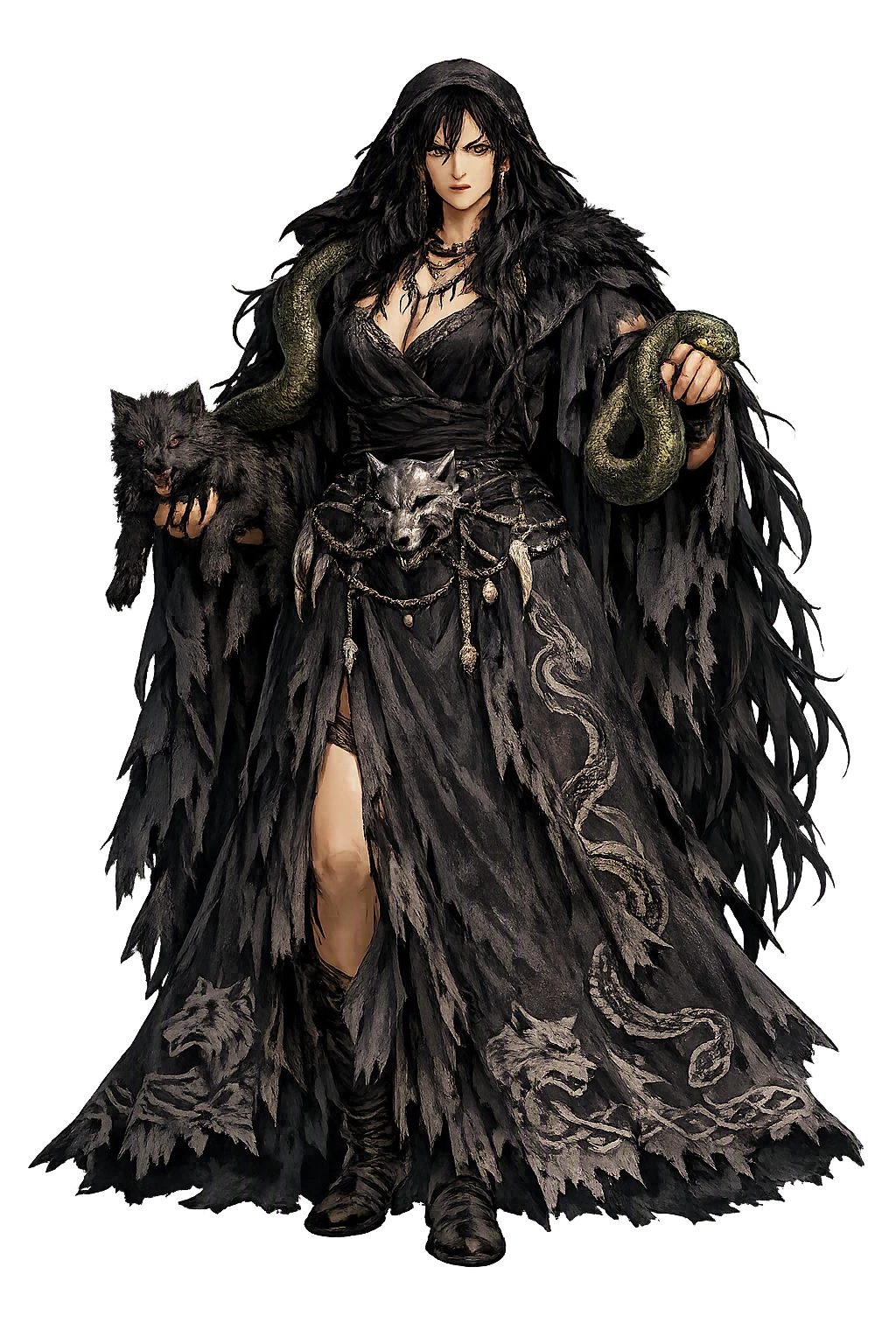
Stress-testing Angrboða: do the industry seats hold?
Audit: Angrboða, seat by seat. The atlas makes claims; the myths decide which ones stand. This is the record of what held.
At a Glance
- Temple: Angrboða
- Pantheon: Norse
- Domain of influence: Monster Mother, Sorcery
- Pattern seats: 6
- Sectors touched: Culture & Entertainment · Society & Spirit · Technology & Innovation · Commerce & Governance
- Strongest seat: Mythic Name Restoration
- Series: The Resonance Files, No. 34 of 548
The Test
Seat 1: Mythic Name Restoration
Claim: Old Norse giantess whose eth and length marks survive in normalized spelling. Exhibit: Three Children by Loki — Snorri Sturluson, in Gylfaginning, gives the whole genealogy in a sentence: Loki lay with a giantess named Angrboða in Jötunheimr, and she bore him three children — the wolf Fenrir, the Midgard-serpent Jörmungandr, and Hel.
Verdict: survives scrutiny. The myth and the trade do the same work.
Seat 2: Astrology, Tarot & Esoteric Services
Claim: She who offers sorrow and mothers monsters; the giantess whose name belongs to sorcery and shadow. Exhibit: The Old Woman of Járnviðr — Völuspá (st.
Verdict: holds under load. The correspondence is functional, not decorative.
Seat 3: Diacritic-First Domains
Claim: The eth and length marks keep Angrboða in normalized Old Norse. Exhibit: What the Children Become — The myth of Angrboða's children is really three myths of containment, each retold in Gylfaginning.
Verdict: holds under load. The correspondence is functional, not decorative.
Seat 4: Disaster Resilience & Recovery
Claim: Mother of Fenrir, Jörmungandr, and Hel — the progenitor of the catastrophes that end the world. Exhibit: Three Children by Loki — Snorri Sturluson, in Gylfaginning, gives the whole genealogy in a sentence: Loki lay with a giantess named Angrboða in Jötunheimr, and she bore him three children — the wolf Fenrir, the Midgard-serpent Jörmungandr, and Hel.
Verdict: holds under load. The correspondence is functional, not decorative.
Seat 5: Gaming, Fantasy & Entertainment IP
Claim: Monster-mother and Ragnarök figure; Norse-themed games mine her saga for bosses and backstory. Exhibit: The Old Woman of Járnviðr — Völuspá (st.
Verdict: survives scrutiny. The myth and the trade do the same work.
The Control Group
Against the seats that survived, one control: the temple's own summary of its figure — Angrboða's mythology is a genealogy of doom told in a handful of lines: three monstrous children, three divine overreactions, and an end foretold. The seats do not drift far from it. That is the audit's cleanest result.
The Method, Stated Plainly
Skeptical? Good — the system is built for you. Every seat in this file carries its why-line and its weight, the full derivation is public at the methodology page, and the challenge process is part of the design. Falsifiable is not a posture here; it is the mechanism.
For the Ones Who Work There
For a sponsor in mythic name restoration, the fit here is not adjacency — it is inheritance. Your trade already tells this story every working day; the temple simply holds the original. The patron tier and the advertising terms carry the mechanics; the myths above carry the reason.
The File Continues
This is one of 548 Resonance Files — the third dispatch from every flagship temple, where the myths meet the markets. The temple's founding dispatch tells the name's story; its Restoration File tells the spelling's; the blog index holds the whole archive.
Continue the series — previous: Andvari (read it) · next: Anima (read it).
The Resonance Files are argued from the same canonical record as the pattern atlas itself: the lexicon, the lore catalog, and the cited sources. Every seat can be challenged at the methodology page — and the challenge is the point.