
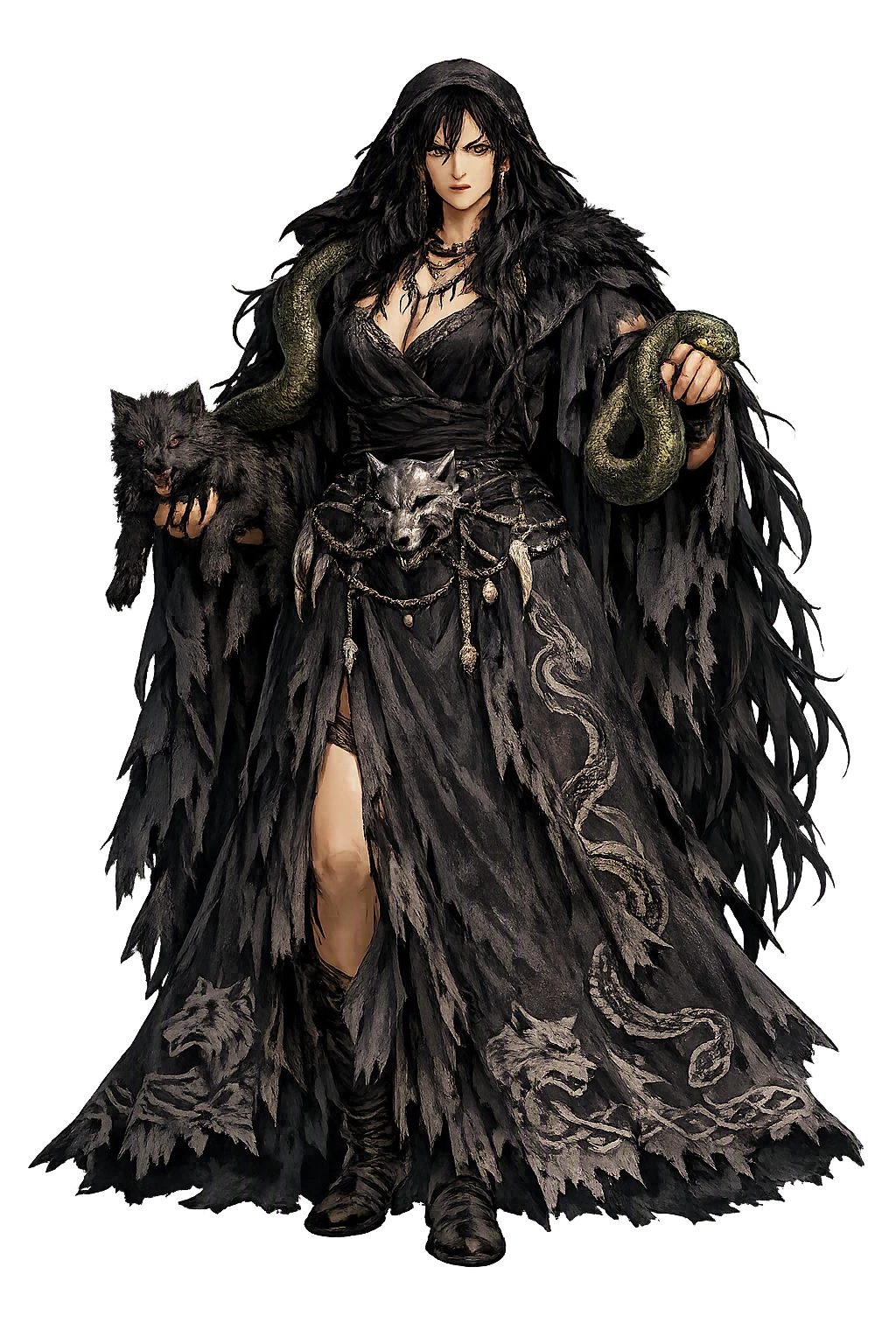
Angrboða in 2026: why scholars still care
In 2026, names are treated as data points. Angrboða is a reminder that they are also cultural artifacts — and that the difference matters for search engines, AI training corpora, and anyone who types the name of a Norse figure into a browser. Scholars never stopped caring about the difference between angrboda and Angrboða; the web simply made that care actionable. What follows is the full scholarly picture — name, script, sound, myth, cult, and legacy — followed by the engineering compromise that lets a restored spelling live at a real address. The question is not whether the name is old. It is whether the digital world is old enough to hold it.
At a Glance
- Restored name: Angrboða
- ASCII form: angrboda
- Meaning: "She who offers sorrow"
- Domain of influence: Monster Mother, Sorcery
- Pantheon: Norse
- Classification: Tier 1
- Original script: ᛅᚾᚴᚱᛒᚢᚦᛅ (Younger Futhark)
- Live domain: angrboda.com
Overview
Angrboða (angrboda) — Monster Mother, Sorcery · She who offers sorrow — belongs to the Norse tradition, where it is catalogued under the domain "Monster Mother, Sorcery". The name means "She who offers sorrow".
Angrboða belongs to the Norse tradition, where it is associated with monster mother, sorcery.
PuniCodex restores the name as Angrboða and serves its temple at angrboda.com. The restoration preserves at least one distinctive feature — a diacritic or a distinctive letter — that the ASCII form loses, and exactly one historically valid Unicode restoration exists, which places the name in Tier 1. The plain ASCII form angrboda survives as a modern convenience imposed by the early domain-name system; the restoration, not the fallback, is the form the project defends as philologically complete.
The Name
The name is attested in Younger Futhark as ᛅᚾᚴᚱᛒᚢᚦᛅ. Etymologically it means "She who offers sorrow".
Old Norse Angrboða, from angr 'sorrow, grief' + boða 'to offer, to announce'; mother of Fenrir, Jörmungandr, and Hel by Loki.
The ASCII form angrboda survives only because the early domain-name system could not carry diacritics; it is a technological compromise, not an ancient spelling. The Unicode restoration Angrboða recovers the full diacritic detail of the scholarly transliteration directly in the address bar. The restoration preserves at least one distinctive feature — a diacritic or a distinctive letter — that the ASCII form loses, and exactly one historically valid Unicode restoration exists, which places the name in Tier 1.
The letter-by-letter transformation runs:
- a → A — Same, capitalized
- n → n — Same
- g → g — Same
- r → r — Same
- b → b — Same
- o → o — Same
- d → ð — Eth: voiced dental fricative
- a → a — Same
The canonical temple for this name is served at angrboda.com.
Etymology & Roots
The recorded derivation reads: Old Norse Angrboða, from angr 'sorrow, grief' + boða 'to offer, to announce'; mother of Fenrir, Jörmungandr, and Hel by Loki.
The root gloss is "sorrow-offerer."
The reconstruction is classed as attested.
The Original Script
The name is preserved in Younger Futhark as ᛅᚾᚴᚱᛒᚢᚦᛅ.
The scholarly transliteration is ankrbuþa.
The rendering proceeds step by step:
- ᛅ (ár) writes /a/, /á/ and /æ/
- ᚾ (nauðr) writes /n/
- ᚴ (kaun) writes both /k/ and /g/ (and the ng cluster)
- The spelling ankrbuþa is a normalized phonetic reconstruction; Younger Futhark does not distinguish voiced/voiceless stops or separate short and long vowels
Pronunciation
The reconstructed pronunciation of the name is /angrboda/ — Norse Reconstruction.
Phoneme by phoneme:
- A — Initial character of the restored form Angrboða.
- ngrboða — Remainder of the name, preserving the distinctive marks of the Norse tradition.
For the modern speaker, the closest approximation is: 'ANGRBODA' — pronounce the restored form with attention to the preserved diacritics and length.
Kindred and historical forms of the name:
- Norse — Angrboða, the restored Unicode form of the name
Angrboða is Tier 1 because the Norse form preserves distinctive features that ASCII loses: stress, length, or special characters.
Mythology
The stories of Angrboða circulate within the Norse corpus, where the figure embodies monster mother, sorcery.
Primary Attestation (Sources)
Angrboða is attested in the canonical Norse sources as a figure associated with monster mother, sorcery.
Name and Meaning (Etymology)
The name means "She who offers sorrow" and reflects the figure's role in the tradition. Angrboða is a jötunn of the Iron Wood and the mother of three monstrous children by Loki: Fenrir, Jörmungandr, and Hel. Her name, "She-Who-Offers-Grief," signals her role in the coming Ragnarök. The Prose Edda presents her as the source of the forces that will unmake the gods, yet she remains a marginal, barely narrated figure. Some modern readings interpret her as the land's ancient, ungovernable fertility, producing the very forces that will consume the cosmic order established by the Æsir.
Symbols & Iconography
The iconography associated with Angrboða concentrates in a small set of recurring attributes, each a compressed statement about the name:
- Restored Name — The Unicode form Angrboða carries the original marks of the Norse tradition.
- Source Script — Preserved through scholarly transliteration and canonical sources.
- Domain — Monster Mother, Sorcery
- Etymology — She who offers sorrow
Archaeology & Evidence
The material record for Angrboða survives in a small number of securely identified remains, catalogued below; the corpus is thin but unambiguous, and each site is tied to the name by ancient testimony.
Angrboða is attested in the textual and iconographic record of the Norse tradition.
Realm & Domain
Angrboða belongs to the Norse tradition, where it is associated with monster mother, sorcery.
Monster Mother
The central domain of Angrboða in the norse tradition.
She who offers sorrow
The name signifies "She who offers sorrow".
Unicode Restoration
The restoration Angrboða recovers what plain ASCII angrboda flattens.
Original Attestation
Attested in the sources as —.
Across Cultures
Angrboða appears within the Norse tradition and has influenced later retellings, artistic depictions, and scholarly study. The Unicode restoration preserves the name's distinctive orthography for contemporary use.
Within the Norse tradition, closely related names in the corpus include Álfheimr, Andvari, Baldr, Baugi, Bestla, and Bifrǫst.
Cultural Legacy
Angrboða continues to appear in scholarship, art, and popular reception as a significant figure of the Norse tradition. Restoring the name in Unicode returns the original marks that ASCII removes. Angrboða has gained renewed attention in modern Heathenry and fantasy literature as a figure of primal, maternal monstrosity.
The Scholarly Record
The account of Angrboða given in this edition rests on the witnesses and reference works listed below. Lexica and etymological dictionaries secure the form and meaning of the name; the literary and religious texts supply the narrative evidence.
- Poetic Edda (Eddukvæði), ed. Neckel-Kuhn; trans. Carolyn Larrington, Oxford World's Classics (2014), 1270. Full text
- Snorri Sturluson, Prose Edda, trans. Anthony Faulkes, Everyman / Viking Society for Northern Research, 1220. Full text
- An Icelandic-English Dictionary, 2nd ed. with supplement, 1874. Full text
A Meditation
Angrboða embodies monster mother, sorcery in the Norse imagination. The name's restoration is not merely cosmetic: it recovers the stress, length, and script that make the figure recognizable in the source tradition.
The Unicode Restoration
Angrboða is classified as Tier 1: the restoration preserves at least one distinctive feature — a diacritic or a distinctive letter — that the ASCII form loses. The ASCII fallback angrboda still resolves everywhere, but it is the restored form that carries the name's full information. Across the 8 characters of the name, the restoration adjusts 1: 1 further adjustment (ð). That is the whole thesis of this temple: the marks are the message.
Character by Character
The journey from angrboda to Angrboða, one character at a time:
- a → A — Same, capitalized
- n → n — Same
- g → g — Same
- r → r — Same
- b → b — Same
- o → o — Same
- d → ð — Eth: voiced dental fricative
- a → a — Same
The Domain Name
The restored name is live as a working domain: angrboda.com. Behind the scenes the DNS carries it in punycode form — an ASCII-compatible encoding that lets a non-ASCII name travel the global network without breaking older infrastructure. The visitor sees Angrboða; the machines see the encoding. That duality is the engineering compromise on which the entire restoration rests, and it is why a name written the way its own tradition wrote it in Younger Futhark can now be typed into any browser on earth.
The Norse Pantheon
Angrboða is one of 95 entries the PuniCodex lexicon catalogues under the Norse pantheon. The Pantheon page gathers the tradition's major figures in one place, and the Lexicon lets you filter all 974 restorations by tradition, tier, or script — the fastest way to see where this name sits among its kin.
Frequently Asked Questions
What does Angrboða mean? The traditional gloss is "She who offers sorrow."
Which tradition does Angrboða belong to? Angrboða is catalogued in the Norse pantheon of the PuniCodex lexicon.
Why is Angrboða classified as Tier 1? Because the restoration preserves at least one distinctive feature — a diacritic or a distinctive letter — that the ASCII form loses — and the marks in the restored spelling preserve exactly that evidence.
Is Angrboða a working domain? Yes — angrboda.com resolves today and routes to this temple.
Can I use Angrboða in a normal browser? Yes. The DNS resolves the punycode form automatically, and the type tool on this site converts angrboda to Angrboða for copying and pasting.
Where does the scholarly information come from? The entry is built from lexica, inscriptional evidence, and reviewed scholarly sources listed in the Scholarly Edition. Every claim is traceable to a canonical source.
Typing Angrboða
You do not need a special keyboard to use this restoration. The PuniCodex Type Tool converts the ASCII form angrboda into Angrboða as you type, and the browser extension offers the same conversion inside any text field. Copy the restored form, paste it into the address bar, and the DNS does the rest.
Sister Temples
Other temples in the Norse pantheon include Fulla, and Geirröðr — each with its own restoration story, its own scholarly record, and its own place in the lexicon.
Why This Restoration Matters
In 2026 the stakes are practical. Search indexes, language models, and localization pipelines all inherit whatever spelling the web normalizes — which means every Unicode domain is also a training signal. Angrboða teaches the machinery that the restored form exists, that it is used, and that it points to a real place. That is why a project built on philology ends up caring about DNS: the infrastructure decides which names the future sees. This restoration makes sure the future sees the whole name.
Explore Further
This post is one doorway into the temple. The home page carries the full character breakdown and the ambient canvas; the lore page tells the myths in long form; the Scholarly Edition preserves the sources, pronunciation data, and revision history; and the patron wall supports the restoration directly. For the wider map, browse the Lexicon, explore the Pantheon, or return to the PuniCodex blog.
A Closer Look at the Marks
A restored name is a small map. In Angrboða, the journey from the ASCII fallback angrboda to the Unicode form can be read letter by letter, and each letter tells a story. Of the 8 characters, 7 remain unchanged; they anchor the name to its modern shape. The remaining adjustments recover marks the source tradition used to distinguish this name from every other word built from the same letters.
The a stays as it is — Same, capitalized.
The n stays as it is — Same.
The g stays as it is — Same.
The r stays as it is — Same.
The b stays as it is — Same.
The o stays as it is — Same.
The d becomes ð — Eth: voiced dental fricative.
The a stays as it is — Same.
Together these changes are not decoration. They are the minimum set of marks needed to keep the name legible in its own tradition. Remove them and you still have a string of letters; you no longer have the name as it was written.
Angrboða in Its Tradition
Angrboða does not stand alone. It belongs to the Norse tradition, where it is counted among 95 names in the PuniCodex lexicon. Its sphere — Monster Mother, Sorcery — places it beside other figures who govern similar aspects of experience. The restored spelling is therefore not only a philological decision; it is a way of keeping the name in the company of its kin. When the address bar shows Angrboða, it marks the boundary between a generic search term and a named entry in a living catalog of myth. That catalog is the point of the project. Every restored name is a vote for specificity: the web should know the difference between a figure and a keyword, between a tradition and a trend. Angrboða is one such vote.
What You Will Find in the Temple
The temple page for Angrboða is more than a landing page. The home tab presents the character breakdown, the pronunciation guide, and the live domain status in a single view. The lore tab gathers the myths and narratives that give the name its depth. The Scholarly Edition tab publishes the sources, variant forms, and review history that justify the restoration. Industry patterns show where the name appears in modern commerce and culture, while the gallery and creatives tabs collect visual and sponsor material. The patron wall lets visitors support the restoration directly. Each tab is generated from the same canonical sources, so the domain, the blog, the scholars page, and the search index all agree. The result is a single source of truth about a name, delivered through several doors.
The Restoration on the Live Web
A domain name is a kind of publication. When Angrboða resolves, it proves that the restored spelling is not a theoretical exercise; it is a working address on the public internet. Search engines can index it, language models can encounter it, and anyone who copies it from a manuscript can paste it into a browser. That practical reality changes the status of the restoration. Before Unicode domains, a scholar could write the name correctly in an article while the public web flattened it to angrboda. Now the public web can carry the correct form end to end. The punycode translation happens silently, so the infrastructure remains compatible while the visible name keeps its marks. That compromise — human-readable restoration, machine-readable encoding — is the foundation of every PuniCodex temple.
Related Names
Sources
The full scholarly apparatus — every citation, revision, and review — lives in the Scholarly Edition. Key references for this post:
- Poetic Edda (Eddukvæði), ed. Neckel-Kuhn; trans. Carolyn Larrington, Oxford World's Classics (2014), 1270.
- Snorri Sturluson, Prose Edda, trans. Anthony Faulkes, Everyman / Viking Society for Northern Research, 1220.
- An Icelandic-English Dictionary, 2nd ed. with supplement, 1874.
- Rundata (Scandinavian Runic-text Database).
- Ynglinga saga (Heimskringla).
- Lexicon authorities for this entry: Prose Edda, Cleasby-Vigfusson.