
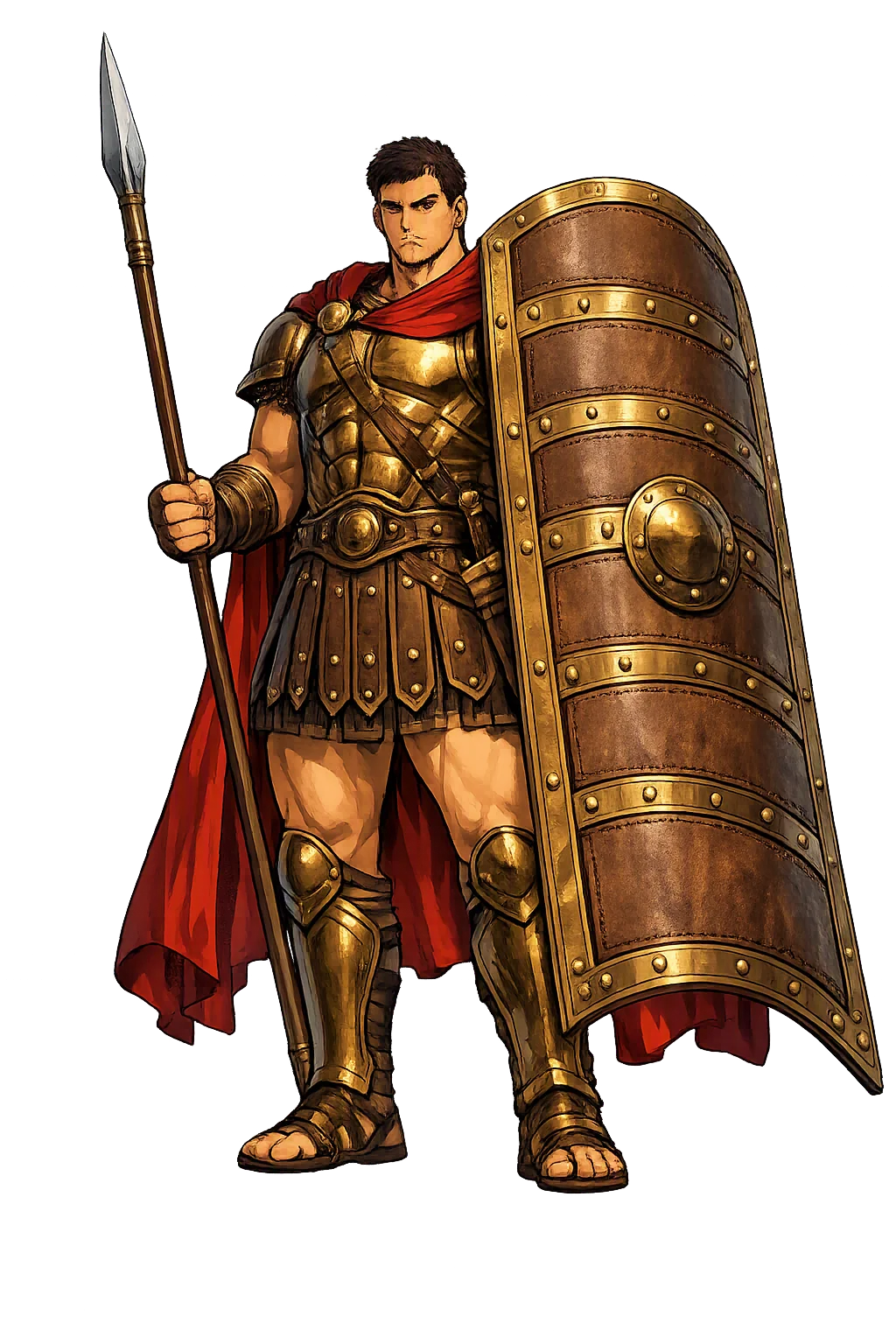
Aias in 2026: why scholars still care
In 2026, names are treated as data points. Aias is a reminder that they are also cultural artifacts — and that the difference matters for search engines, AI training corpora, and anyone who types the name of a Greek figure into a browser. Scholars never stopped caring about the difference between ajax and Aias; the web simply made that care actionable. What follows is the full scholarly picture — name, script, sound, myth, cult, and legacy — followed by the engineering compromise that lets a restored spelling live at a real address. The question is not whether the name is old. It is whether the digital world is old enough to hold it.
At a Glance
- Restored name: Aias
- ASCII form: ajax
- Meaning: "Of the earth"
- Domain of influence: Warrior, Bulwark of Achaeans
- Pantheon: Greek
- Classification: Tier 1
- Original script: Αἴας (Greek)
Overview
Aias (ajax) — Warrior, Bulwark of Achaeans · Of the earth — belongs to the Greek tradition, where it is catalogued under the domain "Warrior, Bulwark of Achaeans". The name means "Of the earth".
Aias is the great defensive warrior of the Greek army at Troy. In the Iliad he is second only to Achilles in strength and courage, a tower of bronze and stubbornness who saves the Greek ships from fire, duels Hector to a standstill, and carries the dead Achilles from the field. Where Achilles is speed and wrath, Aias is mass, endurance, and absolute loyalty. His name became a byword for the soldier who holds the line when everything else breaks.
PuniCodex restores the name as Aias and serves its temple at its temple. The original carries both stress and vowel length, and exactly one historically valid Unicode restoration exists, which places the name in Tier 1. The plain ASCII form ajax survives as a modern convenience imposed by the early domain-name system; the restoration, not the fallback, is the form the project defends as philologically complete.
The Name
The name is attested in Greek as Αἴας. Etymologically it means "Of the earth".
The ASCII form ajax survives only because the early domain-name system could not carry diacritics; it is a technological compromise, not an ancient spelling. The Unicode restoration Aias recovers the full diacritic detail of the scholarly transliteration directly in the address bar. The original carries both stress and vowel length, and exactly one historically valid Unicode restoration exists, which places the name in Tier 1.
The letter-by-letter transformation runs:
- a → A — Same
- j → i — Iota
- a → a — Same
- x → s — Same
The Original Script
The name is written in Greek as Αἴας. This original script is the form against which the ASCII fallback ajax and the PuniCodex restoration Aias are measured: the restoration preserves its full diacritic detail of the written form, so that a reader typing the modern address still speaks the ancient name.
The name is written in Greek as Αἴας. The first syllable is a long diphthong αι with an acute accent; the final alpha is long. The Latin form Ajax and English Ajax are secondary spellings that mask the original Greek vowel quantities. The PuniCodex restoration Aias recovers the scholarly transliteration of the Greek form and is classified as Tier 1 because both pitch accent and vowel length are preserved.
Pronunciation
The reconstructed pronunciation of the name is /aí̯.aːs/ — Attic Greek Reconstruction.
Phoneme by phoneme:
- Ai- — Long diphthong αι [ai̯] carrying the acute pitch accent; the alpha is open and the iota forms an off-glide.
- -as — Long alpha [aː] followed by voiceless sibilant [s], the nominal ending of the hero's name.
For the modern speaker, the closest approximation is: 'AH-yahs' — the first syllable is long and carries the ancient pitch rise; the final syllable is open and sustained.
Kindred and historical forms of the name:
- Greek — Αἴας (Aias), the bulwark of the Achaeans in the Iliad
- Latin — Ajax, the Roman rendering adopted into English and many modern languages
The Greek Αἴας contains both stress (acute on the diphthong) and length (long alpha in the diphthong and final syllable), making it a Tier 1 restoration. The Latin-derived English form Ajax is a secondary spelling, not the original Greek.
Mythology
The myths of Aias are told in the Iliad, the lost Epic Cycle, and above all in Sophocles' tragedy Aias. They turn on a single quality: the absolute, unbending commitment of the warrior. That quality makes him the Greeks' greatest defender and, when it is slighted, their most terrible casualty.
The Defence of the Ships (Iliad)
When the Trojans break through to the Greek ships and set a ship ablaze, Aias holds the line alone. He plants himself on the decks with his great shield and drives back the attackers while the Greeks rally behind him. Homer compares him to a donkey that children cannot move from a cornfield: ugly to mock, impossible to shift.
Duel with Hector (Iliad)
After Hector challenges the Greeks to single combat, Aias is chosen by lot. The two champions fight until nightfall, exchanging blows so heavy that the earth shakes. Neither wins; they exchange gifts and part with mutual respect. It is the closest the Iliad comes to showing Hector matched by equal honour.
The Rescue of Achilles' Body (Epic Cycle)
When Achilles is killed by Paris and Apollo at the Scaean Gate, Aias and Odysseus fight through the Trojans to recover the corpse. Aias lifts the body onto his shoulders and carries it from the field while Odysseus drives off the attackers. The rescue proves Aias' strength and his devotion to his comrades.
The Madness and Suicide (Sophocles)
After Achilles' death, the Greeks award his armour to Odysseus rather than Aias. Maddened by Athena, Aias attacks a flock of sheep believing them to be his enemies. When he returns to sanity and sees what he has done, shame overwhelms him. He falls on his sword, and the debate over whether to bury him honourably divides the Greek commanders.
Symbols & Iconography
The iconography associated with Aias concentrates in a small set of recurring attributes, each a compressed statement about the name:
- Seven-fold oxhide shield — The massive tower-shield that makes Aias a living fortress and protects the whole Greek line.
- Sword — The weapon with which he slays sheep in his madness and then himself in the tragedy of Sophocles.
- The ships — The beached Greek fleet that Aias defends when the Trojans press it with fire.
- The seashore — The place of his suicide and burial, where the waves meet the land of Troy.
Archaeology & Evidence
No monument, inscription, or artifact in the current PuniCodex corpus is yet assigned to Aias with certainty. That absence should be read honestly: for a Greek name of this type the material record is expected to be thin, and the primary evidence remains the textual testimony gathered in the Scholarly Sources section.
Were such evidence to surface, it would take recognizable forms: votive or dedicatory inscriptions naming Αἴας, sanctuary or cult remains tied to warrior and iconography matching its traditional attributes (seven-fold oxhide shield and sword). Each candidate would be weighed against the reconstructed form of the name before entering the scholarly record.
Realm & Domain
Aias is the great defensive warrior of the Greek army at Troy. In the Iliad he is second only to Achilles in strength and courage, a tower of bronze and stubbornness who saves the Greek ships from fire, duels Hector to a standstill, and carries the dead Achilles from the field. Where Achilles is speed and wrath, Aias is mass, endurance, and absolute loyalty. His name became a byword for the soldier who holds the line when everything else breaks.
The Shield Wall
Aias fights with a towering seven-fold oxhide shield that protects whole companies, not merely himself.
Duel with Hector
He meets Hector in single combat and fights him to a draw, proving that defence can match offence.
Rescue of Achilles
After Patroclus falls, Aias stands over the body and bears Achilles' corpse from the battlefield.
Tragic Pride
Denied Achilles' armour, he falls into a madness of shame and takes his own life on the seashore.
Across Cultures
Aias was honoured as a hero at Salamis, his father's island, and at Athens, where the festival Aianteia included games in his honour. The Athenians claimed him as their own through his father Telamon's exile there. Roman writers such as Ovid retold his story, and the name Ajax passed into modern culture as a byword for physical might and tragic pride. In the twentieth century it became a brand name for cleaning products and football clubs, a long descent from the Homeric bulwark.
Within the Greek tradition, closely related names in the corpus include Achérōn, Achilleús, Adámas, Aḗr, Aithḗr, and Anánkē.
Cultural Legacy
Aias stands at the centre of Western reflection on military honour and mental injury. Sophocles' tragedy is now read as one of the earliest literary explorations of combat trauma and the violence that shame can turn inward. The American Department of Defense has sponsored performances of the play for veterans. The Ajax football club of Amsterdam takes its name and emblem from the hero, and 'Ajax' has been used for military vehicles, ships, and spacecraft. His story reminds us that the strongest defender may be the most vulnerable when honour is denied.
The Scholarly Record
The account of Aias given in this edition rests on the witnesses and reference works listed below. Lexica and etymological dictionaries secure the form and meaning of the name; the literary and religious texts supply the narrative evidence.
- Homer, Iliad.
- Sophocles, Ajax.
- Pindar, Nemean Odes 7 and Isthmian Odes 6.
- Ovid, Metamorphoses 12-13.
- Liddell-Scott-Jones Greek-English Lexicon, s.v. Αἴας.
- Garagin and Woodruff, Early Greek Political Thought from Homer to the Sophists.
A Meditation
Aias teaches that strength without flexibility can become its own enemy. His refusal to bend before the Greek commanders is the same refusal that let him hold the ships against Hector; turned inward, it becomes the sword with which he destroys himself. The modern reader cannot easily judge him. His suicide is at once a failure of proportion and a terrible assertion of dignity.
To remember Aias is to remember the cost of asking human beings to be shields. The wall that protects others must itself bear every blow. When the wall is slighted, the whole structure of honour trembles.
The Unicode Restoration
Aias is classified as Tier 1: the original carries both stress and length, and only one valid Unicode restoration exists. The ASCII fallback ajax still resolves everywhere, but it is the restored form that carries the name's full information. That is the whole thesis of this temple: the marks are the message.
Character by Character
The journey from ajax to Aias, one character at a time:
- a → A — Same
- j → i — Iota
- a → a — Same
- x → s — Same
The Greek Pantheon
Aias is one of 275 entries the PuniCodex lexicon catalogues under the Greek pantheon. The Pantheon page gathers the tradition's major figures in one place, and the Lexicon lets you filter all 980 restorations by tradition, tier, or script — the fastest way to see where this name sits among its kin.
Frequently Asked Questions
What does Aias mean? The traditional gloss is "Of the earth."
Which tradition does Aias belong to? Aias is catalogued in the Greek pantheon of the PuniCodex lexicon.
Why is Aias classified as Tier 1? Because the original carries both stress and length, and only one valid Unicode restoration exists — and the marks in the restored spelling preserve exactly that evidence.
Can I use Aias in a normal browser? Yes. The DNS resolves the punycode form automatically, and the type tool on this site converts ajax to Aias for copying and pasting.
Where does the scholarly information come from? The entry is built from lexica, inscriptional evidence, and reviewed scholarly sources listed in the Scholarly Edition. Every claim is traceable to a canonical source.
Typing Aias
You do not need a special keyboard to use this restoration. The PuniCodex Type Tool converts the ASCII form ajax into Aias as you type, and the browser extension offers the same conversion inside any text field. Copy the restored form, paste it into the address bar, and the DNS does the rest.
Sister Temples
Other temples in the Greek pantheon include Sínōn, Sísyphos, and Smáragdos — each with its own restoration story, its own scholarly record, and its own place in the lexicon.
Why This Restoration Matters
In 2026 the stakes are practical. Search indexes, language models, and localization pipelines all inherit whatever spelling the web normalizes — which means every Unicode domain is also a training signal. Aias teaches the machinery that the restored form exists, that it is used, and that it points to a real place. That is why a project built on philology ends up caring about DNS: the infrastructure decides which names the future sees. This restoration makes sure the future sees the whole name.
Explore Further
This post is one doorway into the temple. The home page carries the full character breakdown and the ambient canvas; the lore page tells the myths in long form; the Scholarly Edition preserves the sources, pronunciation data, and revision history; and the patron wall supports the restoration directly. For the wider map, browse the Lexicon, explore the Pantheon, or return to the PuniCodex blog.
A Closer Look at the Marks
A restored name is a small map. In the case of Aias, the map does not lead through diacritics or special letters, because the source tradition wrote the name in Greek rather than in the Latin alphabet. The ASCII form ajax and the restored form share the same letters; the restoration is a decision about which conventional spelling should serve as the public reference.
That decision is not cosmetic. The original script attestation carries semantic and phonetic information that no romanization can fully reproduce. By fixing one conventional spelling as the canonical domain form, the project prevents the drift that happens when a name is romanized differently in every article, map, and database. The breakdown still lists each character — a, j, a, x — so visitors can see exactly what is being carried forward and what is not. What looks like "no change" is, in fact, a deliberate choice to keep the name stable, searchable, and addressable.
Aias in Its Tradition
Aias does not stand alone. It belongs to the Greek tradition, where it is counted among 275 names in the PuniCodex lexicon. Its sphere — Warrior, Bulwark of Achaeans — places it beside other figures who govern similar aspects of experience. The restored spelling is therefore not only a philological decision; it is a way of keeping the name in the company of its kin. When the address bar shows Aias, it marks the boundary between a generic search term and a named entry in a living catalog of myth. That catalog is the point of the project. Every restored name is a vote for specificity: the web should know the difference between a figure and a keyword, between a tradition and a trend. Aias is one such vote.
What You Will Find in the Temple
The temple page for Aias is more than a landing page. The home tab presents the character breakdown, the pronunciation guide, and the live domain status in a single view. The lore tab gathers the myths and narratives that give the name its depth. The Scholarly Edition tab publishes the sources, variant forms, and review history that justify the restoration. Industry patterns show where the name appears in modern commerce and culture, while the gallery and creatives tabs collect visual and sponsor material. The patron wall lets visitors support the restoration directly. Each tab is generated from the same canonical sources, so the domain, the blog, the scholars page, and the search index all agree. The result is a single source of truth about a name, delivered through several doors.
The Restoration on the Live Web
A domain name is a kind of publication. When Aias resolves, it proves that the restored spelling is not a theoretical exercise; it is a working address on the public internet. Search engines can index it, language models can encounter it, and anyone who copies it from a manuscript can paste it into a browser. That practical reality changes the status of the restoration. Before Unicode domains, a scholar could write the name correctly in an article while the public web flattened it to ajax. Now the public web can carry the correct form end to end. The punycode translation happens silently, so the infrastructure remains compatible while the visible name keeps its marks. That compromise — human-readable restoration, machine-readable encoding — is the foundation of every PuniCodex temple.
Related Names
Sources
The full scholarly apparatus — every citation, revision, and review — lives in the Scholarly Edition. Key references for this post:
- Homer, Iliad.
- Sophocles, Ajax.
- Pindar, Nemean Odes 7 and Isthmian Odes 6.
- Ovid, Metamorphoses 12-13.
- Lexicon authorities for this entry: LSJ, Pape-Benseler, Beekes.