
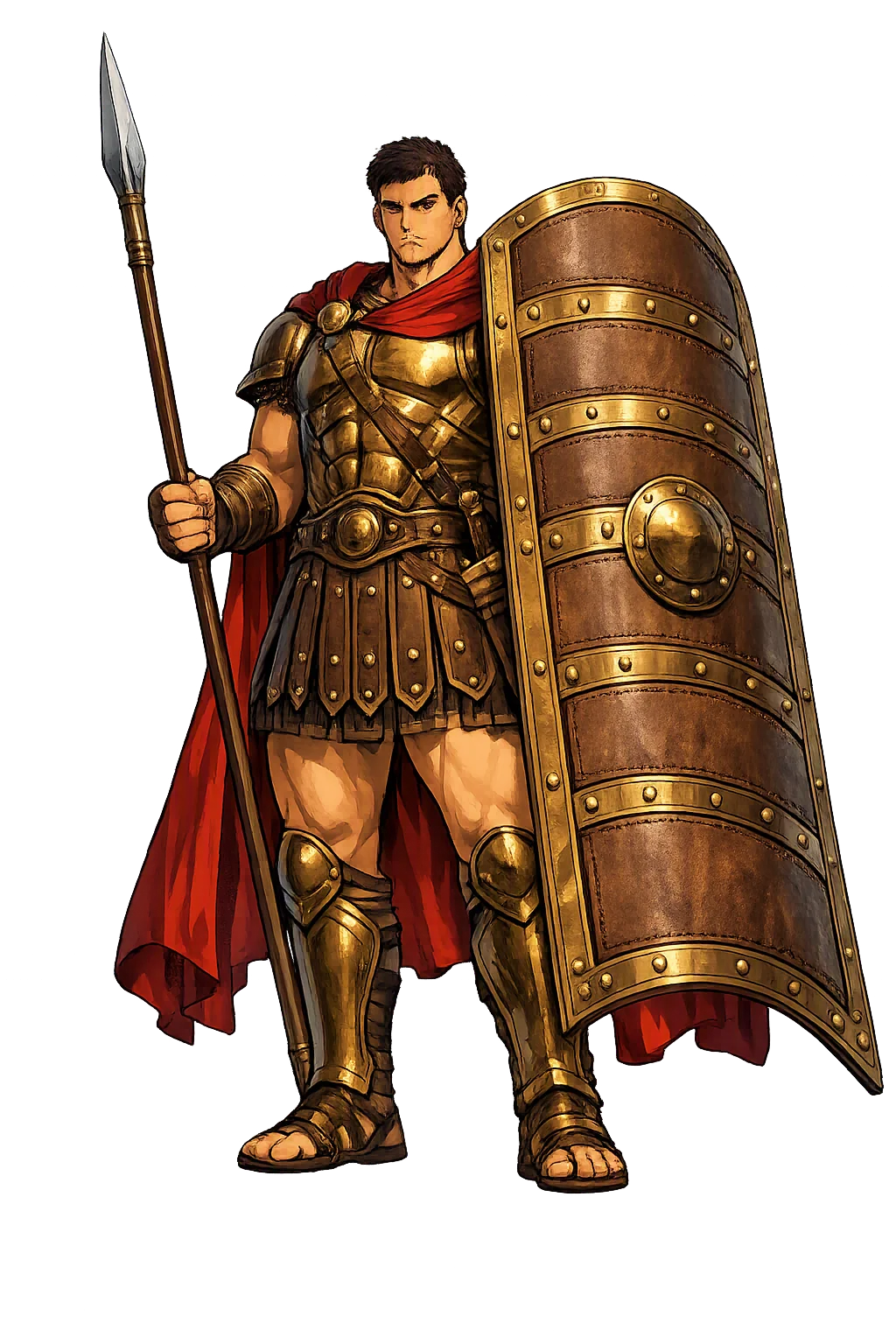
Aías: canonical, contested, and the false forms on record
A letter to a colleague, 31 July 2026 — on the name Aías, and on the forms that keep failing it.
Your note said, roughly: surely the marks are a nicety. Permit me to use Aías to show they are not.
First, the attestation. The name is attested as Αἴας, as Homer, Iliad and Homer, Odyssey 11.543–567; 24.43–84 preserve it. On the evidence, it means "Of the earth". The canonical transliteration is Aías.
And the marks themselves: j → í (Iota). Remove any one of them and you have not simplified the name — you have told a small lie about it, and the whole discipline is the refusal of such lies.
Say it aloud as the sources heard it: 'AH-yahs' — the first syllable is long and carries the ancient pitch rise; the final syllable is open and sustained. The marks are what carry that sound to a reader who has never heard it spoken.
On the plain form — and I want to be precise, because you pushed on this. The plain form ajax is not false — it is a fallback, and the register is exact about what that means. In systems that cannot carry diacritics (legacy databases, older tooling, parts of the address-bar pipeline) the flattened form is the accepted vehicle, and the rulebook names it explicitly as the final rung of the fallback hierarchy: full restoration first, circumflex where attested, macron-only by the academic standard, an attested variant, and only then plain ASCII.
What the fallback status forbids is promotion: ajax may carry the name where marks are impossible, but it may not represent the name where marks are possible. Every mark it drops — j → í — is a fact the sources recorded. A fallback is a vehicle, never the primary.
Now to the forms that provoked your letter. As for Á́ías: it comes from the English ear — English speakers slam the first syllable of every borrowed name (DEL-fi, MY-cene), so the accent drifts forward online, and it fails because moves the stress from j (where the Greek puts it) to A — a different word with a different rhythm; the sources stress j and nothing else As for Aîas: it comes from the circumflex habit — writers who learned that "the little hat means Greek" and apply it wherever an acute belongs, and it fails because the source carries an acute (oxeia, a rising tone), not a circumflex (perispomene, a rise-fall): the two marks are different facts about pitch, and only the acute is attested on j
One more thing, because it always surprises: the name did not stay home. Aias was honoured as a hero at Salamis, his father's island, and at Athens, where the festival Aianteia included games in his honour. The Athenians claimed him as their own through his father Telamon's exile there.
And it never stopped working. Aias stands at the centre of Western reflection on military honour and mental injury. Sophocles' tragedy is now read as one of the earliest literary explorations of combat trauma and the violence that shame can turn inward.
The Convention's Own History
The marks this register defends were not invented for typesetting. Ancient Greek carried a melodic pitch accent, and the acute and circumflex were added by Alexandrian scholars — Aristophanes of Byzantium, tradition holds — precisely to preserve it when the spoken language began to level. Vowel quantity (the macron's concern) is older still: it changes meter, meaning, and grammar, and the poets of the Theogony depend on it. To drop either class of mark is to drop two millennia of deliberate preservation. The restored-stress convention simply continues the oldest documented project in European scholarship: keeping the sound of Greek alive in its letters.
Where Protocol Meets Practice
The technical answer is simple: the canonical marks are legal IDNA 2008 characters, encoded as punycode under `xn--`. The practical answer is messier: legal does not mean stocked (registrar inventory is partial), and stocked does not mean typeable (stacked diacritics defeat mobile keyboards).
So the register's rule is a hierarchy of attested forms — full restoration, circumflex, macron-only, attested variant, and finally plain ASCII for the systems that cannot carry marks. Every rung is defensible because every rung is attested. The forms this register rules against are not rungs; they are errors, and errors do not get rungs.
Write back when you have checked the sources; they are better company than I am.
— The Register
The Verdict
Aías is the canonical form: attested, checkable, and enforced across the temple, the lexicon, the cards, the APIs, and this register. The plain form ajax is sanctioned as the fallback vehicle and nothing more. The false forms above are documented so that no reader has to take the temple's word on faith — the violations are stated, the sources are named, and the register stands open to challenge on every line.
The temple of Aías stands at /ajax/.
The docket for this ruling: 2 false forms ruled against, Á́ías first on the docket; 1 preserved mark verified: j → í; no contested forms attested; the attestation rests on 8 cited sources — Homer, Iliad, Homer, Odyssey 11.543–567; 24.43–84, Sophocles, Ajax.
The Register Continues
This is one of 548 entries in the Canonical Register — the authoritative reference for every flagship temple. The temple's founding dispatch tells the name's story; its Restoration File details the marks; its Resonance File reads the archetype into the industries. The blog index holds the whole archive, and the Rulebook states the convention this register enforces.
Continue the register — previous entry: Aithḗr (read it) · next entry: Ꜣḫ (read it).
The Canonical Register is written from the same canonical record as the lexicon itself. If a false form is missing from this page, it is because the evidence does not support calling it false — or because we have not seen it yet. Show us, with a citation, and the register will answer.