
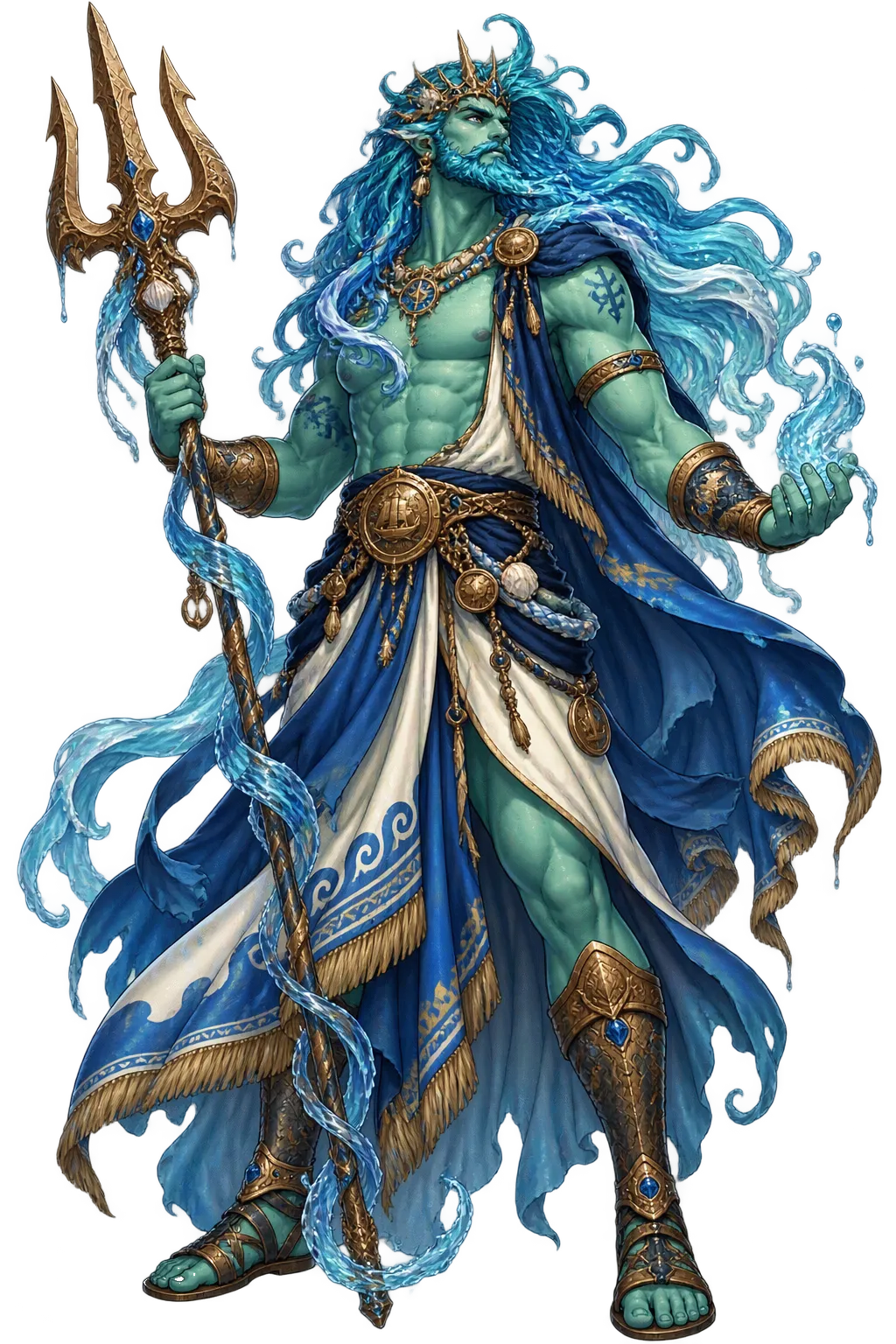
How Yammu got its accent back
The ASCII form yammu is missing something. Yammu restores the marks the source language used to distinguish this name from a thousand others — and those marks change how the name is read, pronounced, and understood. This post explains, with the full scholarly record behind it, what each restored mark preserves: the Phoenician evidence, the reconstructed sound, the myths the name carries, and the mechanical logic of what each restored mark preserves. By the end, the marks in Yammu will look less like ornaments and more like what they are — recovered evidence, pinned back in its proper place.
At a Glance
- Restored name: Yammu
- ASCII form: yammu
- Meaning: "Sea"
- Domain of influence: Sea, Chaos
- Pantheon: Phoenician
- Restoration: ASCII-equivalent form
- Original script: 𐤉𐤌 (Phoenician)
Overview
Yammu (yammu) — The Sea, Rival of Baʿal · Sea — belongs to the Phoenician tradition, where it is catalogued under the domain "Sea, Chaos". The name means "Sea".
Yammu is the Canaanite sea-god: the personified ocean whose rebellion against the divine council set the Baal Cycle in motion, and whose defeat by Baʿal — with two magic clubs thrown from the storm-cloud — established the storm-god’s kingship over the gods. The Ugaritic tablets of the fourteenth century BCE, found in 1929, gave him back his name after three thousand years of silence.
PuniCodex restores the name as Yammu and serves its temple at its temple. The restoration aSCII-equivalent form — a description computed from the displayed form itself. The plain ASCII form yammu survives as a modern convenience imposed by the early domain-name system; the restoration, not the fallback, is the form the project defends as philologically complete.
The Name
The name is attested in Phoenician as 𐤉𐤌. Etymologically it means "Sea".
The ASCII form yammu survives only because the early domain-name system could not carry diacritics; it is a technological compromise, not an ancient spelling. The Unicode restoration Yammu recovers the full diacritic detail of the scholarly transliteration directly in the address bar. The restoration aSCII-equivalent form — a description computed from the displayed form itself.
The letter-by-letter transformation runs:
- y → Y — Same, capitalized
- a → a — Same
- m → m — Same
- m → m — Same
- u → u — Same
The Original Script
The name is preserved in Phoenician as 𐤉𐤌 — Phoenician alphabet, attested Phoenician, c. 1050–800 BCE, in Levant / Mediterranean. The script is written right-to-left.
The scholarly transliteration is Yammu (Phoenician linear alphabet), giving the normalized reading /ˈjam.mu/.
The rendering proceeds step by step:
- Phoenician y-m, the Semitic word for 'sea'
- The doubled mm in the absolute state produces Yammu
- Personified Sea in the Baal Cycle
Pronunciation
The reconstructed pronunciation of the name is /ˈjɑːmʊ/ — Ugaritic (conventional vocalisation).
Phoneme by phoneme:
- Ym — Written ym in Ugaritic cuneiform; conventionally vocalised “Yammu”. The word means “sea”.
- ** — The Canaanite sea-god, rival and enemy of Baʿal, defeated in the great Baal Cycle of Ugarit.
- ** — The name needs no vowels the Ugaritic scribes would not have recognised — a plain transliteration.
For the modern speaker, the closest approximation is: “YAH-moo”
Kindred and historical forms of the name:
- Akkadian — Tiamat’s kin — the sea-monster of the Enūma eliš
- Rival — Baal (Baʿlu) — the storm-god of the Ugaritic tablets
He is the sea itself as god: the oldest named enemy in the Baal Cycle, defeated at the world’s beginning.
Mythology
Yammu’s mythology is the Baal Cycle’s opening act: the sea demands the storm-god’s surrender, the council wavers, and Baʿal — armed by the craftsman-god Kothar-wa-Khasis with two magic clubs — goes out to meet the flood and splits the sea’s skull between the eyes. It is the Levant’s own dragon-combat — the same pattern as Marduk and Tiamat, Indra and Vritra, told in the oldest alphabetic literature on earth.
The Embassy of the Sea (KTU 1.2)
The cycle opens with Yammu’s envoys at the divine council, demanding that Baʿal be delivered into the sea’s power. El, the aged king of the gods, wavers — and it is left to Baʿal himself, with Kothar-wa-Khasis’s weapons, to answer the demand. The scene sets the cycle’s whole theology: kingship is taken, not granted.
The Two Magic Clubs (KTU 1.2 iv)
Kothar-wa-Khasis gives Baʿal two clubs — Yaggarish, “Chaser”, and Ayyamarri, “Driver”. Baʿal strikes Yammu between the eyes, on the skull: ‘Yammu is dead! Baʿal is king!’ The lines are the Levantine storm-god’s coronation — and the pattern that Hebrew poetry would echo in its own sea-combat, Yahweh versus Yam.
Yam in the Psalms (Biblical Echoes)
The Hebrew Bible keeps the sea-god’s name as a common noun and his defeat as a motif: ‘Thou didst divide the sea (yam) by thy strength’, ‘thou rulest the raging of the sea (yam)’. The Ugaritic tablets revealed what the Psalms were arguing against — and what they preserved: Yammu’s defeat is the Old Testament sea’s backstory.
The Sea-Enemy Pattern (Comparative Frame)
Yammu belongs to the oldest myth-complex in the lexicon: the storm-god versus the sea. Tiamat and Marduk in Babylon, Vritra and Indra in the Rigveda, Typhon and Zeus in Greece — the pattern crosses the whole ancient world, and the Ugaritic telling is among its most vivid witnesses. The sea is always first, and always beaten.
Symbols & Iconography
The iconography associated with Yammu concentrates in a small set of recurring attributes, each a compressed statement about the name:
- The Sea Itself — His name IS the word “sea” (ym) — the ocean as the first rebel against order.
- The Two Clubs — “Chaser” and “Driver”, the magic clubs Baʿal threw to shatter his skull — the cycle’s most quoted scene.
- The Divine Council — He demanded Baʿal’s surrender from the council of El; the gods’ cowardice set the war in motion.
- The Tablet’s Return — Found at Ugarit (Ras Shamra) in 1929 — the Baal Cycle restored Canaanite religion to history.
Archaeology & Evidence
The material record for Yammu survives in a small number of securely identified remains, catalogued below; the corpus is thin but unambiguous, and each site is tied to the name by ancient testimony.
Yammu’s monuments are the tablets: the Baal Cycle’s cuneiform pages from Ras Shamrt (Ugarit), 1929 — the oldest large alphabetic texts ever found, and the foundation-stones of Northwest Semitic philology.
Realm & Domain
Yammu is the Canaanite sea-god: the personified ocean whose rebellion against the divine council set the Baal Cycle in motion, and whose defeat by Baʿal — with two magic clubs thrown from the storm-cloud — established the storm-god’s kingship over the gods. The Ugaritic tablets of the fourteenth century BCE, found in 1929, gave him back his name after three thousand years of silence.
The Sea Itself
His name IS the word “sea” (ym) — the ocean as the first rebel against order.
The Two Clubs
“Chaser” and “Driver”, the magic clubs Baʿal threw to shatter his skull — the cycle’s most quoted scene.
The Divine Council
He demanded Baʿal’s surrender from the council of El; the gods’ cowardice set the war in motion.
The Tablet’s Return
Found at Ugarit (Ras Shamra) in 1929 — the Baal Cycle restored Canaanite religion to history.
Across Cultures
Yammu is the Canaanite branch of the ancient Near Eastern sea-enemy — Tiamat’s cousin, with the Babylonian goddess-dragon as his nearest kin. The Hebrew tradition suppressed him into a noun but kept his combat; and modern study of the Baal Cycle restored him as the indispensable witness to what Israel’s religion argued with. The Greeks of the coast heard Poseidon in him; the scholars hear the pattern.
Kindred figures in the PuniCodex cross-tradition index include Angrboða (chaos / primordial / world serpent), ꜥꜣpp (chaos / primordial / world serpent), Ašeratu (sea / water), Ọbalúayé (sea / water), Benzaiten (sea / water), and Cháos (chaos / primordial / world serpent).
Cultural Legacy
The Baal Cycle’s discovery in 1929 rewrote the history of Canaanite and biblical religion — Yammu’s defeat gave the Psalms their sea-imagery’s original. In Ugaritic studies his name heads every syllabus; and the sea-monster pattern he anchors remains the comparative mythologist’s oldest exhibit.
The Scholarly Record
The account of Yammu given in this edition rests on the witnesses and reference works listed below. Lexica and etymological dictionaries secure the form and meaning of the name; the literary and religious texts supply the narrative evidence.
- KTU 1.2 (the Baal Cycle, tablets from Ras Shamra).
- Psalms 74, 89 (the sea-combat echoes).
- Smith, The Ugaritic Baal Cycle.
- Wyatt, Religious Texts from Ugarit.
A Meditation
Yammu: the sea’s own name, restored in plain letters that the fourteenth-century scribes would have recognised. He needs no vowel-marks the tablets did not carry — the plain transliteration IS the restoration, and the skull-split the literature remembers.
The Unicode Restoration
Yammu aSCII-equivalent form. The ASCII fallback yammu still resolves everywhere, but it is the restored form that carries the name's full information. That is the whole thesis of this temple: the marks are the message.
Character by Character
The journey from yammu to Yammu, one character at a time:
- y → Y — Same, capitalized
- a → a — Same
- m → m — Same
- m → m — Same
- u → u — Same
The Phoenician Pantheon
Yammu is one of 7 entries the PuniCodex lexicon catalogues under the Phoenician pantheon. The Pantheon page gathers the tradition's major figures in one place, and the Lexicon lets you filter all 983 restorations by tradition or script — the fastest way to see where this name sits among its kin.
Frequently Asked Questions
What does Yammu mean? The traditional gloss is "Sea."
Which tradition does Yammu belong to? Yammu is catalogued in the Phoenician pantheon of the PuniCodex lexicon.
What does Yammu preserve that ASCII cannot show? The form itself answers: Yammu aSCII-equivalent form — and the marks in the restored spelling are exactly that evidence.
Can I use Yammu in a normal browser? Yes. The DNS resolves the punycode form automatically, and the type tool on this site converts yammu to Yammu for copying and pasting.
Where does the scholarly information come from? The entry is built from lexica, inscriptional evidence, and reviewed scholarly sources listed in the Scholarly Edition. Every claim is traceable to a canonical source.
Typing Yammu
You do not need a special keyboard to use this restoration. The PuniCodex Type Tool converts the ASCII form yammu into Yammu as you type, and the browser extension offers the same conversion inside any text field. Copy the restored form, paste it into the address bar, and the DNS does the rest.
Why This Restoration Matters
The marks in Yammu were never lost; they were only waiting for a carrier that could hold them. Now that the carrier exists, the burden flips: every use of yammu is a choice to leave evidence on the table. The PuniCodex temple keeps the restored form in circulation — as a domain, a dataset entry, and a scholarly argument — so that the choice to use it stays easy. Accent by accent, macron by macron, that is how the original names come back: not with a single grand gesture, but with a spelling that finally works everywhere.
Explore Further
This post is one doorway into the temple. The home page carries the full character breakdown and the ambient canvas; the lore page tells the myths in long form; the Scholarly Edition preserves the sources, pronunciation data, and revision history; and the patron wall supports the restoration directly. For the wider map, browse the Lexicon, explore the Pantheon, or return to the PuniCodex blog.
A Closer Look at the Marks
A restored name is a small map. In the case of Yammu, the map does not lead through diacritics or special letters, because the source tradition wrote the name in Phoenician rather than in the Latin alphabet. The ASCII form yammu and the restored form share the same letters; the restoration is a decision about which conventional spelling should serve as the public reference.
That decision is not cosmetic. The original script attestation carries semantic and phonetic information that no romanization can fully reproduce. By fixing one conventional spelling as the canonical domain form, the project prevents the drift that happens when a name is romanized differently in every article, map, and database. The breakdown still lists each character — y, a, m, m, u — so visitors can see exactly what is being carried forward and what is not. What looks like "no change" is, in fact, a deliberate choice to keep the name stable, searchable, and addressable.
Yammu in Its Tradition
Yammu does not stand alone. It belongs to the Phoenician tradition, where it is counted among 7 names in the PuniCodex lexicon. Its sphere — Sea, Chaos — places it beside other figures who govern similar aspects of experience. The restored spelling is therefore not only a philological decision; it is a way of keeping the name in the company of its kin. When the address bar shows Yammu, it marks the boundary between a generic search term and a named entry in a living catalog of myth. That catalog is the point of the project. Every restored name is a vote for specificity: the web should know the difference between a figure and a keyword, between a tradition and a trend. Yammu is one such vote.
What You Will Find in the Temple
The temple page for Yammu is more than a landing page. The home tab presents the character breakdown, the pronunciation guide, and the live domain status in a single view. The lore tab gathers the myths and narratives that give the name its depth. The Scholarly Edition tab publishes the sources, variant forms, and review history that justify the restoration. Industry patterns show where the name appears in modern commerce and culture, while the gallery and creatives tabs collect visual and sponsor material. The patron wall lets visitors support the restoration directly. Each tab is generated from the same canonical sources, so the domain, the blog, the scholars page, and the search index all agree. The result is a single source of truth about a name, delivered through several doors.
The Restoration on the Live Web
A domain name is a kind of publication. When Yammu resolves, it proves that the restored spelling is not a theoretical exercise; it is a working address on the public internet. Search engines can index it, language models can encounter it, and anyone who copies it from a manuscript can paste it into a browser. That practical reality changes the status of the restoration. Before Unicode domains, a scholar could write the name correctly in an article while the public web flattened it to yammu. Now the public web can carry the correct form end to end. The punycode translation happens silently, so the infrastructure remains compatible while the visible name keeps its marks. That compromise — human-readable restoration, machine-readable encoding — is the foundation of every PuniCodex temple.
Restoration Notes
Restoring a name is not a single decision; it is a sequence of smaller decisions, each backed by a different kind of evidence. For Yammu, the chain begins with the attested form in Phoenician, continues through the standard scholarly romanizations, and ends with the DNS-compatible Unicode spelling used by this temple. The meaning "Sea" anchors the name in its semantic field; without that anchor, the marks would float free of the figure they name. The restored form Yammu and the ASCII form yammu share the same Latin letters; the restoration here is a conventional capitalization rather than a recovery of lost diacritics or special characters. Those adjustments are not arbitrary styling. They follow the restoration logic the displayed form wears openly: Yammu aSCII-equivalent form. The rule is mechanical, not editorial, which means the same standard applies to every entry in the lexicon. A visitor who disagrees with the classification can at least see exactly which evidence produced it, because every step is recorded in the Scholarly Edition. That transparency is the difference between a restoration project and a branding exercise. The name is being put back, not invented.
Related Names
Sources
The full scholarly apparatus — every citation, revision, and review — lives in the Scholarly Edition. Key references for this post:
- Corpus Inscriptionum Semiticarum, Académie des Inscriptions et Belles-Lettres, Paris, 1881.
- Kanaanäische und Aramäische Inschriften, 3 vols., Harrassowitz, Wiesbaden (completed 1971), 1962.
- KTU 1.2 (the Baal Cycle, tablets from Ras Shamra).
- Psalms 74, 89 (the sea-combat echoes).
- Smith, The Ugaritic Baal Cycle.
- Krahmalkov, Phoenician-Punic Dictionary.
- Lexicon authorities for this entry: Ugaritic texts, CIS.